Scoliosis Bracing: A Comprehensive Guide for Families

Updated: 3 days ago
Medically reviewed by Dr. Baraa Alnahhal, MD · Last reviewed: October 2026
Scoliosis bracing, also known as thoracolumbar sacral orthosis (TLSO), is a non-surgical treatment for children and adolescents with moderate spinal curves (25 to 40 degrees). [1] By applying gentle pressure to the spine while the child is still growing, braces can prevent the curve from worsening and may even reduce its size. [1] Success relies heavily on consistent wear, typically 16 to 23 hours a day, until bone growth is complete. [1]
Quick Answer
Scoliosis bracing is a treatment for moderate spinal curvature in children and adolescents whose bones are still growing. A brace applies consistent, gentle pressure to the spine to keep the curve from progressing as the child grows. [1] Most providers recommend wearing it between 16 and 23 hours every day [1] to stabilize the spine and help avoid surgery later.
What the research says
Bracing lowered the chance that a curve reached the surgery threshold. In the BRAIST multicenter trial of 242 adolescents at high risk of curve progression, treatment success (curve not reaching 50 degrees before skeletal maturity) was 72% with bracing versus 48% with observation (adjusted odds ratio 1.93, 95% CI 1.08–3.46). Success rose with the number of hours the brace was worn (P < 0.001), and the trial was stopped early because bracing worked (Weinstein et al., New England Journal of Medicine, 2013) [2].
Rigid braces outperformed soft braces and observation. A systematic review and meta-analysis of 33 studies, in which success meant 5 degrees or less of curve progression, found success rates of 73.2% for rigid full-time braces, 78.7% for night-time braces, 62.4% for soft braces and 50% for observation only. No significant difference between night-time and full-time bracing was identified, and 11 of the 33 studies had a high risk of bias (Costa et al., Journal of Clinical Medicine, 2021) [3].
Compliance matters for curves of 25 to 40 degrees. A systematic review of 11 studies, with curve regression rates ranging from 16.7% to 100%, found evidence that bracing is effective for compliant patients with curves of 25° to 40°, and that a daily pattern of brace wear and a smaller pre-brace curve predicted regression (Tang et al., Bone & Joint Journal, 2024) [4].
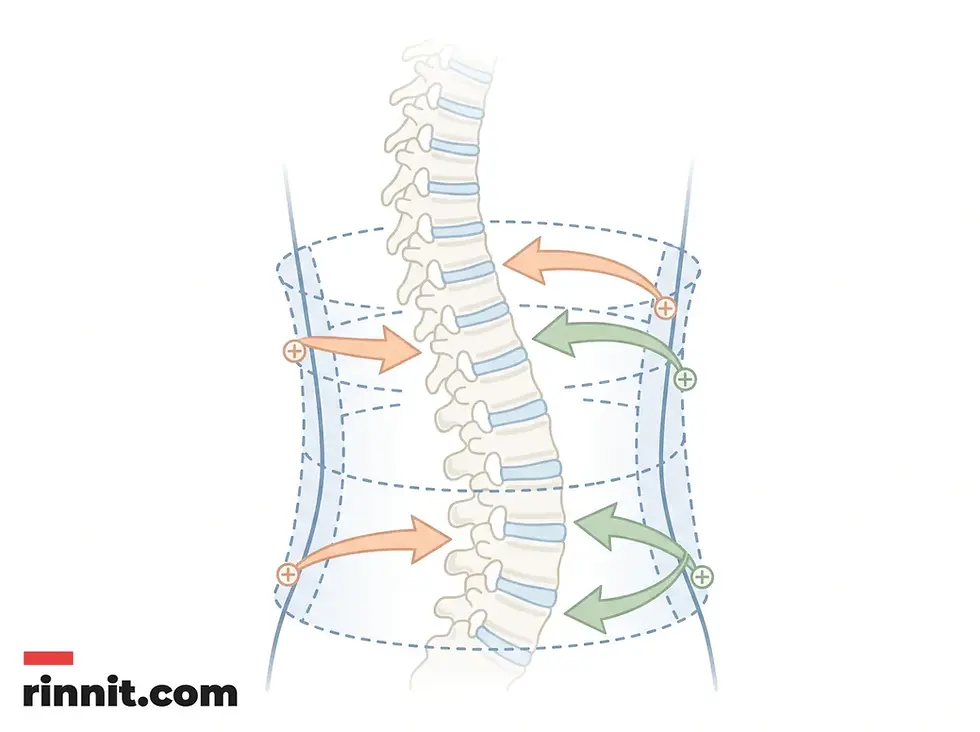
How does scoliosis bracing work?
Scoliosis occurs when the spine twists and develops an abnormal side-to-side curve, often appearing as a "C" or "S" shape on an X-ray. [1] Bracing is most effective for moderate cases, typically defined as curves between 25 and 40 degrees. [1] The brace acts as a corrective force, putting pressure on specific points of the curve to guide the spine into a straighter position during the critical years of bone growth.
Because the treatment relies on the spine's natural growth, it is specifically prescribed for children and adolescents who have not yet reached skeletal maturity. [1] Once the spine stops growing, the brace can no longer influence its shape, and the treatment phase ends. Regular checkups with an orthotist are necessary to ensure the brace continues to fit properly as the child grows [1] and to monitor the spine's response to the therapy.
Feature | Boston Brace | Chêneau Brace | Night Brace |
Primary Use | Daytime/Full-time wear | Daytime/Full-time wear | Sleep only |
Design | Plastic, armpits to waist | Custom, unwinds twists | Stiff, uses gravity |
Mechanism | 3-point side pressure | Multi-point corrective pressure | Intense overnight correction |
Opening | Opens in the back | Custom design | Various |
What types of scoliosis braces are there?
Most modern scoliosis braces are constructed from durable plastic and are custom-molded to fit the individual child's torso. [1] The choice of brace depends on the location and severity of the curve, as well as the child's ability to tolerate the device during daily activities.
The Boston brace is one of the most common designs, featuring a rigid structure that runs from the armpits to the waist and applies pressure to three specific points along the curve. [1] For more complex curves that involve significant twisting of the spine, the Chêneau brace may be used, as it is designed to both apply pressure and help unwind the twisted sections of the vertebrae. [1] In cases where daytime bracing is not tolerated, stiff night braces are an alternative, utilizing gravity to provide intense correction while the child is lying down. [1]

What is daily life like with a scoliosis brace?
Adapting to life with a brace takes time and patience. Initially, children may find the brace uncomfortable or difficult to sleep in, but most adjust within a few weeks. It is important to remember that while the brace must be worn for most of the day, it should not prevent a child from being active.
Maintaining an active lifestyle is highly encouraged. Activities like swimming and gymnastics are excellent for building core strength [1], which provides better support for the spine. However, contact sports are generally discouraged while wearing the brace [1] to prevent injury or damage to the device. Parents should also monitor their child's skin for signs of chafing or irritation, which may indicate that the brace needs adjustment by an orthotist.

Conclusion
Scoliosis bracing is a powerful tool for managing spinal health in growing children. By preventing curve progression, it offers a path toward a straighter spine and can significantly reduce the likelihood of future surgery. Success depends on early detection, a custom fit, and a strong commitment to the recommended wear time.
Next step: If you notice signs of spinal curvature in your child, such as uneven shoulders or a tilted waist, consulting a healthcare provider for an evaluation and discussing bracing options is the most important next step.
Frequently Asked Questions
What is the primary goal of scoliosis bracing?
The main objective is to prevent the spinal curve from getting worse as a child grows. In some cases, it can also help reduce the degree of the curve, potentially avoiding the need for surgery.
At what degree of curvature is a brace usually recommended?
Healthcare providers typically recommend bracing for children with moderate scoliosis, which is generally defined as a curve between 25 and 40 degrees.
How many hours a day does my child need to wear the brace?
Most providers recommend full-time wear, which means keeping the brace on for 16 to 23 hours every day. Full-time bracing is generally more effective than part-time use.
Can my child play sports while wearing a scoliosis brace?
Yes, staying active is encouraged. Activities like swimming are great for core strength. However, contact sports should be avoided while the brace is on.
How long will the treatment last?
The duration depends on the child's age and how much growth they have left. Most children wear the brace for several months to several years, until their spine stops growing.
What is an orthotist?
An orthotist is a specially trained medical professional who measures, fits, and builds custom scoliosis braces to ensure they are both effective and comfortable.
Does the brace hurt?
While there is an initial adjustment period and some discomfort is normal, the brace should not cause significant pain. If it does, or if it causes skin chafing, it needs to be adjusted.
Are there different types of braces?
Yes, the most common are the Boston brace and the Chêneau brace. There are also stiff night braces for children who cannot tolerate daytime wear.
What happens after the bracing treatment ends?
Once growth is complete, the brace is no longer needed. However, regular checkups, including X-rays and exams every six months for two years, are usually recommended to monitor the spine.
Is scoliosis bracing always successful?
Bracing is highly effective at preventing the curve from worsening in most children who follow the recommended wear schedule, though individual results can vary based on the curve's severity.
Related Reading
Scoliometer: How It Screens for Scoliosis and What Readings Mean explains the handheld tool used to screen for scoliosis.
References
Cleveland Clinic. Scoliosis Bracing. Cleveland Clinic. Last updated January 21, 2026. https://my.clevelandclinic.org/health/treatments/scoliosis-bracing
Weinstein SL, Dolan LA, Wright JG, et al. Effects of bracing in adolescents with idiopathic scoliosis. New England Journal of Medicine. 2013;369(16):1512-1521. PMID 24047455. https://doi.org/10.1056/NEJMoa1307337
Costa L, Schlosser TPC, Jimale H, et al. The effectiveness of different concepts of bracing in adolescent idiopathic scoliosis (AIS): a systematic review and meta-analysis. Journal of Clinical Medicine. 2021;10(10):2145. PMID 34063540. https://doi.org/10.3390/jcm10102145
Tang S, Cheung JPY, Cheung PWH. Effectiveness of bracing to achieve curve regression in adolescent idiopathic scoliosis. Bone & Joint Journal. 2024;106-B(3):286-292. PMID 38423123. https://doi.org/10.1302/0301-620X.106B3.BJJ-2023-1105.R1
Medical disclaimer
The information provided in this article is for educational purposes only and should not be used as a substitute for professional medical advice, diagnosis, or treatment. Always seek the advice of your physician or other qualified health provider with any questions you may have regarding a medical condition.



Comments