Renal Tubular Acidosis (RTA): Symptoms, Causes, Types, and Management

Updated: 2 days ago
Medically reviewed by Dr. Baraa Alnahhal, MD · Last reviewed: September 2026
TL;DR
Renal tubular acidosis (RTA) occurs when the kidneys fail to remove excess acid from the blood, disrupting the body's delicate pH balance. It is classified into three main types (Type 1, 2, and 4) based on which part of the kidney tubule is affected. Symptoms range from bone pain and fatigue to life-threatening heart issues. Treatment focuses on oral alkali therapy and dietary adjustments to restore normal acid levels.
Quick Answer
What is Renal Tubular Acidosis (RTA)?
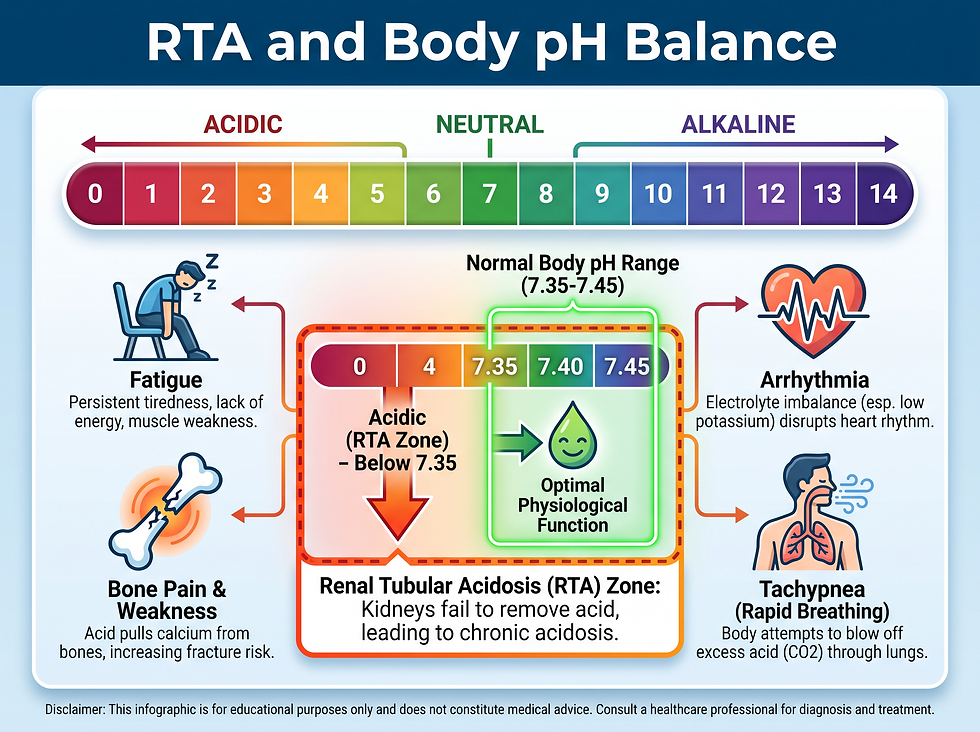
Renal tubular acidosis is a rare condition where the kidneys are unable to properly filter out acid or acid waste products, leading to a buildup of acid in the blood (acidosis). The kidneys normally maintain a body pH between 7.35 and 7.45; RTA causes this pH to drop, which can interfere with vital functions like breathing and heart rhythm.
The condition is divided into three primary types:
Type 1 (Distal RTA): Affects the far end of the kidney tubules; often caused by autoimmune diseases.
Type 2 (Proximal RTA): Affects the beginning of the tubules; common in infants and often linked to genetic conditions.
Type 4 (Hyperkalemic RTA): The most common form, involving high potassium levels; frequently associated with diabetes.
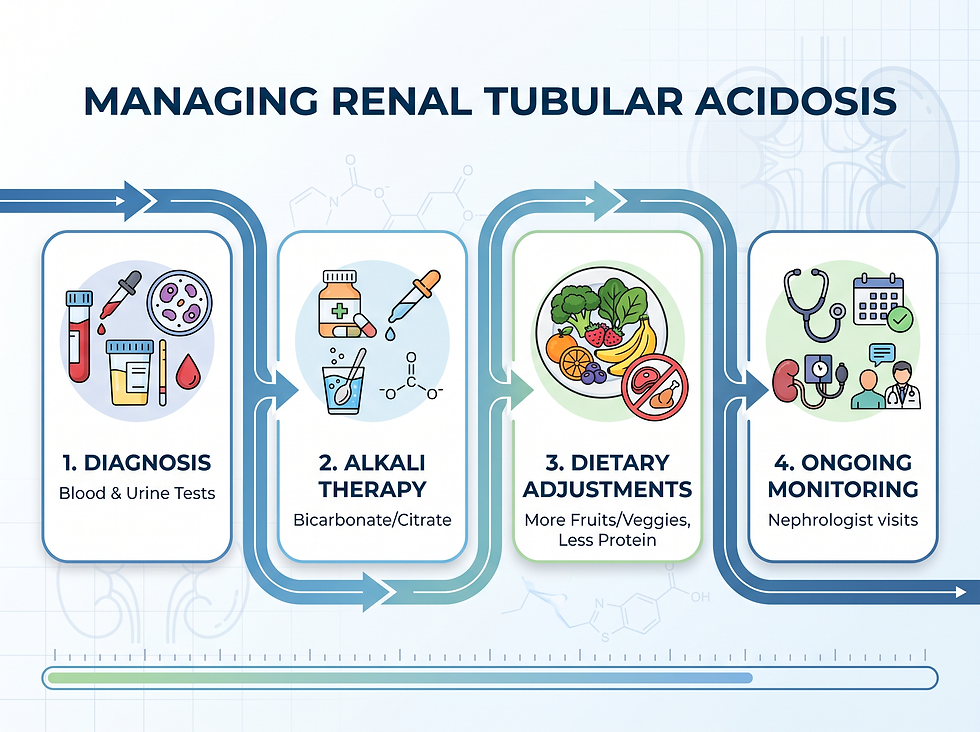
Diagnosis involves blood and urine tests to measure pH and electrolyte levels. Management typically requires lifelong oral alkali therapy (like sodium bicarbonate) and monitoring to prevent complications such as kidney stones, bone disease, and kidney failure.
MEDICAL EMERGENCY: WHEN TO SEEK IMMEDIATE CARE Renal tubular acidosis can lead to life-threatening complications. Seek emergency medical attention if you experience: • Severe confusion or altered mental state. • Extreme muscle weakness or paralysis. • Rapid or irregular heartbeat (arrhythmia). • Significant difficulty breathing (tachypnea). • Signs of cardiac arrest.

What is Renal Tubular Acidosis?
Renal tubular acidosis (RTA) is a condition where your kidneys are unable to maintain the body's acid-base balance. Your kidneys have the critical job of regulating pH, which is a measure of how acidic or basic your body fluids are. A healthy body pH typically ranges between 7.35 and 7.45.
When you eat, your body produces acids or bases depending on the food. For example, high-protein meals produce acid, while fruits and vegetables produce bases. Healthy kidneys filter out the excess to keep your pH stable. In RTA, this filtering process fails, leading to an accumulation of acid that can damage tissues and disrupt organ function.
What are the Main Types of RTA?
Healthcare providers categorize RTA based on which part of the kidney's filtering system (the renal tubules) is malfunctioning.
Type | Name | Location of Problem | Key Characteristics |
Type 1 | Distal RTA (dRTA) | Far (distal) part of tubules | Failure to secrete acid; common in adults with autoimmune issues. |
Type 2 | Proximal RTA (pRTA) | Closer (proximal) part of tubules | Failure to reabsorb bicarbonate; rarer, often seen in infancy. |
Type 4 | Hyperkalemic RTA | End part of tubules | Failure to filter acid and potassium; most common type. |
Type 3 | Combined RTA | Distal and Proximal | Extremely rare combination of Type 1 and Type 2. |
What are the Symptoms of RTA?
Symptoms of RTA occur because high acid levels interfere with how organs function. These symptoms can be subtle at first but may become severe if left untreated.
Bone and Muscle Issues: Bone pain, softening of bones (osteomalacia/rickets), and significant muscle weakness.
Systemic Distress: Feeling very tired (fatigue), confusion, and dehydration.
Respiratory and Cardiac Changes: Fast breathing (tachypnea), increased heart rate (tachycardia), or irregular heartbeat.
Localized Pain: Pain in the abdomen, back, or flank area.
Urinary Changes: Producing less urine than usual (oliguria).
What Causes Renal Tubular Acidosis?
The causes of RTA vary significantly depending on the specific type diagnosed.
Type 1 RTA Causes
The most common cause of Type 1 RTA in adults is autoimmune disease, such as Sjögren's syndrome, lupus, or rheumatoid arthritis. It can also be inherited through genetic variations in the SLC4A1, ATP6V0A4, or AT6V1B1 genes. Certain medications, like lithium or the antifungal amphotericin B, may also trigger this type.
Type 2 RTA Causes
Type 2 RTA is often linked to other inherited conditions like Wilson disease, cystinosis, or Fanconi syndrome. In adults, it is frequently associated with blood disorders like multiple myeloma or amyloidosis. Exposure to heavy metals (lead and cadmium) and certain medications for HIV or glaucoma are also known causes.
Type 4 RTA Causes
As the most common form, Type 4 RTA is most often caused by diabetes-related nephropathy in adults. Other causes include Addison's disease, sickle cell disease, urinary obstructions (like an enlarged prostate or kidney stones), and medications such as NSAIDs, ACE inhibitors, and blood thinners.
What are the Potential Complications?
If left unmanaged, RTA can lead to permanent damage across several body systems. Kidney stones are a particular concern in Type 1 RTA; our guide to kidney stones explains their symptoms, causes, and treatment.
Complication | Type 1 | Type 2 | Type 4 |
Kidney Stones | Yes | No | No |
Chronic Kidney Disease | Yes | No | No |
Growth Delays (Children) | Yes | Yes | No |
Bone Disease (Rickets) | Yes | Yes | No |
Cardiac Arrest | No | No | Yes |
Hearing Loss | Yes | No | No |
Dental Problems | No | Yes | No |
How is RTA Diagnosed?
Diagnosis begins with a thorough review of your medical history and a physical exam. Because RTA is rare, it is sometimes misdiagnosed. Providers rely on specific tests to confirm the condition:
Blood Tests: To measure pH levels and check for electrolyte imbalances, particularly potassium.
Urinalysis: To determine the acidity of the urine and how well the kidneys are handling acid waste.
Genetic Testing: If an inherited form of RTA is suspected.
How is Renal Tubular Acidosis Treated?
Treatment focuses on neutralizing the excess acid in the blood and addressing the underlying cause.
Medication and Therapy
The primary treatment for all types of RTA is oral alkali therapy, typically using sodium bicarbonate or sodium citrate. These medications help balance the body's pH and prevent bone loss and kidney stones. Other medications may include:
Potassium Supplements: To treat low potassium (hypokalemia) in Type 1 and 2.
Diuretics: To help the body retain bicarbonate.
Vitamin D and Calcium: To support bone health and prevent softening.
Dietary Adjustments
A renal dietitian may recommend specific changes to your eating patterns to reduce the acid load on your kidneys:
Increase Fruits and Vegetables: These foods naturally produce bases that help neutralize acid.
Reduce High-Protein Meats: Large amounts of animal protein increase acid production.
Hydration: Maintaining adequate fluid intake is essential, especially for those prone to kidney stones.
Conclusion
Renal tubular acidosis is a complex but manageable condition. By maintaining a strict treatment regimen of alkali therapy and dietary monitoring, most individuals can balance their pH levels and prevent long-term complications like bone disease or kidney failure. Early diagnosis is key to avoiding the more severe cardiac and neurological risks associated with high acid levels.
Next Steps
If you have been diagnosed with RTA or have risk factors like diabetes or autoimmune disease, consult a nephrologist (kidney specialist). Regular monitoring of your blood and urine pH is the most effective way to ensure your treatment plan is working.
Frequently Asked Questions
1. Is renal tubular acidosis curable?
Acquired RTA caused by medications or temporary obstructions may resolve once the cause is addressed. However, genetic or chronic autoimmune-related RTA typically requires lifelong management.
2. Can RTA cause permanent kidney damage?
Yes, if left untreated, chronic acid buildup can lead to chronic kidney disease (CKD) and eventually kidney failure, particularly in Type 1 RTA.
3. What is the most common type of RTA?
Type 4 (Hyperkalemic RTA) is the most common type, often seen in adults with diabetes or those taking certain blood pressure medications.
4. Does RTA affect children differently than adults?
In children, RTA often causes growth delays and rickets (soft bones). Early treatment is crucial to ensure normal development.
5. Why does RTA cause bone pain?
High acid levels in the blood can cause the body to pull calcium from the bones to help neutralize the acid, leading to weakened bones and pain.
6. Can diet alone treat RTA?
While diet is a helpful supportive measure, most people with RTA require medication (alkali therapy) to safely manage their pH levels.
7. What are the signs of Type 4 RTA?
Type 4 is unique because it involves high potassium levels, which can cause muscle weakness and heart rhythm problems.
8. Is RTA a genetic condition?
It can be. Some forms are inherited from parents, but many cases are "acquired" due to other diseases or medications.
9. Can medications cause RTA?
Yes, several common medications, including NSAIDs, certain antibiotics, and some blood pressure drugs, can interfere with kidney tubule function.
10. How often do I need blood tests?
Monitoring frequency varies, but most patients require regular blood and urine tests to ensure their pH and potassium levels remain within a safe range.
11. Can RTA cause hearing loss?
Certain genetic forms of Type 1 RTA are associated with progressive hearing loss.
12. What is the difference between Type 1 and Type 2 RTA?
Type 1 affects the end of the kidney's filtering unit, while Type 2 affects the beginning. Type 1 is more likely to cause kidney stones.
13. Can RTA be prevented?
While genetic forms cannot be prevented, managing underlying conditions like diabetes and avoiding certain high-risk medications may reduce the risk of acquired RTA.
14. What does "alkali therapy" mean?
It refers to taking substances that are basic (alkaline), such as bicarbonate, to neutralize the excess acid in your blood.
15. Is RTA the same as metabolic acidosis?
RTA is a specific cause of metabolic acidosis. While all RTA patients have metabolic acidosis, not all people with metabolic acidosis have RTA.
Learn More
Trusted external resources: American Society of Nephrology, National Kidney Foundation, and the Genetic and Rare Diseases Information Center (GARD).
Medical Disclaimer: This article is for informational purposes only and does not constitute medical advice. Always seek the advice of your physician or other qualified health provider with any questions you may have regarding a medical condition. Never disregard professional medical advice or delay in seeking it because of something you have read in this article.
Comments