Fanconi Syndrome: Symptoms, Causes, Complications, Diagnosis, Treatment and Outlook — What You Need to Know

Updated: 2 days ago
Medically reviewed by Dr. Baraa Alnahhal, MD · Last reviewed: September 2026
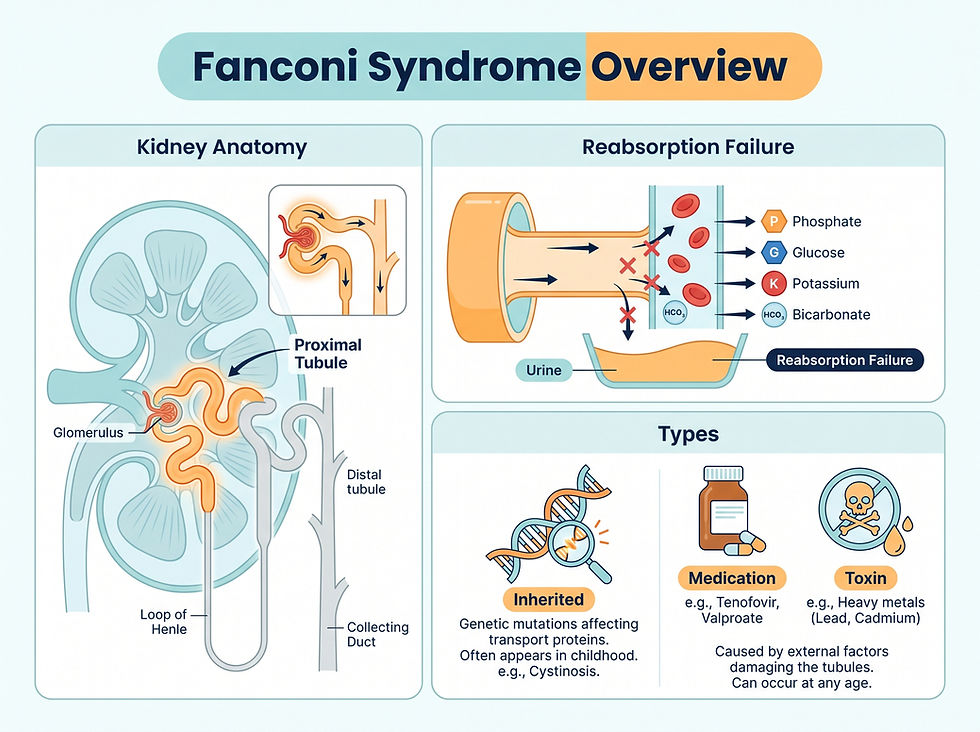
Quick Answer: Fanconi syndrome is a complex group of kidney disorders characterized by dysfunction in the proximal tubules, which are responsible for reabsorbing essential substances back into the bloodstream. When these tubules fail, critical electrolytes and molecules—including phosphate, glucose, potassium, bicarbonate, and amino acids—are lost through the urine. The condition is categorized into inherited forms, often caused by genetic conditions like cystinosis, and acquired forms, which can result from drug toxicity, heavy metal exposure, or underlying diseases like multiple myeloma. Symptoms typically include excessive thirst, frequent urination, bone pain, and muscle weakness. While inherited forms require lifelong management, acquired cases may resolve if the underlying cause is addressed. Early diagnosis and targeted supplementation are vital for preventing long-term bone and kidney damage.
TL;DR: Kidney Tubule Dysfunction at a Glance
Fanconi syndrome represents a significant failure of the kidney's filtration and reabsorption system. Instead of retaining essential nutrients, the body inadvertently flushes them out, leading to widespread systemic imbalances.
The disorder can affect individuals at any stage of life, though inherited versions often present in early childhood. The impact on bone health and muscle function is particularly pronounced due to the loss of phosphate and potassium.
Management focuses on identifying the root cause—whether it be a genetic mutation or an external toxin—and aggressively replacing the lost substances to maintain physiological stability and bone density.
Limitation statement: The referenced clinical source provides comprehensive lists of causes, symptoms, and treatments for Fanconi syndrome. It does not provide global prevalence statistics, although it identifies cystinosis as the most common inherited cause. No statistics are invented in this article.
Essential Substances Lost in Urine | Role in the Body |
Phosphate | Critical for bone strength and energy production. |
Glucose | The primary source of energy for cells. |
Potassium | Vital for muscle function and heart rhythm. |
Bicarbonate | Maintains a healthy blood pH balance. |
Amino Acids | The building blocks of proteins. |
Uric Acid | A byproduct of metabolism normally reabsorbed. |
What Are the Symptoms of Fanconi Syndrome?
The presentation of Fanconi syndrome varies depending on whether the condition was present from birth or developed later in life.
Symptoms by Type
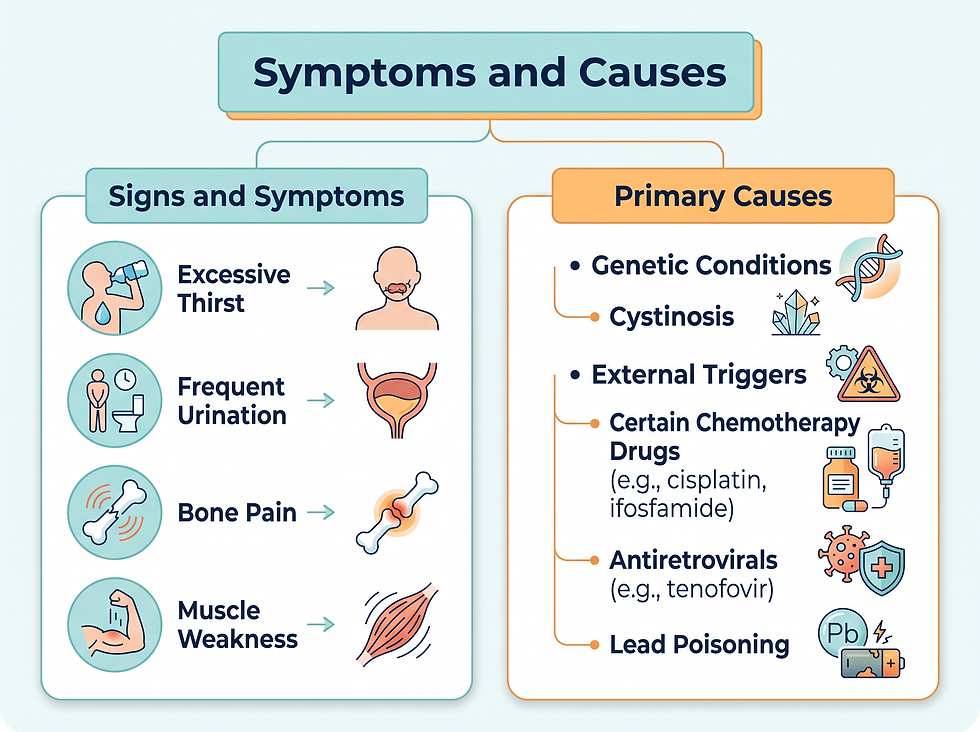
Symptom Category | Inherited Fanconi Syndrome | Acquired Fanconi Syndrome |
Urinary/Fluid | Frequent urination, dehydration, excessive thirst. | Frequent urination, dehydration, excessive thirst. |
Musculoskeletal | Bone pain, muscle/bone weakness, fractures. | Muscle weakness. |
Growth/Physical | Well below average height (small stature). | N/A |
Biochemical Signs | Metabolic acidosis, low phosphate levels. | Low phosphate, low potassium, metabolic acidosis. |
What Causes Fanconi Syndrome?
Fanconi syndrome is not a single disease but a manifestation of various underlying genetic or environmental triggers that damage the kidney's proximal tubules.
Inherited Causes
Inherited forms are passed down through biological parents, with cystinosis being the most frequent culprit.
Genetic Condition | Description |
Cystinosis | Causes amino acid cystine buildup; symptoms start at 6–18 months. |
Wilson Disease | Prevents the body from properly removing copper. |
Lowe Syndrome | A rare genetic condition linked to the X chromosome. |
Dent Disease | Causes calcium deposits, kidney stones, and chronic disease. |
Tyrosinemia Type I | Affects how the body breaks down the amino acid tyrosine. |
Acquired Causes: Drugs and Toxins
Acquired Fanconi syndrome often results from exposure to specific medications or environmental hazards, including lead poisoning.
Drug Class/Hazard | Specific Examples |
Chemotherapy | Cisplatin, Ifosfamide. |
Antiretrovirals | Tenofovir (used for HIV and Hepatitis B). |
Antibiotics | Aminoglycosides (e.g., Gentamicin). |
Environmental | Lead poisoning, Toluene exposure (glue sniffing). |
Other Meds | Valproic acid (antiseizure), Deferasirox (iron removal). |
Underlying Medical Conditions
Some diseases that affect other organs can also injure the kidney tubules, such as AL amyloidosis and multiple myeloma.
Condition | Impact on Kidneys |
Multiple Myeloma | Abnormal proteins produced by plasma cells damage tubules. |
Kidney Transplant | Can occur due to rejection, surgical injury, or medications. |
AL Amyloidosis | Protein changes affecting multiple organs, including kidneys. |
Herbal Therapies | Products containing aristolochic acid are linked to damage. |
How Is Fanconi Syndrome Diagnosed?
Healthcare providers utilize a combination of clinical history and laboratory analysis to confirm a diagnosis and identify the underlying cause.
Diagnostic Step | Key Actions |
Physical Exam | Reviewing symptoms like bone pain and excessive thirst. |
Urine Tests | Checking for glucose, amino acids, and phosphate in the pee. |
Blood Tests | Measuring electrolyte levels and blood pH balance. |
Specialist Referral | Consultation with a nephrologist (kidney specialist). |
Genetic Testing | Recommended if an inherited cause is suspected. |
How Is Fanconi Syndrome Treated?
Treatment strategies are tailored to the specific cause and the severity of the substance loss.
Treatment Strategy | Specific Interventions |
Fluid Replacement | Restoring electrolytes via diet, supplements, or IV fluids. |
Acidosis Management | Sodium bicarbonate to restore healthy blood pH balance. |
Bone Health | Phosphate supplements and Vitamin D to prevent fractures. |
Medication Adjustment | Stopping or reducing doses of drugs causing kidney damage. |
Underlying Treatment | Treating the primary disease (e.g., Wilson disease or myeloma). |
Dietary Restrictions for Inherited Types
Inherited Condition | Substances to Avoid |
Fructose Intolerance | Fructose (found in fruits and plants). |
Fanconi Bickel Syndrome | Galactose (milk and dairy products). |
Tyrosinemia Type I | Tyrosine (found in seeds, nuts, and meats). |

Outlook and Recovery
The long-term outlook for Fanconi syndrome depends heavily on its origin. While inherited forms currently have no cure, modern therapies allow many individuals to live relatively normal lives through diligent management. Acquired cases often show improvement within days or weeks once the offending drug or toxin is removed, though recovery is not always guaranteed. Early detection remains the most critical factor in limiting permanent damage to the kidneys, muscles, and bones.
Take these three steps:
Review Medications — if you take antiretrovirals or chemotherapy drugs, discuss regular kidney monitoring with your provider.
Seek a Specialist — consult a nephrologist if you experience unexplained bone pain or excessive thirst.
Screen for Genetics — if a family history of kidney disease exists, consider genetic testing before starting a family.
This article provides general information and is not a substitute for professional medical advice. Always consult a qualified healthcare provider for diagnosis and treatment.
Frequently Asked Questions
What is Fanconi syndrome?
It is a group of disorders affecting the kidney's proximal tubules, leading to the loss of essential substances in the urine.
Is Fanconi syndrome the same as Fanconi anemia?
No. Fanconi syndrome is a kidney disorder, while Fanconi anemia is a rare genetic blood disorder.
What are the two main types of Fanconi syndrome?
The two types are inherited (present from birth) and acquired (developed later in life).
What is the most common cause of inherited Fanconi syndrome?
Cystinosis, a condition causing the amino acid cystine to build up in the body.
Can drugs cause Fanconi syndrome?
Yes, certain chemotherapy drugs, antibiotics, and antiretrovirals can damage the kidneys.
What is Tenofovir, and how does it relate to Fanconi syndrome?
Tenofovir is a drug used to treat HIV and Hepatitis B that can sometimes cause acquired Fanconi syndrome.
What are the hallmark symptoms of Fanconi syndrome?
Frequent urination, excessive thirst, bone pain, and muscle weakness.
Why does Fanconi syndrome cause bone pain?
The loss of phosphate in the urine weakens the bones, leading to pain and an increased risk of fractures.
What is polydipsia?
Polydipsia is the medical term for being thirstier than usual, a common symptom of Fanconi syndrome.
Can children have Fanconi syndrome?
Yes, inherited forms often show symptoms in children between 6 and 18 months of age.
Does Fanconi syndrome cause small stature?
Inherited forms can lead to growth faltering and well below average height in children.
What substances are lost in the urine in Fanconi syndrome?
Phosphate, glucose, potassium, bicarbonate, uric acid, and amino acids.
What is metabolic acidosis?
A buildup of acid in the body fluids, which occurs when the kidneys fail to reabsorb enough bicarbonate.
How do doctors diagnose Fanconi syndrome?
Diagnosis involves reviewing health history, physical exams, and both blood and urine tests.
What is a nephrologist?
A nephrologist is a doctor who specializes in kidney care and the diagnosis of kidney disorders.
Is there a cure for inherited Fanconi syndrome?
There is no cure for inherited forms, but the condition can be managed with lifestyle changes and supplements.
Can you recover from acquired Fanconi syndrome?
Yes, many acquired cases improve once the underlying cause, such as a specific drug, is removed.
What is the treatment for low phosphate levels?
Treatment typically involves phosphate supplements and Vitamin D to support bone health.
Why is sodium bicarbonate used in treatment?
It helps restore a healthy blood pH balance in patients with metabolic acidosis.
What dietary changes are needed for Fanconi syndrome?
Depending on the cause, patients may need to avoid fructose, galactose, or foods high in tyrosine.
Can lead poisoning cause Fanconi syndrome?
Yes, exposure to high levels of lead is a known cause of the acquired form.
What is toluene exposure?
Toluene is a chemical found in glue and paint; sniffing these products can lead to kidney damage and Fanconi syndrome.
Does multiple myeloma affect the kidneys?
Yes, abnormal proteins produced in multiple myeloma can damage the kidney tubules.
Can a kidney transplant cause Fanconi syndrome?
Yes, it can develop due to surgical injury, medications, or transplant rejection.
What is Wilson disease?
A genetic condition that prevents the body from removing copper, which can then damage the kidneys.
How does Fanconi syndrome affect the eyes?
If caused by cystinosis, it can lead to light sensitivity (photophobia).
Can herbal therapies be dangerous for the kidneys?
Some herbal medicines containing aristolochic acid have been linked to Fanconi syndrome.
What is the Schirmer test used for in kidney contexts?
It is not typically used for kidneys; however, eye symptoms in cystinosis may require ophthalmological evaluation.
How often should Fanconi syndrome be monitored?
Patients should schedule regular appointments with a nephrologist to monitor blood pressure and kidney function.
Can people with Fanconi syndrome live a normal life?
With modern therapies and proper management, many people can live relatively normal lives.
Related Reading on Rinnit
Additional Resources
For further reading, these authoritative external references support the information above:
Content reviewed and produced following the Rinnit editorial framework. Last updated: September 28, 2026.
Comments