Pyloroplasty: Surgical Solutions for Gastric Outlet Obstruction

Updated: 2 days ago
Medically reviewed by Dr. Baraa Alnahhal, MD · Last reviewed: October 2026
Pyloroplasty is a surgical procedure designed to widen the pylorus, the muscular valve at the base of the stomach. [1] By altering this valve, surgeons can improve the passage of food into the small intestine, effectively treating conditions like gastroparesis, pyloric stenosis, and complications from peptic ulcers. The procedure is often performed laparoscopically, offering a high success rate and a relatively fast recovery for most patients.
Quick Answer
Pyloroplasty is a surgery that widens the pyloric valve between the stomach and small intestine to improve gastric emptying. [1] It is used when the pylorus is blocked or malfunctioning from severe peptic ulcer disease, gastroparesis or pyloric stenosis, and often after vagotomy. Restoring flow reduces chronic nausea, vomiting and abdominal pain and improves nutrition.
What the research says
Surgical pyloroplasty improves symptoms and stomach emptying in most people with refractory gastroparesis. In a meta-analysis of 7 studies covering 375 patients who had surgical pyloroplasty, the pooled clinical success rate was 77.3% (95% CI 66.4 to 85.4) by symptom score and 84% (95% CI 64.4 to 93.8) by a 4-hour gastric emptying study, not significantly different from the endoscopic procedure G-POEM (Mohan et al., Surgical Endoscopy, 2020 [2]).
Pyloroplasty is one of several options for gastroparesis. A network meta-analysis of 55 studies in adults with confirmed gastroparesis found that pyloroplasty, G-POEM, gastric electrical stimulation, and botulinum toxin A all gave significant short-term symptom improvement, with G-POEM showing the greatest short-term effect and gastric electrical stimulation the highest efficacy at 3 to 36 months (Eckhardt et al., British Journal of Surgery, 2025 [3]).
Evidence on routine pyloric drainage during esophagus surgery is mixed. One meta-analysis of 9 studies (1,164 patients) found that pyloric drainage reduced delayed gastric emptying after esophagectomy (odds ratio 0.54, 95% CI 0.39 to 0.74) without a significant increase in biliary reflux (Loo et al., Journal of Gastrointestinal Surgery, 2023 [4]), while another covering 15 studies (2,339 patients) found no significant difference in delayed gastric emptying (relative risk 0.98, 95% CI 0.59 to 1.62) (Nevins et al., Langenbeck's Archives of Surgery, 2022 [5]).
What are the different types of pyloroplasty procedures?
Pyloroplasty can be performed with several surgical techniques, each tailored to the patient's specific medical needs. The choice of method often depends on the underlying condition, the patient's age, and the extent of inflammation or scarring present in the digestive tract.
Procedure Type | Description | Primary Application |
Heineke-Mikulicz | Lengthwise incision through the pylorus, closed with crosswise stitches. [1] | Most common method for adults. |
Pyloromyotomy | Incision through outer muscle layers while keeping the inner mucosa intact. | Standard treatment for infants with stenosis. [1] |
Pyloric Dilation | Endoscopic expansion of the valve using specialized tools. [1] | Minimally invasive alternative to cutting. |
Jaboulay/Finney | Bypassing the pylorus to create a new connection (gastroduodenostomy). | Used when severe scarring prevents direct repair. [1] |

When is pyloroplasty surgery needed?
Healthcare providers may recommend pyloroplasty for various digestive conditions that impair the stomach's ability to empty its contents. These conditions can range from congenital defects to complications arising from chronic diseases.
Peptic Ulcer Disease: Severe ulcers can cause swelling or scar tissue that blocks the pyloric opening. [1] Surgery may be required to repair bleeding ulcers or to reconstruct the valve after accessing the duodenum. [1]
Gastroparesis: This condition involves partial paralysis of the stomach muscles, leading to significantly delayed gastric emptying. [1] Pyloroplasty can provide relief for severe cases that do not respond to other treatments. [1]
Pyloric Stenosis: Primarily affecting newborns, this condition involves a thickening of the pylorus walls, which blocks the passage of milk or food and requires immediate surgical intervention.
Adjunct to Other Surgeries: Procedures involving the esophagus or stomach may damage the vagus nerve. [1] Pyloroplasty is often performed simultaneously to ensure the pylorus remains open. [1]

What are the risks and complications of pyloroplasty?
Pyloroplasty is generally safe and effective, but it carries the usual risks of abdominal surgery plus digestive side effects such as dumping syndrome and bile reflux.
Pyloroplasty is usually a simple and minimally invasive procedure. It has a relatively fast recovery time and can relieve difficulties in your digestive system you’ve had for a long time. [1]
One of the most notable side effects is dumping syndrome, which occurs when the stomach empties its contents too rapidly into the small intestine. [1] This can lead to nausea, stomach cramps, and diarrhea shortly after eating, and to weakness, flushing, or heart palpitations a few hours later as blood sugar drops. [1] Up to 40% of people may have some mild symptoms after pyloroplasty and up to 10% may have more severe symptoms, but these usually go away over time and can often be managed with dietary changes. [1] Additionally, some patients may experience bile reflux, where the contents of the small intestine backwash into the stomach, potentially causing inflammation of the stomach lining. [1]
What is recovery like after pyloroplasty, and how successful is it?
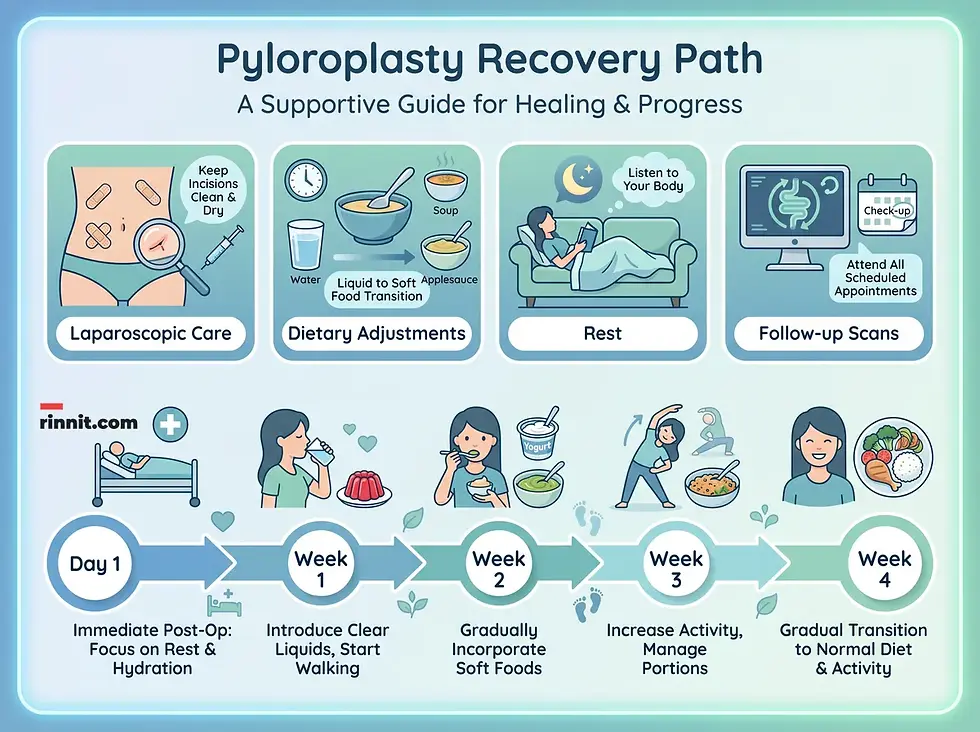
The recovery process for pyloroplasty is typically efficient, particularly when the surgery is performed laparoscopically. Most patients can return to their normal diet and daily activities within a few weeks, although temporary dietary adjustments may be necessary if dumping syndrome occurs.
Recovery Milestone | Timeline | Expectations |
Initial Feeding | Right after surgery | May require tube or IV feeding initially. [1] |
Hospital Stay | Same day to a few days | Laparoscopic patients often go home the same day. |
Normal Activity | 2-4 Weeks | Most patients resume full activity levels. |
Success Rate | ~90% | Excellent results for gastroparesis and obstruction. |
Conclusion and Next Steps
Pyloroplasty serves as a highly effective surgical solution for patients struggling with gastric outlet obstructions and motility disorders. By widening the pyloric valve, the procedure restores the natural flow of digestion and significantly improves the quality of life for those suffering from chronic digestive issues.
If you are experiencing symptoms of delayed gastric emptying or have been diagnosed with a pyloric obstruction, consult with a surgical specialist to determine if pyloroplasty is the right treatment for your condition.
Frequently Asked Questions
What is the primary purpose of a pyloroplasty?
The primary purpose of a pyloroplasty is to widen the pylorus, the muscular valve at the base of the stomach, to improve the passage of food into the small intestine and treat gastric outlet obstructions.
How is a pyloroplasty performed?
Pyloroplasty can be performed through traditional open surgery or minimally invasive laparoscopic techniques, both of which are conducted under general anesthesia.
What is the most common type of pyloroplasty?
The Heineke-Mikulicz pyloroplasty is the most common method, involving a lengthwise incision through the pylorus that is then sewn together crosswise to widen the opening.
Is pyloroplasty used for infants?
Yes, a modified version called a pyloromyotomy (Ramstedt pyloroplasty) is the standard treatment for infants suffering from pyloric stenosis.
What are the main risks of the procedure?
General risks include bleeding and infection, while specific complications include dumping syndrome (rapid stomach emptying) and bile reflux.
What is dumping syndrome?
Dumping syndrome is a condition where the stomach dumps its contents too quickly into the small intestine, causing nausea, cramps, and diarrhea shortly after eating, and weakness or heart palpitations a few hours later.
How successful is pyloroplasty for gastroparesis?
Pyloroplasty helps most people with severe gastroparesis; a pooled analysis found symptom improvement in about 77% and better stomach emptying in about 84%.
How long does recovery take?
Most patients recover quickly and can resume their normal activities and diet within a few weeks, especially following laparoscopic surgery.
Can pyloroplasty be performed without cutting?
Yes, pyloric dilation is an endoscopic procedure that expands the pylorus using specialized tools without making surgical incisions.
Why is pyloroplasty performed with a vagotomy?
A vagotomy disables the nerve that tells the pylorus to open; therefore, a pyloroplasty is required to keep the valve open permanently and allow food to pass.
Related Reading
Gastric Outlet Obstruction: Symptoms, Causes, and Clinical Management explains blockage at the stomach outlet and how it is treated.
Gastroparesis: Symptoms, Causes, Diet & Treatment — Complete Guide covers slow stomach emptying, which pyloroplasty may help.
Pyloric Sphincter: Location, Function, Disorders and Care describes the valve between the stomach and small intestine.
Understanding Vagotomy: A Guide to Managing Stomach Acid explains nerve-cutting surgery often paired with pyloroplasty.
References
Cleveland Clinic. Pyloroplasty. Cleveland Clinic. June 21, 2022. https://my.clevelandclinic.org/health/treatments/23388-pyloroplasty
Mohan BP, et al. Clinical efficacy of gastric per-oral endoscopic myotomy (G-POEM) in the treatment of refractory gastroparesis and predictors of outcomes: a systematic review and meta-analysis using surgical pyloroplasty as a comparator group. Surgical Endoscopy. 2020;34(8):3352-3367. PMID 31583465. https://doi.org/10.1007/s00464-019-07135-9
Eckhardt D, et al. Endoscopic and surgical treatment options for gastroparesis: systematic review and network meta-analysis. British Journal of Surgery. 2025;112(9). PMID 41020330. https://doi.org/10.1093/bjs/znaf183
Loo JH, et al. Outcomes of intraoperative pyloric drainage on delayed gastric emptying following esophagectomy: a systematic review and meta-analysis. Journal of Gastrointestinal Surgery. 2023;27(4):823-835. PMID 36650418. https://doi.org/10.1007/s11605-022-05573-w
Nevins EJ, et al. Are intra-operative gastric drainage procedures necessary in esophagectomy: a systematic review and meta-analysis. Langenbeck's Archives of Surgery. 2022;407(8):3287-3295. PMID 36163378. https://doi.org/10.1007/s00423-022-02685-4
Medical disclaimer
The information provided in this article is for educational purposes only and should not be used as a substitute for professional medical advice, diagnosis, or treatment. Always seek the advice of your physician or other qualified health provider with any questions you may have regarding a medical condition.



Comments