Pulse Pressure: What It Means, How to Calculate It and When to Seek Care

Updated: 2 days ago
Medically reviewed by Dr. Baraa Alnahhal, MD · Last reviewed: October 2026
Quick Answer: What is pulse pressure?
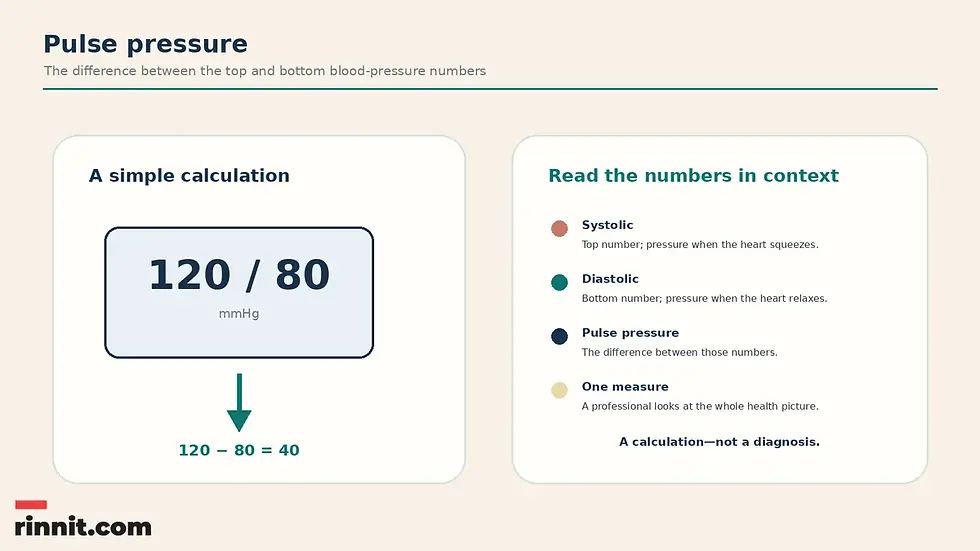
Pulse pressure is the difference between the upper and lower numbers of your blood pressure. The upper number is systolic pressure, measured when the heart squeezes; the lower number is diastolic pressure, measured when the heart relaxes. For example, a reading of 120/80 mmHg gives a pulse pressure of 40 mmHg, which is the normal value. [1]
Core idea | Plain-language meaning |
Formula | Systolic pressure − diastolic pressure. |
Example | 120/80 mmHg → 120 − 80 = 40 mmHg. |
Normal value | 40 mmHg. |
Wide pulse pressure | Higher than 100 mmHg is considered truly widened; a repeated value of 60 mmHg or more is a pattern to discuss with a provider. |
Narrow pulse pressure | One-quarter or less of the systolic pressure. |
Important context | Pulse pressure is one health measure, not the whole picture. |
What the research says
Wider pulse pressure is linked to higher cardiovascular and all-cause mortality. A meta-analysis of 14 prospective studies (510,456 participants) found a pooled relative risk of 1.80 (95% CI 1.49–2.17) for cardiovascular mortality and 1.32 (95% CI 1.23–1.41) for all-cause mortality when comparing the highest with the lowest pulse pressure category. Each 10 mmHg increase carried a relative risk of 1.13 for cardiovascular and 1.09 for all-cause mortality (Zhao et al., J Clin Hypertens, 2014). [2]
Pulse pressure predicted stroke, but not all-cause mortality, in one pooled analysis. Across 11 publications, each 10 mmHg increase in pulse pressure was associated with a higher risk of stroke (pooled HR 1.046, 95% CI 1.025–1.068), while the association with all-cause mortality was not significant (pooled HR 1.022, 95% CI 0.983–1.063) (Liu et al., Clin Res Cardiol, 2016). [3]
In people with diabetes, pulse pressure was the strongest of four blood-pressure indexes. A meta-analysis of 17 prospective studies (52,647 patients, 5,112 cardiovascular cases) estimated a relative risk of cardiovascular disease of 1.10 (95% CI 1.04–1.16) per 10 mmHg increase in pulse pressure. The authors urged cautious interpretation because of large differences between studies (Kodama et al., Am J Cardiol, 2014). [4]
What do the two blood-pressure numbers mean?
When you check blood pressure, you receive two numbers. The systolic pressure is the top number and measures pressure on the arteries each time the heart squeezes. The diastolic pressure is the bottom number and measures pressure on the arteries when the heart relaxes. [1]
Pulse pressure uses both numbers. It is the difference between the higher, systolic number and the lower, diastolic number. [1]
How do you calculate pulse pressure?
Pulse pressure is calculated by subtracting the diastolic blood pressure from the systolic blood pressure. [1]
Pulse pressure = systolic pressure − diastolic pressure
For example, if a blood-pressure reading is 120/80 mmHg:
120 − 80 = 40 mmHg
40 mmHg is considered a normal pulse pressure. A single calculation should not be interpreted without considering the rest of a person's health and the way the reading was taken. [1]
Blood-pressure reading | Calculation | Pulse pressure |
120/80 mmHg | 120 − 80 | 40 mmHg |
140/80 mmHg | 140 − 80 | 60 mmHg |
100/80 mmHg | 100 − 80 | 20 mmHg |
These examples explain the arithmetic only. They do not establish a personal diagnosis or treatment need.
What is a normal pulse pressure?
A pulse pressure of 40 mmHg is considered normal. Pulse pressure is only one measure of health, and a healthcare professional considers many aspects of a person's health rather than one number alone. [1]
As pulse pressure rises above 40 mmHg, the risk of heart and blood-vessel problems increases, even with small increases. This does not mean that every reading above 40 mmHg indicates a disease. Age, activity level, arterial flexibility, blood-pressure measurement conditions and overall health matter. [1]
Why does pulse pressure increase with age?
Arteries naturally become less stretchy and flexible, or less compliant, as people get older. Arteries also tend to be stiffer in people with diabetes and chronic kidney disease. [1]
After age 50, systolic pressure usually keeps rising while diastolic pressure drifts down. Because pulse pressure is the difference between these numbers, the difference tends to become larger. [1]
Age-related change is not the only possible explanation for a higher pulse pressure. A healthcare professional can interpret a pattern in the context of a person's other health information.

Why can pulse pressure change between readings?
Pulse-pressure variation is normal and expected. When you breathe, your heart responds by changing how much blood it pumps. Breathing-related changes in pulse pressure are usually small, about 5 to 10 mmHg. [1]
Blood pressure can also vary from moment to moment, by time of day and by body position. These factors can make two readings taken a few minutes apart differ.
A repeated pattern is more useful to discuss than one isolated result. If you monitor at home, share the readings and the context with a healthcare professional.
What does a wide pulse pressure mean?
A wide pulse pressure, sometimes called a high pulse pressure, means there is a wide difference between the top and bottom blood-pressure numbers. [1]
For people who are not physically active, a wider pulse pressure can indicate problems now or in the future. A leaky or narrow aortic valve and atherosclerosis are possible associated problems. In a hospital setting, infection or inflammation can also produce a wide pulse pressure. [1]
Healthcare professionals consider a pulse pressure higher than 100 mmHg to be truly widened. Pulse pressures of 50 mmHg or more can increase risk of heart disease, heart-rhythm disorders (arrhythmia) and stroke. [1]
Every 10 mmHg increase in pulse pressure is associated with about a 23% higher risk of coronary artery disease. This population-level association is not a personal prediction. [1]
Wide pulse pressures can also occur in very active people, such as long-distance runners. Professionals do not consider this a problem in those people because their hearts pump more blood and their arteries are flexible and healthy from regular activity. [1]
What does a narrow pulse pressure mean?
A narrow pulse pressure, sometimes called a low pulse pressure, is a pulse pressure that is one-quarter or less of the systolic pressure. [1]
This can happen when the heart is not pumping enough blood, such as in heart failure or cardiac tamponade. It can also happen after substantial blood loss or internal bleeding from an injury.
A narrow result can have serious causes, so a repeated or concerning pattern should be discussed with a healthcare professional rather than interpreted from an online calculation.
Why does managing pulse pressure matter?
A higher pulse pressure can mean the heart is working harder than usual, the arteries are less flexible than they should be, or both. These issues can increase the risk of heart and circulatory problems, particularly heart attack or stroke. [1]
The risk can be greater when both increased cardiac workload and arterial stiffness are present, which is common, especially in adults older than 55. [1]
Pulse pressure is not a stand-alone diagnosis. It is one piece of information a healthcare professional may use alongside blood pressure, symptoms, medical history and other findings. It also sits within the wider picture of cardiovascular disease risk. [1]
What can support overall blood-pressure care?
Managing pulse pressure goes hand in hand with taking care of overall blood pressure. These general actions are not a personalized plan or a substitute for professional advice.
Action | Context |
Get a yearly checkup | High blood pressure and related problems often have no symptoms until advanced. |
Choose nutritious foods | Foods low in sodium and salt can help manage blood pressure; a provider may recommend 2,300 mg of sodium per day or less, about one teaspoon of salt. |
Stay active | Physical activity supports the heart and circulation; aerobic activity is especially helpful. |
Drink alcohol in moderation | Recommended limits differ for females and males; discuss what applies to you with a professional. |
Know your risks | Share family history of heart problems, high blood pressure, diabetes or high cholesterol. |
Take prescribed medication as directed | Follow the prescribing professional's instructions. |
Monitor blood pressure if desired | A home cuff can show patterns to discuss with a healthcare professional. |
Alcohol limits are commonly given as one alcohol-containing drink per day and no more than seven per week for females, or two per day and no more than 14 per week for males. These are general limits, not a recommendation for any individual. [1]
How should I monitor a blood-pressure pattern?
If you choose to monitor blood pressure at home, take readings consistently and record the date, time, body position and any relevant context. Home monitoring can help you understand whether pressure tends to be higher than it should be, and the pattern can be discussed with a healthcare professional.
Do not change prescribed medication based on a home calculation. A single reading may be affected by normal short-term variation, breathing, time of day or body position.

When should I talk with a healthcare professional?
If regular checks show an unusually wide pulse pressure of 60 mmHg or more, schedule an appointment to discuss it. The same applies to a narrow pulse pressure that is less than one-quarter of the top blood-pressure number. [1]
A healthcare professional can consider whether a pattern relates to aging, arterial stiffness, a cardiovascular condition, blood loss, measurement variation or another factor.
When should pulse-pressure symptoms receive prompt care?
Pulse pressure itself may not cause symptoms. However, serious cardiovascular or circulation problems can present with concerning symptoms. Call 911 or go to the emergency room for severe or sudden chest pain, severe shortness of breath, fainting, coughing up blood, signs of major bleeding or rapidly worsening symptoms.
This article cannot determine whether a symptom is connected to pulse pressure. If you have a known heart condition, a new abnormal blood-pressure pattern or symptoms that concern you, contact a healthcare professional.
Conclusion: Pulse pressure is one part of the blood-pressure picture
Pulse pressure is calculated by subtracting diastolic pressure from systolic pressure. A reading of 120/80 mmHg produces a pulse pressure of 40 mmHg, the normal value. [1]
The difference between the numbers can change with age, arterial flexibility, diabetes, chronic kidney disease, breathing, time of day and body position. Wide and narrow pulse pressures have different definitions and possible contexts. [1]
A repeated wide pulse pressure of 60 mmHg or more, or a narrow pulse pressure at or below one-quarter of the systolic number, should be discussed with a healthcare professional. Use the calculation as a conversation starter—not a diagnosis. [1]
Track patterns carefully, bring questions to a qualified healthcare professional and consider pulse pressure alongside the full blood-pressure reading and overall health. [1]
Frequently Asked Questions
What is pulse pressure?
Pulse pressure is the difference between the top and bottom numbers of a blood-pressure reading.
What is the pulse-pressure formula?
Subtract diastolic pressure from systolic pressure: systolic pressure − diastolic pressure.
What is the pulse pressure for 120/80?
The pulse pressure for 120/80 is 40 mmHg because 120 − 80 = 40.
Is 40 mmHg a normal pulse pressure?
Yes. 40 mmHg is considered a normal pulse pressure. A healthcare professional still considers the complete health picture.
What is systolic pressure?
Systolic pressure is the top blood-pressure number and measures pressure on the arteries when the heart squeezes.
What is diastolic pressure?
Diastolic pressure is the bottom blood-pressure number and measures pressure on the arteries when the heart relaxes.
Why does pulse pressure get higher with age?
Arteries naturally become less flexible with age. After age 50, systolic pressure commonly rises while diastolic pressure drifts down, widening the difference.
Can diabetes affect pulse pressure?
Arteries tend to be stiffer in people with diabetes and chronic kidney disease. Arterial stiffness can contribute to a higher pulse pressure.
Is it normal for pulse pressure to change between readings?
Yes. Small changes are normal and expected. Breathing-related changes are usually about 5 to 10 mmHg, and blood pressure can vary by time of day and body position.
What is a wide pulse pressure?
A wide pulse pressure is a wide difference between systolic and diastolic pressure. A pulse pressure higher than 100 mmHg is considered truly widened, while a repeated value of 60 mmHg or more should be discussed with a provider.
What can a wide pulse pressure be associated with?
Possible associations include a leaky or narrow aortic valve, atherosclerosis, infection or inflammation in a hospital setting, heart disease, arrhythmia and stroke risk.
What is a narrow pulse pressure?
A narrow pulse pressure is a pulse pressure that is one-quarter or less of the systolic pressure.
What can cause a narrow pulse pressure?
A narrow pulse pressure can occur when the heart is not pumping enough blood, including in heart failure or cardiac tamponade, or after substantial blood loss or internal bleeding from an injury.
Can athletes have a wide pulse pressure?
Very active people, including long-distance runners, can have wider pulse pressures. Providers do not consider this a problem in those people because their hearts pump more blood and their arteries are flexible and healthy from regular activity.
Does pulse pressure diagnose heart disease?
No. Pulse pressure is one measure. A healthcare professional considers it with the rest of a person's health information, symptoms and other findings.
Does a single pulse-pressure reading matter?
A single reading may be affected by normal variation, breathing, time of day or body position. A repeated pattern is more useful to discuss with a healthcare professional.
When should I discuss pulse pressure with a professional?
Discuss repeated pulse pressure of 60 mmHg or more, or a narrow pulse pressure that is one-quarter or less of the systolic number, with a healthcare professional.
Can pulse pressure increase the risk of stroke?
Pulse pressures of 50 mmHg or more can increase the risk of stroke, along with heart disease and heart-rhythm disorders. This is a population-level association, not a personal prediction.
Can pulse pressure affect the kidneys or eyes?
Higher pulse pressures may play a role in eye and kidney damage from diseases such as diabetes.
How can I support blood-pressure health?
General actions include yearly checkups, nutritious foods lower in sodium and salt, physical activity, moderate alcohol use, knowing family risks, taking prescribed medication as directed and optional home monitoring.
Should I change medication because of pulse pressure?
No. Do not change prescribed medication based on an online calculation or home reading. Follow the prescribing professional's instructions and discuss patterns with them.
What symptoms need prompt care?
Severe or sudden chest pain, severe shortness of breath, fainting, coughing up blood, signs of major bleeding or rapidly worsening symptoms need emergency care: call 911.
Related Reading
High Blood Pressure: Silent Symptoms, Serious Risks, and Proven Ways to Lower It explains high blood pressure, its risks and how it is treated.
Blood Pressure Measurement: How to Take an Accurate Reading and What It Means describes how to measure blood pressure accurately at home or clinic.
Aortic Valve Regurgitation: Leaky Valve Symptoms, Causes & Treatment explains a leaky aortic valve, a cause of wide pulse pressure.
Heart Failure: Symptoms, Causes & Treatment Guide covers weak heart pumping, which can narrow pulse pressure.
References
Cleveland Clinic. Pulse Pressure: What It Means & How To Calculate It. Cleveland Clinic. Updated July 25, 2024. https://my.clevelandclinic.org/health/body/21629-pulse-pressure
Zhao L, Song Y, Dong P, et al. Brachial pulse pressure and cardiovascular or all-cause mortality in the general population: a meta-analysis of prospective observational studies. J Clin Hypertens (Greenwich). 2014;16(9):678-685. PMID 25052820. https://doi.org/10.1111/jch.12375
Liu FD, Shen XL, Zhao R, et al. Pulse pressure as an independent predictor of stroke: a systematic review and a meta-analysis. Clin Res Cardiol. 2016;105(8):677-686. PMID 26902972. https://doi.org/10.1007/s00392-016-0972-2
Kodama S, Horikawa C, Fujihara K, et al. Meta-analysis of the quantitative relation between pulse pressure and mean arterial pressure and cardiovascular risk in patients with diabetes mellitus. Am J Cardiol. 2014;113(6):1058-1065. PMID 24462067. https://doi.org/10.1016/j.amjcard.2013.12.005
Disclaimer
This article is for general educational purposes and is not a substitute for professional medical advice, diagnosis or treatment. Always seek the advice of a qualified healthcare professional with any questions about a medical condition or treatment.



Comments