Pleurisy: Complete Guide to Symptoms, Causes, and Treatment

Updated: 2 days ago
Medically reviewed by Dr. Baraa Alnahhal, MD · Last reviewed: September 2026
Pleurisy: Complete Guide to Symptoms, Causes, and Treatment
TL;DR
Pleurisy is inflammation of the pleura, the thin tissue lining the lungs and chest cavity, causing sharp chest pain that worsens with breathing, coughing, or sneezing. Common causes include viral infections, bacterial infections, and autoimmune conditions. Treatment focuses on addressing the underlying cause and managing pain, typically with NSAIDs and, if bacterial, antibiotics.
Quick Answer
Pleurisy is inflammation of the pleura — the two-layered membrane surrounding the lungs — that causes sharp, stabbing chest pain, especially when breathing deeply, coughing, or sneezing. It's commonly caused by viral infections but can also result from bacterial infections, autoimmune diseases, or, rarely, more serious underlying conditions. Treatment depends on the cause but often includes anti-inflammatory medications for pain relief.
What Is Pleurisy?
Pleurisy, also called pleuritis, is inflammation of the pleura, the two thin layers of tissue that separate your lungs from your chest wall.
Normally, these two layers glide smoothly against each other as you breathe. When they become inflamed, they rub together and cause sharp pain, particularly when you inhale deeply, cough, or sneeze.
What Are the Symptoms of Pleurisy?
The hallmark symptom of pleurisy is sharp chest pain that changes with breathing.
| Symptom | Description | |---|---| | Sharp chest pain | Pain that worsens with deep breaths, coughing, or sneezing | | Shortness of breath | Often due to shallow breathing to avoid pain | | Referred pain | Pain that may spread to the shoulder or back | | Dry cough | A cough without much mucus production | | Fever | May be present if an infection is the underlying cause |
What Causes Pleurisy?
Pleurisy can result from a variety of underlying conditions, most commonly infections.
| Cause | Description | |---|---| | Viral infection | The most common cause, such as influenza or a common cold virus | | Bacterial infection | Including bacterial pneumonia | | Fungal infection | Less common, but can cause pleural inflammation | | Autoimmune conditions | Such as lupus or rheumatoid arthritis | | Lung cancer | Tumors can irritate the pleura | | Pulmonary embolism | A blood clot in the lung can cause pleuritic pain | | Tuberculosis | Can lead to pleural inflammation | | Chest trauma | Injury to the ribs or chest wall | | Sickle cell disease | Can cause episodes of pleuritic chest pain | | Certain medications | Some drugs can trigger drug-induced lupus-like pleurisy |

Who Is at Risk for Pleurisy?
Anyone can develop pleurisy, but certain factors increase the risk, including having a recent respiratory infection, an autoimmune disease, a history of blood clots, or exposure to asbestos. Smokers and people with weakened immune systems are also at higher risk.
Related Conditions
Pleurisy can sometimes lead to or occur alongside other pleural conditions.
Pleural effusion: A buildup of fluid between the pleural layers.
Atelectasis: Partial collapse of the lung, which can occur due to shallow breathing.
Empyema: A collection of pus in the pleural space, often from an untreated infection.
How Is Pleurisy Diagnosed?
Diagnosing pleurisy involves a combination of a physical exam and diagnostic tests to determine the underlying cause.
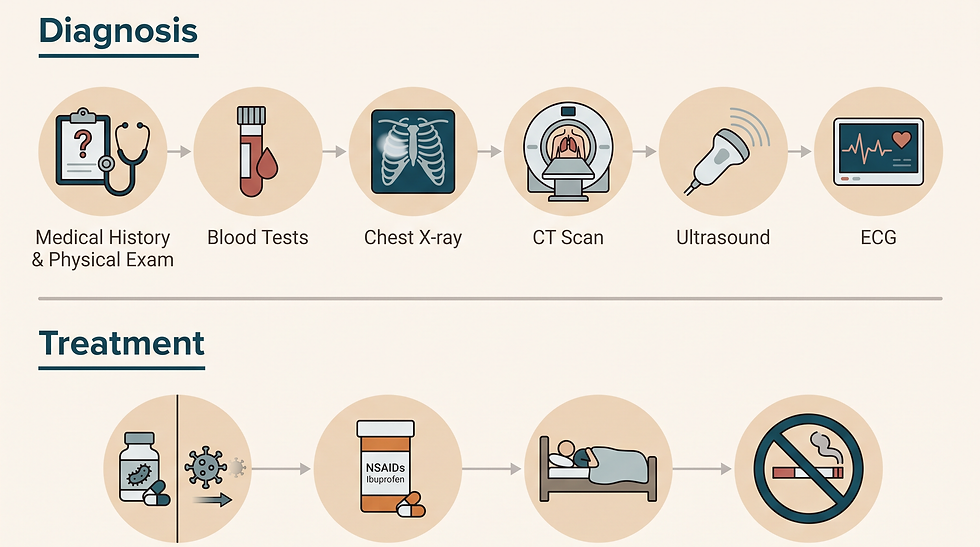
Your healthcare provider will listen to your lungs with a stethoscope for a distinctive rubbing sound. Additional tests may include blood tests to check for infection or autoimmune markers, a chest X-ray to look for fluid or lung abnormalities, a CT scan for more detailed imaging, an ultrasound to detect pleural effusion, an electrocardiogram (ECG) to rule out heart-related causes, thoracentesis (removing fluid with a needle for analysis), or thoracoscopy (a minimally invasive procedure to view the pleura directly).
How Is Pleurisy Treated?
Treatment for pleurisy focuses on managing pain and addressing the underlying cause.
If a bacterial infection is the cause, antibiotics will be prescribed. Pain relief is typically managed with nonsteroidal anti-inflammatory drugs (NSAIDs), such as ibuprofen, which help reduce both pain and inflammation. In some cases, particularly with autoimmune-related pleurisy, corticosteroids may be used.
Lifestyle and Home Remedies
While recovering from pleurisy, resting and avoiding activities that worsen the pain can help. Lying on the affected side may relieve pain for some people, while applying a heating pad may also help. Taking shallow breaths to avoid pain is a natural reaction, but try to breathe as deeply as tolerable to prevent complications like atelectasis.
When to See a Doctor
Seek medical attention if you experience sudden, sharp chest pain, especially if it worsens with breathing. Seek emergency care immediately if you have severe shortness of breath, chest pain accompanied by sweating or nausea, or a rapid heartbeat, as these could indicate a more serious condition, such as a pulmonary embolism or heart attack.
Conclusion
Pleurisy can cause significant discomfort, but with proper diagnosis and treatment of the underlying cause, most people recover fully. If you experience persistent or severe chest pain, it's important to seek medical evaluation to rule out serious conditions and begin appropriate treatment.
Frequently Asked Questions
What is pleurisy?
Pleurisy is inflammation of the pleura, the tissue lining the lungs and chest cavity, causing sharp chest pain that worsens with breathing.
What are the main symptoms of pleurisy?
The main symptom is sharp chest pain that worsens with deep breathing, coughing, or sneezing, sometimes accompanied by shortness of breath or fever.
What causes pleurisy?
Common causes include viral and bacterial infections, autoimmune diseases, pulmonary embolism, and chest trauma.
How is pleurisy treated?
Treatment depends on the cause but typically includes NSAIDs for pain, antibiotics for bacterial infections, and rest.
Is pleurisy contagious?
Pleurisy itself is not contagious, but the underlying viral or bacterial infection causing it may be.
Can pleurisy go away on its own?
Mild cases caused by viral infections often resolve on their own within a few days to weeks with supportive care.
How long does pleurisy pain last?
Pain duration varies depending on the cause but typically improves within a few days to two weeks with appropriate treatment.
When should I worry about chest pain from pleurisy?
Seek emergency care if chest pain is severe, sudden, or accompanied by shortness of breath, sweating, or a rapid heartbeat.
Further Reading
Editorial note: This article is for educational purposes only and does not replace professional medical advice. Always consult a qualified healthcare professional for diagnosis and treatment decisions. Content based on current clinical guidance and published medical sources; reviewed August 2026.
Health information, not medical advice. This article is for general education and is not a substitute for professional diagnosis or treatment. Always consult a qualified healthcare provider about your own health, and seek emergency care for urgent symptoms.
Comments