Plasma Protein Fraction Injection: Uses, Safety, and What to Expect

Updated: 2 days ago
Medically reviewed by Dr. Baraa Alnahhal, MD · Last reviewed: September 2026
Plasma protein fraction is an IV medication given in hospitals and clinics to treat dangerously low blood volume — most often from severe bleeding or severe dehydration. It's not something anyone takes at home. Here's what it does, how it's given, and what patients and families should know before treatment.
What Is Plasma Protein Fraction, and What Is It Used For?
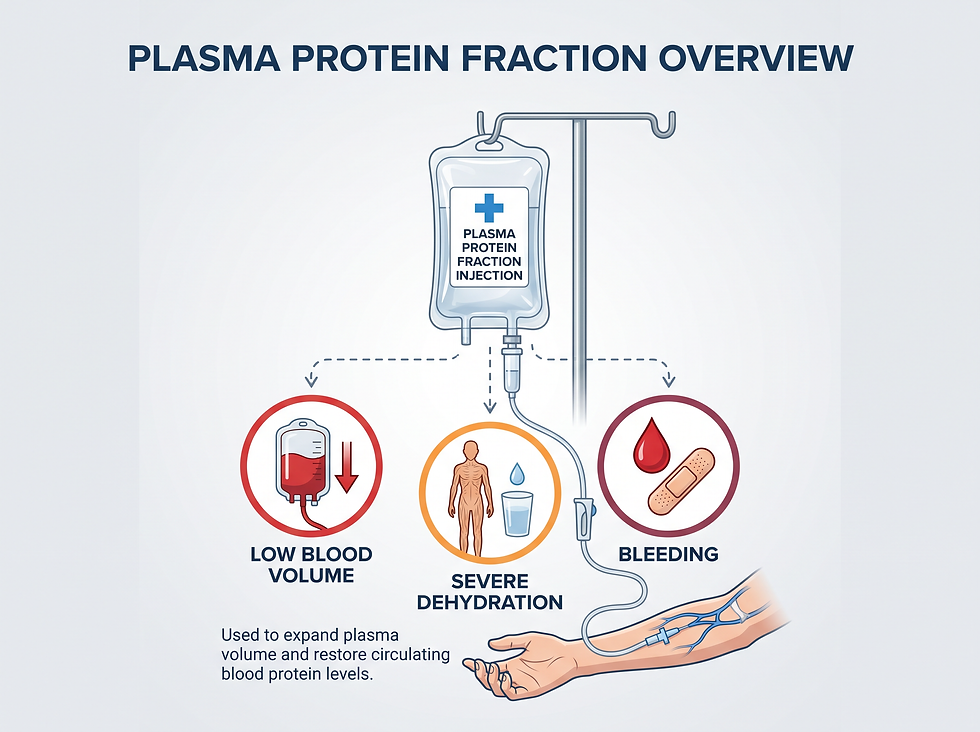
Plasma protein fraction — often known by the brand name Plasmanate — treats a condition called hypovolemia, which is a dangerous drop in blood volume. It can happen after serious bleeding (trauma, surgery) or extreme dehydration. The medication works by increasing the volume of fluid inside the blood vessels, which helps the heart keep circulating blood and delivering oxygen to vital organs.
This is strictly an acute, in-hospital treatment. It's given only through an intravenous (IV) infusion, and a healthcare team calibrates the dose and infusion speed to each patient's needs.
Feature | Description |
Generic name | Plasma protein fraction |
Common brand | Plasmanate |
Primary use | Treating low blood volume (hypovolemia) |
How it's given | Intravenous (IV) infusion in a hospital or clinic |
Who Needs Extra Monitoring
Before starting treatment, the care team reviews a patient's full health history. A few conditions call for closer attention: heart failure and severe anemia (low red blood cell counts) both need careful monitoring, since rapidly increasing blood volume can put extra strain on the heart. It's also important to tell the care team about any allergies to blood products, preservatives, or other medications, along with a full list of current medications, herbs, and supplements.
This medication is made from donated human blood. There is a small risk that it may contain bacteria or viruses, such as hepatitis or HIV. All products are processed to kill most bacteria and viruses.

Monitoring and Possible Side Effects
During the infusion, the care team keeps a close eye on vital signs. The two biggest risks are allergic reactions and sudden changes in blood pressure. Patients are asked to speak up right away about dizziness, blurry vision, or any swelling of the face or throat — these can be early signs of a reaction.
Severity | What to watch for |
Report immediately | Rash, hives, facial swelling, dizziness, fainting, blurry vision |
Common / minor | Back pain, flushing, headache, itching, nausea |
Minor side effects like a headache or mild nausea often don't need any specific treatment, but it's still worth mentioning them if they're bothersome — the team can slow the infusion or otherwise adjust it for comfort.
Pregnant, Breastfeeding, and Pediatric Patients
Children are more sensitive to changes in blood volume, so pediatric dosing is precise and closely supervised. Anyone who is pregnant or breastfeeding should talk through the risks and benefits with their healthcare provider before treatment, so the care plan fits their specific situation.
What to Expect: The Treatment Roadmap
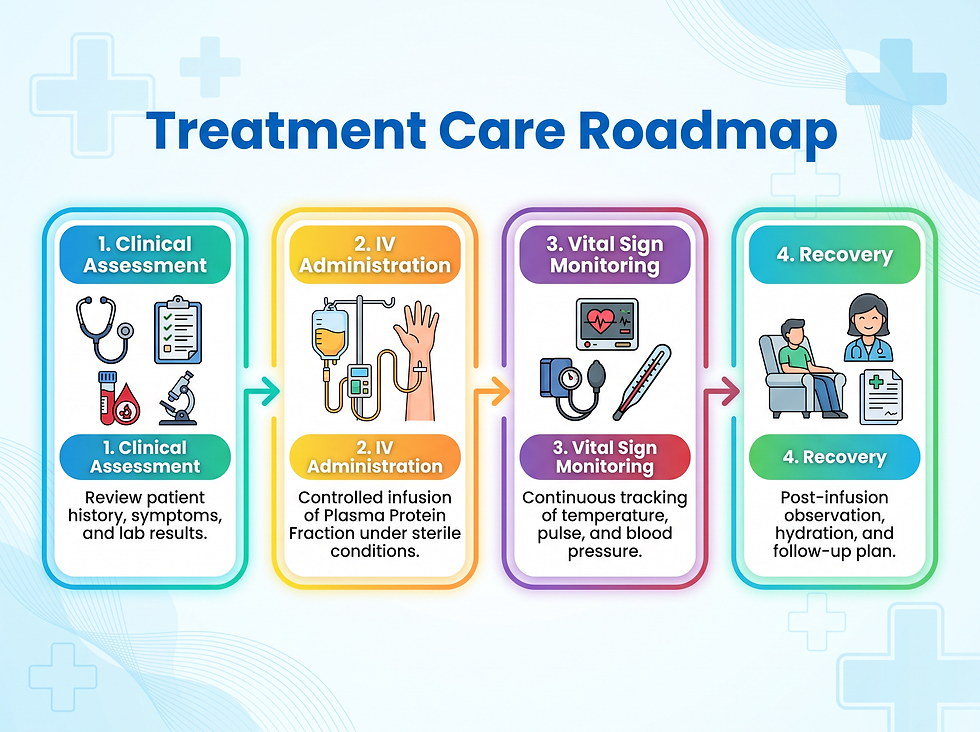
Treatment generally follows four steps: a clinical assessment of history, symptoms, and lab results; a controlled IV infusion of plasma protein fraction under sterile conditions; continuous monitoring of temperature, pulse, and blood pressure throughout; and a period of post-infusion observation, hydration, and follow-up planning before discharge.
Frequently Asked Questions
What is plasma protein fraction injection?
It's an IV medication used to treat low blood volume caused by severe dehydration or bleeding.
How does this medication work?
It increases the volume of fluid in your blood vessels so your heart can pump blood more effectively.
What is the common brand name for this medication?
The most common brand name is Plasmanate.
Where is this medication given?
Only in a hospital or clinic, administered by healthcare professionals.
Is this something I'd take regularly?
No — it's only used as needed for acute, short-term conditions, never as a regular medication.
Can it be stored or used at home?
No. It's stored and managed exclusively by clinical facilities.
What are the main risks?
The primary risks are allergic reactions and drops in blood pressure.
Is there an infection risk from donated blood?
There's a very small risk, but the product goes through processing designed to kill most bacteria and viruses.
What should I tell my doctor before this treatment?
Mention any heart failure, anemia, allergies, or whether you're pregnant or breastfeeding.
What does an allergic reaction look like?
Symptoms include skin rash, itching, hives, and swelling of the face, lips, or throat.
Why might I feel dizzy during treatment?
Dizziness can signal low blood pressure, which should be reported to the care team right away.
Are drug interactions common?
Interactions with other medications are generally not expected.
Can children receive this treatment?
Yes, but it requires precise dosing and close monitoring by a pediatric care team.
What are common minor side effects?
Back pain, flushing, headache, itching, and mild nausea.
How exactly is it delivered?
It's infused directly into a vein through an IV line, with the rate controlled by the care team.
Related Reading on Rinnit
Trusted Sources
This article is for general educational purposes and is not a substitute for professional medical advice, diagnosis, or treatment. Always talk to your doctor or a qualified healthcare provider with any questions about a medical condition or medication.
Comments