Pearly Penile Papules: Symptoms, Causes, and Management

Updated: 2 days ago
Medically reviewed by Dr. Baraa Alnahhal, MD · Last reviewed: September 2026
Quick Answer: What Are Pearly Penile Papules?
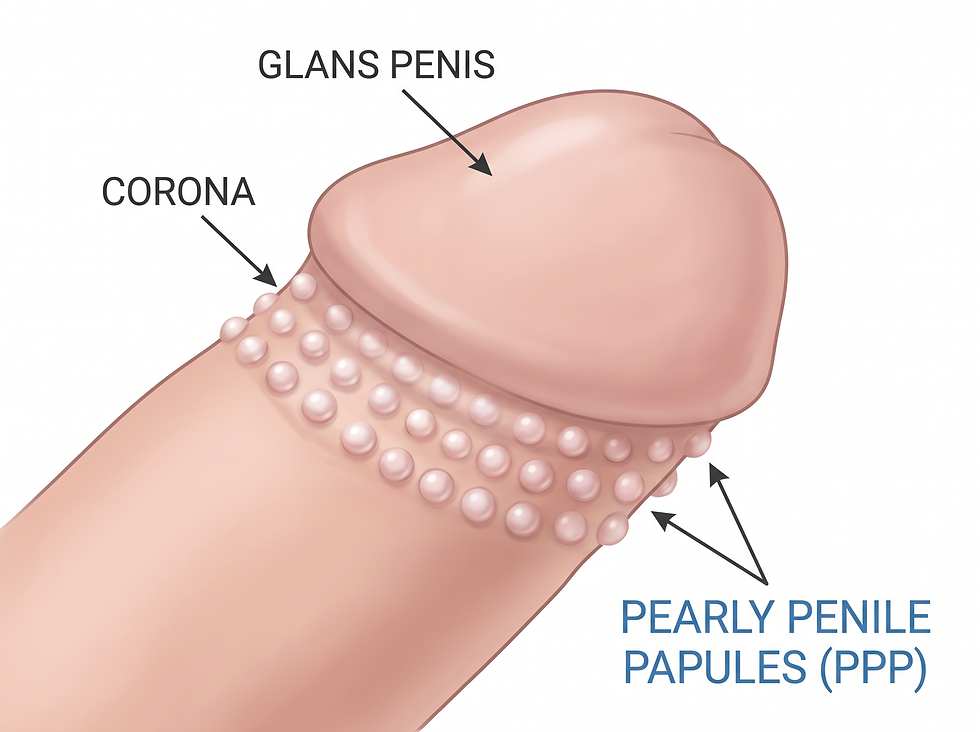
Pearly penile papules are small, rounded, or finger-like growths that typically form in rows around the corona of the glans penis. These bumps, which can appear white, yellow, or pink, are non-contagious and medically harmless. They are often mistaken for STIs, but they are a normal anatomical variation affecting 14% to 48% of males. No treatment is medically necessary unless for cosmetic or psychological reasons.
In short: Pearly penile papules (PPP) are common, benign growths that appear around the head of the penis. Affecting up to 48% of males, these small, pearl-like bumps are not sexually transmitted infections or signs of cancer. While they are harmless and typically require no treatment, they can cause significant psychological distress. For those concerned about their appearance, professional dermatological removal options are available, though home treatments should be strictly avoided.
Overview of Pearly Penile Papules
Pearly penile papules (PPP) are small, benign skin growths that develop near the head of the penis. They are frequently discovered during young adulthood or late puberty. Despite their appearance, which can be alarming to those unfamiliar with them, they do not indicate poor hygiene, infection, or malignancy.
Feature | Details |
Appearance | Small, pearl-like bumps (rounded or finger-like) |
Common Colors | White, yellow, or pink |
Typical Size | 1–2 mm wide, up to 4 mm long |
Prevalence | 14% to 48% of males worldwide |
Nature | Medically harmless and non-contagious |
Symptoms and Identification
The primary sign of PPP is the presence of small, uniform bumps around the glans penis. These growths are typically arranged in one or more rows and are most prominent along the corona (the rounded border at the base of the glans).
Physical Characteristics
Shape: Bumps may be dome-shaped, tapered, or ring-like.
Texture: They are often described as feeling like small pimples or grains of rice.
Location: While they primarily cover the corona, they can sometimes cover the entire head of the penis; they rarely appear on the shaft.
It is important to note that PPP do not cause pain, itching, bleeding, or discharge. If any of these additional symptoms occur, it may indicate a different condition, such as a sexually transmitted infection (STI), and requires medical evaluation.

Causes and Triggers
The exact cause of pearly penile papules remains unknown. They are not triggered by sexual activity, viruses, or bacteria. Some medical experts believe they are vestigial structures—parts of human anatomy that once served a purpose but no longer do.
Key Facts About PPP
Not an STI: PPP cannot be contracted or transmitted through sexual contact.
Not Contagious: You cannot give them to anyone else.
Demographics: They are more common in uncircumcised individuals and are more frequently observed in Black males.
Age Factors: They often emerge during late puberty and may naturally diminish or disappear with age.
Diagnosis and Psychological Impact
Healthcare providers can usually diagnose PPP through a simple physical examination. In some cases, a dermatoscope—a specialized magnifying tool—is used to get a closer look at the skin tissue and rule out other conditions like genital warts or molluscum contagiosum.
While medically harmless, the presence of PPP can lead to significant emotional and psychological distress. Individuals may experience:
Anxiety and Stress: Worrying about the appearance of the penis.
Low Self-Esteem: Feeling embarrassed or self-conscious.
Avoidance: Reluctance to engage in sexual activity or use public locker rooms.

Management and Treatment Options
Because PPP are harmless, treatment is not medically required. For many, a simple confirmation from a doctor that the bumps are normal is sufficient to alleviate concerns.
Professional Removal Methods
If PPP cause significant distress or embarrassment, they can be removed by a healthcare professional using the following techniques:
Cryotherapy: Freezing the papules off.
Laser Therapy: Using targeted light to remove the growths.
Excision: Surgically cutting the papules away.
The Danger of Home Treatments
Healthcare providers strongly advise against attempting to remove PPP at home. Using substances like toothpaste, castor oil, lemon juice, or acids can cause severe skin irritation. Attempting to cut or scrape them off can lead to:
Infection: Introducing bacteria into sensitive tissue.
Scarring: Permanent damage to the skin.
Bleeding and Discoloration: Long-term aesthetic issues.
Conclusion
Pearly penile papules are a common and entirely benign anatomical variation. While their appearance may cause initial alarm, they are not a health risk and do not interfere with sexual function. Understanding that these bumps are normal for a significant portion of the male population is the first step in managing any associated anxiety. If cosmetic removal is desired, it should only be performed by a qualified medical professional.
Frequently Asked Questions
Are pearly penile papules contagious?
No, they are not an infection and cannot be spread to others.
Do I need to see a doctor for PPP?
While not medically necessary, seeing a doctor can provide peace of mind and confirm the diagnosis.
Can I pop pearly penile papules?
No, they are not pimples and cannot be popped; attempting to do so will cause pain and potential infection.
Will they go away on their own?
They may naturally become less noticeable or disappear as you get older.
Is there a cream to remove them?
There are no medically recommended over-the-counter creams for PPP removal.
Do pearly penile papules affect fertility?
No, they have no impact on sperm production or fertility.
Are they related to HPV?
No, PPP are not caused by the human papillomavirus (HPV).
Can women get something similar?
Yes, a similar benign condition called vestibular papillomatosis can occur in women.
Is removal painful?
Professional removal is typically done under local anesthesia to minimize discomfort.
Do they grow back after removal?
In some cases, papules may recur after treatment, though this is not common.
Why are they more common in uncircumcised men?
The exact reason is unknown, but statistics show a higher prevalence in those with foreskin.
Can I have sex if I have PPP?
Yes, it is perfectly safe to have sexual intercourse; the bumps are not an STI.
Are they a sign of cancer?
No, PPP are entirely benign and do not lead to penile cancer.
What do they feel like?
They are typically firm and smooth to the touch, similar to small grains of rice.
How long does professional removal take?
Most procedures are quick, often completed in a single office visit.
Source: Cleveland Clinic, "Pearly Penile Papules," March 6, 2026.
Medical Disclaimer: This information is for educational purposes only and does not constitute medical advice. Consult a healthcare professional for diagnosis and treatment.
Comments