Fordyce Spots: Symptoms, Causes, Diagnosis, Treatment and Outlook — What You Need to Know

Updated: 2 days ago
Medically reviewed by Dr. Baraa Alnahhal, MD · Last reviewed: September 2026
TL;DR
Fordyce spots, also known as Fordyce granules, are common, benign, and non-contagious skin bumps caused by enlarged sebaceous (oil) glands. They typically appear as small, white, yellow, or pale red spots on the lips, inside the cheeks, or in the genital area. While they are a natural part of the skin and affect 70% to 80% of adults, they often become more noticeable during or after puberty due to hormonal changes. Fordyce spots do not require medical treatment for health reasons, but various cosmetic procedures, such as laser therapy or cryotherapy, are available for those who wish to reduce their appearance.
Quick Answer: What are Fordyce Spots?
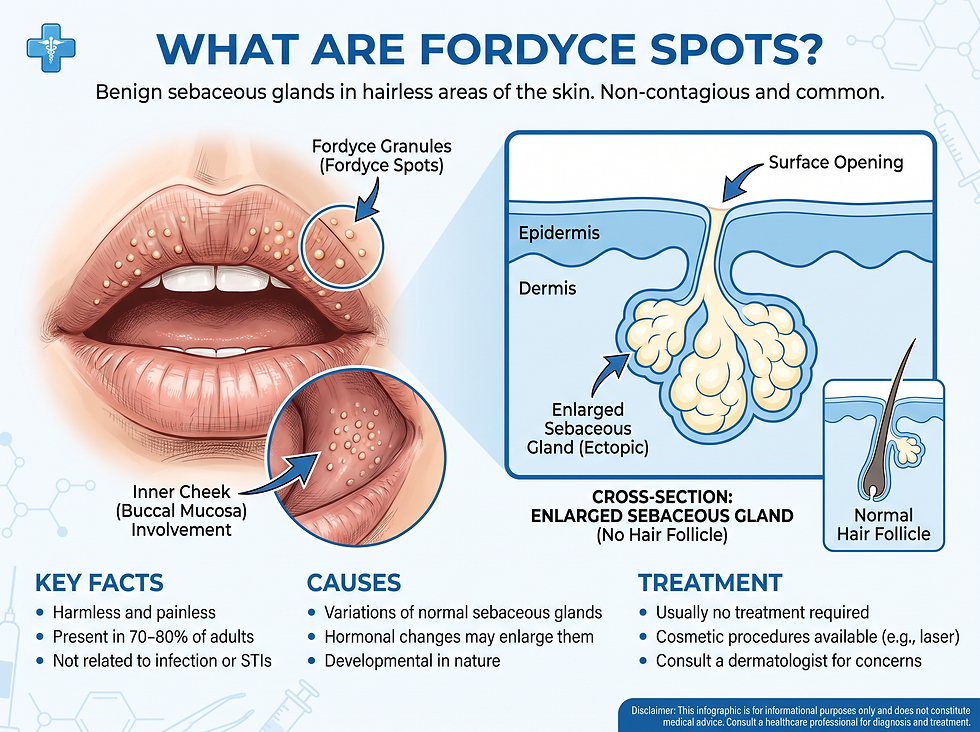
Fordyce spots are enlarged, slightly raised sebaceous glands that occur in hairless areas of the skin. Unlike typical oil glands associated with hair follicles, Fordyce spots are "ectopic," meaning they appear in unusual locations like the vermillion border of the lips or the mucosal surfaces of the genitals. They are named after Dr. John Addison Fordyce, who first described them in 1896. These spots are entirely benign, meaning they are not cancerous and do not lead to other health complications. They are not a sexually transmitted disease (STD) and cannot be spread through skin-to-skin contact. [1]
Appearance and Characteristics
Fordyce spots have distinct physical characteristics that help distinguish them from other skin conditions.
Color: White, yellow, pale red, or skin-colored.
Size: Typically 1 to 3 millimeters (about the size of a sesame seed).
Texture: Slightly raised or flat; easier to see when skin is stretched.
Grouping: Can appear as singular spots or clusters of 50 or more.
Location: Lips (vermillion border), inside cheeks, penis, scrotum, or vulva.
How Common are Fordyce Spots?
Fordyce spots are exceptionally common in the adult population. Research indicates that between 70% and 80% of adults have these granules. While they may be present at birth, they typically remain invisible until puberty, when increased hormone levels cause the sebaceous glands to enlarge and become more prominent. Interestingly, males are approximately twice as likely to develop noticeable Fordyce spots compared to females. [1]
Symptoms and Identification
The primary "symptom" of Fordyce spots is their visual presence. They do not typically cause physical discomfort, though there are rare reports of spots in the genital area becoming itchy or inflamed during sexual activity.
Pain Level: Usually painless.
Contagion: Non-contagious; cannot be spread.
Itchiness: Rare, typically only if irritated.
Visibility: Increases with age and hormonal changes.
Comparison with Other Conditions
Because Fordyce spots can appear on the lips and genitals, they are frequently mistaken for more serious conditions like herpes or genital warts. Understanding the differences is crucial for peace of mind and proper care.
Cause: Fordyce Spots: Enlarged oil glands; Herpes (HSV): Viral infection (HSV-1/2); Genital Warts (HPV): Viral infection (HPV)
Appearance: Fordyce Spots: Small, painless bumps; Herpes (HSV): Painful blisters/sores; Genital Warts (HPV): Fleshy, cauliflower-like
Contagious? Fordyce Spots: No; Herpes (HSV): Yes, highly; Genital Warts (HPV): Yes, highly
Treatment: Fordyce Spots: Optional (Cosmetic); Herpes (HSV): Antiviral medication; Genital Warts (HPV): Removal/Vaccination

Causes and Development
The exact reason why some individuals have more prominent Fordyce spots than others is not fully understood, but the underlying mechanism is well-documented.
Hormonal Influence: Puberty triggers the enlargement of sebaceous glands, making existing but invisible spots become noticeable.
Congenital Presence: Some researchers believe the glands are present at birth but simply lack the volume to be seen early in life.
Skin Type: Individuals with oily skin may have more prominent sebaceous activity, potentially making spots more visible. [1]
Diagnosis of Fordyce Spots
In most cases, a healthcare provider can diagnose Fordyce spots through a simple visual examination. Because they have a very characteristic appearance, advanced testing is rarely needed. However, if the spots appear suddenly or are accompanied by pain or discharge, a provider may perform a skin biopsy or order tests to rule out STDs like herpes or syphilis. [1]
Treatment and Management Options
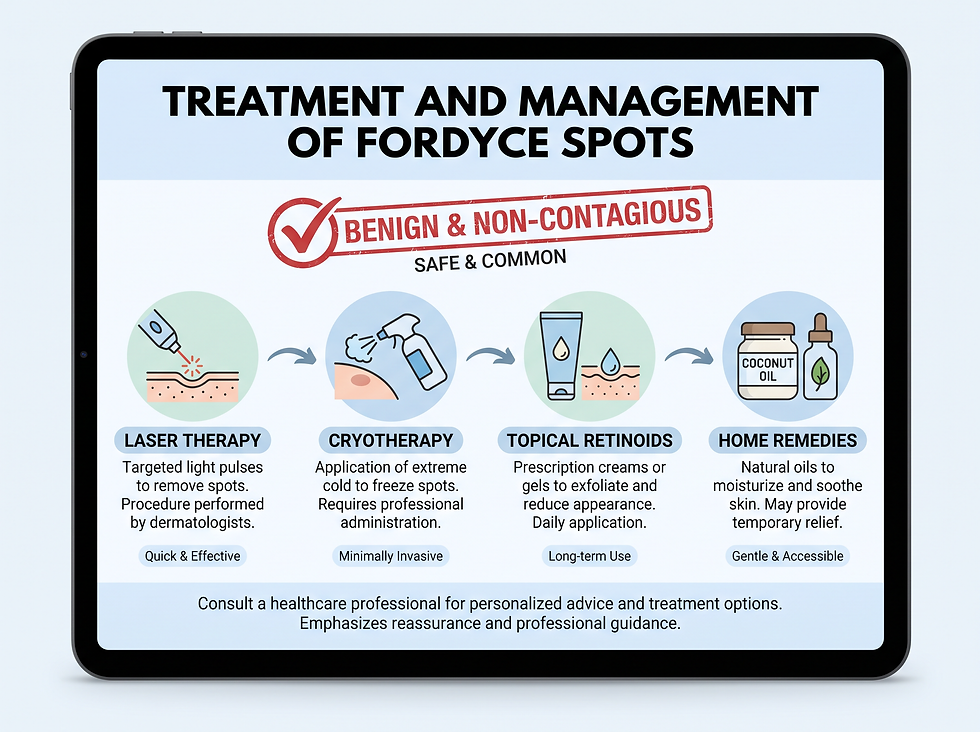
Since Fordyce spots are a normal anatomical variation, treatment is not medically necessary. However, if the spots cause cosmetic distress or self-consciousness, several professional and home-based options can reduce their appearance.
Professional Medical Procedures
Dermatologists offer several effective methods for shrinking or removing Fordyce granules.
Laser Therapy: Method: CO2 or pulsed dye lasers to remove layers; Healing Time: 5 to 21 days
Cryotherapy: Method: Freezing the tissue with liquid nitrogen; Healing Time: ~3 days
Electrodessication: Method: Burning away spots with an electric needle; Healing Time: 3 to 5 days
Micro-punch Surgery: Method: "Punching" out the tissue with a tool; Healing Time: Up to 1 month
Topical Retinoids: Method: Creams like Retin-A® to reduce size; Healing Time: 2 to 6 weeks
Home Remedies and Self-Care
While professional treatments are more effective, some individuals use home remedies to manage skin oiliness and minimize the visibility of spots.
Apple Cider Vinegar: Acts as an astringent to shrink pores (dilute with water).
Natural Oils: Argan and jojoba oils contain antioxidants that may improve skin texture.
Coconut Oil: Helps moisturize dry skin, which can sometimes trigger overactive oil production.
Proper Hygiene: Washing with mild cleansers helps prevent the glands from becoming clogged or irritated.
Outlook and Prognosis
The outlook for individuals with Fordyce spots is excellent. They are a benign condition that does not impact physical health. While they may persist for years, they often fade or become less noticeable as a person ages and hormone levels stabilize. If you choose to undergo removal procedures, most results are successful, though some spots may eventually return. [1]
When to See a Healthcare Provider
While Fordyce spots are harmless, you should consult a professional if you notice changes in your skin that cause concern.
Spots appear suddenly on genitals. Reason for Concern: Rule out STIs/STDs.
Bumps are painful, itchy, or bleeding. Reason for Concern: Possible infection or irritation.
You experience cosmetic distress. Reason for Concern: Discuss professional removal.
Bumps change shape or color. Reason for Concern: Rule out skin cancer (Basal Cell).
A Note from the Care Team
"Fordyce spots occur on your body naturally. Though they are harmless, don’t hesitate to contact your healthcare provider if you think something is wrong with your skin or if you have any skin-related questions. Even if you’re concerned for cosmetic reasons, you should still take care of your skin and be aware of any changes. You know your body best, but your healthcare provider can properly diagnose any signs or symptoms and offer the best treatment options." — Cleveland Clinic [1]
FAQ: Frequently Asked Questions
Are Fordyce spots an STD?
No. Fordyce spots are enlarged oil glands and are not caused by any virus or bacteria. They are not sexually transmitted and are a normal part of human anatomy for the majority of adults. [1]
Can I squeeze Fordyce spots?
No. Squeezing Fordyce spots will not make them go away. While you might express a small amount of oily sebum, you are much more likely to cause painful inflammation, irritation, or a secondary infection. [1]
Do Fordyce spots go away on their own?
In many cases, Fordyce spots become less noticeable over time as you age. However, they are a permanent part of the skin for most people unless professionally treated. [1]
Can Fordyce spots appear on the tongue?
While Fordyce spots are most common on the lips and genitals, they can occasionally appear on other mucosal surfaces, including the inside of the cheeks and sometimes the gums. [1]
Is apple cider vinegar safe for Fordyce spots?
Apple cider vinegar is generally safe when diluted (1 tablespoon per 1/4 cup of water), but it can cause irritation on sensitive skin. Always test a small area first and consult a provider before regular use. [1]
Why do I have so many Fordyce spots?
The number and visibility of Fordyce spots vary by individual. Factors like genetics, hormone levels, and skin oiliness all play a role in how prominent the sebaceous glands appear. [1]
Can Fordyce spots turn into cancer?
No. Fordyce spots are benign sebaceous glands. They do not have the potential to become cancerous (malignant). [1]
Are Fordyce spots more common in men?
Yes. Studies suggest that males develop noticeable Fordyce spots about twice as often as females, likely due to differences in hormonal activity. [1]
How long does laser treatment take to heal?
Depending on the type of laser used (CO2 vs. pulsed dye), healing can take anywhere from 5 to 21 days. Your dermatologist will provide specific aftercare instructions. [1]
Can I use Retin-A for Fordyce spots?
Topical retinoids like Retin-A® can help reduce the appearance of Fordyce spots over several weeks, but they should only be used under the guidance of a healthcare provider, especially in sensitive areas. [1]
Do Fordyce spots itch?
Typically, no. Fordyce spots are painless and non-itchy. If you experience itching, it may be due to localized irritation or a different underlying skin condition. [1]
Can Fordyce spots be mistaken for milia?
Yes. Milia are small, white cysts filled with keratin, while Fordyce spots are oil glands. A dermatologist can easily distinguish between the two during an exam. [1]
Are Fordyce spots contagious through kissing?
No. Since they are not an infection, Fordyce spots cannot be spread through kissing, oral contact, or any form of skin-to-skin touch. [1]
Can Fordyce spots appear on the shaft of the penis?
Yes. Fordyce spots are very common on the shaft of the penis, the scrotum, and the vulva. This is a normal anatomical finding and not a cause for medical alarm. [1]
What is the difference between Fordyce spots and sebaceous hyperplasia?
Sebaceous hyperplasia also involves enlarged oil glands but typically appears on the face (forehead/nose) as yellowish, indented bumps, whereas Fordyce spots are smaller and found on mucosal surfaces. [1]
References
Cleveland Clinic. Fordyce Spots. (2022, September 7). https://my.clevelandclinic.org/health/diseases/24140-fordyce-spots
American Academy of Dermatology (AAD). Sebaceous Glands and Skin Conditions.
Journal of Medical Case Reports. Clinical presentation of Fordyce granules.
Dermatology Times. Treatment options for Fordyce spots.
Medical Disclaimer: The information provided in this article is for educational purposes only and should not be considered medical advice. If you are concerned about new bumps on your skin or genitals, consult a qualified healthcare provider for an accurate diagnosis and personalized treatment plan.
Comments