Patent Foramen Ovale (PFO): Symptoms, Causes, and Treatment

Updated: 2 days ago
Medically reviewed by Dr. Baraa Alnahhal, MD · Last reviewed: September 2026
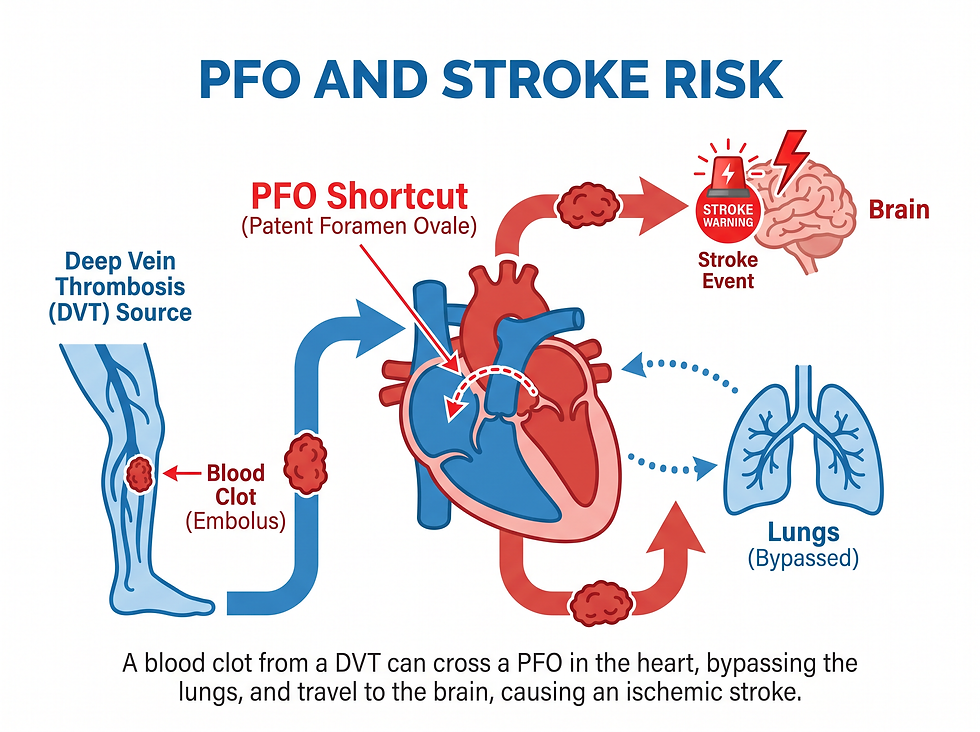
TL;DR: A patent foramen ovale (PFO) is a small opening between the heart's upper chambers that typically closes after birth. While up to 25% of adults have this condition, most experience no symptoms. However, a PFO can allow blood clots to bypass the lungs and travel to the brain, increasing the risk of cryptogenic stroke. Management ranges from monitoring and medication to minimally invasive catheter-based closure.
Quick Answer: What Is a Patent Foramen Ovale?
A patent foramen ovale (PFO) is a lingering flap or opening between the right and left upper chambers (atria) of the heart. Originally a necessary shortcut for fetal circulation, this opening usually seals by age three. In approximately one in four adults, it remains "patent" or open. While often harmless, a PFO can provide a pathway for blood clots to reach the brain, potentially causing unexplained strokes.
Overview of Patent Foramen Ovale
A patent foramen ovale (PFO) represents a remnant of fetal circulation. Before birth, the foramen ovale allows oxygen-rich blood from the placenta to bypass the non-functional fetal lungs by flowing directly from the right atrium to the left atrium. Once a newborn begins breathing, the change in pressure typically forces this opening to close. When the opening fails to seal by the third birthday, it is classified as a PFO.
Feature | Details |
Anatomical Location | Interatrial septum (between the right and left atria) |
Prevalence | Estimated in up to 25% of the adult population |
Primary Risk | Blood clots bypassing the lungs and reaching the brain |
Typical Status | Asymptomatic and requires no treatment in most cases |

Symptoms and Clinical Signs
In the vast majority of cases, a PFO does not produce noticeable symptoms. The opening is usually too small to cause significant hemodynamic changes. However, if the leak is substantial or if complications arise, individuals may experience specific issues related to blood flow and oxygenation.
Common signs and associated conditions include:
Unexplained Stroke: Often the first sign, especially in individuals under age 60.
Migraines: A potential link exists between PFO and migraine-like headaches.
Shortness of Breath: Specifically platypnea-orthodeoxia syndrome, where breathlessness occurs while sitting or standing.
Low Blood Oxygen: Hypoxemia resulting from blood bypassing the lungs.
Ischemia: Reduced blood flow to limbs or vital organs like the kidneys.
Causes and Risk Factors
The exact reason why the foramen ovale fails to close in some individuals remains unknown, though research suggests a possible genetic component. While anyone can have a PFO, certain groups are more likely to be diagnosed due to the nature of their activities or medical history.
Who Is at Higher Risk?
Underwater Divers: Fast pressure drops can cause nitrogen bubbles to form; a PFO allows these bubbles to bypass the lungs and enter the arterial circulation (barotrauma).
Mountain Climbers: A PFO may increase the likelihood of developing high-altitude pulmonary edema (HAPE).
Stroke Survivors: Up to 50% of people under 60 who experience a cryptogenic (unexplained) stroke are found to have a PFO.
Diagnosis and Evaluation
Healthcare providers typically discover a PFO while investigating other medical events, such as a stroke or heart attack. Because the condition is often silent, specialized imaging is required for detection.
Diagnostic Tool | Description |
Transthoracic Echocardiogram (TTE) | An external ultrasound using sound waves to visualize heart structures. |
Transesophageal Echocardiogram (TEE) | A detailed internal ultrasound performed via a probe in the esophagus. |
Bubble Test | Injecting a saline solution to track if bubbles cross between the atria. |
Transcranial Doppler (TCD) | Ultrasound used to detect bubbles reaching the brain's circulation. |
Treatment and Management Options
Most individuals with a PFO do not require intervention. Treatment is typically reserved for those who have experienced a stroke or are at high risk for blood clots.
Nonsurgical Management
Anticoagulants: Blood-thinning medications such as aspirin, warfarin, or clopidogrel to prevent clot formation.
Monitoring: Regular follow-ups to ensure the condition remains asymptomatic.
Surgical and Procedural Interventions
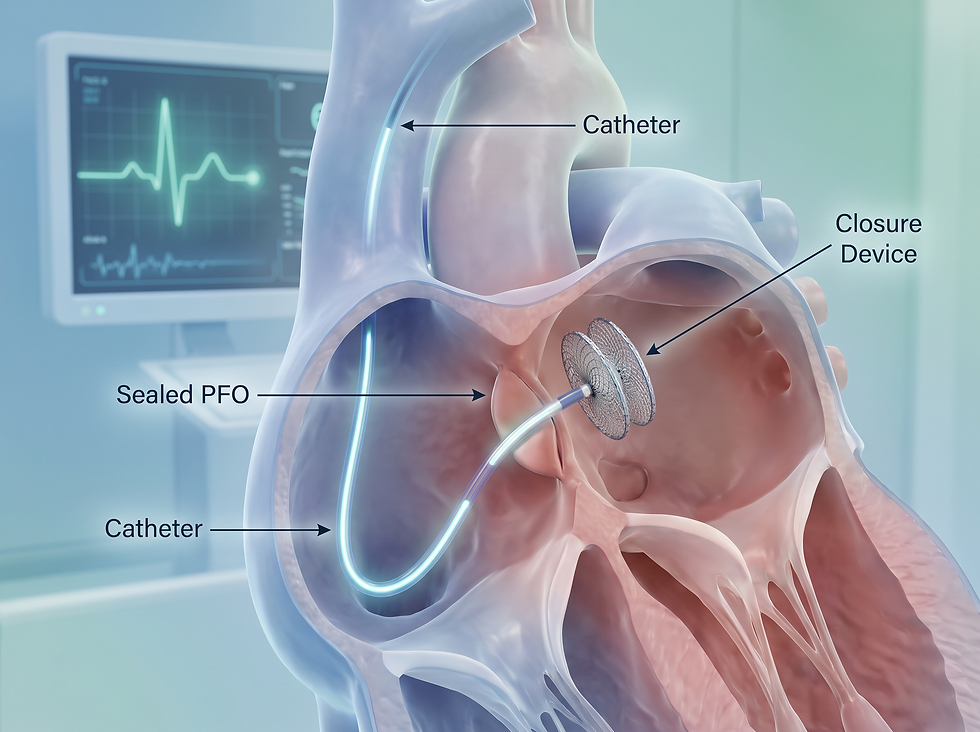
Endovascular Closure: A minimally invasive procedure where a catheter threads a closure device into the heart to seal the opening.
Heart Surgery: In cases where catheter-based methods are unsuitable, minimally invasive or open-heart surgery may be used to repair the flap.
Recovery and Prevention
Recovery timelines depend on the chosen treatment. Patients undergoing endovascular closure often return to normal activities within a few days, though they may require short-term blood-thinning medication.
Prevention focuses on managing known risk factors for blood clots, such as deep vein thrombosis (DVT). For divers and climbers, following safety protocols regarding pressure changes and altitude is essential to minimize the risk of PFO-related complications.
Conclusion
A patent foramen ovale is a common anatomical variation that remains asymptomatic for most people. While the "shortcut" in the heart usually closes in early childhood, its persistence only becomes a medical concern if it facilitates the passage of blood clots to vital organs. With modern diagnostic tools and minimally invasive closure techniques, the outlook for managing PFO is highly positive.
Frequently Asked Questions
1. Is a PFO a birth defect? It is considered a remnant of fetal circulation rather than a traditional defect, as every human is born with the opening.
2. Can a PFO close on its own in adulthood? No, if it has not closed by age three, it is unlikely to seal without medical intervention.
3. What is the difference between PFO and ASD? A PFO is a flap-like opening that can open under pressure, while an Atrial Septal Defect (ASD) is a permanent hole where heart tissue is missing.
4. Can I exercise with a PFO? Most people can exercise normally, but those with symptoms or a history of stroke should consult their cardiologist.
5. How common is PFO? Approximately 25% of all adults have a patent foramen ovale.
6. Does a PFO cause heart murmurs? In some cases, a provider may hear a murmur, but many PFOs are silent during a standard physical exam.
7. Is PFO surgery dangerous? Minimally invasive closure is generally considered safe, with a low risk of complications.
8. Can a PFO cause fatigue? While rare, a large PFO that significantly lowers blood oxygen levels can lead to fatigue and shortness of breath.
9. What is a "bubble test"? It is a diagnostic procedure where agitated saline is injected to see if bubbles cross from the right to the left side of the heart.
10. Do I need blood thinners forever? Not necessarily; medication needs are determined by your stroke risk and whether you have had a closure procedure.
11. Can PFO be genetic? Research suggests there may be a genetic component to why the opening fails to seal.
12. What is a cryptogenic stroke? It is a stroke with no identifiable cause, which often leads to the discovery of an underlying PFO.
13. Are there restrictions for divers with PFO? Divers should follow conservative dive profiles and consult a specialist in dive medicine.
14. What are the symptoms of a PFO-related stroke? Symptoms are the same as any stroke, including sudden weakness, facial drooping, and speech difficulties.
15. How long is recovery after a PFO closure? Most patients can return to light activity within a few days and full activity within a few weeks.
Medical disclaimer: This article is for informational purposes only and does not constitute medical advice. Consult a healthcare professional for diagnosis and treatment.
Source: Cleveland Clinic, "Patent Foramen Ovale (PFO)," July 10, 2025.
Comments