Partial Knee Replacement

Updated: 3 days ago
Medically reviewed by Dr. Baraa Alnahhal, MD · Last reviewed: October 2026
Partial knee replacement is a targeted operation that replaces only the damaged sections of the knee joint with metal and plastic implants. Unlike a total replacement, it preserves healthy bone and ligaments, which often means a faster recovery and a more natural-feeling joint. It is mainly used for osteoarthritis that is confined to one or two compartments of the knee, and most people can go home the same day [1].
Quick Answer: What is partial knee replacement?
Partial knee replacement is a surgery that replaces only the damaged sections of the knee joint with artificial implants, most often for osteoarthritis limited to one or two of the knee's three compartments. It typically takes about one hour, and most people resume usual activities within six weeks. Compared with total knee replacement, recovery is quicker. [1] [4]
What the research says
Partial and total replacement gave similar results at 5 years in a large UK trial. The TOPKAT trial randomly assigned 528 patients with isolated medial compartment osteoarthritis at 27 UK sites to partial or total knee replacement. At 5 years there was no difference in Oxford Knee Score (mean difference 1.04; 95% CI, −0.42 to 2.50), and rates of reoperation and complications were similar. Partial replacement was less expensive (an average of £910 less) and gave 0.240 additional quality-adjusted life-years, and the authors suggest it should be considered the first choice for late-stage isolated medial compartment osteoarthritis (Beard et al., Lancet, 2019).
Partial replacement was linked to fewer complications and shorter hospital stays. A meta-analysis of 13 publications from randomized trials (683 partial and 683 total knee replacements) found fewer complications after partial replacement (relative risk 0.59; 95% CI, 0.45 to 0.78) and shorter hospital stays. There were no significant differences in range of motion, revision, failure, operation time, or patient satisfaction. Knee scores favored partial replacement, but the differences were below the minimal clinically important difference, and all but one study reported outcomes within 5 years (Xia et al., Chin Med J, 2025).
Many people are less aware of a partial knee replacement. A meta-analysis of cohort studies compared scores on the Forgotten Joint Score, which measures how little a person is aware of their artificial joint. At 2 years the mean score was 82.35 after partial replacement and 74.05 after total replacement (mean difference 7.65; 95% CI, 3.72 to 11.57; 5 studies, 930 patients), although results differed considerably between studies (Tripathy et al., Knee Surg Sports Traumatol Arthrosc, 2021).
Research summaries are based on article abstracts retrieved from PubMed.
What are the three compartments of the knee in partial knee replacement?
Knee Compartment | Location and Function |
Medial Compartment | The inside section of the knee joint. |
Lateral Compartment | The outside section of the knee joint. |
Patellofemoral Compartment | The area located directly under the kneecap (patella). |
Who is a candidate for partial knee replacement?
The primary reason for undergoing a partial knee replacement is severe osteoarthritis that has not responded to nonsurgical treatments. Healthcare providers typically recommend this surgery when patients have severe joint pain, persistent stiffness, swelling, and limited mobility that interferes with daily life [1]. Because the procedure is targeted, it is only suitable for people whose joint damage is localized rather than widespread. Total knee replacements are more common because most people with knee arthritis have it in all three compartments at once [1].
What happens during partial knee replacement surgery?
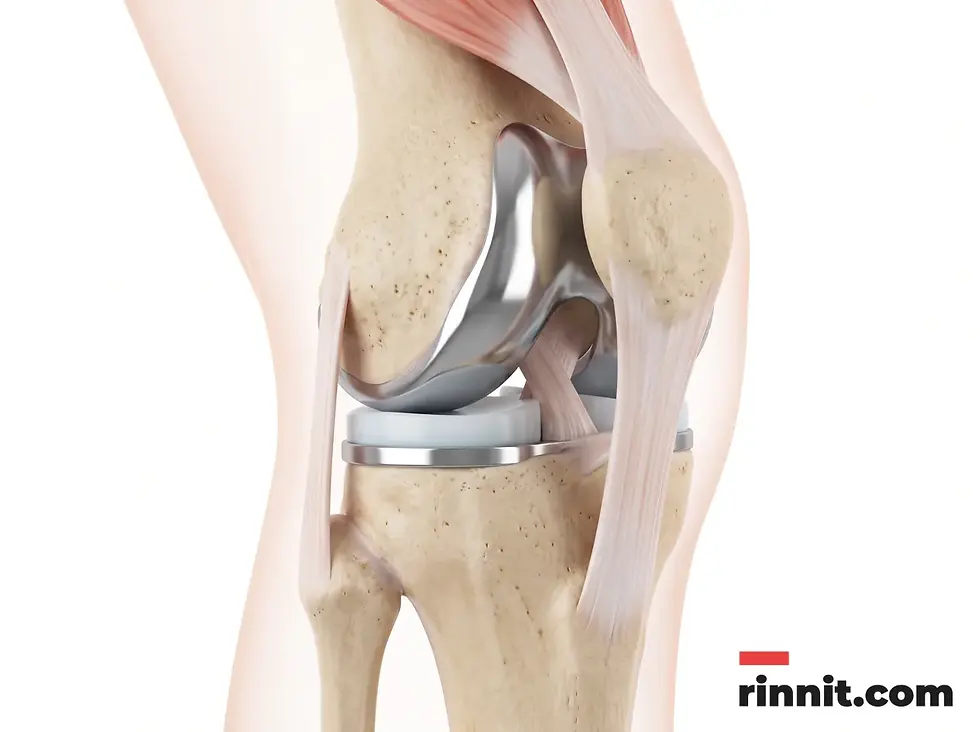
During the operation, which usually lasts about one hour, the surgeon removes only the damaged cartilage and bone from the affected compartments. These are replaced with durable prosthetic pieces made of metal and plastic. A high-grade plastic spacer is also inserted to recreate the smooth cushioning effect of natural cartilage. Most procedures are performed under general or regional anesthesia, so the patient remains comfortable throughout [1].
Procedure Phase | Key Activities and Expectations |
Preparation | Physical exams, blood tests, and imaging like X-rays to map the damage. |
Surgery | Removal of damaged tissue and precise placement of the prosthetic implants. |
Immediate Recovery | Monitoring vital signs in a recovery room; most patients go home the same day. |
Short-term Healing | Initial six-week period focused on wound healing and early mobility. |
What do recovery and rehabilitation after partial knee replacement involve?
Recovery from a partial knee replacement is generally faster than from a total replacement, but it still requires dedicated effort. Patients are encouraged to start moving and walking with assistance almost immediately after surgery. A customized recovery plan typically includes icing the joint to manage swelling, elevating the leg, and attending regular physical therapy sessions to regain strength and range of motion [1].

Consistency in performing home exercises is critical for a successful outcome. Most people can resume their normal daily activities within approximately six weeks, although full healing may take several months. Pain management during this time often combines prescription medication with over-the-counter options such as acetaminophen or NSAIDs, as directed by the surgical team [1].
What are the long-term outlook and risks of partial knee replacement?
For many patients, a partial knee replacement provides relief for 10 years or longer [1]. While the surgery is safe and effective, potential risks include blood clots, infection, nerve damage, and the prosthetic components loosening or wearing down over time. Some people still have knee pain after surgery. In some cases, if arthritis develops in the remaining natural compartments of the knee, a transition to a total knee replacement may be necessary in the future [1].

Conclusion
Partial knee replacement is a highly effective surgical option for people with localized knee arthritis. By targeting only the damaged areas, it offers a path to less pain and better mobility with a shorter recovery than more extensive surgery. With proper preparation and a commitment to rehabilitation, many patients can regain an active lifestyle for years to come [1] [2].
When should you see a doctor about partial knee replacement?
If chronic knee pain is limiting your mobility and conservative treatments have failed, speak with an orthopedic specialist. A thorough evaluation can determine whether a partial knee replacement is the right solution to help you regain your independence. After surgery, call your surgeon right away for chest pain, shortness of breath, a fever above 101°F (38.3°C), bleeding, signs of infection at the incision, new or worsening calf, ankle, or foot pain, or severe pain that does not improve with medication [1].
Frequently Asked Questions
What is the main advantage of a partial knee replacement over a total one?
The primary advantages include a faster recovery time, less post-operative pain, and a joint that often feels more natural because healthy bone and ligaments are preserved.
How long does the surgery take?
A typical partial knee replacement surgery takes approximately one hour to complete.
Can I go home the same day as my surgery?
Yes, most patients are able to return home on the same day as their partial knee replacement procedure. Your care team will let you know if you need to stay overnight.
What is the most common reason for this surgery?
Osteoarthritis is the most common condition treated with partial knee replacement, specifically when it is limited to one or two compartments of the knee.
How long will the prosthetic joint last?
Most partial knee replacements are durable and last for 10 years or longer for the majority of patients.
When can I return to normal activities?
Most people can resume their usual daily activities approximately six weeks after the surgery, though full recovery takes longer.
Is physical therapy necessary?
Yes, working with a physical therapist is a crucial part of recovery to help you regain strength, flexibility, and safe movement.
What are the three compartments of the knee?
The three compartments are the medial (inside), lateral (outside), and patellofemoral (under the kneecap) sections.
What are the risks of the procedure?
Potential but rare risks include blood clots, infection, nerve damage, and the prosthetic pieces loosening or wearing down.
Will I need a total knee replacement later?
Some patients may eventually need a total knee replacement if arthritis develops in the compartments that were not replaced during the initial surgery.
Related Resources
External resource for deeper reading:
Related Reading
Knee X-Ray: Why It's Done, What It Shows and What to Expect explains the X-ray used for knee injuries, pain and arthritis.
References
Cleveland Clinic. Partial Knee Replacement. Cleveland Clinic Health Library. Last updated November 3, 2023. https://my.clevelandclinic.org/health/treatments/14599--partial-knee-replacement
Beard DJ, Davies LJ, Cook JA, et al. The clinical and cost-effectiveness of total versus partial knee replacement in patients with medial compartment osteoarthritis (TOPKAT): 5-year outcomes of a randomised controlled trial. Lancet. 2019;394(10200):746-756. PMID: 31326135. DOI: 10.1016/S0140-6736(19)31281-4
Xia K, Min L, Xie W, et al. Is unicompartmental knee arthroplasty a better choice than total knee arthroplasty for unicompartmental osteoarthritis? A systematic review and meta-analysis of randomized controlled trials. Chin Med J (Engl). 2025;138(13):1568-1577. PMID: 38997246. DOI: 10.1097/CM9.0000000000003193
Tripathy SK, Varghese P, Srinivasan A, et al. Joint awareness after unicompartmental knee arthroplasty and total knee arthroplasty: a systematic review and meta-analysis of cohort studies. Knee Surg Sports Traumatol Arthrosc. 2021;29(10):3478-3487. PMID: 33078218. DOI: 10.1007/s00167-020-06327-4
Medical disclaimer
This article is for informational purposes only and is not a substitute for professional medical advice, diagnosis, or treatment. Always seek the advice of your physician or other qualified health provider with any questions you may have about a medical condition.



Comments