Paroxysmal A-fib: Symptoms, Causes, and Treatment

Updated: 2 days ago
Medically reviewed by Dr. Baraa Alnahhal, MD · Last reviewed: September 2026
TL;DR: Paroxysmal atrial fibrillation (AFib) involves occasional episodes of a chaotic heart rhythm that last fewer than seven days. While these episodes are temporary, they increase stroke risk and can progress to more persistent forms of AFib. Early intervention through lifestyle changes, medications, or procedures like catheter ablation is essential to manage symptoms and protect long-term heart health.
Quick Answer: What Is Paroxysmal A-fib?
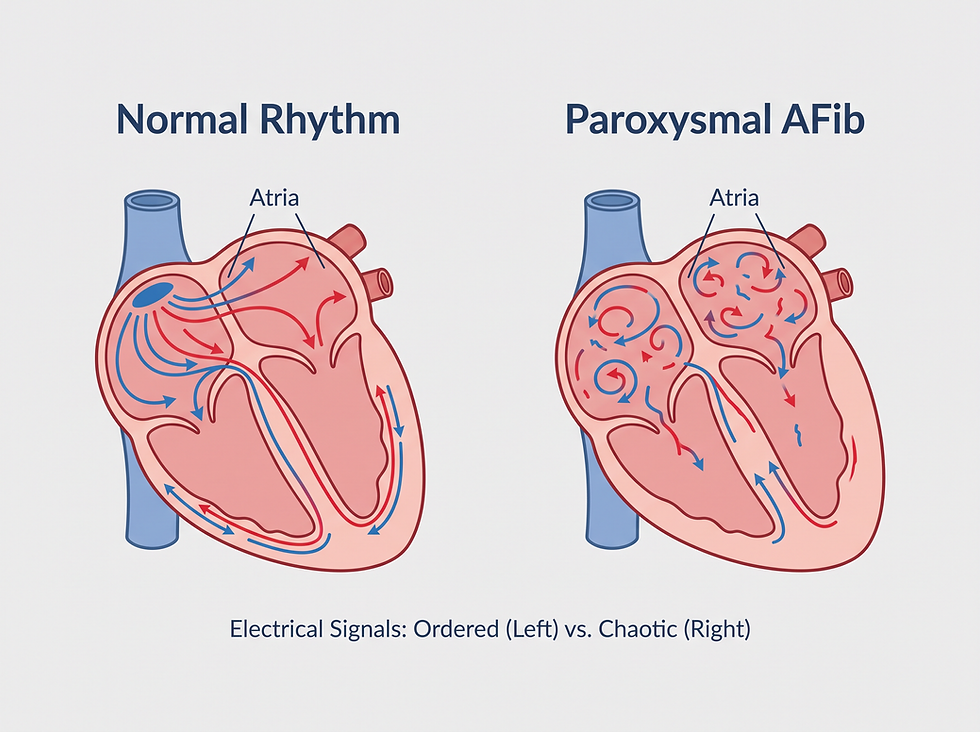
Paroxysmal A-fib is an early stage of atrial fibrillation characterized by sudden, chaotic heart rhythm episodes that resolve within seven days. These episodes may occur frequently or rarely and can be triggered by underlying heart conditions or lifestyle factors. Because the irregular rhythm increases the risk of blood clots and stroke, early diagnosis is critical. Treatment focuses on managing symptoms, preventing progression to persistent AFib, and reducing complications through medication or specialized cardiac procedures.
Understanding Paroxysmal Atrial Fibrillation
Paroxysmal atrial fibrillation is a stage of a heart rhythm disorder where the upper chambers of the heart beat irregularly. Unlike more advanced stages, paroxysmal episodes are temporary and stop on their own or with medical help within a week.
Feature | Paroxysmal AFib Detail |
Duration | Lasts fewer than seven days |
Resolution | Stops spontaneously or with intervention |
Stage | Early stage of atrial fibrillation |
Primary Risk | Increased risk of blood clots and stroke |
Symptoms and Warning Signs
Many individuals with paroxysmal AFib experience no symptoms at all, making the condition difficult to detect without medical monitoring. When symptoms do occur, they can range from mild fluttering to severe discomfort that impacts daily quality of life.
Common symptoms include:
Heart Palpitations: The most frequent sign, often described as a racing or fluttering heart.
Shortness of Breath: Difficulty breathing during activity or while at rest.
Extreme Fatigue: A feeling of intense tiredness that is not explained by activity.
Lightheadedness: Fainting or feeling as though you might lose consciousness.
Chest Discomfort: A sensation of tightness or pressure in the chest area.
Causes and Risk Factors
Paroxysmal AFib is not a separate disease but a phase of atrial fibrillation. It is caused by changes in the heart's electrical system, often resulting from other underlying health issues.
Risk Factor | Impact on AFib |
Heart Disease | Coronary artery or valve disease alters electrical pathways. |
Blood Pressure | Hypertension puts strain on the heart chambers. |
Lifestyle | Excessive alcohol use (more than 3 drinks/week) triggers episodes. |
Other Conditions | Diabetes, obesity, and sleep apnea increase progression risk. |

Diagnosis and Medical Testing
Because paroxysmal episodes come and go, capturing them on a standard test can be challenging. Healthcare providers often compare the process to trying to photograph lightning: the event may be over before the equipment is ready.
Diagnostic tools include:
Electrocardiogram (EKG/ECG): A 10-second recording performed in a clinic.
Ambulatory Monitors: Wearable devices, such as Holter monitors, that record heart activity for days or weeks.
Wearable Technology: Consumer devices that check for abnormal rhythms during daily routines.
Treatment and Management Strategies
The primary goal of treatment is to prevent paroxysmal AFib from progressing to persistent AFib, where episodes last longer and become harder to treat.
Habit and Lifestyle Adjustments
Managing weight, controlling diabetes, and treating sleep apnea are foundational to slowing progression. Reducing alcohol intake to three or fewer drinks per week, or avoiding it entirely, is highly recommended.
Medications and Procedures
Blood Thinners: Prescribed to reduce the risk of stroke by preventing clot formation.
Rate and Rhythm Control: Medications that help the heart maintain a normal beat.
Catheter Ablation: A procedure that can slow progression and improve symptoms.
Cardioversion: An intervention used to stop an active, severe episode.

Outlook and Long-Term Health
While atrial fibrillation is generally considered a lifelong condition, it is possible to slow or stop its progression. Early diagnosis, strict adherence to treatment plans, and regular follow-up visits are the most effective ways to protect heart health and prevent complications like stroke.
Conclusion
Paroxysmal AFib may only cause occasional symptoms, but its impact on long-term health is significant. By recognizing early warning signs and working closely with a healthcare team, you can manage the condition effectively and maintain a high quality of life.
Do you have concerns about your heart rhythm? Contact a healthcare provider today to discuss your symptoms and screening options.
Frequently Asked Questions
1. How long does a paroxysmal AFib episode last? Episodes last fewer than seven days and often stop on their own within 24 to 48 hours.
2. Can paroxysmal AFib go away forever? It is considered a lifelong condition that can remit and relapse, though progression can be slowed or stopped.
3. Is paroxysmal AFib life-threatening? While the rhythm itself is often not immediately fatal, it significantly increases the risk of a life-threatening stroke.
4. What is the most common symptom? Heart palpitations, or the feeling of a racing or fluttering heart, is the most common symptom reported.
5. Can I have AFib and not know it? Yes, many people have no symptoms, and the condition is only found through medical testing or wearable monitors.
6. How is paroxysmal AFib different from persistent AFib? Paroxysmal episodes end within seven days, while persistent AFib episodes last longer than a week.
7. Does alcohol affect paroxysmal AFib? Yes, alcohol is a known trigger. Providers recommend limiting intake to three or fewer drinks per week.
8. What is catheter ablation? It is a procedure that uses energy to destroy small areas of heart tissue that cause irregular rhythms.
9. Why do I need blood thinners for short episodes? Even short episodes allow blood to pool and form clots, which can lead to a stroke if they reach the brain.
10. Can stress cause an episode? Managing overall health and known triggers is key to preventing episodes, so talk with your provider about what may set yours off.
11. Is an EKG always enough for diagnosis? No, because episodes are intermittent, a 10-second EKG may miss the irregular rhythm entirely.
12. What are ambulatory monitors? These are portable devices you wear for days or weeks to capture heart rhythm data during your normal routine.
13. Can exercise trigger paroxysmal AFib? Shortness of breath during activity is a symptom, but you should discuss safe activity levels with your provider.
14. What is cardioversion? It is a medical procedure that uses electricity or medicine to "reset" the heart to a normal rhythm.
15. Can I prevent paroxysmal AFib from getting worse? Yes, by managing risk factors like high blood pressure, obesity, and diabetes, you can slow or stop progression.
Further Reading
Medical disclaimer: This content is for informational purposes only and does not constitute medical advice. Always seek the advice of your physician or other qualified health provider with any questions you may have regarding a medical condition.
Source date: February 11, 2026.
Comments