Organophosphate Poisoning: Risks, Symptoms, and Emergency Care

Updated: 2 days ago
Medically reviewed by Dr. Baraa Alnahhal, MD · Last reviewed: October 17, 2026
Quick Answer
Organophosphate poisoning is a reaction to chemicals in pesticides or nerve agents that overstimulates the nerves and muscles. [1] Symptoms include difficulty breathing, constricted pupils, vomiting and muscle tremors. If exposure is suspected, call poison control or emergency services immediately (in the U.S., 1-800-222-1222). [1] Treatment involves removing contaminated clothing, washing the skin and IV antidotes in a hospital. [1]
What the research says
Atropine is the mainstay of treatment, and it is monitored against clinical targets. A clinical review reports clear evidence of benefit when atropine is given effectively, with monitoring to keep systolic blood pressure above 80 mmHg, pulse above 80 beats per minute and a clear chest, while evidence that oximes such as pralidoxime help after self-poisoning is weak (PubMed: Bajracharya et al., J Nepal Health Res Counc, 2016) [2].
Fresh frozen plasma has not been shown to reduce deaths. In a review of seven randomized trials (421 patients), a meta-analysis of six of them (369 patients) found that adding fresh frozen plasma to standard care did not significantly lower mortality (risk ratio 0.58; 95% CI 0.27–1.25; very low certainty), although it was linked to less need for mechanical ventilation (risk ratio 0.80; 95% CI 0.66–0.96; low certainty). The authors judged the evidence insufficient to support routine use (PubMed: De Santi et al., Clin Toxicol, 2026) [3].
Decontamination and antidotes sit among many treatments that have been tested. A systematic review that included 62 systematic reviews, randomized trials and observational studies assessed atropine, oximes, benzodiazepines, activated charcoal, and removing contaminated clothes and washing the poisoned person, among other treatments (PubMed: Blain, BMJ Clin Evid, 2011) [4].
What Is Organophosphate Poisoning?
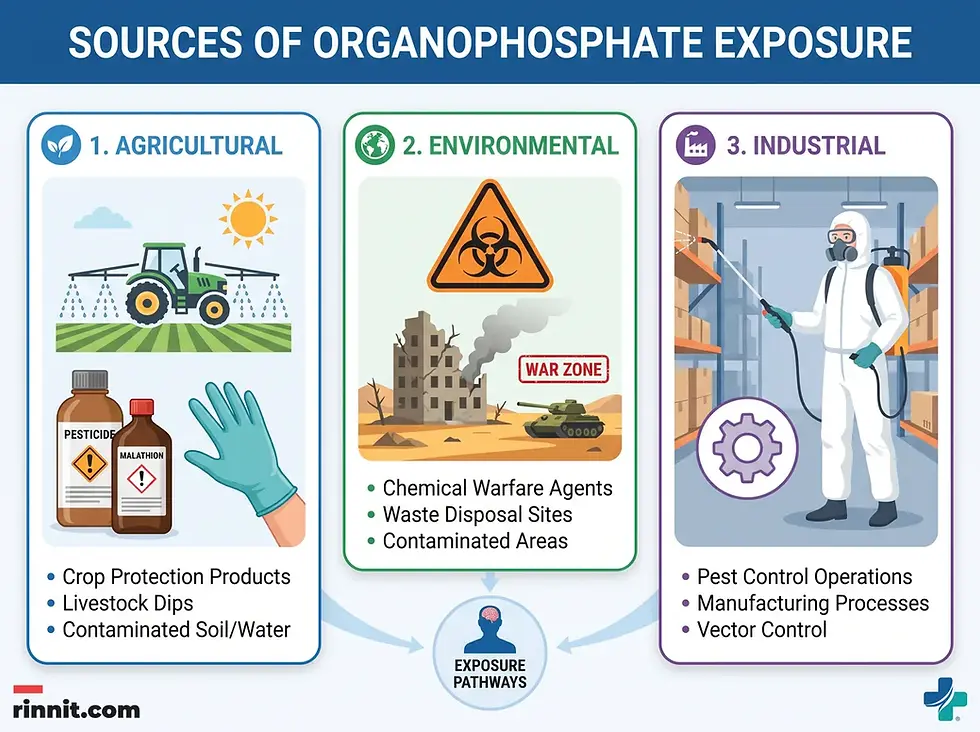
Organophosphates are a class of chemical compounds widely used in agricultural insecticides and herbicides, as well as in chemical warfare agents. [1] [2] While the U.S. Environmental Protection Agency (EPA) phased out most residential uses between 2000 and 2005, these chemicals remain in use for food crops and industrial applications. Poisoning occurs when these compounds enter the body through inhalation, ingestion, or skin contact. [1]
Common sources of exposure
How does organophosphate exposure affect the body?
The primary danger of organophosphates lies in their ability to inhibit the enzyme acetylcholinesterase. In a healthy nervous system, this enzyme breaks down a neurotransmitter called acetylcholine after it has sent a signal to a muscle or nerve. When organophosphates block this enzyme, acetylcholine builds up at the nerve junctions (synapses), causing continuous and uncontrollable stimulation of the body's organs and muscles. [1] [2]

Systemic symptoms
Exposure affects multiple bodily systems simultaneously. The severity of symptoms depends on the amount of chemical absorbed and the duration of exposure.
System affected | Common symptoms |
Respiratory | Wheezing, shortness of breath, excessive mucus (bronchorrhea) |
Cardiovascular | Rapid or slow heart rate, high or low blood pressure |
Central nervous | Headache, restlessness, seizures, loss of consciousness |
Gastrointestinal | Abdominal pain, nausea, vomiting, diarrhea |
Musculoskeletal | Muscle weakness, cramps, involuntary twitching (fasciculations) |
Ocular | Constricted pupils (miosis), excessive tearing, bloodshot eyes |
What causes organophosphate poisoning and who is at risk?
Most cases of organophosphate poisoning are linked to occupational hazards or environmental factors. Individuals who work directly with agricultural chemicals are at the highest risk.
High-risk scenarios
Occupational use: farmers, pesticide applicators, and industrial workers handling herbicides. [1]
Environmental hazards: living in or near areas of active warfare or terrorism where nerve agents may be deployed. [1]
Intentional ingestion: cases of self-harm or attempted suicide involving agricultural chemicals. [1] [2]
Emergency note: If you or someone you know is struggling with thoughts of self-harm, contact the Suicide and Crisis Lifeline by calling or texting 988 (in the U.S.). Help is available 24/7.
How is organophosphate poisoning diagnosed?
Healthcare providers typically diagnose organophosphate poisoning based on the patient's symptoms and a history of potential exposure. [1] Because the condition is life-threatening, treatment often begins before all laboratory results are finalized. [1]
Diagnostic tools
Blood tests: to measure the activity levels of acetylcholinesterase in the plasma and red blood cells. [1] [2]
Clinical history: identifying the specific products or environments the patient was exposed to. [1]
Supplemental tests: because many other conditions cause similar symptoms, providers may also order urine tests, MRI or CT scans, an EEG, or nerve conduction studies to check overall health and determine the cause of symptoms. [1]
How is organophosphate poisoning managed in an emergency?
Immediate decontamination and the administration of antidotes are the cornerstones of organophosphate poisoning treatment. [1]
Decontamination protocol
To prevent further absorption and protect healthcare workers, a strict decontamination process is followed:
Clothing removal: all contaminated clothing is removed and disposed of as hazardous waste.
Skin cleansing: the skin is washed thoroughly with soap and water at least three times. [1]
Personal protection: medical staff wear protective gear to avoid secondary exposure.
Antidote administration
Two primary medications are used to reverse the effects of the poisoning:
Respiratory support
Since respiratory failure is the leading cause of death, many patients require intubation and mechanical ventilation to maintain adequate oxygen levels while the antidotes take effect. [1]

What are recovery and long-term outlook after organophosphate poisoning?
Recovery can take anywhere from several days to several weeks, depending on the severity of the exposure. [1] While many individuals recover fully with prompt treatment, some may experience long-term neurological complications, including memory loss, peripheral neuropathy (nerve damage in the limbs), or chronic muscle weakness (myopathy). [1] Continuous monitoring by a healthcare provider is essential to manage any lingering effects.
Key Takeaways
Organophosphate poisoning is a severe medical condition caused by exposure to chemical compounds found in certain pesticides, herbicides, and nerve agents like Sarin. These chemicals disrupt the nervous system by blocking enzymes that normally regulate muscle and nerve signals, leading to overstimulation. Symptoms range from respiratory distress and seizures to cardiovascular instability. Treatment requires immediate medical intervention, including the administration of specific antidotes like atropine and thorough skin decontamination. Because respiratory failure is the primary cause of death, rapid diagnosis and emergency care are critical for survival.
Take the Next Step
If you suspect exposure to organophosphates, do not wait for symptoms to appear. Call your local poison center (in the U.S., Poison Control at 1-800-222-1222) or seek emergency medical care immediately. [1] Rapid intervention saves lives.
Further reading: Cleveland Clinic — Organophosphate Poisoning
Frequently Asked Questions
1. What is the most common way people are exposed?
Most people are exposed through skin contact or inhalation while working with agricultural pesticides or insecticides.
2. Can I treat organophosphate poisoning at home?
No. This is a life-threatening emergency that requires specialized antidotes (atropine and pralidoxime) and professional decontamination that can only be provided in a hospital. [1]
3. Are these chemicals still used in the U.S.?
Yes. While residential use was phased out, they are still used legally on many food crops and in industrial pest control.
4. What is the "SLUDGE" acronym?
Medical professionals often use "SLUDGE" to remember symptoms: Salivation, Lacrimation (tearing), Urination, Defecation, Gastrointestinal distress, and Emesis (vomiting).
5. Is the damage permanent?
With immediate treatment, many people recover fully. However, severe poisoning can lead to permanent nerve damage, memory issues, or muscle weakness. [1]
6. How do I protect myself while working with pesticides?
Always wear recommended personal protective equipment (PPE), including gloves, masks, and long sleeves, and follow all safety labels strictly.
7. Why are constricted pupils a sign of poisoning?
Organophosphates cause the muscles in the eye to overstimulate, forcing the pupils to stay small (miosis), even in low light.
8. Can you get poisoned by eating treated fruit?
While rare due to safety regulations, improper washing of produce treated with high levels of organophosphates could theoretically lead to low-level exposure. Always wash fruits and vegetables thoroughly.
9. What should I do if I spill pesticide on my skin?
Remove your clothing immediately and wash the area with soap and water multiple times. Seek medical advice or call Poison Control right away. [1]
How soon do symptoms start after organophosphate exposure?
Symptoms can start within minutes to hours, depending on the amount and how the chemical entered the body. Some symptoms can be delayed, so call poison control or 911 for any suspected exposure, even if you feel fine.
Related Reading
Respiratory Failure: Symptoms, Causes, and Management explains breathing failure, the most dangerous effect of severe poisoning.
Mechanical Ventilation: How a Ventilator Works, Types, Risks and Recovery explains breathing machines used to support patients in intensive care.
Paraquat Poisoning: Symptoms, Emergency Response, and Prevention explains another dangerous pesticide poisoning and its emergency care.
Bradycardia: Slow Heart Rate, Symptoms, Causes, and Treatment explains a slow heart rate, a possible sign of organophosphate poisoning.
References
Cleveland Clinic. Organophosphate poisoning. Cleveland Clinic Health Library. Medically reviewed; last updated July 18, 2024. my.clevelandclinic.org/health/diseases/organophosphate-poisoning.
Bajracharya SR, Prasad PN, Ghimire R. Management of organophosphorus poisoning. J Nepal Health Res Counc. 2016;14(34):131-138. PMID 28327676. https://pubmed.ncbi.nlm.nih.gov/28327676/
De Santi O, Orellana MJ, Di Niro CA, et al. Fresh frozen plasma as an adjunctive therapy in acute organophosphate poisoning: a systematic review and meta-analysis. Clin Toxicol (Phila). 2026:1-13. PMID 42770382. https://doi.org/10.1080/15563650.2026.2732065
Blain PG. Organophosphorus poisoning (acute). BMJ Clin Evid. 2011;2011:2102. PMID 21575287. https://pubmed.ncbi.nlm.nih.gov/21575287/
Medical Disclaimer
This article is for informational purposes only and does not constitute medical advice. Always seek the advice of your physician or other qualified health provider with any questions you may have regarding a medical condition. Never disregard professional medical advice or delay in seeking it because of something you have read here.



Comments