Optic Atrophy: Causes, Symptoms, and Vision Management

Updated: 3 days ago
Medically reviewed by Dr. Baraa Alnahhal, MD · Last reviewed: October 2026
Optic atrophy is long-term damage to the optic nerve, the nerve that carries visual impulses from the eye to the brain. It can cause permanent vision loss, but treating the underlying cause can help stop it from getting worse [1].
Quick Answer: What is optic atrophy?
Optic atrophy is the deterioration of optic nerve fibers from causes such as lack of blood flow, the most common, plus pressure, inflammation, infection, trauma or toxins. It causes blurred vision and trouble with side and color vision and can lead to blindness. The damage cannot be reversed, so treatment focuses on the cause, and low-vision aids help. [1]
What the research says
Optic neuritis often leaves good long-term vision. In 15-year follow-up of 294 patients from the Optic Neuritis Treatment Trial, 72% of eyes affected by optic neuritis had visual acuity of 20/20 or better, and long-term visual outcome was favorable for most people, even those who developed multiple sclerosis (Optic Neuritis Study Group, Ophthalmology, 2008).
Lowering eye pressure can delay glaucoma, a cause of optic nerve damage. In a randomized trial of 1,636 people with elevated eye pressure, the chance of developing glaucoma at 60 months was 4.4% with pressure-lowering eye drops versus 9.5% with observation (hazard ratio 0.40) (Kass et al., Arch Ophthalmol, 2002).
What Is Optic Atrophy?
Optic atrophy affects the cells of the optic nerve, which carries impulses from your eye to your brain. It happens because of long-term damage to optic nerve fibers from many different causes, and it is a serious condition that can cause irreversible vision problems, including blindness [1].

The optic nerve connects the eye to the brain; in optic atrophy its fibers deteriorate.
What are the symptoms of optic atrophy?
Symptoms relate to changes in vision [1]:
Blurred vision or a reduction in sharpness of vision
Difficulties with peripheral vision
Difficulties with color vision
What Causes Optic Atrophy?
Optic atrophy happens when something interferes with the optic nerve's ability to transmit impulses to the brain. Many factors can cause this [1]:
Cause category | Examples |
Lack of blood flow (vascular/ischemia) | The most common cause of optic nerve atrophy |
Present from birth or inherited (congenital) | Leber hereditary optic neuropathy, which causes vision loss in one eye first and then the other |
Pressure from outside or inside the nerve | Tumors; glaucoma, which can damage the nerve and sometimes includes high eye pressure |
Inflammation | Optic neuritis (inflammation of the optic nerve); hydrocephalus (fluid collection in the brain) |
Infections | Syphilis, measles, and others |
Trauma | Eye injuries from industrial or car accidents, sports, or fighting |
Retinal diseases | Diabetes-related retinopathy and retinal vein occlusion |
Toxins, nutritional deficits, or medications | Usually affects both eyes |

Causes of optic atrophy fall into vascular, pressure, inflammatory, and traumatic groups, among others.
Is Optic Atrophy Contagious?
You cannot catch optic atrophy from anyone, but many infections can cause it, including syphilis, measles, tuberculosis, mumps, chickenpox, Lyme disease, aspergillosis, and cryptococcosis [1].
Complications
Optic atrophy cannot be reversed. The major complication is loss of vision, or blindness [1].
How is optic atrophy diagnosed?
See an eye care specialist if you have any vision issues. They will ask about your symptoms and medical history, and may ask what you eat and drink and what medications and supplements you take, then do an eye exam [1].
With an ophthalmoscope the provider can see cell changes and a paleness of the optic disc, related to blood flow changes. A healthy disc has a pink color; an atrophied disc looks white or pale [1].
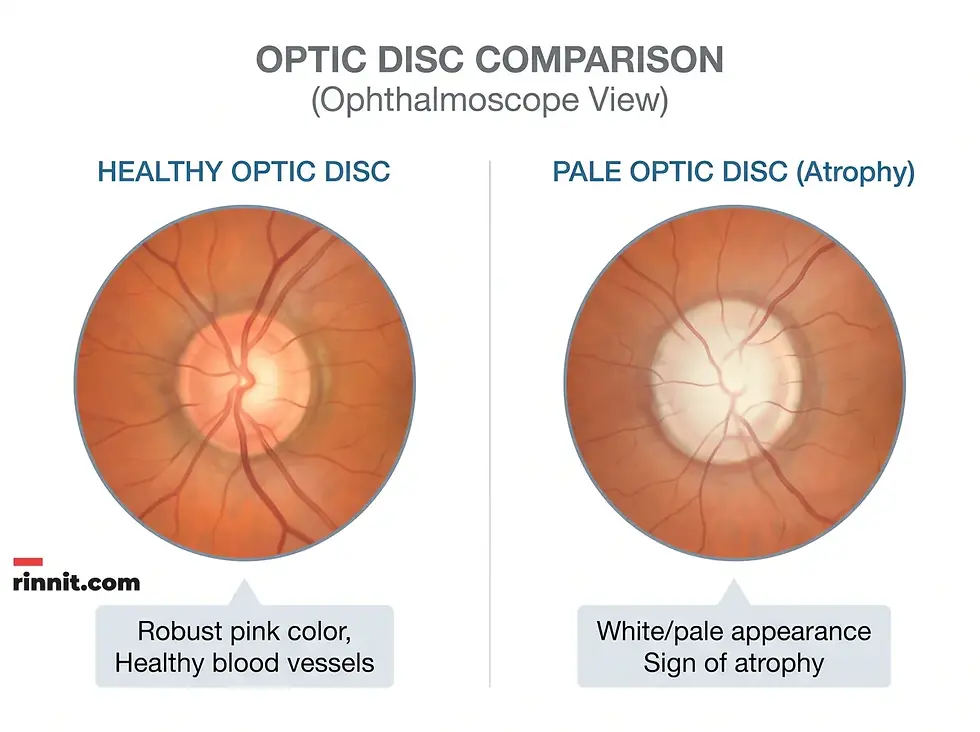
A healthy optic disc (left) compared with the pale disc of optic atrophy (right).
Your provider, who may also look for multiple sclerosis or tumors, may use other tests [1]:
Optical coherence tomography (OCT)
Visual field tests
Magnetic resonance imaging (MRI) scans
Fluorescein angiography
Ultrasound
Blood tests
How is optic atrophy treated, and what is the outlook?
Optic atrophy itself has no real cure or treatment, so providers treat its cause to stop it from getting worse, and the outlook depends on that cause. Your provider will treat the cause to stop the condition from getting worse, for example by removing a tumor or removing fluid from the brain and spinal cord [1].
The outlook depends on the cause. If the cause is optic neuritis, you can usually count on getting your vision back when the inflammation goes away; with other optic neuropathies, vision might not improve. With glaucoma, early diagnosis can lead to successful treatment and slower growth of optic atrophy, and early diagnosis of a tumor can relieve pressure on the nerve and prevent further damage [1].
Living With Low Vision
If your sight worsens, ask your provider about coping with low vision. Options include special lenses and magnifying glasses, and non-optical materials such as text-reading software [1].
Can optic atrophy be prevented?
In most cases optic atrophy cannot be prevented, but you may lower your risk in some cases [1]:
Wear safety goggles to prevent eye injuries
Get necessary vaccines to prevent infections when possible
Practice safe sex to avoid sexually transmitted infections
When should you see a healthcare provider about optic atrophy?
See a provider for regular eye exams, especially if you have any eye-related condition, and for any change in vision such as blurry vision or trouble with color or peripheral vision. If you have a sudden loss of vision or extreme eye pain, call your provider or get immediate medical help, as these can be symptoms of serious eye conditions [1].
Questions to Ask Your Doctor
What is causing my optic atrophy?
What options do I have for treating the cause, and what are the side effects?
Is this condition hereditary, and is genetic testing right for my family?
Am I eligible for any clinical trials?
Can you recommend a support group and low-vision aids?
What is the bottom line on optic atrophy?
Optic atrophy is permanent damage to the optic nerve with many possible causes. Because it cannot be reversed, protecting your vision means regular eye exams, quick attention to vision changes, and treating the cause early [1].
Frequently Asked Questions
What is optic atrophy?
Optic atrophy, also called optic nerve atrophy, is damage to the optic nerve, which carries impulses from the eye to the brain. It results from long-term damage to optic nerve fibers from many causes and can cause irreversible vision problems, including blindness.
Can optic atrophy be reversed or cured?
Optic atrophy cannot be reversed, and there is no real cure or treatment for the nerve damage itself. Providers treat the underlying cause to stop the condition from getting worse.
What are the first signs of optic nerve damage?
Symptoms relate to vision: blurred vision or reduced sharpness, difficulty with peripheral (side) vision, and difficulty with color vision.
Does optic atrophy always lead to blindness?
No. The major complication is vision loss, which can include blindness, but the outlook depends on the cause. Low-vision aids such as special lenses, magnifying glasses, and text-reading software can help if sight worsens.
Is optic atrophy the same as glaucoma?
No. Glaucoma is a disease that can damage the optic nerve, sometimes with high eye pressure, and so can lead to optic atrophy. Early diagnosis of glaucoma can lead to successful treatment and slower progression.
How does a doctor see optic atrophy?
The eye care specialist uses an ophthalmoscope to look at the back of the eye. Optic atrophy causes cell changes and a paleness of the optic disc related to blood flow changes. Tests such as OCT, visual field tests, MRI, fluorescein angiography, ultrasound, and blood tests may follow.
Can children have optic atrophy?
Yes. Some causes are present from birth or inherited, such as Leber hereditary optic neuropathy, which causes vision loss in one eye first and then the other. Other causes, such as infections, tumors, or trauma, can also affect children.
Is optic atrophy contagious?
No, you cannot catch it from anyone. However, some infections that can cause it, such as syphilis, measles, tuberculosis, mumps, chickenpox, and Lyme disease, can be passed on.
Can optic atrophy be prevented?
In most cases it cannot be prevented, but you may lower the risk by wearing safety goggles to prevent eye injuries, getting needed vaccines, and practicing safe sex to avoid sexually transmitted infections.
When should I seek urgent care?
See a provider for any change in vision, such as blurry vision or trouble with color or peripheral vision. If you have a sudden loss of vision or extreme eye pain, call your provider or get immediate medical help.
Related Resources
Related reading on Rinnit:
External resources for deeper reading:
Related Reading
Color Blind Test: Types of Color Vision Tests, What to Expect and Results: A color vision test checks how well you tell colors apart using plates, color-arranging tasks or color matching, and is quick and painless.
References
Cleveland Clinic. Optic atrophy. Cleveland Clinic Health Library. Medically reviewed; last updated July 14, 2023. https://my.clevelandclinic.org/health/diseases/12326-optic-atrophy
Optic Neuritis Study Group. Visual function 15 years after optic neuritis: a final follow-up report from the Optic Neuritis Treatment Trial. Ophthalmology. 2008;115(6):1079-1082.e5. PMID: 17976727. DOI: 10.1016/j.ophtha.2007.08.004
Kass MA, Heuer DK, Higginbotham EJ, et al. The Ocular Hypertension Treatment Study: a randomized trial determines that topical ocular hypotensive medication delays or prevents the onset of primary open-angle glaucoma. Arch Ophthalmol. 2002;120(6):701-713. PMID: 12049574. DOI: 10.1001/archopht.120.6.701
Medical disclaimer
This article is for informational purposes only and is not a substitute for professional medical advice, diagnosis, or treatment. Always seek the advice of your physician or other qualified health provider with any questions you may have about a medical condition.



Comments