Notalgia Paresthetica: Understanding the Persistent Itch Between Your Shoulders

Updated: 2 days ago
Medically reviewed by Dr. Baraa Alnahhal, MD · Last reviewed: October 19, 2026
Quick Answer: What is Notalgia Paresthetica?
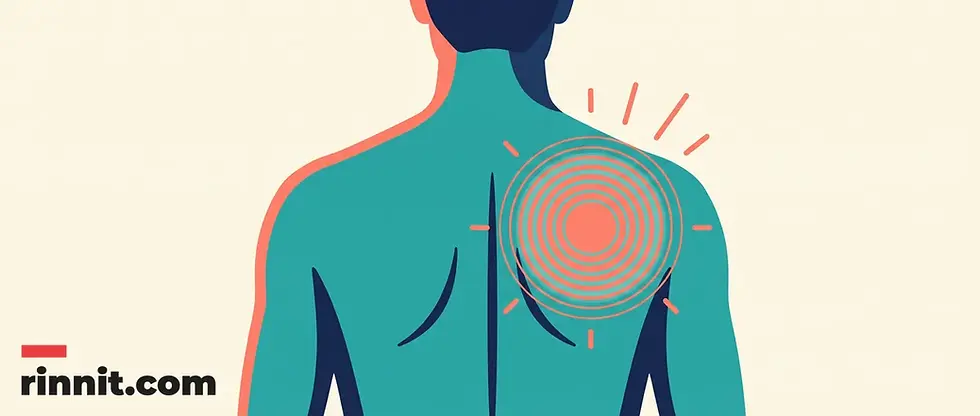
Notalgia paresthetica is a sensory neuropathy that causes a localized, persistent itch or uncomfortable sensation on the upper back, typically between the inner shoulder blade and spine. It is a nerve problem rather than a skin disease, so it does not start with a rash, though a dark or discolored patch often develops from repeated scratching and rubbing.
What the research says
Physical therapy is a reasonable first step, and Botox has not held up in a trial. A systematic review of 243 screened articles found 16 studies of procedural treatments. Physical therapy was suggested as a first-line choice or an alternative for refractory cases, while botulinum toxin did not show acceptable results in a clinical trial, despite some improvement in case reports and case series (Nilforoushzadeh et al., Skin Res Technol, 2024). [2]
No treatment is definitive, but topical capsaicin has the best support. A 2023 review concluded that no definitive treatment exists and that, of the treatments evaluated, topical capsaicin remains the most efficacious. It also noted that larger studies are needed to find the best treatment and dosing (Robinson et al., Clin Pract, 2023). [3]
The trial evidence for capsaicin is still thin. A systematic review of six randomized trials of topical capsaicin for itch in any condition found only one in notalgia paresthetica. That crossover study favored capsaicin over placebo in its first phase, but the review concluded there was no convincing evidence for capsaicin in pruritus overall (Gooding et al., Int J Dermatol, 2010). [4]
Key Takeaways: Notalgia Paresthetica Essentials
Feature | Details |
Primary Symptom | Intense, localized itching on the upper back. |
Common Location | Between the shoulder blade and the spine (usually one side). |
Underlying Cause | Nerve irritation or damage (neuropathy). |
Physical Sign | Discolored skin patch from chronic scratching. |
Risk Factors | Age over 50, female sex, and spinal conditions. |
Treatment Focus | Symptom management (Gabapentin, TENS, PT). |
What are the symptoms and sensations of notalgia paresthetica?
The hallmark of notalgia paresthetica is an itch that feels impossible to satisfy. Because the sensation is nerve-based, it can manifest in various ways beyond simple pruritus (itchy skin).
Tingling and Numbness: A “pins and needles” feeling in the affected area. [1]
Burning or Heat: Sensations of warmth or a sharp, burning pain. [1]
Tenderness: The skin may feel sore or sensitive to the touch. [1]
Cold Sensations: Some individuals report localized feelings of coldness. [1]
Skin Discoloration: A hyperpigmented (darker) patch of skin often appears where the person frequently scratches.
It is important to note that unlike dermatological conditions, notalgia paresthetica does not begin with a rash. If a rash is present before the itching starts, the cause may be a primary skin condition rather than a nerve issue. [1]
What Causes the Persistent Itch?
Researchers believe that notalgia paresthetica is caused by irritation or compression of the nerves that supply the skin of the back. This can occur either at the point where the nerve exits the spine or within the skin itself.
Potential Cause | Description |
Radiculopathy | A pinched nerve originating from the spinal column. |
Spinal Conditions | Herniated disks, degenerative disk disease, or osteoarthritis. |
Metabolic Issues | Conditions like diabetes that can lead to nerve damage. |
Post-Infection | Nerve damage following a shingles (herpes zoster) infection. |
Nerve Malfunction | An abnormal itch control mechanism within the nervous system. |

Who is at Risk?
Notalgia paresthetica most commonly affects adults, particularly those over the age of 50. It is also observed more frequently in women than in men. While rare in children, its presence in younger populations can sometimes be an early indicator of a hereditary condition known as Multiple Endocrine Neoplasia (MEN) 2A, necessitating further medical evaluation.
How is notalgia paresthetica diagnosed?
Diagnosing notalgia paresthetica is usually straightforward and based on a physical exam and the patient’s description of their symptoms. Healthcare providers will typically look for the characteristic discolored patch on the back and ask about the duration of the itching. Medical imaging or blood tests are rarely needed unless the provider suspects a more complex neurological or neuromuscular disorder. [1]
How is notalgia paresthetica managed and treated?
Because notalgia paresthetica is a chronic condition without a known cure, treatment focuses on reducing the intensity of the itch and improving quality of life. What works for one person may not work for another, often requiring a trial-and-error approach.
Oral Medications: Gabapentin is one of the oral medicines most often tried for nerve-related itching, though evidence for it is limited. Antihistamines may be used to prevent scratching during sleep. [1]
Topical Treatments: Creams containing capsaicin (derived from chili peppers) are commonly used to desensitize the nerves. Steroids and lidocaine patches may also provide relief.
Nerve Stimulation (TENS): Transcutaneous electrical nerve stimulation uses low-voltage currents to disrupt pain and itch signals. [1]
Injections: Botox injections or spinal nerve blocks can be used to temporarily block nerve signals in severe cases. [1]
Physical Therapy: Stretching the chest (pectoral) muscles and strengthening the upper back muscles can sometimes relieve pressure on the affected nerves. [1]

Conclusion
Living with notalgia paresthetica can be frustrating due to its persistent nature, but it is not a threat to overall physical health. By working closely with a healthcare provider and exploring various nerve-focused treatments, most individuals can find a management plan that significantly reduces their discomfort.
Frequently Asked Questions
What is notalgia paresthetica?
It is a neurological condition causing chronic itching or burning on the upper back.
Where exactly does it occur?
Usually between the inner shoulder blade and the spine.
Is it dangerous?
No, it is not life-threatening or dangerous to your health.
Why does my back have a dark patch?
This is usually hyperpigmentation caused by chronic scratching and rubbing.
Does it start with a rash?
No, it is a nerve issue; any skin changes are secondary to scratching.
What does “notalgia” mean?
It means “pain in the back.”
What does “paresthetica” mean?
It refers to sensations like burning, tingling, or itching.
Who is most commonly affected?
Adults over 50, particularly women.
Can children get it?
It is rare in children and may indicate a hereditary condition like MEN 2A.
How common is it?
It accounts for about 8% of all chronic itchy skin cases.
Is it caused by a pinched nerve?
Many researchers believe it is caused by nerve irritation in the spine or skin.
Can a herniated disk cause this?
Yes, spinal issues are a common underlying cause.
Is it related to shingles?
Yes, post-herpetic nerve damage can lead to this condition.
How is it diagnosed?
Mainly through physical examination and medical history.
Do I need an MRI?
Rarely, unless other serious neurological symptoms are present.
Is there a cure?
There is no known cure, but symptoms can be managed.
What is the most effective oral medication?
Gabapentin is often the most effective for nerve-related itching.
What is capsaicin cream?
A topical treatment made from chili peppers that helps desensitize nerves.
How does TENS therapy work?
It uses low-voltage electrical currents to block itch and pain signals.
Can Botox help?
Botox injections may help some people by blocking nerve signals, though results vary.
What is a nerve block?
An injection of anesthetic near a nerve to provide temporary relief.
Does physical therapy help?
Yes, strengthening and stretching exercises can relieve nerve pressure.
How long does the condition last?
It can last for months or even years.
Can it go away on its own?
Yes, some people experience periods of remission.
Is the itch worse at night?
Many people find it more bothersome when they are trying to sleep.
Can diabetes cause this?
Yes, metabolic conditions that cause neuropathy can be a factor.
What is radiculopathy?
A condition where a nerve root in the spine is compressed or irritated.
Is it contagious?
No, it is a neurological condition and cannot be spread to others.
Can stress make it worse?
Stress can often heighten the perception of itching and pain.
Should I see a dermatologist or a neurologist?
Either can help, depending on whether your provider suspects a skin or a nerve problem.
What is MEN 2A?
A rare hereditary condition that can involve notalgia paresthetica in children.
Can I use lidocaine for relief?
Yes, topical anesthetics like lidocaine can provide temporary numbing.
Why does it only affect one side?
It usually involves a specific nerve on one side of the spinal column.
Can I use over-the-counter anti-itch creams?
Standard creams often don’t work because the itch is nerve-based, not skin-based.
What are paraspinal muscles?
The muscles that run alongside your spine.
How does stretching help?
Stretching pectoral muscles can improve posture and reduce nerve compression.
Is it related to osteoarthritis?
Yes, spinal lesions from osteoarthritis can irritate nerves.
What is pruritus?
The medical term for itchy skin.
Can I use ice packs for relief?
Cold can sometimes temporarily soothe the burning or itching sensation.
Is it the same as a pinched nerve in the neck?
It involves nerves that supply the upper back, usually in the thoracic region.
Can I prevent it?
There are currently no known ways to prevent the condition.
Will the dark patch ever fade?
It may fade if the scratching stops, but it can take a long time.
Is it a sign of something serious?
In adults, it is usually just bothersome; in children, it needs more investigation.
How often should I do physical therapy?
Your therapist will provide a specific schedule, often several times a week.
Can antihistamines stop the itch?
They don’t stop the nerve itch itself but can help you sleep through it.
What is a sensory neuropathy?
A condition where the nerves responsible for sensation are damaged or malfunctioning.
Can I get it on both sides of my back?
Yes, though it most commonly affects only one side.
Is the itch constant?
It can be constant or come and go in waves throughout the day.
Does heat make it worse?
For some, sweating or heat can trigger a flare-up of itching.
Should I stop scratching?
Yes, as scratching can damage the skin and lead to infection or scarring.
Related Reading
What Is Brachioradial Pruritus? Symptoms, Causes, Treatment, and Prevention explains a related nerve itch that affects the arms.
Itchy Skin (Pruritus): What Causes It, When to See a Doctor, and How to Get Relief covers the many causes of itchy skin and when to see a doctor.
Neurodermatitis (Lichen Simplex Chronicus): Symptoms, Causes, Diagnosis & Treatment — Complete Guide describes how constant scratching can thicken and darken the skin.
Radiculopathy (Pinched Nerve): Symptoms, Causes, Types, and Treatment explains how pinched spinal nerves cause pain, numbness and tingling.
References
Cleveland Clinic. Notalgia Paresthetica: Causes, Symptoms & Treatment. Cleveland Clinic. Last updated March 27, 2023. https://my.clevelandclinic.org/health/diseases/24850-notalgia-paresthetica
Nilforoushzadeh MA, Ghane Y, Heidari N, et al. A systematic review of procedural modalities in the treatment of notalgia paresthetica. Skin Res Technol. 2024;30(5):e13723. PMID 38696233. https://doi.org/10.1111/srt.13723
Robinson C, Downs E, De la Caridad Gomez Y, et al. Notalgia paresthetica review: update on presentation, pathophysiology, and treatment. Clin Pract. 2023;13(1):315-325. PMID 36826171. https://doi.org/10.3390/clinpract13010029
Gooding SM, Canter PH, Coelho HF, et al. Systematic review of topical capsaicin in the treatment of pruritus. Int J Dermatol. 2010;49(8):858-865. PMID 21128913. https://doi.org/10.1111/j.1365-4632.2010.04537.x
Disclaimer
The information provided in this article is for educational purposes only and should not be considered medical advice. Always consult with a qualified healthcare professional for diagnosis and treatment of any medical condition.



Comments