What Is Brachioradial Pruritus? Symptoms, Causes, Treatment, and Prevention

Updated: 2 days ago
Medically reviewed by Dr. Baraa Alnahhal, MD · Last reviewed: October 2026
Quick Answer
Brachioradial pruritus is a condition that causes deep itching and abnormal sensations on the outer forearm from neck nerve irritation and sun exposure. It mostly affects women, with an average age at diagnosis of 59. [1] An ice pack test usually confirms it, and treatment includes sun protection, amitriptyline and capsaicin cream. Many people improve within weeks to months.
Key takeaways
Brachioradial pruritus is a nerve condition, not a rash, that causes itching, stinging, or tingling on the outer forearms, and in 75% of cases it affects both arms. [1]
It is believed to result from a combination of a pinched nerve in the neck (cervical nerves C5-C8) and ultraviolet radiation exposure, which is why symptoms flare after sun exposure and improve in winter. [1]
Women are three times more likely to develop it, with an average diagnosis age of 59, and it is more common in people with lighter skin and outdoor lifestyles. [1]
Diagnosis usually involves a simple ice pack test; imaging is only needed in rare cases. [1]
Treatment centers on avoiding UV exposure, oral medications (most commonly amitriptyline), and topical treatments (capsaicin, mild corticosteroids, local anesthetics, antihistamines), with surgery reserved for very rare cases. [1]
What the research says
Most people with brachioradial pruritus show signs of nerve-root involvement in the neck. In 46 patients with itching in the C5 to C8 dermatomes, electromyography showed radicular involvement in 39 (85%), and in 28 (60%) the test findings matched the area where the itch was felt. The authors concluded that peripheral nervous system involvement is associated with the condition (Miller et al., Arq Neuropsiquiatr, 2021) [2].
Neck imaging and nerve testing should be part of the work-up. In nine patients with brachioradial pruritus who all had electrodiagnostic testing and cervical MRI, all nine had cervical spine disease (disc protrusion, spondylosis, or stenosis), and 8 (89%) had abnormal electromyography consistent with chronic radiculopathy, mainly at C6 (Shields et al., Cureus, 2022) [3].
Nerve-calming medicines reduce itch, and a combination did not beat a single drug. In a retrospective review of 64 patients at a tertiary itch center, itch scores fell significantly with both pregabalin alone and pregabalin combined with ketamine, amitriptyline, and lidocaine cream, with no significant difference between the two. Some patients had drowsiness, weight gain, or skin irritation, and the authors call for controlled trials (Mashoudy et al., Acta Derm Venereol, 2024) [4].
What Is Brachioradial Pruritus?

Brachioradial pruritus is a nerve condition that causes itching, stinging, or tingling sensations in your outer forearm. It is not a rash or a contagious condition. [1]
The name comes from two parts. "Brachioradial" refers to the brachioradialis muscle in the lower part of your arm that helps it bend at the elbow. "Pruritus" is the medical term for itching. [1]
The condition usually affects both arms, but it can occur in only one arm. [1]
Which nerve causes brachioradial pruritus?
Irritation of the cervical nerves can lead to brachioradial pruritus. In your neck (the cervical spine), you have eight pairs of spinal nerves labeled C1 to C8. These nerves supply sensation to your neck, shoulders, arms, and hands. Irritation of any of the nerves between C5 and C8 can cause brachioradial pruritus. [1]
Symptoms of Brachioradial Pruritus
The main sign of brachioradial pruritus is itchiness on your outer forearm. The condition does not involve a skin rash, but you may develop marks or skin discoloration from excessive scratching. [1]
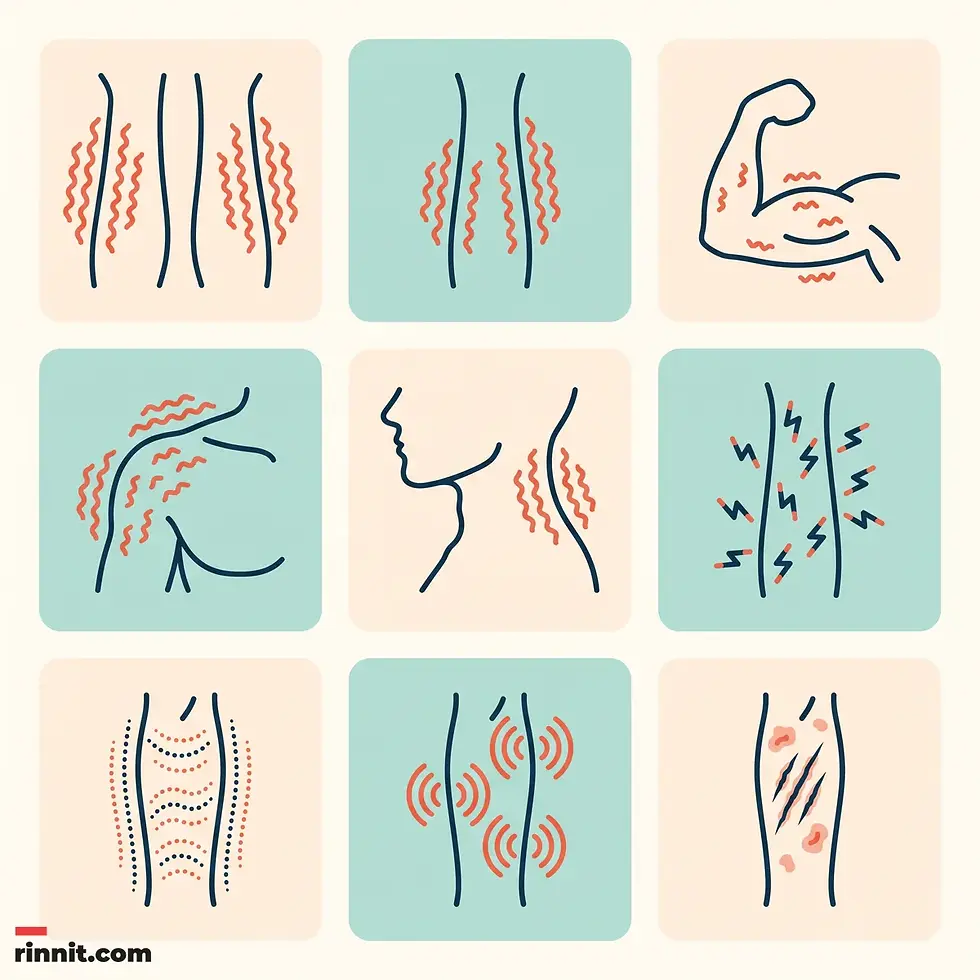
You may also have itching on your:
Upper arms.
Shoulders.
Neck.
Some people also experience the following sensations in the affected area:
Pain.
Stinging.
Tingling.
In 75% of cases, the itching and other sensations affect both arms. [1] But it can also affect just one arm.
What Causes Brachioradial Pruritus?
Researchers believe a combination of cervical radiculopathy and ultraviolet (UV) radiation causes brachioradial pruritus. [1]
Cervical radiculopathy
A pinched nerve in your neck (cervical radiculopathy) can cause abnormal sensations (paresthesia) in various parts of your upper body, including your arms. You may feel tingling, numbness, pain, and itching. [1]
Several spinal issues can lead to a pinched nerve in your neck, including:
Osteoarthritis.
Degenerative disk disease.
Foraminal stenosis.
People with brachioradial pruritus often do not realize they have a pinched nerve in their neck because they often do not experience pain from it. However, studies show that neck imaging tests of people with this condition show evidence of spinal issues and pinched nerves. [1] [3]
Ultraviolet radiation exposure
Researchers are not exactly sure why, but they believe UV radiation is a contributing factor because many people report increased symptoms with sun exposure, the condition is more common in the summer months, and many people report relief of symptoms during the winter months and with sun protection. [1]
What causes brachioradial pruritus to flare up?
Sun exposure typically triggers flare-ups of brachioradial pruritus. The symptoms are often worse after being outside without sun protection. [1]
Risk Factors
The table below summarizes the main risk factors for brachioradial pruritus.
Risk factor | Detail |
Sex | Women are three times more likely to have brachioradial pruritus than men. This may be because women are more likely to have cervical spine and nerve issues due to their anatomy. [1] |
Middle age | The average age at diagnosis is 59, but it can affect people of other ages. [1] |
Light skin type | The condition more commonly affects people with lighter skin types. [1] |
Outdoor lifestyle | People who develop brachioradial pruritus are typically outdoor enthusiasts, like cyclists, hikers, and beach-goers. Some have an extensive history of sunburn. [1] |
Diagnosis and Tests
How is brachioradial pruritus diagnosed?
A healthcare provider will ask about your symptoms, medical history, and lifestyle. They will perform a physical exam and assess your arms to be sure you do not have a rash that is causing the itching. [1]
Providers can usually diagnose brachioradial pruritus with the ice pack test. Your provider places an ice pack on the affected area. If your symptoms immediately stop and then return once the ice pack is removed, it usually means you have brachioradial pruritus. [1]
Diagnostic element | What it involves |
Symptom and lifestyle history | Discussion of symptoms, medical history, and sun exposure habits. |
Physical exam | Assessment of the arms to confirm there is no rash causing the itching. |
Ice pack test | An ice pack placed on the affected area; symptoms stopping immediately and returning after removal strongly suggests brachioradial pruritus. |
Imaging (rare) | MRI scan or X-rays to assess the cervical spine and spinal nerves in rare cases. |
In rare cases, your provider may recommend imaging tests to assess your cervical spine and spinal nerves, such as an MRI scan or X-rays. [1]
What kind of doctor do you see?
In most cases, a primary care physician (PCP) can diagnose brachioradial pruritus and recommend treatment. But they may refer you to a neurologist if your case is severe or there may be other underlying neurological issues. [1]
Treatment of Brachioradial Pruritus
Treatment methods include avoiding ultraviolet (UV) radiation exposure, oral medications, and topical medications. Using ice packs on the affected area can also alleviate symptoms temporarily. In very rare cases, healthcare providers may recommend surgery to correct cervical spine conditions. [1]

Avoiding UV radiation exposure
Methods of avoiding UV radiation include:
Reducing the amount of time you spend in the sun.
Using sunscreen regularly and reapplying it as necessary.
Wearing UV-protected long-sleeved shirts and other clothing.
Avoiding using tanning beds.
Oral medications
Healthcare providers most commonly prescribe an oral tricyclic antidepressant called amitriptyline for brachioradial pruritus. [1] This is because tricyclic antidepressants are known to help treat nerve issues, like neuropathic pain.
Medication type | Examples |
Most common oral medication | Amitriptyline (a tricyclic antidepressant used to treat nerve issues such as neuropathic pain). |
Other oral medications | Gabapentin, risperidone, fluoxetine, chlorpromazine, hydroxyzine. |
Topical medications | Capsaicin, mild corticosteroids, local anesthetics (amitriptyline/ketamine), antihistamines. |
Topical medications
Topical medications, such as creams and lotions, include capsaicin, mild corticosteroids, local anesthetics (amitriptyline/ketamine), and antihistamines. [1]
Outlook and Prognosis
For many people with brachioradial pruritus, symptoms go away in a few weeks to a few months after taking medication and reducing exposure to sunlight. [1]
For some, the itching and burning sensations come and go for the rest of their lives. In many cases, healthcare providers can successfully manage these flare-ups. Many people with the condition find that symptoms improve during the winter months. [1]
Some people experience skin complications due to excessive scratching. They include:
Scratches and sores.
Prurigo nodules (hard lumps).
Lichenification (thick, leathery skin).
Hypopigmentation or hyperpigmentation.
Eczema.
Prevention
There is no known way to prevent brachioradial pruritus. But you can reduce your risk of developing the condition by protecting your skin from exposure to sunlight and UV radiation. Wear protective clothing when you go outside. Always use sunscreen with a sun protection factor (SPF) of at least 30. [1]
Living With Brachioradial Pruritus
When should I see a healthcare provider?
Contact your healthcare provider if you feel a constant urge to scratch your arms or experience other signs of brachioradial pruritus. If treatment is not helping your symptoms, reach out to your provider for other options. [1]
What questions should I ask my healthcare provider?
If you have brachioradial pruritus, you may want to ask:
What is causing my itchy arms?
What type of treatment is best for me?
What can I do to avoid complications from scratching?
A note for readers
Brachioradial pruritus is a nerve condition that causes itching and other abnormal sensations in your forearm. While this condition is not a danger to your health, it can cause unpleasant and uncomfortable symptoms. If it is interfering with your quality of life, talk to a healthcare provider. They can recommend treatments and answer any questions.
Conclusion
Brachioradial pruritus may sound complicated, but it is ultimately a nerve-driven itch, not a skin disease. It targets the outer forearms, most often both arms, and appears when a cervical nerve irritation in the neck meets ultraviolet sun exposure. The good news is that diagnosis is often as simple as an ice pack test, and treatment usually combines sensible sun protection with medications that calm irritated nerves. Many people find relief within weeks to months, and symptoms tend to ease during winter. If your arms itch persistently without a rash, a conversation with a healthcare provider can confirm what is going on and put a practical plan in place.
Explain complex health topics visually. Rinnit's library of infographic templates offers ready-to-edit designs that can turn explanations like nerve pathways, ice pack testing, and sun protection routines into clear, shareable graphics.
Frequently Asked Questions
What is brachioradial pruritus?
Brachioradial pruritus is a nerve condition that causes itching, stinging, or tingling sensations in the outer forearm. It is not a rash or a contagious condition.
Is brachioradial pruritus a skin disease?
No. It is a nerve condition. The itching comes from irritated nerves rather than a problem in the skin itself, which is why there is no rash.
What does the name brachioradial pruritus mean?
"Brachioradial" refers to the brachioradialis muscle in the lower part of the arm that helps it bend at the elbow. "Pruritus" is the medical term for itching.
Does brachioradial pruritus affect one arm or both arms?
In 75% of cases, the itching and other sensations affect both arms. But it can also affect just one arm.
What nerve causes brachioradial pruritus?
Irritation of the cervical nerves can lead to brachioradial pruritus. You have eight pairs of spinal nerves in your neck, labeled C1 to C8, which supply sensation to the neck, shoulders, arms, and hands. Irritation of any of the nerves between C5 and C8 can cause the condition.
What causes brachioradial pruritus?
Researchers believe a combination of cervical radiculopathy (a pinched nerve in the neck) and ultraviolet (UV) radiation exposure causes the condition.
Can a pinched nerve in the neck make my arms itch?
Yes. A pinched nerve in the neck can cause abnormal sensations in various parts of the upper body, including the arms. You may feel tingling, numbness, pain, and itching.
What spinal problems lead to a pinched nerve in the neck?
Several spinal issues can cause it, including a herniated disk, osteoarthritis, degenerative disk disease, and foraminal stenosis.
How do I know the itch is from the sun and not a rash?
Brachioradial pruritus does not involve a rash. You may develop marks or skin discoloration from excessive scratching, but there is no rash present. Flare-ups after being outside without sun protection and relief in winter are also strong clues.
What triggers a brachioradial pruritus flare-up?
Sun exposure typically triggers flare-ups. The symptoms are often worse after being outside without sun protection.
Who is most likely to get brachioradial pruritus?
Women are three times more likely to have it than men, the average age at diagnosis is 59, and it more commonly affects people with lighter skin types. It is also more common in outdoor enthusiasts, such as cyclists, hikers, and beach-goers, some of whom have an extensive history of sunburn.
Why are women more likely to get brachioradial pruritus?
Researchers suggest this may be because women are more likely to have cervical spine and nerve issues due to their anatomy.
How is brachioradial pruritus diagnosed?
A provider asks about symptoms, medical history, and lifestyle, and performs a physical exam to rule out a rash. The condition can usually be diagnosed with the ice pack test: symptoms stop immediately when an ice pack is placed on the area and return once it is removed. In rare cases, imaging such as MRI or X-rays may assess the cervical spine and spinal nerves.
What is the ice pack test for brachioradial pruritus?
Your provider places an ice pack on the affected area. If your symptoms immediately stop and then return once the ice pack is removed, it usually means you have brachioradial pruritus.
What kind of doctor treats brachioradial pruritus?
In most cases, a primary care physician can diagnose it and recommend treatment. They may refer you to a neurologist if your case is severe or other underlying neurological issues may be present.
How is brachioradial pruritus treated?
Treatment methods include avoiding UV radiation exposure, oral medications, and topical medications. Ice packs can temporarily alleviate symptoms. In very rare cases, providers may recommend surgery to correct cervical spine conditions.
What medications are used for brachioradial pruritus?
Providers most commonly prescribe the oral tricyclic antidepressant amitriptyline because it helps treat nerve issues such as neuropathic pain. Other oral options include gabapentin, risperidone, fluoxetine, chlorpromazine, and hydroxyzine. Topical options include capsaicin, mild corticosteroids, local anesthetics (amitriptyline/ketamine), and antihistamines.
How do I stop brachioradial pruritus flare-ups?
Reduce your time in the sun, use sunscreen regularly and reapply as necessary, wear UV-protected long-sleeved shirts and other clothing, and avoid tanning beds. Applying ice packs to the affected area can also provide temporary relief.
How long does brachioradial pruritus last?
For many people, symptoms go away in a few weeks to a few months after taking medication and reducing exposure to sunlight. For some, the itching and burning sensations come and go for the rest of their lives, though providers can often manage the flare-ups.
Does brachioradial pruritus get better in winter?
Many people with the condition find that symptoms improve during the winter months.
Can brachioradial pruritus cause skin complications?
Yes, some people experience skin complications due to excessive scratching, including scratches and sores, prurigo nodules (hard lumps), lichenification (thick, leathery skin), hypopigmentation or hyperpigmentation, and eczema.
Can brachioradial pruritus be prevented?
There is no known way to prevent it. But you can reduce your risk by protecting your skin from sunlight and UV radiation, wearing protective clothing outdoors, and always using sunscreen with a sun protection factor (SPF) of at least 30.
When should I see a healthcare provider for itchy arms?
Contact your healthcare provider if you feel a constant urge to scratch your arms or experience other signs of brachioradial pruritus. If treatment is not helping your symptoms, reach out for other options.
Is brachioradial pruritus dangerous?
The condition is not a danger to your health, but it can cause unpleasant and uncomfortable symptoms. If it is interfering with your quality of life, talk to a healthcare provider about treatment options.
Related Reading
References
Cleveland Clinic. Brachioradial Pruritus. Cleveland Clinic Health Library. Medically reviewed; last updated August 30, 2023. https://my.clevelandclinic.org/health/diseases/21181-brachioradial-pruritus
Miller LHGSV, Akita J, Martelli ACC, et al. Neurophysiological assessment of brachioradial pruritus patients. Arq Neuropsiquiatr. 2021;79(10):900-903. PMID 34706020. https://doi.org/10.1590/0004-282X-ANP-2020-0333
Shields LB, Iyer VG, Zhang YP, et al. Brachioradial pruritus: clinical, electromyographic, and cervical MRI features in nine patients. Cureus. 2022;14(2):e21811. PMID 35291549. https://doi.org/10.7759/cureus.21811
Mashoudy KD, Andrade LF, Khalil N, et al. Treatment of brachioradial pruritus: a tertiary center retrospective analysis. Acta Derm Venereol. 2024;104:adv40246. PMID 38916180. https://doi.org/10.2340/actadv.v104.40246
Medical disclaimer
This article is for informational purposes only and does not constitute medical advice. Always consult a qualified healthcare provider for diagnosis and treatment of any medical condition.



Comments