Itchy Skin (Pruritus): What Causes It, When to See a Doctor, and How to Get Relief

Updated: 2 days ago
Medically reviewed by Dr. Baraa Alnahhal, MD · Last reviewed: October 2026
Quick Answer: Key Facts About Itchy Skin
Itchy skin, medically called pruritus, is an irritating sensation that triggers the urge to scratch, most commonly caused by dry skin. It can also stem from skin conditions, internal diseases or nerve disorders. See a doctor if itching lasts more than two weeks, disrupts sleep or comes with fever or weight loss. Treatment targets the cause. [1] [2]
What the research says
Itch is common in older adults. A systematic review and meta-analysis of 17 studies (28,666 participants) found a pooled prevalence of senile pruritus — itch in adults aged 60 and older — of 21.04% (95% CI 11.37%–32.72%) (Chen et al., BMJ Open, 2022) [4]
Whole-body itch can come from the kidneys. A meta-analysis of 42 studies covering 11,800 adults on dialysis found that about 55% (95% CI 49%–61%) had chronic kidney disease–associated pruritus (Hu et al., Medicine, 2018) [5]
Doctors usually start with blood, liver, kidney and thyroid tests. A clinical review recommends that the initial evaluation of itch include a complete blood count with differential, liver, kidney and thyroid function tests, and diabetes screening, with extra concern for an underlying cancer in people older than 60 who have a history of liver disease and diffuse itch lasting less than 12 months (Roh et al., J Am Acad Dermatol, 2022) [6]
What is itchy skin?
Itchy skin is an irritating sensation that makes you want to scratch. The medical name for this sensation is pruritus (pronounced proo-RIE-tus). Itchy skin is often caused by dry skin and is common in older adults, because skin tends to become drier with age. [1]
Depending on the cause, your skin may look completely normal, or it may be inflamed, rough, or covered with bumps. Repeated scratching can lead to raised, thick areas of skin that might bleed or become infected.
Many people find relief with simple self-care measures such as moisturizers, gentle cleansers, and lukewarm baths. But long-term relief usually requires identifying and treating the underlying cause. Common treatments include medicated creams, moist dressings, and anti-itch medicines taken by mouth.

What are the symptoms of itchy skin?
Itchy skin can affect small areas, such as the scalp, an arm, or a leg. Or it can cover the whole body. The itchiness can occur without any other noticeable changes on the skin, or it may come with visible skin changes. The table below shows the common symptoms to look for. [1]
Skin change | What it looks like |
Inflamed skin | Red, swollen, irritated skin in the itchy area |
Scratch marks | Lines and streaks where the skin has been scratched |
Bumps, spots, or blisters | Raised areas or small fluid-filled spots |
Dry, cracked skin | Rough skin with visible cracks or flaking |
Leathery or scaly patches | Thickened, rough patches from repeated scratching |
The itch-scratch cycle
Sometimes itchiness lasts a long time and can be intense. As you rub or scratch the area, it gets itchier. And the more it itches, the more you scratch. Breaking this itch-scratch cycle can be difficult, and prolonged scratching is what leads to thickened skin, bleeding, and infection.
When should you see a doctor?
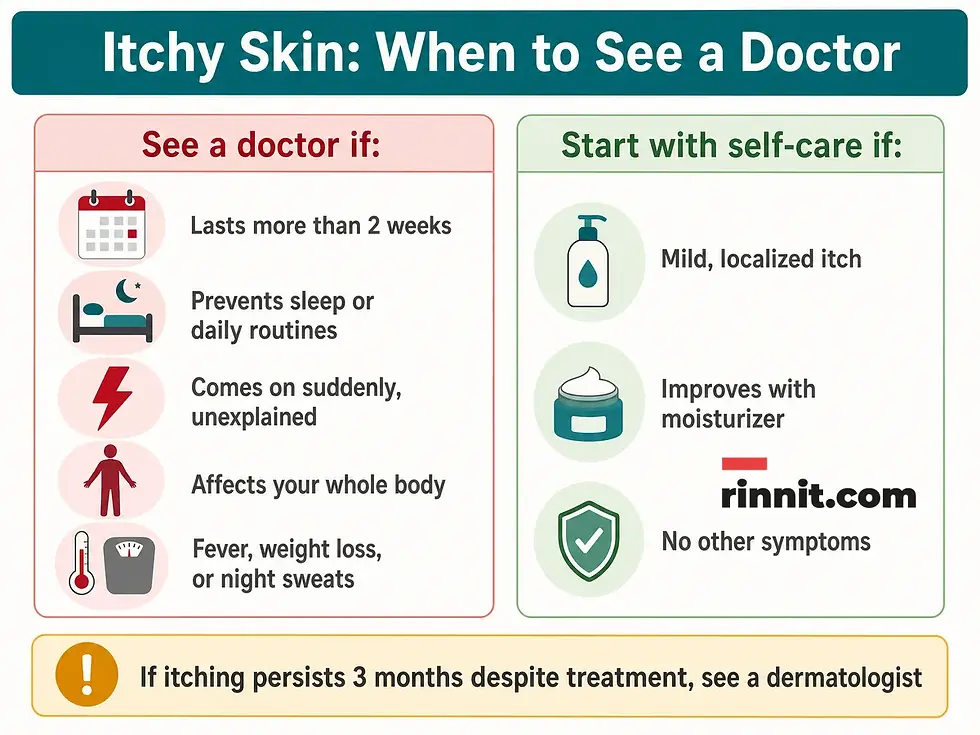
See your healthcare provider or a skin disease specialist (called a dermatologist) if the itching does any of the following:
Lasts more than two weeks and doesn't improve with self-care measures
Is severe and distracts you from your daily routines or prevents you from sleeping
Comes on suddenly and can't be easily explained
Affects your whole body
Comes with other symptoms, such as weight loss, fever, or night sweats
If the condition persists for three months despite treatment, see a dermatologist to be evaluated for skin disease. You may also need to see a doctor who specializes in internal medicine (an internist) to check for other diseases. [1]
What causes itchy skin?
Causes of itchy skin fall into five broad categories. The cause can also sometimes be impossible to determine. [1]
Cause category | What it includes |
Skin conditions | Dry skin (xerosis), eczema (dermatitis), psoriasis, scabies, parasites, burns, scars, insect bites, and hives |
Internal diseases | Liver disease, kidney disease, anemia, diabetes, thyroid problems, and certain cancers — these often cause itching all over the body |
Nervous system conditions | Multiple sclerosis, pinched nerves, and shingles (herpes zoster) |
Psychiatric conditions | Anxiety, obsessive-compulsive disorder, and depression |
Irritation and allergic reactions | Wool, chemicals, soaps, poison ivy, cosmetics, and reactions to certain medicines such as opioid pain medicines |
Internal causes of pruritus include liver disease, kidney disease, anemia, diabetes, thyroid problems, and certain cancers; itching that affects the whole body deserves extra attention because it might signal one of them. Itch linked to liver disease that slows the flow of bile is called cholestatic pruritus. In some cases, the cause of the itching simply cannot be determined.
Who is at higher risk?
Anyone can develop itchy skin, though some people have a higher risk than others. But you may be more likely to develop it if you:
Have a condition that can cause itching, such as dermatitis, kidney disease, anemia, or thyroid disease
Are an older adult, as skin can become drier with age
Can itchy skin cause complications?
Yes. Itchy skin that is severe or lasts more than six weeks is called chronic pruritus. For patients with chronic itch, this can affect quality of life. It might disturb your sleep or cause anxiety or depression.
Prolonged itching and scratching can also increase the intensity of the itch, possibly leading to skin injury, infection, and scarring. [1]
How is itchy skin diagnosed?
Diagnosing the cause of itchy skin starts with a physical exam and questions about your medical history. If your healthcare provider thinks your itchy skin is the result of a medical condition, you might have one or more tests. [2]
Test | What it looks for |
Blood test | A complete blood count can provide evidence of an internal condition causing your itch, such as anemia |
Liver and kidney function tests | Liver or kidney disorders and thyroid conditions, such as hyperthyroidism, can cause itching |
Chest X-ray | Can show if you have enlarged lymph nodes, which can go along with itchy skin |
How is itchy skin treated?
Treatment focuses on removing the cause of the itch. If home remedies don't ease your symptoms, your healthcare provider may recommend prescription medicine or other treatments. Controlling itchy skin symptoms can be challenging and may require long-term therapy. [2]
Corticosteroid creams and ointments
If your skin is itchy and inflamed, your healthcare provider may suggest applying a medicated cream or ointment to the affected areas. You might then cover the treated skin with damp cotton material. Moisture helps the skin absorb the cream and has a cooling effect.
If you have severe or long-term itching, your provider might suggest a bedtime routine: bathe in plain lukewarm water for 20 minutes, apply triamcinolone 0.025% to 0.1% ointment to the wet skin, and then put on pajamas. This traps the moisture and helps the medicine absorb. You would repeat this routine at bedtime for several nights.
Other creams and ointments
Other treatments you apply to your skin include calcineurin inhibitors, such as tacrolimus (Protopic) and pimecrolimus (Elidel). You may also find some relief with topical anesthetics, capsaicin cream, or doxepin cream.
Oral medicines
Antidepressants called selective serotonin reuptake inhibitors (SSRIs) may be helpful in easing some types of long-term itch. Examples include fluoxetine (Prozac) and sertraline (Zoloft). Another option is tricyclic antidepressants, such as doxepin. You may not feel the full benefit of some of these medicines until 8 to 12 weeks after starting treatment.
Light therapy (phototherapy)
Phototherapy involves exposing your skin to a specific type of light. This can be a good option for people who can't take oral medicines. You'll likely need a few phototherapy sessions, until the itching is under control.

What home remedies and self-care steps help?
For temporary relief of itching, the following self-care measures can help. [2]
Self-care step | How to do it |
Avoid itch triggers | Identify what's causing your symptoms and avoid it — wool clothing, an overly heated room, too many hot baths, or exposure to cleaning products |
Moisturize daily | Apply a hypoallergenic, fragrance-free moisturizer to affected skin at least once a day; for dry skin, thicker creams and ointments work better than lotions |
Treat a dry, itchy scalp | Try nonprescription medicated shampoos containing zinc pyrithione, ketoconazole, selenium sulfide, or coal tar; you might need to try a few products before finding one that works |
Use soothing, cooling products | Short-term nonprescription corticosteroid cream, calamine lotion, or creams with menthol, camphor, capsaicin, or pramoxine (adults only); keeping them in the refrigerator can enhance the soothing effect |
Avoid scratching | Cover the itchy area if you can't keep from scratching; trim your nails and wear gloves when you sleep if it helps |
Take a bath | Use lukewarm water and add about a half cup (100 grams) of Epsom salts, baking soda, or an oatmeal-based bath product; use a mild cleanser only on the underarms and groin; rinse, pat dry, and moisturize |
Reduce stress or anxiety | Stress can worsen itching; counseling, behavior modification therapy, acupuncture, meditation, and yoga can help |
Try nonprescription allergy medicine | Antihistamines such as diphenhydramine can make you drowsy, which may help before bedtime if itching disrupts sleep; older adults should ask a doctor first because these drugs can cause confusion and falls |
Use a humidifier | A humidifier may provide relief if home heating makes the air in your home dry |
Stay well rested | Getting enough sleep might reduce the risk of itchy skin |
Two important exceptions to keep in mind: corticosteroid creams do not help with the itch that follows a shingles infection, and antihistamines do not help with that itch either.
How can you prepare for a doctor's appointment?
You're likely to start by seeing your primary care provider, or you may be referred to a specialist in skin diseases (a dermatologist). [2]
What you can do. List your symptoms, when they occurred, and how long they lasted. List all medicines, vitamins, and herbs you're taking, or take the original bottles with a written list of the dosages and directions. And write down questions to ask your healthcare provider.
Questions to ask include: What is likely causing my symptoms? Are tests needed to confirm the diagnosis? Is my condition likely short term or long term? Do I need prescription medication, or can I use nonprescription products? What results can I expect?
What to expect from your doctor. Your provider will likely begin with your medical history and ask questions such as: When did symptoms begin? What did your skin look like when symptoms started? Is the itchiness interfering with your daily activities? What appears to worsen or improve your symptoms? What at-home treatments have you tried? Have you traveled recently, gone swimming or wading in a lake or pond, or been in contact with possible irritants such as pets or certain metals at home or at work?
Conclusion and next steps
Itchy skin, or pruritus, is a sensation that makes you want to scratch, and in most cases it traces back to dry skin — particularly in older adults, whose skin tends to become drier with age. The good news is that many people find relief through self-care steps such as daily moisturizing with fragrance-free products, lukewarm rather than hot baths, and avoiding known irritants like wool and harsh soaps.
However, itching is sometimes a signal of something more. If your itching lasts more than two weeks despite self-care, is severe enough to disturb sleep or daily life, appears suddenly without explanation, covers your whole body, or comes with fever, weight loss, or night sweats, it's time to see a healthcare professional. Diagnosis starts with a physical exam and may include blood tests, liver and kidney function tests, or a chest X-ray, and treatment focuses on removing the underlying cause.
Talk with a healthcare professional. If you have itching that lasts more than two weeks, is severe, covers your whole body, or comes with other symptoms like fever or weight loss, contact your healthcare provider. For more plain-language guides on skin conditions and everyday health concerns, explore the related articles on Rinnit.com.
Frequently Asked Questions
What is pruritus?
Pruritus is the medical name for itchy skin — an irritating sensation that makes you want to scratch. It is often caused by dry skin and is common in older adults, as skin tends to become drier with age.
What are the most common causes of itchy skin?
The most common cause is dry skin. Other causes include skin conditions such as eczema, psoriasis, and scabies; internal diseases such as liver disease, kidney disease, anemia, diabetes, and thyroid problems; nerve disorders such as shingles; psychiatric conditions such as anxiety; and irritation or allergic reactions to things like wool, soaps, and certain medicines.
When should I see a doctor for itchy skin?
See a healthcare provider if the itching lasts more than two weeks and doesn't improve with self-care, is severe and distracts you from daily routines or prevents sleep, comes on suddenly without explanation, affects your whole body, or comes with other symptoms such as weight loss, fever, or night sweats.
What tests might a doctor order for itchy skin?
Depending on your symptoms and history, a doctor may order a blood test (such as a complete blood count to check for anemia), liver and kidney function tests, or a chest X-ray to look for enlarged lymph nodes.
How can I stop the itch-scratch cycle?
You can help break the cycle by moisturizing daily with a fragrance-free cream, using lukewarm rather than hot baths, covering the itchy area, trimming your nails, wearing gloves at night, and keeping soothing products like calamine lotion in the refrigerator. If needed, a doctor can prescribe treatments such as corticosteroid creams, other medicated ointments, oral medicines, or light therapy.
Why does my skin itch all over my body?
Whole-body itching can be a symptom of an underlying illness, such as liver disease, kidney disease, anemia, diabetes, thyroid problems, or certain cancers. If itching affects your whole body, see a healthcare provider for evaluation.
Can stress cause itchy skin?
Yes. Stress and anxiety can trigger itching or make it worse, and they can also flare skin conditions like eczema. Managing stress can help break the itch-scratch cycle.
Can medicines cause itchy skin?
Yes, some medicines, including certain pain relievers and antibiotics, can cause itching. Do not stop a prescribed medicine on your own; talk with your provider first.
Do antihistamines help itchy skin?
Antihistamines can help itching caused by allergies or hives, and some types may help with sleep. They often do less for itching from dry skin or internal diseases, so ask a provider if itching continues.
When is itchy skin an emergency?
Get emergency help right away if itching comes with hives and trouble breathing, swelling of the face, lips or throat, or dizziness. These can be signs of a serious allergic reaction.
Related Reading
References
Mayo Clinic Staff. Itchy skin (pruritus) – Symptoms and causes. Mayo Clinic. Updated October 23, 2024. https://www.mayoclinic.org/diseases-conditions/itchy-skin/symptoms-causes/syc-20355006
Mayo Clinic Staff. Itchy skin (pruritus) – Diagnosis and treatment. Mayo Clinic. Updated October 23, 2024. https://www.mayoclinic.org/diseases-conditions/itchy-skin/diagnosis-treatment/drc-20355010
Butler DF. Pruritus and Systemic Disease. Medscape. Updated March 21, 2023. https://emedicine.medscape.com/article/1098029-overview
Chen S, Zhou F, Xiong Y. Prevalence and risk factors of senile pruritus: a systematic review and meta-analysis. BMJ Open. 2022;12(2):e051694. PMID 35210338. https://doi.org/10.1136/bmjopen-2021-051694
Hu X, Sang Y, Yang M, et al. Prevalence of chronic kidney disease-associated pruritus among adult dialysis patients: a meta-analysis of cross-sectional studies. Medicine (Baltimore). 2018;97(21):e10633. PMID 29794739. https://doi.org/10.1097/MD.0000000000010633
Roh YS, Choi J, Sutaria N, et al. Itch: epidemiology, clinical presentation, and diagnostic workup. J Am Acad Dermatol. 2022;86(1):1-14. PMID 34428534. https://doi.org/10.1016/j.jaad.2021.07.076
Medical disclaimer
This article is for informational purposes only and is not medical advice. Always consult a qualified healthcare professional for diagnosis and treatment decisions.



Comments