Non-Sustained Ventricular Tachycardia (NSVT): Risks and Management

Updated: 2 days ago
Medically reviewed by Dr. Baraa Alnahhal, MD · Last reviewed: October 19, 2026
Quick Answer: What is NSVT?
Non-sustained ventricular tachycardia (NSVT) is an abnormal heart rhythm in which the ventricles beat very rapidly for less than 30 seconds, ending on their own before significantly affecting blood pressure or consciousness. In a healthy heart it is typically benign, but with heart disease it may need treatment to prevent complications such as sudden cardiac death.
What the research says
Risk rises when the heart muscle is diseased. A meta-analysis of 18 studies (5,238 people) with non-ischemic cardiomyopathy found that NSVT was linked to nearly three times the risk of life-threatening ventricular arrhythmia events (hazard ratio 2.90, 95% CI 2.31 to 3.64) (Kuroda et al., J Cardiol, 2024). [1]
The meaning of NSVT can differ between men and women. Among 1,455 people referred for Holter monitoring, NSVT was found in 9.7% of women and 20.6% of men. Over a median 8.3 years, it was linked to higher mortality in men (HR 1.6) but not in women (HR 1.2, not statistically significant) (Christiansen et al., Heart Rhythm O2, 2024). [2]
Longer monitoring catches more episodes. In a Cleveland Clinic cohort of 2,805 children and adults with congenital heart disease seen in cardiology clinic, 172 (6%) had NSVT on ambulatory patch monitors, and only 55% of cases were detected within the first 2 days of monitoring (El Assaad et al., Pediatr Cardiol, 2026). [3]
Key Takeaways: NSVT at a Glance
Feature | Details |
Duration | Less than 30 seconds per episode. |
Origin | Lower heart chambers (ventricles). |
Common Symptoms | Palpitations, dizziness, or no symptoms at all. |
Risk Factor | Generally harmless in healthy hearts; risky in diseased hearts. |
Detection | Often found incidentally via EKG, telemetry, or smartwatches. |
Treatment Goal | Symptom relief and prevention of serious cardiac events. |

How does non-sustained ventricular tachycardia (NSVT) work?
Non-sustained ventricular tachycardia (NSVT) is a brief, self-limiting burst of rapid heart rate that starts in the ventricles, the heart's primary pumping stations. "Non-sustained" indicates that the rapid rhythm is self-limiting and brief. "Ventricular" identifies the ventricles, the heart's primary pumping stations, as the source of the electrical misfire. "Tachycardia" is simply the clinical term for a heart rate that exceeds the normal resting range. When these three factors combine, the result is a short burst of speed from the lower heart that usually resolves before the body experiences a major drop in blood flow.
What are the symptoms of non-sustained ventricular tachycardia (NSVT)?
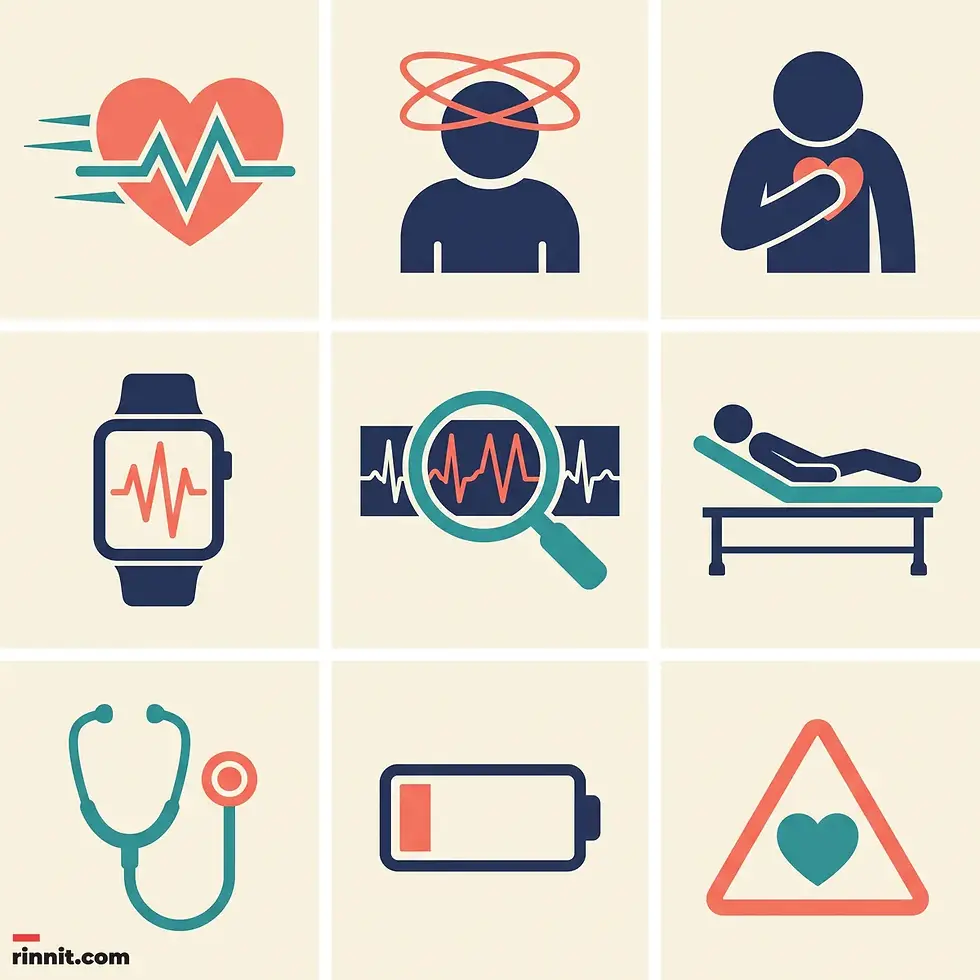
NSVT affects individuals in different ways. Some may experience several brief episodes a day, while others may only have one. It is also common for these episodes to occur without the person noticing them at all. [5]
Heart Palpitations: The most frequent symptom, often described as a pounding, racing, or "flip-flopping" sensation in the chest.
Dizziness: A feeling of lightheadedness during or immediately after a burst of fast heartbeats. [5]
Near-Fainting: The sensation that you are about to lose consciousness (near-syncope). [5]
It is important to note that the absence of symptoms does not always mean the condition is harmless. In people with certain types of heart disease, frequent asymptomatic episodes can still be clinically significant and may only be detected through professional monitoring. [5]
Symptom | Description |
Palpitations | Feeling the heart pound or race. |
Dizziness | Lightheadedness or unsteadiness. |
Near-Syncope | Feeling as though you might pass out. |
Asymptomatic | No noticeable physical sensations. |
What causes non-sustained ventricular tachycardia, and which conditions are linked?
NSVT can occur for a variety of reasons. In some cases, it appears in an otherwise healthy heart for unknown reasons, a condition referred to as idiopathic NSVT. However, it is frequently linked to structural or functional heart issues. [5]
Common Underlying Causes
Cardiomyopathy: Conditions that affect the heart muscle, such as hypertrophic or dilated cardiomyopathy. [5]
Ischemic Heart Disease: Damage from a past or current heart attack, or unstable angina. [5]
Inherited Arrhythmia Syndromes: Genetic conditions like Brugada syndrome or Long/Short QT syndromes.
Valvular Issues: Such as mitral valve prolapse. [5]
Hypertensive Heart Disease: Damage caused by long-term high blood pressure. [5]
Risk of Complications
The primary concern with NSVT is its potential to lead to sudden cardiac death, but this risk is almost exclusively tied to individuals who also have significant underlying heart problems like heart failure, cardiac sarcoidosis, or amyloidosis. For those with a structurally normal heart, the risk remains very low. Call 911 or your local emergency number if a racing heartbeat comes with fainting, chest pain, or severe shortness of breath.
How is non-sustained ventricular tachycardia (NSVT) diagnosed?
Because NSVT is often brief and silent, it is frequently an "incidental diagnosis", found while testing for something else or noticed by a patient on a wearable device like a smartwatch. [5]
Electrocardiogram (EKG): A standard test to record the heart's electrical activity. [5]
Ambulatory Monitoring: Wearing a portable device (like a Holter monitor) for 24 hours or longer to capture intermittent episodes.
Echocardiogram: An ultrasound of the heart to check its structure and pumping function. [5]
Stress Testing: Monitoring the heart's rhythm during physical exertion. [5]
Advanced Imaging: Cardiac MRI or CT angiograms to look for scarring or blockages. [5]
Electrophysiology (EP) Study: A specialized procedure to map the heart's electrical system and locate the origin of the arrhythmia. [5]
How is non-sustained ventricular tachycardia (NSVT) managed and treated?
Treatment for NSVT is highly personalized, focusing on reducing symptoms and lowering the risk of serious complications.
Observation: If the heart is healthy and there are no symptoms, no treatment may be necessary. [5]
Medication: Beta-blockers, verapamil, or antiarrhythmic drugs can help regulate the heart rate and prevent episodes. [5]
Catheter Ablation: A procedure where a thin tube is used to destroy the small area of heart tissue responsible for the abnormal signals. [5]
Implantable Cardioverter Defibrillator (ICD): For those at high risk of sudden cardiac death, a device can be implanted to monitor the heart and deliver a corrective shock if a dangerous rhythm occurs. [5]

Conclusion
Non-sustained ventricular tachycardia is a common arrhythmia that ranges from a benign nuisance to a significant clinical marker. While the term may sound intimidating, the outlook for most people, especially those with healthy hearts, is excellent. By identifying underlying causes and managing symptoms through medication or specialized procedures, the risks associated with NSVT can be effectively minimized.
Frequently Asked Questions
What exactly is NSVT?
It is a burst of fast heartbeats from the lower chambers lasting less than 30 seconds.
How long does an episode of NSVT last?
By definition, it lasts anywhere from a few beats up to 29 seconds.
Is NSVT a heart attack?
No, it is an electrical rhythm issue, though it can be caused by a past heart attack.
Can a smartwatch detect NSVT?
Yes, many modern wearables can alert users to irregular or fast heart rhythms.
What are heart palpitations?
The feeling that your heart is skipping a beat, pounding, or racing.
Is NSVT always dangerous?
No, in a healthy heart, it is often considered harmless.
What makes NSVT risky?
The presence of underlying heart disease, such as heart failure or cardiomyopathy.
What is the most common symptom?
Heart palpitations are the symptom most frequently reported by patients.
Can you have NSVT without knowing it?
Yes, many people have episodes that cause no physical sensations at all.
What does "non-sustained" mean?
It means the rhythm stops on its own within a very short period.
Where do the ventricles sit in the heart?
They are the two large lower chambers responsible for pumping blood to the body and lungs.
What is tachycardia?
A heart rate that is faster than the normal resting rate (usually over 100 bpm).
What is an incidental diagnosis?
A diagnosis made while looking for or treating a different condition.
How does an EKG help?
It provides a snapshot of the heart's electrical activity at a specific moment.
What is a Holter monitor?
A portable EKG device worn for a day or more to track the heart over time.
Why is an echocardiogram performed?
To see if the heart's structure or muscle function is abnormal.
What is idiopathic NSVT?
NSVT that occurs in a healthy heart without an identifiable cause.
Can high blood pressure cause NSVT?
Yes, long-term hypertension can lead to heart changes that trigger arrhythmias.
What is Brugada syndrome?
A rare genetic condition that affects the heart's electrical system.
What is Long QT syndrome?
A heart rhythm condition that can cause fast, chaotic heartbeats.
Can a past heart attack cause NSVT?
Yes, scar tissue from a heart attack can interfere with electrical signals.
What is sudden cardiac death?
A sudden, unexpected loss of heart function, breathing, and consciousness.
Who is at highest risk for complications?
People with heart failure or severe cardiomyopathy.
Do I need treatment if I have no symptoms?
Not necessarily, unless you have underlying heart disease that increases your risk.
What are beta-blockers?
Medications that slow the heart rate and lower blood pressure.
How do antiarrhythmic drugs work?
They help maintain a normal heart rhythm by affecting electrical signals.
What is catheter ablation?
A procedure to "reset" the heart's rhythm by destroying problematic tissue.
What is an ICD?
A small device that can shock the heart back into a normal rhythm if needed.
Is NSVT the same as AFib?
No, AFib starts in the upper chambers (atria), while NSVT starts in the lower chambers.
Can exercise trigger NSVT?
Yes, in some people, physical exertion can bring on an episode.
What should I do if I feel dizzy?
Sit or lie down immediately and contact your healthcare provider.
Is NSVT hereditary?
Some underlying causes, like genetic heart syndromes, can be inherited.
Can caffeine cause NSVT?
Stimulants like caffeine can sometimes trigger palpitations or arrhythmias.
What is an EP study?
A procedure to map the heart's electrical pathways in detail.
How is a cardiac MRI different from an echo?
An MRI provides much more detailed images of the heart muscle and any scarring.
What is mitral valve prolapse?
A condition where the heart's mitral valve doesn't close properly.
Can stress cause NSVT?
Extreme stress or anxiety can sometimes trigger heart rhythm changes.
What is unstable angina?
Chest pain that occurs unexpectedly and may signal a coming heart attack.
Is NSVT more common as you age?
Yes, as the likelihood of underlying heart disease increases with age.
Can children have NSVT?
Yes, though it is much less common than in adults.
What is near-syncope?
The medical term for feeling like you are about to faint.
Does NSVT affect blood pressure?
Because it is brief, it usually does not have a major impact on blood pressure.
Can I drive if I have NSVT?
Often yes, but check with your cardiologist first, and do not drive if episodes cause dizziness or fainting.
How often should I have my heart checked?
Your doctor will determine a schedule based on your specific risks and symptoms.
What is the difference between sustained and non-sustained VT?
Sustained VT lasts longer than 30 seconds and is much more dangerous.
Can electrolyte imbalances cause NSVT?
Yes, low levels of potassium or magnesium can affect heart rhythm.
What is cardiac sarcoidosis?
An inflammatory disease that can affect the heart's electrical system.
When is NSVT considered "frequent"?
Doctors generally look at the total number of episodes over a 24-hour period.
Should I call emergency services for palpitations?
Only if they are accompanied by chest pain, severe shortness of breath, or fainting.
Where can I find a heart rhythm specialist?
Your primary care doctor can refer you to a cardiologist or electrophysiologist.
Related Reading
What Is Ventricular Tachycardia? A Plain-Language Guide to the Fast Heart Rhythm That Starts in the Heart's Lower Chambers explains sustained fast rhythms that start in the lower heart chambers.
Premature Ventricular Contractions (PVCs): Symptoms, Causes, and Treatment covers extra heartbeats that often occur alongside NSVT.
Holter Monitor: What It Detects, How It Works and Results explains the wearable heart monitor used to detect NSVT.
Understanding Implantable Cardioverter Defibrillators (ICD) describes devices that protect high-risk patients from dangerous rhythms.
References
Kuroda S, Kawamura I, Sahashi Y, Kuno T. The significance of non-sustained ventricular tachycardia on life-threatening ventricular arrhythmia events in patients with non-ischemic cardiomyopathy in the contemporary era: a systematic review and meta-analysis. J Cardiol. 2024;84(3):177-179. PMID 38754764. https://doi.org/10.1016/j.jjcc.2024.05.004
Christiansen PB, Larsen BS, Hadad R, et al. Sex differences in the prognosis of nonsustained ventricular tachycardia detected on Holter recording. Heart Rhythm O2. 2024;5(7):427-434. PMID 39802887. https://doi.org/10.1016/j.hroo.2024.05.007
El Assaad I, Dakik L, E'mar AR, et al. Non-sustained ventricular tachycardia in children and adult congenital heart disease: optimal duration and clinical significance. Pediatr Cardiol. 2026;47(7):3034-3042. PMID 41231244. https://doi.org/10.1007/s00246-025-04086-y
Katritsis DG, Zareba W, Camm AJ. Nonsustained ventricular tachycardia. J Am Coll Cardiol. 2012;60(20):1993-2004. PMID 23083773. https://doi.org/10.1016/j.jacc.2011.12.063
Cleveland Clinic. Non-sustained ventricular tachycardia (NSVT). Cleveland Clinic. Last updated November 25, 2025. https://my.clevelandclinic.org/health/diseases/nsvt
Disclaimer
The information provided in this article is for educational purposes only and should not be considered medical advice. Always consult with a qualified healthcare professional for diagnosis and treatment of any medical condition. If you have chest pain, severe shortness of breath, or fainting, seek emergency care immediately.



Comments