Premature Ventricular Contractions (PVCs): Symptoms, Causes, and Treatment

Updated: 2 days ago
Medically reviewed by Dr. Baraa Alnahhal, MD · Last reviewed: October 2026
Quick Answer
Premature ventricular contractions (PVCs) are extra heartbeats that start in the heart's lower chambers [1] [3] and arrive sooner than expected. They are usually not dangerous in people without heart disease and often need no treatment [1] [2]. They are linked to caffeine, tobacco, some medicines and anxiety [1] [3]. Frequent or bothersome PVCs may be treated with trigger avoidance, beta blockers or catheter ablation [2] [3].
What the research says
Caffeinated coffee increased PVCs in a randomized trial. In 100 adults wearing a continuous ECG for 14 days, days with caffeinated coffee had 154 daily premature ventricular contractions versus 102 on days without caffeine (rate ratio 1.51); the trial's primary outcome, premature atrial contractions, did not differ significantly (Marcus et al., N Engl J Med, 2023) [5].
Catheter ablation looked better than antiarrhythmic drugs for reducing PVCs, with fewer complications. A systematic review of 5 studies (1,113 patients, only one randomized) found ablation seemed superior for PVC recurrence, frequency, and burden, with complication rates of 0% to 5.6% versus 9.5% to 21% for drugs; all studies had potential for bias (De Silva et al., JACC Clin Electrophysiol, 2023) [6].
Weakened heart function from PVCs is uncommon, and how many extra beats you have is the key factor. In a meta-analysis of 17 studies of 1,701 children with structurally normal hearts, left ventricular dysfunction occurred in 40 patients, with a mean PVC burden of 32.5% in those affected versus 15.47% in those without, and function recovered in all but one (Flore et al., Europace, 2025) [7].
What Are Premature Ventricular Contractions?
A premature ventricular contraction, or PVC, is a type of irregular heartbeat, also called an arrhythmia [1]. PVCs are extra heartbeats that start in one of the heart's lower chambers, called the ventricles [1] [3]. The extra beats change the usual pattern of the heartbeat.
PVCs go by several other names in medical settings: premature ventricular complexes, ventricular premature beats, and ventricular extrasystoles [1].
The reassuring point for most people: if you do not have heart disease, PVCs may not be a concern, and you may not need treatment [1] [2]. Treatment may be recommended if the irregular beats are very frequent or bothersome, or if you have an underlying heart condition [1].

Figure 1. A normal heartbeat starts high in the heart and follows a regular rhythm, while a premature ventricular contraction starts early in one of the lower chambers and disrupts the pattern.
How the Heart Beats
To understand PVCs, it helps to know how the heart works. A typical heart has four chambers. The two upper chambers are called the atria. The two lower chambers are called the ventricles [1].
The heart's electrical system controls the heartbeat. Electrical signals start in a group of cells at the top of the heart called the sinus node. They pass through a pathway between the upper and lower chambers called the atrioventricular node, or AV node [1]. The movement of these signals causes the heart to squeeze and pump blood.
In a healthy heart, this signaling process usually goes smoothly, and the heart at rest beats about 60 to 100 times a minute [1].
But with PVCs, the heartbeats are not regular. The extra beats start in the lower chambers instead of the upper ones, and they begin sooner than typically expected.
Key Facts at a Glance
Question | Answer |
What they are | Extra heartbeats that start in the ventricles and arrive sooner than expected |
Other names | Premature ventricular complexes, ventricular premature beats, ventricular extrasystoles [1] |
Are they serious | |
Symptoms | Often none; sometimes fluttering, pounding, jumping, or skipped beats [1] |
Common triggers | Caffeine, tobacco, some medicines, alcohol or drug misuse, adrenaline, heart muscle injury [1] |
Diagnosis | Exam plus heart rhythm tests: ECG, Holter monitor, event monitor, or stress test [2] |
Treatment | Often none; lifestyle changes, beta blockers or calcium channel blockers, or radiofrequency ablation for frequent PVCs [2] |
What are the symptoms of premature ventricular contractions (PVCs)?
Premature ventricular contractions (PVCs) may cause no symptoms at all in some people [1] [3]. When they do, the extra beats can cause unusual feelings in the chest, such as:
These changes may make you more aware of your heartbeat than usual [1].
When to See a Doctor
If you feel changes in your heartbeat, make an appointment for a health checkup [1]. A healthcare professional can figure out whether your symptoms are due to a heart condition or another health concern [1].
What causes premature ventricular contractions?
The cause of PVCs is not always clear. Certain things, including heart diseases or changes in the body, can make cells in the lower heart chambers electrically unstable [1]. Heart disease or scarring may cause the heart's electrical signals to take the wrong path [1].
PVCs may be caused by some medicines, including decongestants and antihistamines, alcohol or drug misuse, stimulants such as caffeine or tobacco, higher levels of adrenaline in the body due to exercise or anxiety, and injury to the heart muscle due to disease [1].
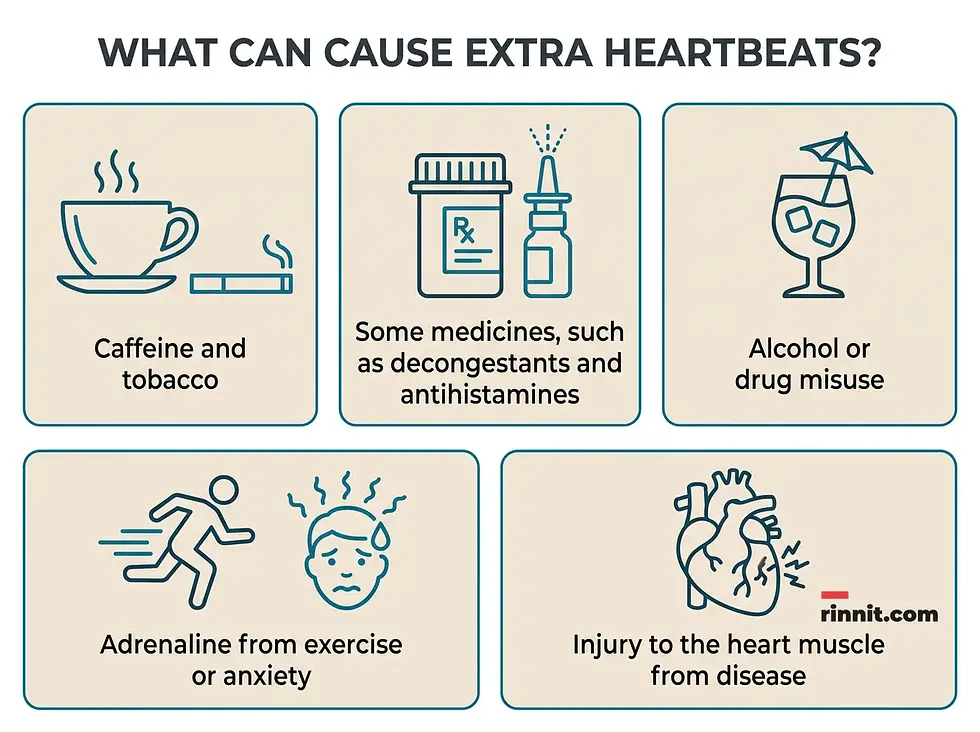
Figure 2. Known causes and triggers of premature ventricular contractions, from everyday stimulants to heart muscle injury.
What are the risk factors for premature ventricular contractions?
Certain lifestyle choices and health conditions make a person more likely to have premature ventricular contractions.
Risk factor | Notes |
Caffeine or illicit drugs | Includes drugs such as cocaine or methamphetamines [1] |
All forms of tobacco use | |
Regular alcohol consumption | |
Exercise | A trigger for certain types of PVCs [1] |
Anxiety [1] | Emotional stress can prompt extra beats |
Heart attack [1] | Prior heart attack raises risk |
Coronary artery disease [1] | Narrowed heart arteries |
Congenital heart defect [1] | A heart condition present at birth |
Heart failure [1] | Weakened heart muscle and other heart conditions |
What complications can premature ventricular contractions cause?
Possible complications of PVCs may include other types of irregular heartbeats and weakening of the heart muscle, called cardiomyopathy [1] [7].
In some people with heart disease, frequent PVCs can cause dangerous heartbeat changes that lead to sudden cardiac death [1]. This complication is rare [1].
How are premature ventricular contractions diagnosed?
To diagnose PVCs, a healthcare professional examines you. You are usually asked about your medical history and lifestyle habits, and the professional listens to your heart with a stethoscope [2].
Several simple tests diagnose PVCs and help find their cause:
Test | What it does |
Electrocardiogram (ECG or EKG) | Shows how the heart is beating and can diagnose PVCs; sticky patches on the chest, and sometimes the arms and legs, connect by wires to a computer [2] |
Holter monitor | A small, wearable ECG device records the heartbeat for a day or more during daily activities; some personal devices such as smartwatches offer portable ECG monitoring [2] |
Event monitor | A portable ECG device worn for up to 30 days or until an irregular heartbeat or symptoms occur; you press a button when symptoms happen [2], and some monitors automatically spot irregular beats |
Exercise stress test | Walking on a treadmill or riding a stationary bike while heart activity is watched, showing whether exercise triggers PVCs [2] |
What are the treatment options for premature ventricular contractions?
Most people with PVCs do not have heart disease and will not need treatment. If you have heart disease, PVCs can lead to more-serious irregular heartbeats [2], and treatment depends on the cause.
For frequent PVCs, treatment may include one or more of the following:
Approach | How it works |
Lifestyle changes | |
Medications | |
Radiofrequency catheter ablation |
Which self-care tips help manage premature ventricular contractions?
Premature ventricular contractions can be managed by knowing your triggers, limiting stimulants, asking about safe exercise and managing stress.

Figure 3. Four self-care steps that can reduce extra heartbeats and improve heart health.
Know your triggers. If you have frequent PVCs, keep a diary of the day and timing of symptoms [2]. A diary may help show which foods, drinks, or activities trigger the extra beats.
Limit or avoid stimulants. Caffeine, alcohol, tobacco, and illicit drugs are known to cause PVCs [2].
Ask about exercise. Some types of exercise may trigger PVCs or make them worse [2]. Ask your healthcare team what type and amount of exercise is safe for you.
Manage stress. Anxiety can trigger irregular heartbeats, including PVCs [1] [2]. Find ways to reduce emotional stress; mindfulness practice and support groups are two ideas [2]. If you need help managing anxiety, talk to a healthcare professional about tips and medicines that may help.
How should you prepare for a PVC appointment?
You might start by seeing your family healthcare professional, and you may be told to see a doctor trained in heart diseases, called a cardiologist [2].
What You Can Do
Take someone with you to your appointment, if possible, to help you remember the information you receive [2].
Before you go, make a list of your symptoms and when they started, important medical information including other recent health conditions and family history of heart disease, all medicines, vitamins, and supplements with dosages, and the questions you want to ask [2].
Questions to ask your healthcare team include: What is the likely cause of my symptoms? What tests do I need? What treatment do you suggest, if any? Do I need to change any medicines I take for other conditions? What lifestyle changes can reduce my symptoms? Do I need to stop alcohol and caffeine? What is my risk of long-term complications? How will you check my health over time?
What to Expect From Your Doctor
Your healthcare team is likely to ask whether symptoms come and go or are constant, how much alcohol and caffeine you use, whether you smoke or use other tobacco, whether you use illicit drugs, and how often you feel stressed or anxious and what you do to manage those feelings [2].
Conclusion and Next Steps
Extra heartbeats feel unsettling, but for most people with a healthy heart, PVCs are not dangerous and often need no treatment at all. The pattern to watch is simple: changes in your heartbeat, whether fluttering, pounding, or skipped beats, are worth a checkup so a professional can confirm whether a heart condition or something else is responsible.
For frequent or bothersome PVCs, straightforward options exist, from cutting caffeine and tobacco to blood pressure medicines and catheter ablation. Keeping a symptom diary and managing stress round out the self-care toolkit.
Take action. If you feel changes in your heartbeat, schedule a health checkup with a healthcare provider.
FAQ
What are premature ventricular contractions (PVCs)?
PVCs are extra heartbeats that start in the lower chambers of the heart (the ventricles) instead of at the top, arriving sooner than expected and changing the usual heartbeat pattern. They are also called premature ventricular complexes, ventricular premature beats, or ventricular extrasystoles.
Are PVCs dangerous?
In most cases, no. If you do not have heart disease, PVCs may not be a concern and often do not need treatment. In some people with heart disease, frequent PVCs can lead to more-serious irregular heartbeats, weakening of the heart muscle, or, rarely, dangerous heartbeat changes.
What causes extra heartbeats to happen?
The cause is not always clear, but known causes include some medicines such as decongestants and antihistamines, alcohol or drug misuse, stimulants like caffeine or tobacco, higher adrenaline from exercise or anxiety, and injury to the heart muscle due to disease.
How are PVCs diagnosed?
A healthcare professional examines you, takes a medical history, and listens to your heart. Tests may include an electrocardiogram (ECG), a wearable Holter monitor, an event monitor worn up to 30 days, or an exercise stress test to see if exercise triggers the extra beats.
How are PVCs treated?
Most people with PVCs need no treatment. For frequent or bothersome PVCs, options include lifestyle changes such as avoiding caffeine and tobacco, blood pressure medicines such as beta blockers and calcium channel blockers, or radiofrequency catheter ablation, a procedure that creates tiny scars to block the abnormal signals.
Additional Resources
For further reading, these authoritative external references support the information above:
American Heart Association. Premature Contractions: PACs and PVCs
National Heart, Lung, and Blood Institute. What Is an Arrhythmia?
Content reviewed and produced following the Rinnit editorial framework. Last updated: October 13, 2026.
This article is for educational purposes and is not medical advice.
Related Reading
Learn more in our guide to Holter Monitor: What It Detects, How It Works and Results.
References
Mayo Clinic Staff. Premature ventricular contractions (PVCs) - Symptoms & causes. Mayo Clinic. September 20, 2025. https://www.mayoclinic.org/diseases-conditions/premature-ventricular-contractions/symptoms-causes/syc-20376757
Mayo Clinic Staff. Premature ventricular contractions (PVCs) - Diagnosis & treatment. Mayo Clinic. September 20, 2025. https://www.mayoclinic.org/diseases-conditions/premature-ventricular-contractions/diagnosis-treatment/drc-20376762
American Heart Association. Premature Contractions ‒ PACs and PVCs. American Heart Association. Last reviewed September 24, 2024. https://www.heart.org/en/health-topics/arrhythmia/about-arrhythmia/premature-contractions-pacs-and-pvcs
National Heart, Lung, and Blood Institute. What Is an Arrhythmia?. National Heart, Lung, and Blood Institute. Last updated March 24, 2022. https://www.nhlbi.nih.gov/health/arrhythmias
Marcus GM, Rosenthal DG, Nah G, et al. Acute Effects of Coffee Consumption on Health among Ambulatory Adults. N Engl J Med. 2023;388(12):1092-1100. PMID 36947466. https://doi.org/10.1056/NEJMoa2204737
De Silva K, Haqqani H, Mahajan R, et al. Catheter Ablation vs Antiarrhythmic Drug Therapy for Treatment of Premature Ventricular Complexes: A Systematic Review. JACC Clin Electrophysiol. 2023;9(6):873-885. PMID 37380322. https://doi.org/10.1016/j.jacep.2023.01.035
Flore F, Lioncino M, Cicenia M, et al. Premature ventricular contraction-induced ventricular dysfunction in children without structural heart disease: a systematic review and meta-analysis. Europace. 2025;27(8):euaf167. PMID 40796120. https://doi.org/10.1093/europace/euaf167



Comments