Neurosyphilis: Understanding the Neurological Complications of Syphilis

Updated: 2 days ago
Medically reviewed by Dr. Baraa Alnahhal, MD · Last reviewed: October 2026
Quick Answer: Key Facts About Neurosyphilis
Neurosyphilis is a neurological complication that occurs when syphilis bacteria, Treponema pallidum, invade the brain and spinal cord. [1] It can cause headaches, personality changes, vision problems, nerve pain and loss of coordination. [1] Untreated syphilis and a weakened immune system raise the risk. [1] It is diagnosed with blood tests and spinal fluid analysis and treated with antibiotics, most commonly penicillin. [1]
Feature | Details |
What it is | A neurological complication that happens when syphilis bacteria invade the brain and spinal cord. [1] |
Primary cause | The bacterium Treponema pallidum, which spreads through sexual contact. [1] |
Common symptoms | Headaches, personality changes, vision problems, nerve pain, and loss of coordination. [1] |
Risk factors | Untreated syphilis, unprotected sex, and a weakened immune system (for example, HIV). [1] |
Diagnosis | Blood tests and cerebrospinal fluid (CSF) analysis through a lumbar puncture. [1] |
Treatment | Antibiotics, most commonly penicillin given by IV or intramuscular injection. [1] |
What the research says
Ceftriaxone may be a workable alternative to penicillin. In a retrospective study of 208 people treated for neurosyphilis at eight French hospitals (42 given ceftriaxone, 166 given benzylpenicillin), overall clinical response was higher with ceftriaxone in the raw data (98% vs 76%), and blood-test response at 6 months was similar (88% vs 82%). Hospital stays were shorter with ceftriaxone, and no major side effects were reported in either group. After statistical adjustment, complete-response rates were no longer significantly different, and the authors say randomized trials are needed to confirm the results. (Bettuzzi et al., Lancet Infect Dis, 2021) [2]
A spinal fluid marker may help with diagnosis. A meta-analysis of 6 studies involving 720 people with syphilis and 338 with neurosyphilis found that a spinal fluid marker called CXCL13 had a pooled sensitivity of 82% and a pooled specificity of 84% for detecting neurosyphilis. Based on limited evidence, the authors conclude it can help support the diagnosis. (Luan et al., Int J STD AIDS, 2023) [3]
What Is Neurosyphilis?
Neurosyphilis is a medical condition that happens when the bacterium that causes syphilis, Treponema pallidum, enters the central nervous system (the brain and spinal cord). [1] Syphilis is best known as a sexually transmitted infection (STI), and neurosyphilis is that infection reaching the nervous system. The bacteria can reach the nervous system at any point after the first infection, even within the first few weeks. [1] Not everyone with syphilis develops neurosyphilis symptoms. [1]
Syphilis and neurosyphilis are related but distinct. Syphilis causes signs such as a painless genital sore or a skin rash, while neurosyphilis causes neurological and psychiatric symptoms. [1] If it is left untreated, neurosyphilis can lead to serious complications, including permanent paralysis, dementia, and death. [1]
What are the five forms of neurosyphilis?
Researchers group neurosyphilis into early and late forms. The symptoms a person has depend on which form develops.
Early Neurosyphilis
Early forms usually appear between the first few weeks and the first several years after infection. [1]
Asymptomatic neurosyphilis (ANS): the most common form. There are no neurological symptoms, and it is found only when a spinal fluid analysis shows evidence of syphilis. [1]
Meningeal neurosyphilis: inflammation of the meninges, the three protective layers around the brain and spinal cord. It causes headache, nausea, vomiting, and neck stiffness. [1]
Meningovascular neurosyphilis: a more severe early form in which inflammation of the artery walls in the brain can lead to blood clots and stroke. [1]
Late Neurosyphilis
Late forms develop many years after the first infection, usually in people who never received proper treatment for syphilis. They are less common today because of better prevention, screening, and treatment. [1]
General paresis: chronic inflammation that breaks down brain tissue. It can appear about 3 to 30 years after infection [1] and causes personality changes, mood disturbances, and psychiatric conditions such as delirium or psychosis. [1]
Tabes dorsalis: the most severe form, in which parts of the spinal cord break down. It can appear about 5 to 50 years after infection [1] and causes intense nerve pain, loss of coordination (ataxia), and bladder problems. [1]

What are the symptoms and warning signs of neurosyphilis?
Because neurosyphilis can affect different parts of the nervous system, its symptoms are varied and can look like those of other neurological conditions.
Early Warning Signs
Cognitive and Psychiatric Changes
In later stages, neurosyphilis can look like a mental health crisis. People may have irritability, personality changes, forgetfulness, and poor judgment. [1] Severe cases can lead to seizures, delusions, and depression. [1]
Coordination and Physical Changes
Tabes dorsalis is marked by loss of reflexes, trouble walking, burning or tingling sensations, and abnormal pupils called Argyll Robertson pupils [1], which are small and do not react to light.

What causes neurosyphilis, how does it spread and who is at risk?
The cause of neurosyphilis is the Treponema pallidum bacterium. Syphilis spreads through sexual contact (vaginal, anal, or oral sex). [1] Neurosyphilis itself is not contagious, because it is a complication that develops inside the person who has syphilis. [1]
Syphilis does not go away without antibiotic treatment, and the risk of neurosyphilis symptoms rises the longer syphilis stays untreated. [1] For some people, the infection of the nervous system clears on its own without causing symptoms. [1]
Who Is at Higher Risk
People with untreated syphilis: anyone with syphilis who does not receive antibiotics. [1]
People with weakened immune systems: those living with HIV tend to develop neurosyphilis symptoms sooner than those without HIV. [1]
People who have unprotected sex: this raises the chance of getting syphilis. Men who have sex with men account for a large share of syphilis cases in the United States [1], which is why regular screening matters.
How is neurosyphilis diagnosed?
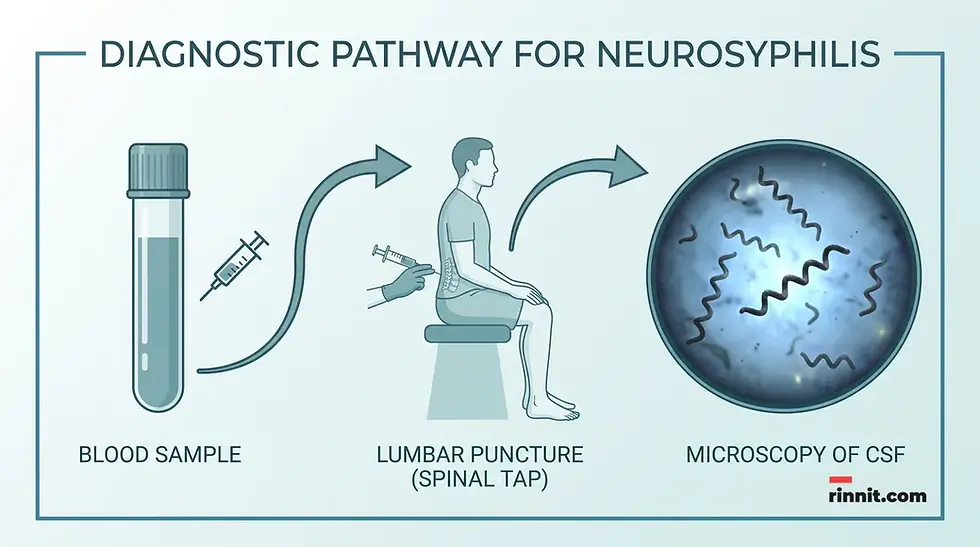
A healthcare provider starts with your symptoms, medical history, and a physical and neurological exam. If syphilis and neurosyphilis are suspected, they usually order blood tests for syphilis bacteria, then a lumbar puncture (spinal tap) to collect cerebrospinal fluid, which is analyzed for evidence of the infection. [1] The CDC recommends an HIV test for everyone with syphilis whose HIV status is unknown or who previously tested negative. [1]
How is neurosyphilis treated and followed up?
Stopping neurosyphilis and keeping it from getting worse means treating the syphilis infection with antibiotics. Penicillin is the most common choice, given by IV or by intramuscular injection. [1] Ceftriaxone is another common antibiotic. [1]
After treatment, follow-up blood tests are used to make sure the infection is responding. Repeat lumbar punctures are usually needed only if symptoms or blood tests do not improve. [1] Attending every follow-up visit is an important part of treatment.
Can the Damage Be Reversed?
Antibiotics stop neurosyphilis from progressing, but they may not reverse neurological damage that has already happened. [1] People with asymptomatic or meningeal neurosyphilis who are properly treated generally return to their original health. [1] People with meningovascular neurosyphilis, general paresis, or tabes dorsalis may improve but usually do not fully return to their original health. [1] That is why early detection and treatment matter so much.
How can neurosyphilis be prevented?
The only way to prevent neurosyphilis is to avoid getting syphilis. If you are sexually active, using a condom correctly lowers your chance of infection [1], and regular screening for syphilis and other STIs helps catch an infection early. Getting tested and treated as soon as symptoms appear, or when a partner tests positive, can stop syphilis from progressing to neurosyphilis. [1]
What is the bottom line on neurosyphilis?
Neurosyphilis is a complication of untreated syphilis in which the bacteria reach the brain and spinal cord. It ranges from forms with no symptoms to severe late-stage disease, and it can cause stroke, dementia, and paralysis if untreated. [1] Blood and spinal fluid tests can diagnose it, and antibiotics can stop it from progressing. If you have ever tested positive for syphilis, did not finish treatment, or have unexplained neurological symptoms, talk to a healthcare provider about testing.
Protect your neurological health. For more information on sexual health screenings and finding specialized neurological care, visit Rinnit.com.
Frequently Asked Questions
Can neurosyphilis be cured?
Antibiotics can clear the infection and stop neurosyphilis from getting worse. People with the asymptomatic or meningeal forms usually return to their original health with proper treatment. [1] Others may improve but can have lasting problems, because treatment may not reverse damage that has already occurred. [1]
How do I know if I have neurosyphilis?
Many people have no symptoms at first (the asymptomatic form). If you have ever tested positive for syphilis and did not finish treatment, or you have unexplained headaches, mood changes, or vision problems, ask a healthcare provider about testing.
Is a spinal tap necessary for diagnosis?
Providers typically diagnose neurosyphilis from your symptoms and an analysis of cerebrospinal fluid. A lumbar puncture is how that fluid is collected, alongside blood tests for syphilis. [1]
Can I get neurosyphilis if I used a condom?
Using a condom correctly lowers your risk of syphilis, but it may not remove it completely, because syphilis sores can be in areas a condom does not cover.
How long does it take for neurosyphilis to develop?
It depends on the form. Early forms can appear from the first few weeks to several years after infection. [1] Late forms take much longer: general paresis typically appears 3 to 30 years after infection, and tabes dorsalis 5 to 50 years after. [1]
What are Argyll Robertson pupils?
This is a classic sign of late neurosyphilis. The pupils are small and do not react to light, but they still tighten when the eyes focus on something close.
Does everyone with syphilis get neurosyphilis?
No. In some people the infection of the nervous system clears on its own without symptoms. [1] But syphilis itself will not go away without antibiotics, and the risk of neurosyphilis grows the longer syphilis is left untreated. [1]
Can neurosyphilis cause a stroke?
Yes. The meningovascular form causes inflammation in the walls of the brain’s arteries, which can lead to blood clots and stroke. [1]
Is neurosyphilis the same as “madness”?
No. In the past, late-stage general paresis was often mistaken for insanity because of its personality changes and delusions. Today it is understood as a treatable infection of the brain.
Can I have neurosyphilis without a rash?
Yes. Neurosyphilis can occur at any stage of syphilis. [1] The asymptomatic form causes no neurological symptoms, and late forms can appear years after the early signs of syphilis, such as a rash, have faded.
What is a Charcot joint?
It is a complication of tabes dorsalis. [1] Loss of sensation in a joint leads to repeated injury and, over time, breakdown of the joint.
Why are people with HIV at higher risk?
People with HIV tend to develop neurosyphilis symptoms sooner than people without HIV. [1] Researchers are not sure why, but they think a weakened immune system may play a role. [1]
Can I get neurosyphilis twice?
Neurosyphilis is a complication of syphilis, so the key risk is reinfection. You can get syphilis again if you are exposed, which would again put you at risk of neurosyphilis.
Is the treatment painful?
Treatment involves IV or intramuscular injections, which can be uncomfortable, but it is necessary to prevent serious complications.
What happens if neurosyphilis is not treated?
Untreated neurosyphilis can lead to permanent paralysis, dementia, and death. [1]
Related Reading
What Is Syphilis? Symptoms, Stages, Testing, and Treatment Explained (2026 Guide) explains syphilis stages, testing and penicillin treatment.
Lumbar Puncture (Spinal Tap): Purpose, Procedure, Recovery and Results describes the spinal fluid test used to diagnose neurosyphilis.
What Is Ocular Syphilis? explains how syphilis can affect the eyes and vision.
STD Testing (STI Testing): Who Needs It, Test Types and What Results Mean explains how sexually transmitted infection testing works and who needs it.
References
Cleveland Clinic. Neurosyphilis. Cleveland Clinic. Last updated February 28, 2023. https://my.clevelandclinic.org/health/diseases/24772-neurosyphilis
Bettuzzi T, Jourdes A, Robineau O, et al. Ceftriaxone compared with benzylpenicillin in the treatment of neurosyphilis in France: a retrospective multicentre study. Lancet Infect Dis. 2021;21(10):1441-1447. PMID 34051142. https://doi.org/10.1016/S1473-3099(20)30857-4
Luan X, Du Y, Luo D. Diagnostic value of cerebrospinal fluid chemokine c-x-c motif ligand 13 for neurosyphilis: A systematic review and meta-analysis. Int J STD AIDS. 2023;35(2):96-102. PMID 37795953. https://doi.org/10.1177/09564624231205328
Medical disclaimer
This article is for educational purposes only and is not a substitute for professional medical advice. Always consult a healthcare provider for diagnosis and treatment of STIs and neurological conditions.



Comments