Understanding Metabolism: The Science of Cellular Energy

Updated: 3 days ago
Medically reviewed by Dr. Baraa Alnahhal, MD · Last reviewed: October 2026
Editorial note: This article is provided for educational purposes only. It is not medical advice. Always consult a qualified healthcare professional for diagnosis and treatment of any condition.
Quick Answer
Metabolism is the continuous set of chemical reactions in your cells that sustain life by converting nutrients from food into energy for breathing, circulation and cell repair. Your total metabolic rate combines your basal metabolic rate (BMR), the energy used for digestion and the energy used for physical activity. The system regulates itself to maintain internal balance, known as homeostasis. [1]
What the research says
Resistance training modestly raises resting metabolic rate. In a meta-analysis of 18 studies, resistance exercise increased resting metabolic rate by about 96 kcal per day compared with controls (95% CI 45 to 147), while aerobic exercise showed no significant effect (MacKenzie-Shalders et al., J Sports Sci, 2020 [2]).
Cutting calories can slow resting metabolism. Across 12 randomized trials (881 participants), resting metabolic rate fell after continuous calorie restriction, and the drop was significantly smaller with intermittent dieting that included break periods (Poon et al., Nutr Rev, 2025 [3]).
Short sleep affects blood-sugar control more than resting energy burn. In a small crossover trial of postmenopausal women (9 analyzed), four nights of sleep restriction (about 5 hours vs 8.4 hours in bed) reduced insulin sensitivity by 12% to 20% and fat oxidation during insulin infusion, but did not alter resting energy metabolism (Singh et al., Obesity, 2023 [4]).
What are the core functions of metabolism?
Metabolism is not a single action but a vast network of cellular processes that never stop, even during sleep. [1] These processes ensure that every organ system has the fuel it needs to operate. The body utilizes energy derived from carbohydrates, proteins, and fats to maintain homeostasis—the stable internal environment necessary for survival. [1]
The primary life-sustaining functions powered by metabolism include:
Respiration: Providing the energy for the lungs to exchange oxygen and carbon dioxide. [1]
Circulation: Sustaining the heart's rhythm and the movement of blood through the vessels.
Digestion: Breaking down food into absorbable nutrients. [1]
Cellular Maintenance: Growing new cells and repairing damaged tissues. [1]
Hormonal Regulation: Managing the production and release of chemical messengers. [1]
Thermoregulation: Keeping the body at a consistent, healthy temperature. [1]
What are anabolism and catabolism in metabolism?
Metabolism is divided into two distinct but interconnected pathways: catabolism and anabolism. [1] These cycles work in tandem to ensure the body can both extract energy from the environment and build the structures it needs to thrive.
Catabolism involves breaking down macronutrients into their simplest forms, such as glucose from carbohydrates or fatty acids from fats. Anabolism uses these building blocks to create essential components like proteins for muscle growth and bone minerals for skeletal strength.

What is metabolic rate, and how does it relate to metabolism?
The speed at which your body burns energy is known as your metabolic rate. [1] This rate is not fixed and adapts based on your activity levels and environment. It is comprised of three main components that determine your total daily energy expenditure. [1]
Basal Metabolic Rate (BMR): This represents the majority of your energy use, covering the basic functions required to stay alive at rest.
Thermic Effect of Food: The energy your body consumes specifically to digest, absorb, and process the nutrients you eat. [1]
Physical Activity: The energy used for all movement, from walking to intense exercise. [1]
Several biological factors influence these rates. For example, muscle tissue requires more energy to maintain than fat tissue, meaning individuals with higher muscle mass typically have a higher BMR. [1] Age also plays a role, as metabolic processes often slow down naturally over time.
What are common disorders of metabolism?
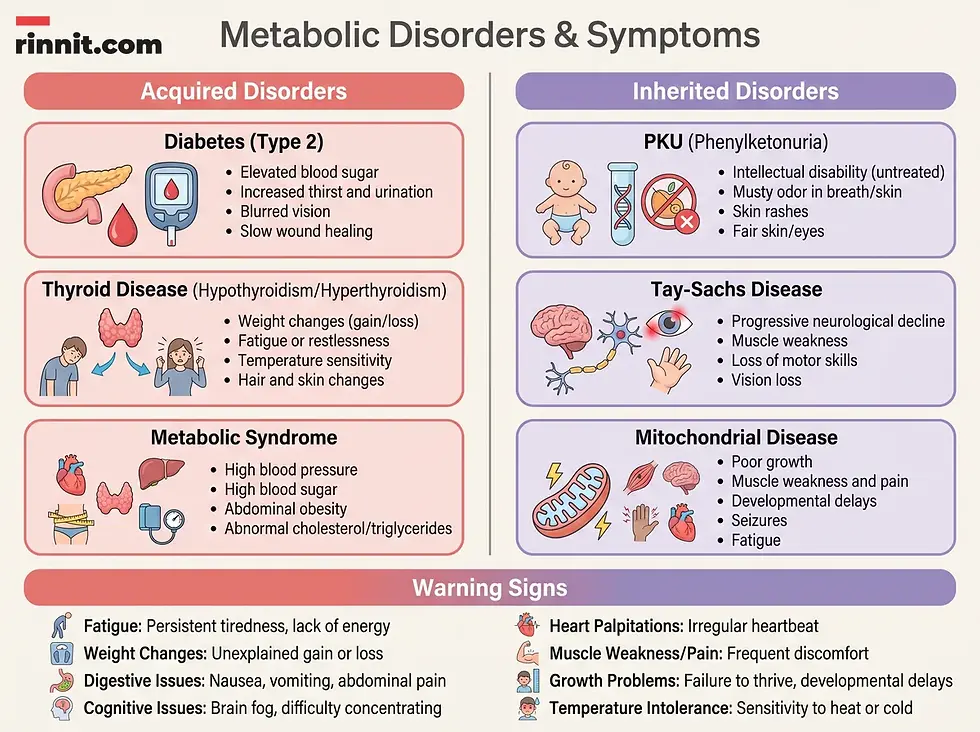
A metabolic disorder occurs when a chemical process in the body is disrupted. These conditions can be acquired through lifestyle and environmental factors or inherited through genetics. [1] Because metabolism involves so many systems, disorders can manifest with a wide variety of symptoms.
Acquired disorders like Type 2 diabetes involve issues with how the body uses insulin to process glucose. Inherited disorders, often called inborn errors of metabolism, typically involve a missing or defective enzyme that prevents the body from breaking down specific proteins or fats correctly.
How can you support healthy metabolism?
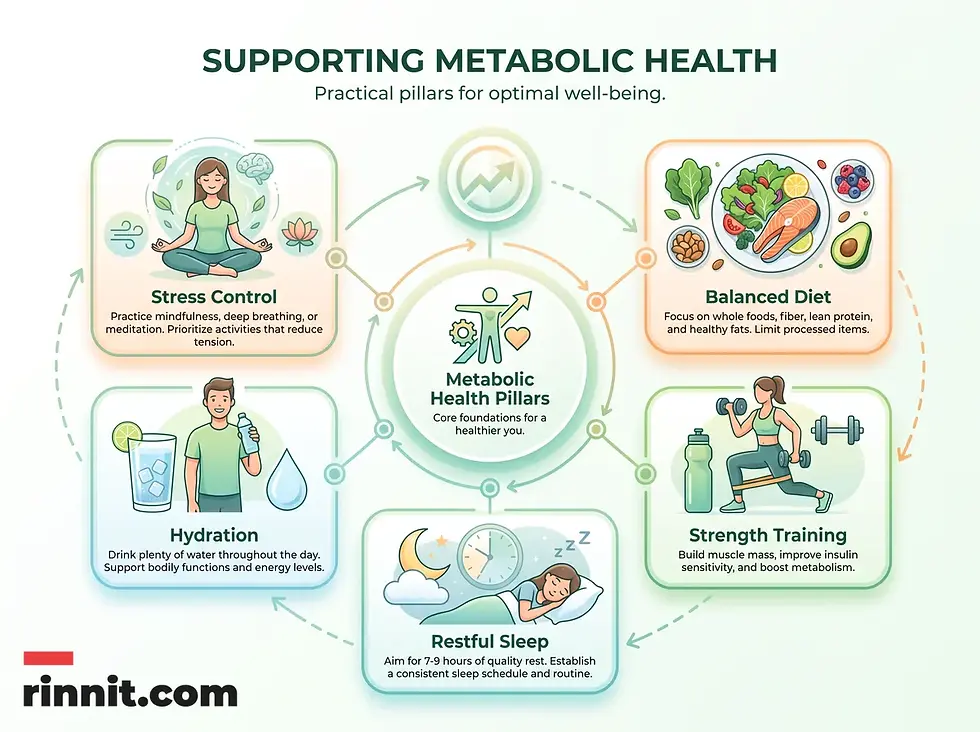
Healthy metabolism can be supported through lifestyle choices such as balanced nutrition, hydration, strength training, quality sleep and stress management, even though genetics and age are fixed. Focus on consistency rather than extreme changes to help your body maintain its natural balance.
Balanced Nutrition: Prioritize whole foods rich in fiber and protein to support steady energy levels and muscle maintenance.
Hydration: Water is essential for the chemical reactions that drive metabolism.
Strength Training: Building muscle mass can naturally increase your BMR. [1]
Quality Sleep: Lack of sleep can disrupt the hormonal signals that regulate hunger and energy use.
Stress Management: Chronic stress can lead to hormonal imbalances that affect how the body stores and uses energy.
Conclusion
Metabolism is a sophisticated, self-regulating system that ensures your body has the energy needed for every breath and heartbeat. While often discussed in the context of weight management, its primary role is sustaining life and maintaining homeostasis. By understanding the balance between anabolism and catabolism and supporting your body through healthy habits, you can promote long-term metabolic efficiency and overall wellness.
What steps can you take to support your metabolism?
Metabolic wellness steps include seeing a provider about persistent fatigue or unexplained weight changes, tracking daily movement and including protein in every meal.
Consult a Provider: If you experience persistent fatigue or unexplained weight changes, speak with a healthcare professional to evaluate your metabolic health. [1]
Monitor Activity: Use a tracker to ensure you are meeting daily movement goals to support your metabolic rate.
Prioritize Protein: Include protein in every meal to support muscle repair and the thermic effect of food.
Frequently Asked Questions
1. What is the simplest definition of metabolism?
Metabolism is the set of chemical processes in your cells that turn food into the energy your body needs to function.
2. Can I permanently speed up my metabolism?
While you can increase your rate through muscle building and activity, it naturally adjusts to your body's needs and age.
3. What is Basal Metabolic Rate (BMR)?
BMR is the number of calories your body burns just to stay alive at rest, covering functions like breathing and circulation.
4. Is a slow metabolism the only cause of weight gain?
No, weight is influenced by a complex mix of calorie intake, activity, genetics, and hormones; metabolism is rarely the sole cause.
5. What is the difference between anabolism and catabolism?
Catabolism breaks down nutrients for energy, while anabolism uses energy to build and repair body structures.
6. How does muscle mass affect metabolism?
Muscle tissue is more metabolically active than fat, meaning it burns more calories even when you are not moving.
7. What are the signs of a metabolic disorder?
Symptoms vary widely but can include persistent fatigue, unexplained weight changes, and skin or digestive issues.
8. Does age affect metabolic rate?
Yes, metabolism typically slows down as people age, often due to a natural loss of muscle mass and hormonal changes.
9. Can certain foods "boost" metabolism?
Some foods have a higher thermic effect (like protein), but no single food can significantly or permanently change your metabolic rate.
10. Why is sleep important for metabolism?
Sleep regulates the hormones that control appetite and energy use; poor sleep can lead to metabolic imbalances.
Related Reading
Basal Metabolic Rate (BMR) Explained: How Your Body Uses Energy at Rest explains how many calories your body burns at rest.
What Is Metabolic Syndrome? Five Warning Signs and How to Reverse Your Risk covers the five warning signs of metabolic syndrome and how to lower risk.
Hypothyroidism: Symptoms, Causes & Treatment Guide explains how an underactive thyroid slows metabolism and is treated.
Inherited Metabolic Disorders: Symptoms, Causes, and Treatment describes genetic conditions that affect how the body processes food.
References
Cleveland Clinic. Metabolism: What It Is, How It Works & Disorders. Cleveland Clinic. Last updated November 20, 2024. https://my.clevelandclinic.org/health/body/21893-metabolism
MacKenzie-Shalders K, Kelly JT, So D, et al. The effect of exercise interventions on resting metabolic rate: a systematic review and meta-analysis. J Sports Sci. 2020;38(14):1635-1649. PMID 32397898. https://doi.org/10.1080/02640414.2020.1754716
Poon ET, Tsang JH, Sun F, et al. Effects of intermittent dieting with break periods on body composition and metabolic adaptation: a systematic review and meta-analysis. Nutr Rev. 2025;83(1):59-71. PMID 38193357. https://doi.org/10.1093/nutrit/nuad168
Singh P, Beyl RA, Stephens JM, et al. Effect of sleep restriction on insulin sensitivity and energy metabolism in postmenopausal women: a randomized crossover trial. Obesity (Silver Spring). 2023;31(5):1204-1215. PMID 36998155. https://doi.org/10.1002/oby.23739
Medical disclaimer
The information provided in this article is for educational purposes only and should not be used as a substitute for professional medical advice, diagnosis, or treatment. Always seek the advice of a qualified healthcare provider with any questions you may have regarding a medical condition.



Comments