Managing Psoriasis on the Eyelids: Symptoms and Care

Updated: 3 days ago
Medically reviewed by Dr. Baraa Alnahhal, MD · Last reviewed: October 2026
Eyelid psoriasis is a chronic skin condition that causes scaly, thick, swollen patches on or around the eyes. Symptoms include itching, redness, flaking, and sometimes vision impairment or eyelid curving. Psoriasis comes from skin cell buildup, while eyelid eczema is more often an allergic or irritant reaction. Treatment combines gentle cleansing, moisturizers, and carefully applied topical medicines under medical supervision.
Quick Answer
Psoriasis on the eyelids is a rare, chronic condition causing scaly, thick, swollen patches of skin around the eyes when an overactive immune system speeds up skin cell growth. It can cause eyelid discomfort or affect vision. Gentle cleansing, warm compresses and specialized topical treatments help, and medical supervision is essential to prevent complications like glaucoma or cataracts. [1]
What the research says
Eye involvement in psoriasis is easy to miss and varies widely. A clinical review notes that ocular and periocular psoriasis is underrepresented in the literature and can range from asymptomatic redness to debilitating scarring and vision loss, that treatment is critical to prevent progression, and that certain situations should trigger immediate referral to an ophthalmologist (Sedghi et al., Clin Dermatol, 2023).
Light therapy near the eyes calls for eye protection. A review of phototherapy (including PUVA and narrowband UVB) found that each type can have acute and chronic effects on periocular and ocular structures such as the conjunctiva, cornea, lens, and retina, and that protective eyewear can help prevent damage, especially when the eyelids do not close fully (DePry et al., Clin Dermatol, 2015).
Research summaries are based on article abstracts retrieved from PubMed. Few studies focus on eyelid psoriasis specifically, so these reviews cover psoriasis around the eye more broadly.
What Is Psoriasis on the Eyelids?
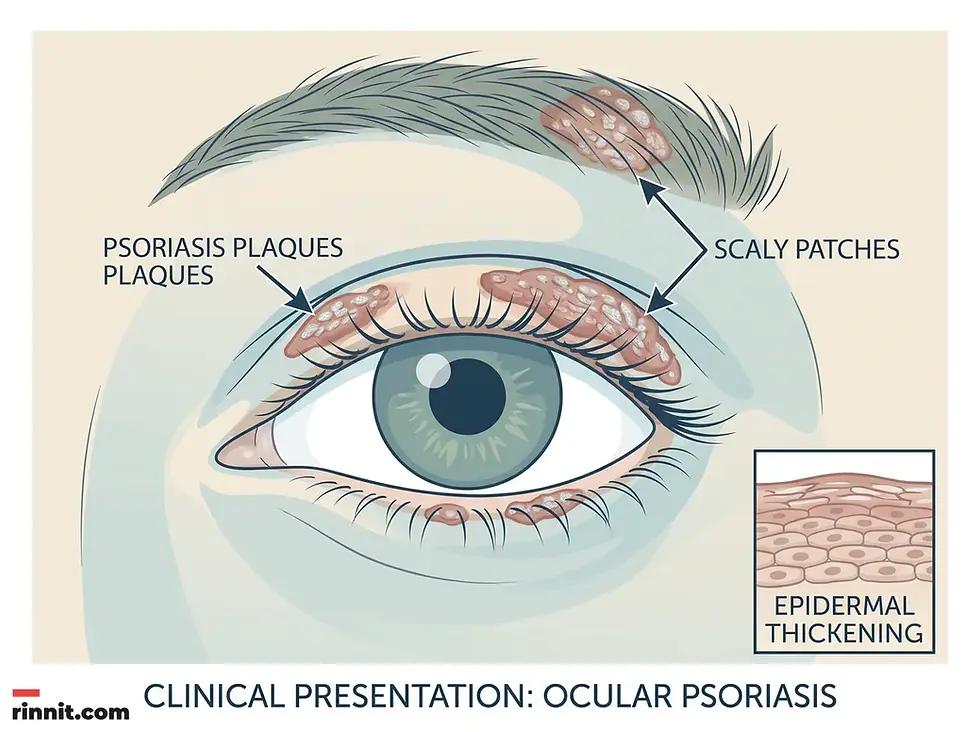
Psoriasis is a chronic autoimmune condition that usually affects the skin on various parts of the body. It is rare for it to target the eyelids specifically, but when it does it can cause real discomfort and visible changes. An outbreak appears as a plaque: a patch of swollen, itchy, discolored skin that may flake or scale. It usually occurs in people who have already been diagnosed with psoriasis elsewhere on the body. [1]
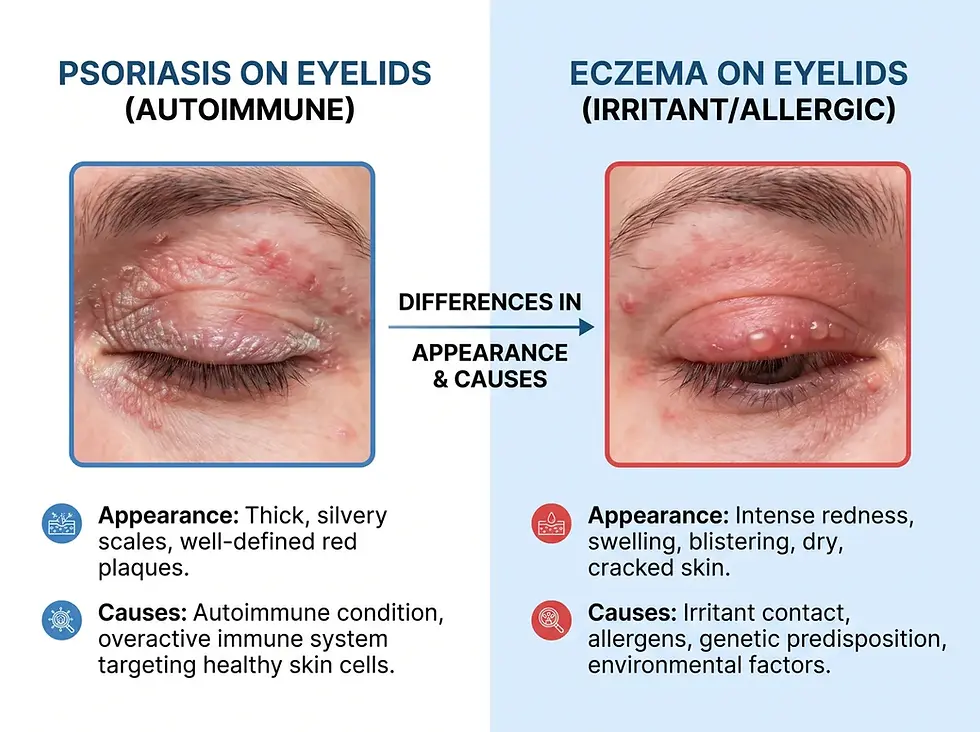
Telling psoriasis apart from conditions like eczema (eyelid dermatitis) is crucial for effective treatment. Both cause itching and redness, but they have different underlying causes and physical features.
Feature | Eyelid Psoriasis | Eyelid Eczema (Dermatitis) |
Primary cause | Immune-driven cell buildup | Irritants or allergens |
Appearance | Thick, scaly, flaky plaques | Itchy rash, blistering, or burning |
Itch intensity | Significant | Usually more intense than psoriasis |
Cell growth | Accelerated (3–4 days) | Normal rate |
What are the symptoms and complications of psoriasis on the eyelids?
Eyelid psoriasis symptoms range from mild dryness to severe swelling that impairs vision. Because the skin around the eyes is so thin, inflammation can change the shape of the eyelid, making it curve upward or downward.
Common symptoms include:
Visible scaling: Flaky skin that may cover the eyelashes or eyebrows.
Discoloration: Redness or darkened patches of skin around the eyes.
Physical discomfort: Itching, pain, and a feeling of tightness or swelling.
Vision impact: Severe plaques can block the line of sight or cause chronic dry eye.
Infection risk: Scratching the delicate skin can cause sores that ooze pus, a sign of a secondary infection. [1]
What causes and triggers psoriasis on the eyelids?
Eyelid psoriasis is caused by an overactive immune system. In a healthy body, skin cells replace themselves about every 30 days. During a psoriasis flare, that process speeds up to just three or four days. The rapid growth makes dead skin cells pile up on the surface, forming the typical scales and thick patches.
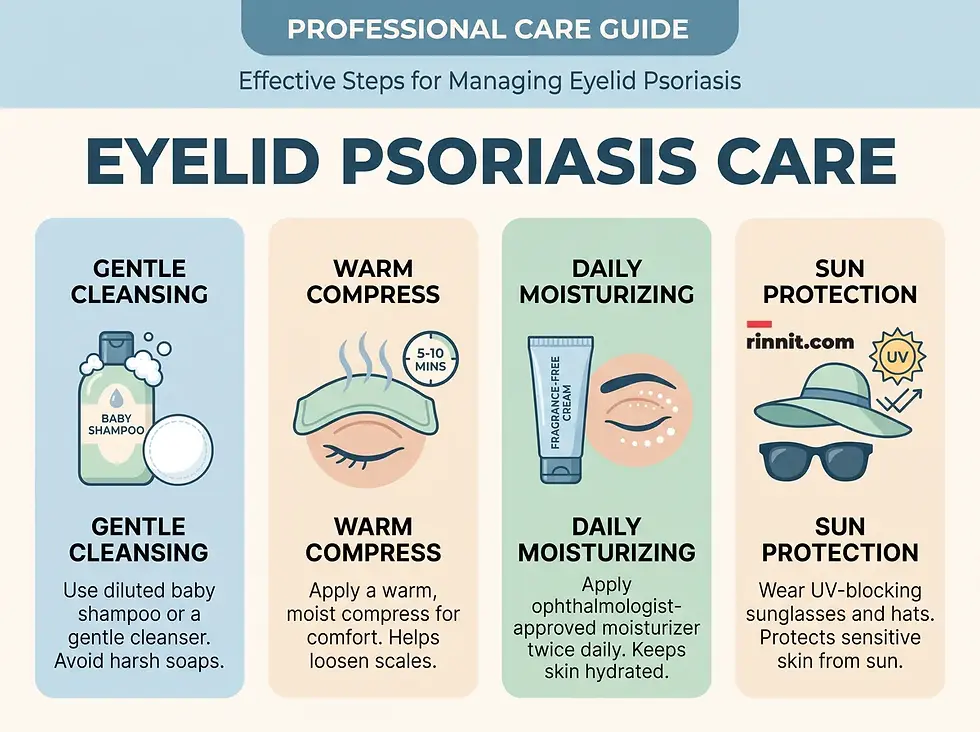
The condition is chronic and cannot be cured, but some habits can reduce how often flares happen. Daily gentle cleansing and moisturizing are essential for keeping the skin barrier healthy. Protecting the face from environmental stressors, such as too much sun or harsh chemical scents, can also prevent unnecessary irritation. [1]
How is psoriasis on the eyelids diagnosed and treated?
A healthcare provider, such as a dermatologist or an ophthalmologist, typically diagnoses eyelid psoriasis with a physical exam. Sometimes a skin biopsy is done to rule out eczema or other similar skin disorders.
Treatment aims to relieve itching and reduce inflammation while protecting the eyes:
At-home care: Gentle washing with baby shampoo, warm compresses, and unscented moisturizers with oil.
Topical medications: Medicated creams containing coal tar, hydrocortisone, or tacrolimus may be prescribed.
Eye health: Hydrating eye drops can prevent dry eye caused by inflammation or treatments.
Warning: Use topical medicines exactly as directed. Overuse near the eyes can raise the risk of serious complications, including cataracts and glaucoma. [1]
Conclusion and Next Steps
Living with eyelid psoriasis takes a careful balance of effective treatment and skin protection. It can affect your confidence and daily comfort, but with the right medical guidance it is very manageable. If you notice new scaly patches around your eyes, or your current treatments are not helping, see a specialist to protect both your vision and your skin.
Frequently Asked Questions
Is psoriasis on the eyelids contagious?
No, psoriasis is an autoimmune condition and cannot be spread from person to person through contact. [1]
Can eyelid psoriasis affect my vision?
Yes, severe swelling and scaling can obstruct vision or cause the eyelids to curve, potentially leading to eye irritation. [1]
What is the difference between psoriasis and eyelid eczema?
Psoriasis involves a buildup of skin cells, while eczema is typically a reaction to an allergen or irritant and is often itchier. [1]
How do I clean my eyelids during a flare?
Use a very gentle, sensitive skin soap or a product like baby shampoo to avoid further irritation. [1]
Can I use over-the-counter hydrocortisone on my eyelids?
While OTC creams are available, you should only use them on your eyelids under a doctor's supervision to avoid eye damage. [1]
How long does it take for a flare to clear up?
Itchiness may improve quickly with treatment, but scales may take weeks to clear, and discoloration can take months to resolve. [1]
Can I wear makeup or contacts during an outbreak?
It is best to consult your doctor, as makeup can irritate the skin and some medications may affect contact lens wear. [1]
What are the risks of using steroid creams near the eyes?
Improper use can lead to serious eye conditions such as glaucoma, cataracts, or chronic dry eye. [1]
What should I do if my skin starts oozing pus?
Contact your healthcare provider immediately, as this may be a sign of a secondary bacterial infection. [1]
Can I prevent future flares?
While you cannot cure psoriasis, daily moisturizing, gentle cleansing, and sun protection can help reduce flare frequency. [1]
Related Reading
Managing Psoriasis on the Face: Symptoms, Causes, and Sensitive Care explains gentle treatment of psoriasis on facial skin.
Psoriasis: Complete Guide to Symptoms, Types, Causes, and Treatment covers psoriasis types, triggers and treatment options.
Eyelid Dermatitis: The Complete Guide to Symptoms, Causes, Treatment and Prevention describes another common cause of red, itchy eyelids.
Blepharitis: Symptoms, Causes, and Treatment explains eyelid margin inflammation and how to care for it.
References
Cleveland Clinic. Psoriasis on the Eyelids. Cleveland Clinic Health Library. Last updated May 25, 2023. https://my.clevelandclinic.org/health/diseases/25025-psoriasis-on-the-eyelids
Sedghi T, Torre K, Suchecki J, et al. The ocular and periocular involvement of psoriasis. Clin Dermatol. 2023;41(4):515-522. PMID: 37619649. DOI: 10.1016/j.clindermatol.2023.08.008
DePry J, Brescoll J, Szczotka-Flynn L, et al. Phototherapy-related ophthalmologic disorders. Clin Dermatol. 2015;33(2):247-255. PMID: 25704945. DOI: 10.1016/j.clindermatol.2014.10.017
Medical disclaimer
This article is for informational purposes only and is not a substitute for professional medical advice, diagnosis, or treatment. Always seek the advice of your physician or other qualified health provider with any questions you may have about a medical condition.



Comments