Managing Pregnancy Gingivitis: Causes, Symptoms, and Oral Care

Updated: 2 days ago
Medically reviewed by Dr. Baraa Alnahhal, MD · Last reviewed: October 2026
Quick Answer: What Is Pregnancy Gingivitis?
Pregnancy gingivitis is a common condition that causes red, swollen, tender gums that often bleed when you brush or floss. Large increases in estrogen and progesterone make the gums react more strongly to plaque. It is usually temporary, but untreated it can progress to periodontitis, a more serious gum infection. Professional cleaning and daily oral hygiene manage most cases. [1]
What the research says
Gum bleeding is very common in pregnancy. A meta-analysis of 20 studies found a pooled prevalence of bleeding on probing of 67% (95% CI 56 to 80%) among pregnant women, though the studies varied widely, and periodontitis was estimated at 40% (Chen et al., J Dent, 2022).
Treatment during pregnancy may help gum health, but the evidence is not conclusive. A meta-analysis of 13 randomized trials found that periodontal treatment might help prevent pregnancy gingivitis, but the result was not statistically significant (OR 0.85, 95% CI 0.68 to 1.06). Lower-quality studies suggested fewer preterm births and low-birth-weight babies, but higher-quality studies did not (Xu et al., J Matern Fetal Neonatal Med, 2025).
Evidence that treating gum disease prevents preterm birth is mixed. A network meta-analysis of 20 randomized trials found that scaling and root planing combined with chlorhexidine rinsing lowered the risk of preterm birth (OR 0.29, 95% CI 0.10 to 0.88) (Wu et al., Front Public Health, 2024), while a meta-analysis of 5 trials with 1,984 pregnant women found only a non-significant trend in favor of treatment (Montoya-Carralero et al., Med Oral Patol Oral Cir Bucal, 2024).
Research summaries are based on article abstracts retrieved from PubMed.
What is pregnancy gingivitis?
Pregnancy gingivitis is a form of gum inflammation that occurs during pregnancy. It causes redness, swelling, and tenderness of the gum tissue. The condition is very common, affecting between 60% and 75% of pregnancies in the United States. Although it can be uncomfortable, the main clinical concern is stopping it from progressing into more serious gum disease. [1]
The changes of pregnancy make the mouth more prone to irritation. Increased blood flow to the gums, a direct result of rising hormone levels, often leads to greater sensitivity and a higher chance of bleeding during routine oral care. With good oral hygiene and professional care, the condition is highly treatable and usually resolves after delivery. [1]
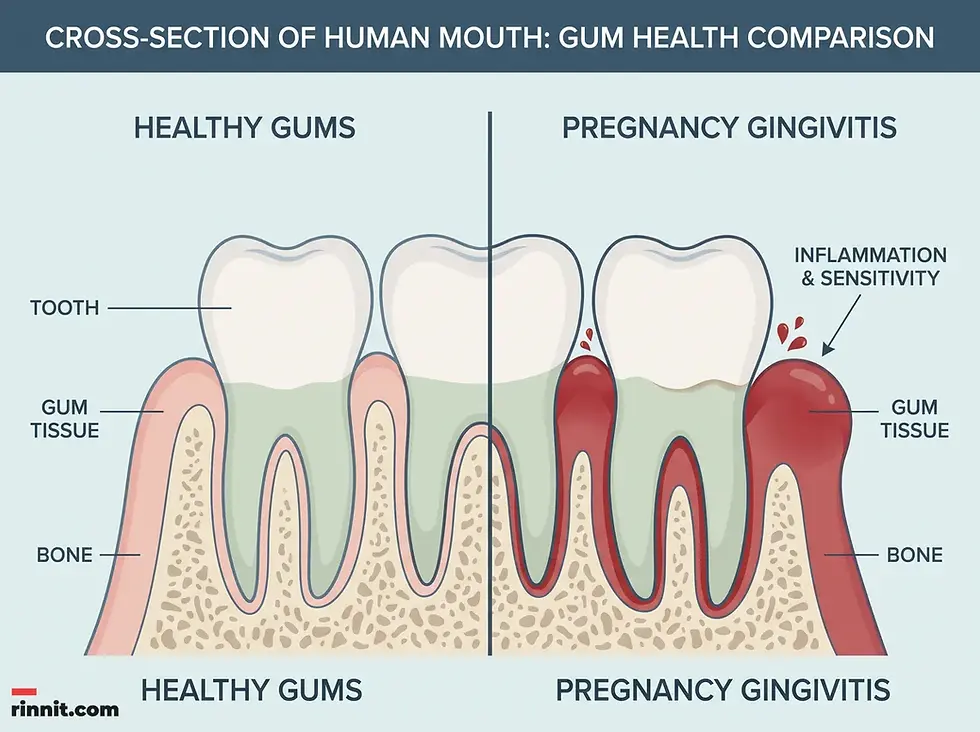
What causes pregnancy gingivitis?
Pregnancy gingivitis is caused mainly by the sharp rise in estrogen and progesterone. These hormones support the pregnancy, but they also affect tissues throughout the body, including the gums. They cause two main changes in the mouth: they increase blood flow to the gums, which can lead to inflammation, soreness, and bleeding, and they change how sensitive the gums are to plaque. [1]
Plaque is a sticky film of bacteria that constantly forms on the teeth. During pregnancy, the gums react more strongly to it, so even small amounts of plaque can cause irritation and swelling that might not happen when you are not pregnant.
Risk Factors for Gum Inflammation
Several other factors can add to the effect of hormones on gum health. Knowing them helps with prevention and management. [1]
Risk Factor | Description | Impact on Gum Health |
Oral Hygiene Habits | Poor brushing and flossing routines. | Allows plaque to build up and irritate sensitive gums. |
Dietary Choices | Eating sugary and acidic foods. | Promotes bacterial growth and damages enamel and gums. |
Morning Sickness | Frequent vomiting, often in the first trimester. | Exposes teeth and gums to stomach acid, causing irritation. |
Tobacco Use | Smoking cigarettes or using other tobacco products. | Raises the risk of gum problems. |
Medical History | A history of gum disease. | Raises the likelihood of significant inflammation. |
What are the symptoms of pregnancy gingivitis?
Symptoms often begin in the first trimester and may become more severe in the second or third trimester as hormone levels keep rising. They can continue until the baby is born. Spotting them early allows faster treatment and relief. Common signs include: [1]
Redness: Gums that look red rather than a healthy pink.
Swelling: Puffiness or enlargement of the gum tissue around the teeth.
Tenderness: Pain or discomfort when eating, brushing, or flossing.
Bleeding: Gums that bleed easily, especially when you brush or floss.
Bad breath: Breath that stays unpleasant even after you brush your teeth.

How is pregnancy gingivitis managed with professional care?
The main treatment for gum inflammation is a professional dental cleaning to remove the plaque buildup that brushing at home cannot reach. Dental and obstetric experts agree that needed dental X-rays are safe during pregnancy; they use very little radiation, and the American Dental Association no longer considers an abdominal shield necessary. Tell your pregnancy care team after you have seen a dentist so they can note the diagnosis in your medical record. [1]
At home, the foundations of gum health are brushing twice daily with a soft-bristled brush and flossing once a day. Your dentist may also recommend gargling daily with a warm saltwater rinse (1 teaspoon of salt in 1 cup of warm water) and rinsing with an alcohol-free mouthwash. [1]
Treatment Options for Severe Cases
If gingivitis is left untreated, it can progress to periodontitis, a more serious infection in which the gums pull away from the teeth and leave pockets that can become infected. If your symptoms are severe or getting worse, your dentist may prescribe: [1]
Prescription mouthwash: Antimicrobial rinses to reduce bacteria.
Antibiotics: Used when there is a significant infection.
Deeper cleanings: Procedures such as scaling and root planing to clean infected pockets.
Because some medications are not safe during pregnancy, contact your pregnancy care provider before you start any new medication for your gums. [1]

What is the outlook for pregnancy gingivitis, and how can it be prevented?
The outlook for pregnancy gingivitis is good. For most people, the gums return to normal after delivery. Even so, protecting your oral health during pregnancy matters, because if gingivitis progresses to periodontitis it may lead to tooth loss and has been linked to a higher risk of preterm birth and low birth weight. The research on whether treating gum disease prevents preterm birth is mixed, so the safest approach is to prevent gum disease in the first place. [1]
You cannot change your hormone levels, but you can lower your risk. Brush twice daily, floss once daily, schedule at least one dental visit during pregnancy, and cut back on sugary foods and drinks. Consistent oral hygiene protects your teeth and gums and supports a healthier pregnancy overall. [1]
Conclusion
Pregnancy gingivitis is a common and manageable part of the body's changes during pregnancy. By understanding the role of hormones and plaque, and by committing to regular dental care and daily home hygiene, you can protect your oral health. If you notice persistent bleeding or swelling, talk to your dentist or pregnancy care provider so it can be treated before it becomes more serious.
Frequently Asked Questions
Is it normal for my gums to bleed during pregnancy?
Yes, it is very common. Gingivitis affects 60% to 75% of pregnancies in the U.S., and bleeding gums are one of its main signs, driven by hormonal changes.
Will pregnancy gingivitis go away on its own?
In most cases, your gums return to normal after the baby is born. In the meantime, good oral hygiene and a professional dental cleaning can help manage symptoms.
Are dental X-rays safe while I am pregnant?
Yes. Dental and obstetric experts agree that needed dental X-rays are safe during pregnancy; they use very little radiation, and an abdominal shield is no longer considered necessary.
Can gum disease affect my baby?
There is no evidence that slightly red or swollen gums harm the baby. Untreated gingivitis can progress to periodontitis, which has been linked to preterm birth and low birth weight, although studies on whether treating gum disease prevents preterm birth have had mixed results. Keeping your gums healthy and seeing a dentist is the safest approach.
How often should I brush my teeth during pregnancy?
Brush at least twice daily and floss once daily to reduce plaque buildup and gum inflammation.
Does morning sickness affect my gums?
Yes. Frequent vomiting from morning sickness is a risk factor for pregnancy gingivitis, and the acid can irritate the gums and wear down tooth enamel.
What is the best mouthwash to use?
An alcohol-free mouthwash is generally recommended. Ask your dentist for specific product suggestions that are safe during pregnancy.
Can I have a dental cleaning while pregnant?
Yes. A professional dental cleaning is the main treatment for gum inflammation and is recommended during pregnancy.
Should I change my diet to help my gums?
Cutting back on sugary foods and drinks can help protect your tooth enamel and gums and lower your risk of gingivitis and cavities.
When should I see a dentist for my gums?
Schedule at least one routine dental visit during pregnancy, or sooner if you notice significant pain, swelling, or persistent bleeding.
Related Reading
Gingivitis: Why Your Gums Bleed, What Causes It, and How Daily Care Reverses It explains why gums bleed and how daily care reverses gingivitis.
Periodontitis: Why Your Gums Bleed and Recede, the 4-Stage Disease Path, and How Treatment Saves Your Teeth explains how untreated gum disease advances and how treatment helps.
Understanding Pyogenic Granuloma: Symptoms, Causes, and Treatments describes the red gum growth sometimes called a pregnancy tumor.
Oral Hygiene: How to Brush, Floss and Protect Your Teeth and Gums Every Day shows how to brush and floss to protect teeth and gums.
References
Cleveland Clinic. Pregnancy gingivitis. Cleveland Clinic. Last updated December 15, 2025. https://my.clevelandclinic.org/health/diseases/22484-pregnancy-gingivitis
Chen P, Hong F, Yu X. Prevalence of periodontal disease in pregnancy: a systematic review and meta-analysis. J Dent. 2022;125:104253. PMID: 35998741. DOI: https://doi.org/10.1016/j.jdent.2022.104253
Xu H, Cai M, Xu H, et al. Role of periodontal treatment in pregnancy gingivitis and adverse outcomes: a systematic review and meta-analysis. J Matern Fetal Neonatal Med. 2025;38(1):2416595. PMID: 39721768. DOI: https://doi.org/10.1080/14767058.2024.2416595
Wu J, Wu J, Tang B, et al. Effects of different periodontal interventions on the risk of adverse pregnancy outcomes in pregnant women: a systematic review and network meta-analysis of randomized controlled trials. Front Public Health. 2024;12:1373691. PMID: 39371200. DOI: https://doi.org/10.3389/fpubh.2024.1373691
Montoya-Carralero JM, Ávila-Villasmil R, Sánchez-Pérez A, et al. Relationship between periodontal disease and preterm birth. A systematic review and meta-analysis. Med Oral Patol Oral Cir Bucal. 2024;29(6):e857-e865. PMID: 39396142. DOI: https://doi.org/10.4317/medoral.26830
Medical disclaimer
This article is for informational purposes only and is not a substitute for professional medical advice, diagnosis, or treatment. Always seek the advice of your physician or other qualified health provider with any questions you may have about a medical condition.



Comments