Managing Palmoplantar Psoriasis: Care for Hands and Feet

Updated: 2 days ago
Medically reviewed by Dr. Baraa Alnahhal, MD · Last reviewed: September 2026
TL;DR
Palmoplantar psoriasis is a chronic autoimmune condition that causes thick, scaly, and discolored patches on the hands and feet. It can affect the palms, soles, fingers, and nails, often leading to significant discomfort or pain. While there is no cure, symptoms can be managed through a combination of topical treatments, oral medications, and light therapy. Identifying environmental triggers and maintaining a consistent moisturizing routine are essential for reducing flare-ups and improving quality of life.
Quick Answer
Palmoplantar psoriasis, or psoriasis on the hands and feet, is a chronic condition caused by an overactive immune system that accelerates skin cell production. It affects approximately 3% to 4% of psoriasis patients, manifesting as itchy, scaly plaques on the palms, soles, and digits. Treatment involves specialized topicals, systemic medications, and phototherapy. Consistent skin care and trigger avoidance are critical for managing symptoms and preventing secondary infections in these high-friction areas.
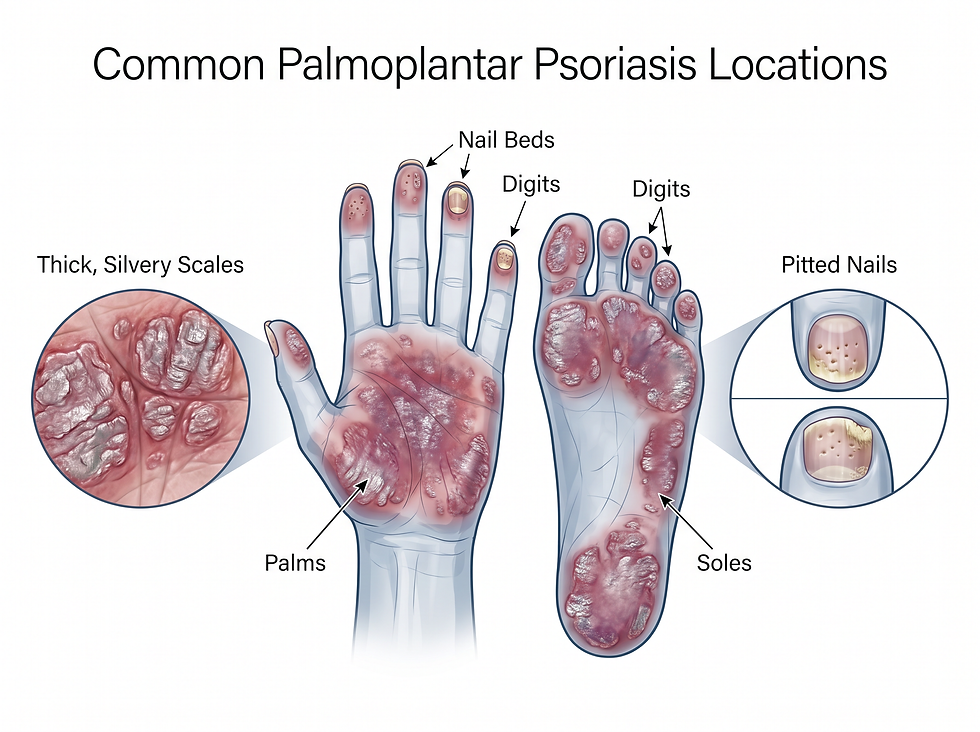
Palmoplantar psoriasis is a localized form of psoriasis that specifically targets the hands and feet. This chronic condition is driven by an overactive immune system that mistakenly attacks healthy skin cells, causing them to replicate and move to the surface much faster than normal. The result is the formation of thick, discolored, and scaly patches known as plaques. These plaques can appear on the palms, soles, wrists, ankles, and even in the webbing between fingers and toes.
Because the hands and feet are constantly in use, palmoplantar psoriasis can be particularly disruptive to daily life. The thick scales can crack, leading to severe pain and an increased risk of infection. While the condition is lifelong and currently has no cure, a wide range of medical treatments and lifestyle adjustments can help individuals manage their symptoms and minimize the frequency of flare-ups.
Clinical Characteristics of Palmoplantar Psoriasis
The symptoms of palmoplantar psoriasis vary depending on the specific type and the severity of the inflammation. Understanding these characteristics is the first step toward effective management.
Feature | Description | Common Locations |
Scaling and Flaking | Thick, silver-to-gray scales on discolored skin | Palms, soles, and knuckles |
Pustules | Fluid-filled blisters that may turn yellow or brown | Soles and palms (Pustular subtype) |
Nail Changes | Pitting, discoloration, or thickening of the nails | Fingernails and toenails |
Discomfort | Intense itchiness, dryness, and sometimes severe pain | High-friction areas like soles |
Skin Discoloration | Red, purple, or dark brown patches | Across the hands and feet |
Differentiating Psoriasis from Eczema
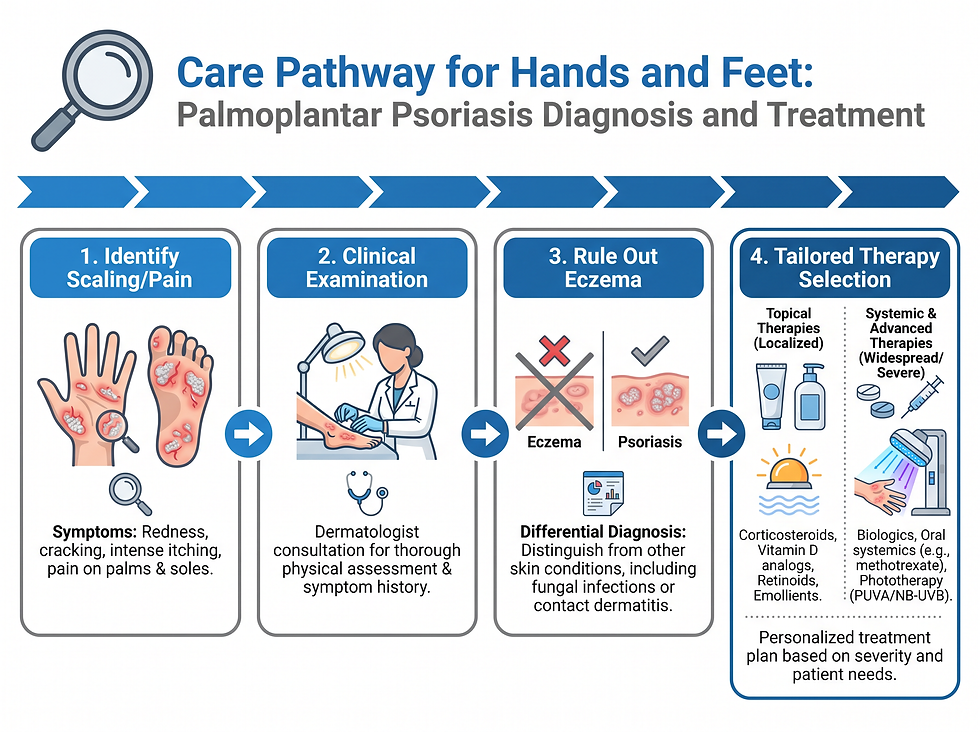
It is common for palmoplantar psoriasis to be confused with hand or foot eczema, as both conditions cause discolored and itchy rashes. However, the presence of distinct scales and flakes is a primary indicator of psoriasis. Eczema tends to present as a more uniform, dry rash without the thick plaque formation characteristic of psoriasis. A dermatologist can confirm the diagnosis through a visual exam or a skin biopsy if the symptoms overlap.
Causes and Environmental Triggers
The underlying cause of palmoplantar psoriasis is an immune system malfunction that triggers rapid skin cell turnover. While the exact reason why it localizes to the hands and feet is unknown, certain environmental factors are known to trigger or worsen outbreaks. These triggers cause the immune system to overreact, leading to a sudden increase in symptoms.
Common triggers include:
High Stress: Emotional tension is a frequent catalyst for psoriasis flare-ups.
Sun Exposure: While controlled light therapy is beneficial, excessive sun damage can irritate the skin.
Skin Irritants: Contact with harsh chemicals, allergens, or repetitive friction can worsen plaques.
Infections: Systemic infections can sometimes prompt the immune system to attack skin cells.
Diagnostic Pathway
Diagnosing psoriasis on the hands and feet typically begins with a thorough physical examination by a healthcare provider or dermatologist. They will review your medical history and family history to identify any genetic predispositions to autoimmune skin conditions.
Diagnostic Tool | Procedure | Purpose |
Visual Examination | Inspection of plaques, scales, and nail changes | Identifying characteristic psoriasis patterns |
Skin Biopsy | Microscopic analysis of a small skin sample | Confirming psoriasis and ruling out eczema |
Allergy Testing | Patch testing for environmental irritants | Identifying specific triggers for flare-ups |
Management and Treatment Options
Treatment for palmoplantar psoriasis is often multi-layered, combining topical applications with systemic medications for more severe cases. The goal is to reduce inflammation, clear existing plaques, and prevent new ones from forming.
Medical treatments include:
Topical Agents: Creams containing corticosteroids, calcipotriene, salicylic acid, or coal tar to soothe the skin.
Oral Medications: Systemic drugs like acitretin (retinoids), methotrexate, or cyclosporine for widespread symptoms.
Light Therapy: Phototherapy uses specific wavelengths of light to slow down skin cell growth.
Biologics: Advanced injectable treatments like etanercept or infliximab that target specific parts of the immune system.
Conclusion
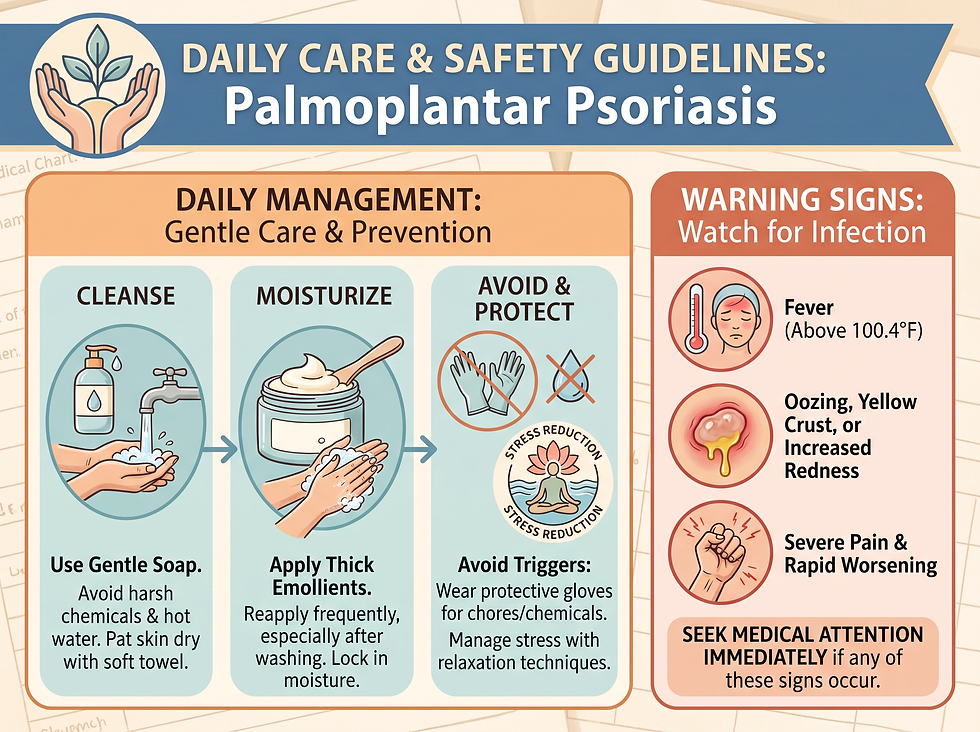
Managing palmoplantar psoriasis requires a proactive approach to skin care and a close partnership with a dermatologist. Although the condition is chronic, the availability of modern treatments means that most people can achieve significant relief from itching and scaling. By maintaining a consistent moisturizing routine, protecting the hands and feet from irritants, and adhering to a prescribed treatment plan, individuals can lead active and comfortable lives.
Call to Action
If you are experiencing persistent scaling, itching, or painful cracks on your hands or feet, consult a dermatologist. Early intervention can help clear your skin faster and prevent the discomfort associated with advanced plaques.
Frequently Asked Questions
Is palmoplantar psoriasis contagious?
No. It is an autoimmune condition and cannot be spread to others through physical contact.
Can I have both psoriasis and eczema on my hands?
Yes, it is possible to have both conditions at the same time, which may require a combined treatment approach.
How long does it take for treatments to work?
While itch relief can be immediate, it typically takes several weeks to see a significant reduction in plaques.
Does palmoplantar psoriasis affect the nails?
Yes, it frequently causes pitting, thickening, or discoloration of the fingernails and toenails.
What is the difference between psoriasis and pustulosis?
Pustulosis is a subtype of psoriasis that includes pus-filled blisters on the affected patches of skin.
Can stress really cause a flare-up?
Yes, stress is a well-documented trigger that can activate the immune system and worsen symptoms.
Is a skin biopsy always required for diagnosis?
No, but it is often used to confirm the diagnosis or rule out other skin conditions like eczema.
What kind of soap should I use?
You should use gentle, fragrance-free soaps that do not strip the skin of its natural moisture.
Should I wear gloves to protect my hands?
Wearing soft, cotton gloves after applying moisturizer can help lock in hydration and protect the skin from irritants.
Can diet affect my psoriasis?
While a healthy diet supports overall health, you should consult your doctor for specific nutritional advice related to your condition.
What are the signs of a skin infection?
Fever, oozing fluid, increased swelling, and severe pain are signs that you should seek medical attention.
Is palmoplantar psoriasis rare?
It affects approximately 3% to 4% of all people diagnosed with psoriasis.
Can I use regular lotion for my plaques?
You should use thick emollients or medicated moisturizers recommended by your dermatologist for better results.
Does sunlight help my hands and feet?
While phototherapy is a controlled medical treatment, natural sun exposure should be managed carefully with sunscreen.
Will my symptoms ever go away completely?
Psoriasis is a chronic condition, meaning it can flare up throughout your life, but treatment can keep it in remission for long periods.
Medical Disclaimer: The information provided in this article is for educational purposes only and should not be used as a substitute for professional medical advice, diagnosis, or treatment. Always seek the advice of your physician or other qualified health provider with any questions you may have regarding a medical condition.
Comments