Dyshidrotic Eczema: Tiny Itchy Blisters on Your Hands and Feet — Causes, Diagnosis and Treatment

Updated: 2 days ago
Medically reviewed by Dr. Baraa Alnahhal, MD · Last reviewed: October 2026
Dyshidrotic eczema is a skin condition, also called dyshidrosis or pompholyx, that causes tiny, itchy, fluid-filled blisters on the hands and feet, especially between the fingers, on the palms and on the soles [1]. Providers don't know the exact cause, but genes and environment both play a role, and flare-ups are often triggered by allergens, moisture, stress and seasonal changes [1]. It is not contagious [1]. Flare-ups usually clear up in three to four weeks, and treatment ranges from at-home care to prescription medicines [1].
Quick Answer
Dyshidrotic eczema is a type of eczema that produces small, firm, itchy blisters about 1 to 2 millimeters wide on the palms, between the fingers and on the soles. It is not contagious. Flare-ups come and go in cycles of about three to four weeks, triggered by nickel, stress, sweat and warm weather, and topical corticosteroids help. [1]
What the research says
It most often affects adults in their working years, and more women than men. In an analysis of 2018 insurance claims, 34,932 patients had claims for dyshidrotic eczema; 61% were female and the average age at first diagnosis was 37 years. It was mostly seen in employees in the service industry and the manufacturing of durable goods (Gladys et al., Contact Dermatitis, 2022 [2]).
Airborne allergens may aggravate vesicular hand eczema. In a randomized, double-blind, placebo-controlled crossover study of 18 patients with vesicular hand eczema and house dust mite allergy, hand eczema scores rose significantly after inhaling house dust mite compared with placebo, and an increase in the number of vesicles was preceded by late asthmatic reactions (Schuttelaar et al., Contact Dermatitis, 2013 [3]).
Dyshidrotic eczema responded well to light therapy. In a randomized trial of 29 patients with chronic palmoplantar eczema treated with oral or bath PUVA, dyshidrotic eczema responded better to both treatments (P=0.048) and stayed in remission longer than hyperkeratotic eczema (Tzaneva et al., Photodermatology, Photoimmunology & Photomedicine, 2009 [4]).
What Is Dyshidrotic Eczema?
Dyshidrotic eczema, also called dyshidrosis and, in medical literature, pompholyx, is a type of eczema that causes tiny, itchy blisters and dry skin. It usually affects the skin between your fingers, on your palms and on the soles of your feet [1].
The fluid-filled blisters look like small, cloudy beads. They are about 1 to 2 millimeters wide, the size of a pinhead. Sometimes they join together to form a larger blister. When the blisters dry out, the skin may turn scaly and crack [1].
Among all people with hand eczema, 5% to 20% have dyshidrotic eczema. It is one of the more common forms of hand eczema, and a healthcare provider can help you treat and manage it [1].
Dyshidrotic eczema at a glance
What Does Dyshidrotic Eczema Look Like?
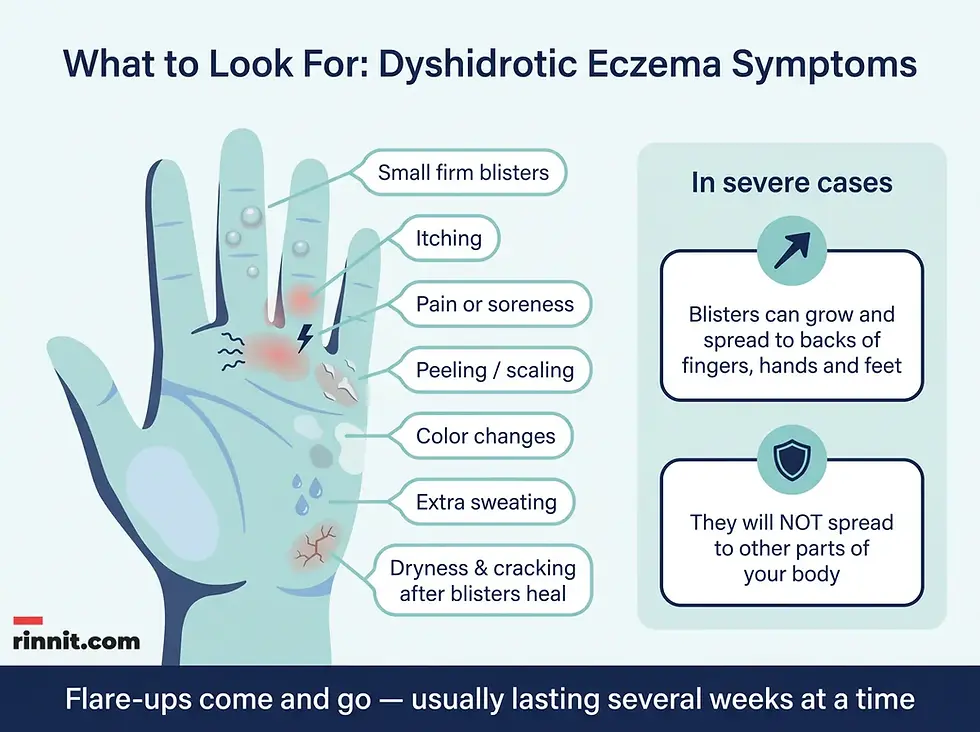
Dyshidrotic eczema causes symptoms that come and go. These may last for several weeks at a time. The most common symptoms affect the skin [1]:
Small, firm blisters. Cloudy, bead-like bumps about the size of a pinhead [1].
Itching. Often intense around the blister areas [1].
Pain or soreness. The affected areas can feel tender or painful [1].
Peeling or scaling. As blisters dry out, skin peels and flakes [1].
Color changes. The skin may change color in the affected areas [1].
Extra sweating. The affected areas may sweat more than usual [1].
Dryness and cracking. After blisters go away, skin can dry out and crack [1].
In severe cases, blisters may get bigger and spread to the backs of your fingers, hands and feet. Importantly, they will not spread to other parts of your body [1].
How Do You Tell It Apart From Other Blistering Skin Problems?
A few other conditions can look similar, which is why a provider may run tests to confirm the diagnosis [1]. Here is how dyshidrotic eczema differs from the most common look-alikes:
Dyshidrotic eczema. Pinhead-sized blisters between the fingers and on the palms and soles, with recurring flare-up cycles. It stays on the hands and feet [1].
Contact dermatitis. A rash that appears where the skin touched an irritant or allergen, so the pattern follows the contact.
Bullous pemphigoid. An autoimmune blistering disease that typically causes larger, tense blisters and is not tied to trigger cycles.
Hand, foot and mouth disease. A viral infection that often comes with fever and mouth sores, and can spread beyond the hands and feet.
What Causes Dyshidrotic Eczema?
Healthcare providers don't know exactly what causes dyshidrotic eczema. They believe that both genes and the environment play a role [1].
This condition can run in biological families. If your parent or sibling has it, you might get it too. Certain things in your environment, like allergens or stress, can also trigger symptoms [1].
One important fact for anyone dealing with it: dyshidrotic eczema is not contagious. You can't catch it from someone else, and you can't spread it through physical contact [1].
What triggers dyshidrosis?
A combination of triggers can cause a flare-up [1]:
Allergens or irritants. Nickel, certain personal care products, some foods [1].
Fungal infections. Athlete's foot can trigger a reaction and cause symptoms [1].
Moisture. Frequent hand washing, wearing gloves at work, sweaty hands or feet, and humid climates [1].
Seasonal changes. Warm weather and seasonal allergies like hay fever can worsen symptoms, while cooler months may calm them [1].
Stress. Both physical and emotional stress can make symptoms feel more severe [1].
Risk factors
Dyshidrotic eczema can affect anyone. It is more common if you [1]:
Are between the ages of 20 and 40
Are female
Have a biological family history of eczema
Have an allergic reaction when you touch something your body doesn't like
Get antibody (IVIG) infusions to help fight infections
Take aspirin or birth control pills
Possible complications
If you scratch the blisters, you might break your skin open. This can lead to an infection. Contact a healthcare provider if you notice an infection, because they may give you antibiotics to clear it up [1].
As the blisters heal, your skin may become dry, peel or form deep, painful cracks. Scratching a lot can also make the skin on your fingers, hands and feet thicker over time [1].
Because you can see this condition on your skin, it might make you feel self-conscious and make daily tasks harder. This can cause stress, and stress may make symptoms worse, since it is a trigger. A provider can help you manage both your skin and your mental health, because your emotional well-being is just as important as your physical health [1].
How Is It Diagnosed?
Your healthcare provider will look closely at the affected areas on your skin. They'll also ask about your health history [1].
Tell your provider if you started using any new skincare products, wearing new jewelry or eating new foods. This information can help them figure out what might be triggering your symptoms [1]. Your provider may also suggest tests to confirm the diagnosis [1]:
Allergy testing
Skin biopsy
Blood tests
These tests can also help rule out other conditions that look similar, such as contact dermatitis, bullous pemphigoid and hand, foot and mouth disease [1].

How Is Dyshidrotic Eczema Treated?
Treatment for dyshidrotic eczema may include a mix of the following approaches [1]:
Avoiding triggers. Your provider can help you figure out and avoid things that make your symptoms worse. This may include using unscented soaps, not wearing nickel jewelry and avoiding foods you're allergic to [1].
Creating a skincare routine. This condition weakens your skin's protective barrier. Using extra moisturizer keeps your skin hydrated and prevents cracking and dryness [1].
Trying at-home remedies. You can manage mild symptoms at home between visits. This can help calm your skin [1].
Using medications. Your provider may prescribe creams or lotions to help your skin heal faster [1].
Treating the underlying cause. If your symptoms link to an underlying condition like athlete's foot or excess sweating, your provider will treat those [1].
At-home care
You can do a few things at home to make your blisters more comfortable [1]:
Gently wash the affected areas with mild soap
Apply an antibacterial cream or ointment
Cover the areas with a bandage or gauze
Change your bandages at least once a day
It can be tempting to pop your blisters, but avoid doing this. The skin over your blisters helps protect the deeper layers from infection [1].
In addition to caring for blisters, you can try these steps to ease symptoms and help your skin heal [1]:
Soak your hands and feet in cool water to help you relax
Apply a cool compress for 10 to 15 minutes to lessen itching, then air dry and moisturize right away
Use unscented moisturizers often throughout the day to help with dryness
What medications treat dyshidrotic eczema?
Your provider might recommend starting with treatments you can get at your local pharmacy [1]:
Low-strength topical corticosteroid creams, such as hydrocortisone
Oral antihistamines like fexofenadine (Allegra) or cetirizine (Zyrtec)
For more severe cases, your provider may prescribe [1]:
Stronger topical corticosteroid creams or ointments
Topical calcineurin inhibitors like tacrolimus or pimecrolimus
Other topical nonsteroid medications
Oral corticosteroids like prednisone
Systemic immunosuppressive medications like methotrexate, mycophenolate or injections like dupilumab
Phototherapy (light therapy)
Treatment steps at a glance
Avoid triggers: the first step for everyone.
Skincare routine: extra moisturizer to support the skin barrier, daily and ongoing.
At-home blister care: mild soap washing, antibacterial ointment and bandages changed daily for mild symptoms between visits.
Over-the-counter medicines: hydrocortisone cream and oral antihistamines are a starting point from your pharmacy.
Prescription topicals: stronger corticosteroids, tacrolimus, pimecrolimus or other nonsteroid creams for persistent or more severe cases.
Systemic treatments: oral corticosteroids, immunosuppressives or phototherapy for severe or stubborn cases.
How Can You Prevent Flare-Ups?
To lower your risk of new symptoms or flare-ups [1]:
Use warm (not hot) water when washing your hands, and wash your skin right after touching an allergen or known trigger
Use gloves when washing dishes or handling harsh chemicals
Skip new jewelry if you aren't sure what it's made of and you have a metal allergy
Dry your hands and feet well after bathing or swimming
When Should You See a Healthcare Provider?
Call your healthcare provider if you feel new or worsening symptoms. Let them know right away if you notice signs of an infection [1], like:
Pus
Severe pain
Swelling
Warmth to the touch
Yellow crusting
Outlook / Prognosis
What can you expect if you have dyshidrotic eczema?
Dyshidrotic eczema symptoms usually flare up and last about three to four weeks before clearing up. This condition affects everyone differently. You might only have symptoms once. Or you might have frequent flare-ups when you contact triggers like allergens, sweat or stress [1].
If you have repeated flare-ups, the condition may change your skin over time. Your skin could become dry, cracked or thicker. It can even affect your mental health if flare-ups keep happening. Treatment can help you avoid triggers and manage symptoms so they're less uncomfortable [1].
The bottom line
A flare-up can make everyday tasks painful and uncomfortable. Simple things like holding a coffee mug, typing or shaking someone's hand can hurt and disrupt your day [1].
But symptoms don't have to keep you from your daily activities. A provider can help you find what causes your symptoms and suggest treatments to calm your skin so you can feel better and get back to the things you enjoy [1].
Frequently Asked Questions
What is dyshidrotic eczema?
Dyshidrotic eczema (also called dyshidrosis or pompholyx) is a type of eczema that causes tiny, itchy, fluid-filled blisters on the hands and feet, especially between the fingers, on the palms and on the soles. It affects an estimated 5% to 20% of people with hand eczema.
Is dyshidrotic eczema contagious?
No. Dyshidrotic eczema is not contagious. You cannot catch it from someone else, and you cannot spread it through physical contact.
What do the blisters look like?
The blisters look like small, cloudy beads about 1 to 2 millimeters wide, the size of a pinhead. Sometimes they join together to form a larger blister. When they dry out, the skin may turn scaly and crack.
How long does dyshidrotic eczema last?
Flare-ups usually last about three to four weeks before clearing up. Some people have symptoms only once, while others have frequent flare-ups when they contact triggers like allergens, sweat or stress.
What triggers dyshidrotic eczema flare-ups?
Common triggers include allergens or irritants (nickel, certain personal care products, some foods), fungal infections like athlete's foot, excess moisture or sweat, warm weather and seasonal allergies, and physical or emotional stress.
Can stress cause dyshidrotic eczema?
Stress does not cause the condition itself, since providers don't know the exact cause, but physical and emotional stress can trigger a flare-up and make symptoms feel more severe.
Can I pop dyshidrotic eczema blisters?
No. It's tempting, but the skin over your blisters helps protect the deeper layers from infection. Popping them can break the skin open and lead to infection.
How is dyshidrotic eczema diagnosed?
A provider examines the affected skin and asks about your health history. They may order an allergy test, skin biopsy or blood tests to confirm the diagnosis and rule out similar conditions like contact dermatitis or hand, foot and mouth disease.
How is dyshidrotic eczema treated?
Treatment includes avoiding triggers, using extra moisturizer, gentle at-home blister care, and medications. Mild cases may be managed with over-the-counter hydrocortisone or antihistamines. Severe cases may need prescription corticosteroids, calcineurin inhibitors, immunosuppressives or phototherapy.
How do I know if dyshidrotic eczema blisters are infected?
Signs of infection include pus, severe pain, swelling, warmth to the touch and yellow crusting. If you notice these, contact your healthcare provider promptly, because you may need antibiotics.
Can dyshidrotic eczema spread to other parts of my body?
No. Even in severe cases where blisters spread to the backs of the fingers, hands and feet, dyshidrotic eczema stays on the hands and feet and does not spread to other parts of the body.
Helpful Resources
Related Reading
Atopic Dermatitis (Eczema): Symptoms, Causes & Treatment — Complete Guide explains the most common type of eczema and how flares are managed.
Contact Dermatitis: Symptoms, Causes, Diagnosis & Treatment — Complete Guide explains skin rashes triggered by irritants or allergens and how to treat them.
Patch Test for Skin Allergies: How It Works, How to Prepare and What Results Mean describes the skin allergy test used to find contact triggers.
Nummular Eczema: Understanding the Coin-Shaped Skin Condition describes coin-shaped eczema patches, their causes and treatment options.
References
Cleveland Clinic. Dyshidrotic Eczema (Dyshidrosis). Cleveland Clinic. Last updated July 16, 2025. https://my.clevelandclinic.org/health/diseases/17728-dyshidrotic-eczema
Gladys TE, Maczuga S, Flamm A. Characterizing demographics and cost of care for dyshidrotic eczema. Contact Dermatitis. 2022;86(2):107-112. PMID 34773262. https://doi.org/10.1111/cod.14007
Schuttelaar MLA, Coenraads PJ, Huizinga J, et al. Increase in vesicular hand eczema after house dust mite inhalation provocation: a double-blind, placebo-controlled, cross-over study. Contact Dermatitis. 2013;68(2):76-85. PMID 23046099. https://doi.org/10.1111/j.1600-0536.2012.02172.x
Tzaneva S, Kittler H, Thallinger C, et al. Oral vs. bath PUVA using 8-methoxypsoralen for chronic palmoplantar eczema. Photodermatology, Photoimmunology & Photomedicine. 2009;25(2):101-105. PMID 19292787. https://doi.org/10.1111/j.1600-0781.2009.00419.x
Medical disclaimer
This article is for general informational purposes and is not a substitute for professional medical advice, diagnosis, or treatment. Always consult a qualified healthcare professional about any medical condition.



Comments