Pustular Psoriasis: Symptoms, Types, and Management Strategies

Updated: 2 days ago
Medically reviewed by Dr. Baraa Alnahhal, MD · Last reviewed: October 17, 2026
Definition: A type of psoriasis causing pus-filled blisters (pustules) on scaly skin plaques.
Types: Can be localized (e.g., hands and feet) or generalized (widespread and potentially severe).
Triggers: Often sparked by stress, certain medications, infections, or UV exposure.
Management: Treated with topicals, phototherapy, oral medications, and biological treatments.
Quick Answer
Pustular psoriasis is a chronic inflammatory skin condition with white, pus-filled blisters on red or discolored scaly plaques. The pustules are not infectious; the condition stems from an overactive immune system. It can be localized, such as on the hands and feet, or a rare, severe generalized form requiring urgent care. Treatment clears the skin and avoids triggers.
What the research says
Generalized pustular psoriasis is a distinct disease, not just a severe form of plaque psoriasis. A global Delphi consensus of 21 dermatologists, built on a systematic literature review, agreed that GPP is phenotypically, genetically, and immunologically distinct from plaque psoriasis, and reached consensus on 100% of treatment-goal statements, including rapid and sustained clearance of pustules and prevention of new flares (Puig et al., J Eur Acad Dermatol Venereol, 2023).
Targeted therapy now exists for GPP flares. A review of the evidence on spesolimab, an antibody against the IL-36 receptor, reports that in phase II randomized trials it produced rapid skin clearance during a GPP flare and was superior to placebo in preventing flares for up to 48 weeks of maintenance treatment, and that it is licensed in Europe and the United States for treating GPP flares in adults (Bernardo et al., Drugs, 2024).
What is Pustular Psoriasis?
Pustular psoriasis is a distinct form of psoriasis that manifests as fluid-filled blisters, known as pustules, appearing on patches of scaly, flaky skin called plaques. While psoriasis itself affects millions, approximately 3% of those diagnosed will experience the pustular variety at some point in their lives. This condition is chronic, meaning it can recur throughout a person's life, and while it is more common in adults, it can affect individuals of any age. [1]
A common misconception is that the pus within the blisters indicates a contagious infection; however, the fluid is composed of immune cells and is not infectious. Pustular psoriasis is primarily driven by an overactive immune system that causes skin cells to replicate too quickly and immune cells called neutrophils to collect in the skin's superficial layers.
Feature | Localized Pustular Psoriasis | Generalized Pustular Psoriasis (GPP) |
Scope | Targets specific areas (hands, feet, fingertips). | Spreads quickly across large areas of the body. |
Severity | Primarily localized pain and itchiness. | Can be life-threatening; requires urgent care. |
Systemic Symptoms | Usually none. | Fever, chills, fatigue, muscle weakness. |
Rarity | More common localized form. | The rarest form of psoriasis. |

What are the symptoms and common triggers of pustular psoriasis?
The hallmark of this condition is the appearance of thick, discolored plaques covered in small, white or yellow pustules. These blisters can join together, burst, and leave the skin feeling exceptionally tender and sore. Common areas for localized symptoms include the palms of the hands, the soles of the feet, the scalp, and the face. In its generalized form, the rash can be accompanied by systemic symptoms such as fever, fast heart rate, and dehydration. [1]
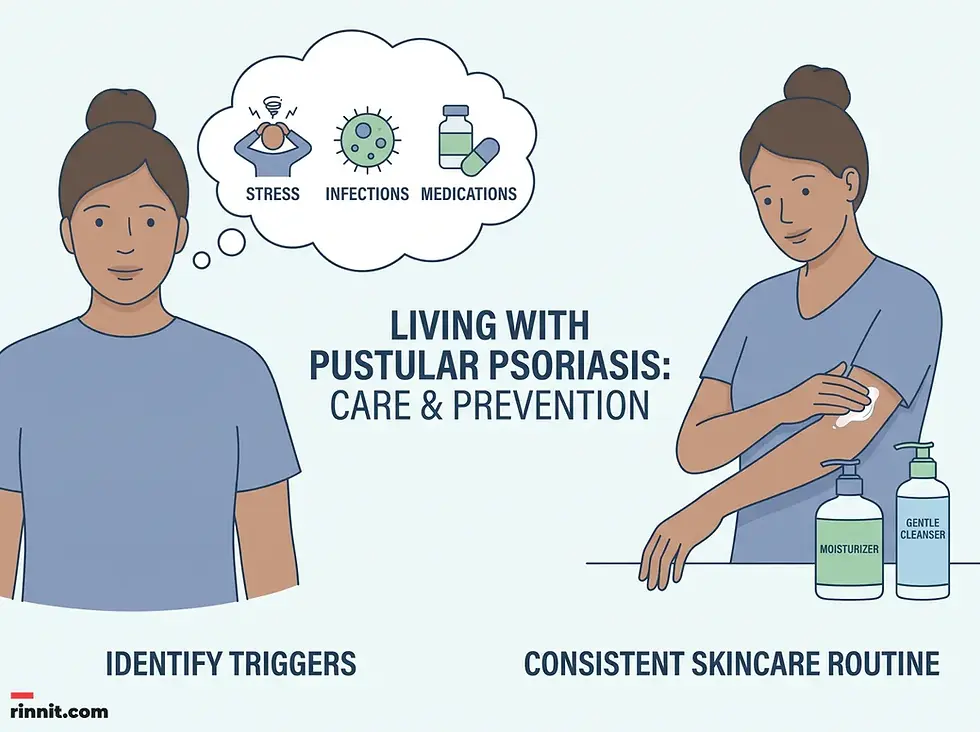
Identifying triggers is a crucial part of managing the condition, as flares are often sparked by environmental or internal factors. Common triggers include:
Medication Reactions: Starting or stopping certain drugs can sometimes initiate a flare.
Stress: Emotional or physical stress is a well-documented trigger for many skin conditions.
Infections: Bacterial infections, such as those caused by streptococcus or staphylococcus, can prompt a flare-up.
Environmental Factors: Excessive ultraviolet (UV) exposure or significant changes to a daily routine can also play a role.
How is pustular psoriasis diagnosed and treated?
Diagnosis typically begins with a physical examination and a review of the patient's medical history. Because the symptoms can resemble other dermatological conditions, healthcare providers may perform culture tests, skin biopsies, or allergy tests to confirm the diagnosis. If generalized pustular psoriasis is suspected, blood tests like a complete blood count (CBC) are often necessary to monitor for systemic inflammation. [1]
Treatment aims to clear the skin, relieve pain and itching, and prevent secondary infections. Depending on the severity and type of psoriasis, providers may recommend:
Topical Therapies: Ointments and creams applied directly to the plaques to reduce inflammation.
Phototherapy: Controlled exposure to specific types of light to slow skin cell growth.
Systemic Medications: Oral drugs or biological treatments that target the immune system's overactive response.
Flare Management: Keeping track of triggers and maintaining a consistent skincare routine.

What is the long-term outlook for pustular psoriasis?
As a chronic, lifelong condition, pustular psoriasis requires ongoing management rather than a one-time cure. Flares can take several weeks or even months to clear completely, even with consistent treatment. Patients are encouraged to work closely with a dermatologist to develop a personalized care plan that addresses both the physical symptoms and the emotional impact of the condition. [1]
Conclusion and Next Steps
Pustular psoriasis is a complex condition that demands a proactive approach to care. While the symptoms can be painful and persistent, modern treatments offer effective ways to manage flares and maintain skin health. If you experience a sudden spread of pustules accompanied by a fever or muscle weakness, seek medical attention immediately, as this may indicate the more severe generalized form of the condition.
Frequently Asked Questions
Is the fluid in the pustules contagious?
No, the fluid is not infectious and cannot spread the condition to other people through physical contact.
Can children get pustular psoriasis?
Yes, while it is more common in adults, it can affect people of any age, including children.
What is the rarest form of pustular psoriasis?
Generalized pustular psoriasis (GPP) is the rarest and most severe form of the condition.
How long does it take for a flare to clear?
It can take anywhere from a few weeks to several months for the skin to clear completely after a flare-up.
Can stress cause a flare-up?
Yes, stress is a common trigger that can lead to the sudden appearance of symptoms.
Are there specific areas where localized psoriasis appears?
Localized psoriasis frequently affects the palms of the hands, the soles of the feet, and the tips of the fingers or toes.
Is there a cure for pustular psoriasis?
There is currently no cure, but various treatments can effectively manage symptoms and reduce the frequency of flares.
What should I do if I have a fever along with the rash?
You should contact a healthcare provider immediately, as this may indicate generalized pustular psoriasis.
Does UV exposure help or hurt?
While controlled phototherapy is a treatment, excessive or uncontrolled UV exposure can actually trigger a flare-up.
What are biological treatments?
Biological treatments are medications that target specific parts of the immune system to reduce the inflammation that causes psoriasis.
References
Cleveland Clinic. Pustular Psoriasis. Cleveland Clinic Health Library. Accessed October 11, 2026. https://my.clevelandclinic.org/health/diseases/24805-pustular-psoriasis
Puig L, Choon SE, Gottlieb AB, et al. Generalized pustular psoriasis: a global Delphi consensus on clinical course, diagnosis, treatment goals and disease management. J Eur Acad Dermatol Venereol. 2023;37(4):737-752. PMID: 36606566. DOI: https://doi.org/10.1111/jdv.18851
Bernardo D, Thaçi D, Torres T. Spesolimab for the treatment of generalized pustular psoriasis. Drugs. 2024;84(1):45-58. PMID: 38114719. DOI: https://doi.org/10.1007/s40265-023-01988-0
Medical disclaimer
This article is for informational purposes only and is not a substitute for professional medical advice, diagnosis, or treatment. Always seek the advice of your physician or other qualified health provider with any questions you may have about a medical condition.



Comments