Understanding Mucosa-Associated Lymphoid Tissue (MALT): The Body's First Line of Defense

Updated: 2 days ago
Medically reviewed by Dr. Baraa Alnahhal, MD · Last reviewed: September 2026
TL;DR: Mucosa-associated lymphoid tissue (MALT) consists of concentrated clusters of immune cells within the body's mucous membranes. It acts as a first line of defense, identifying and neutralizing pathogens that enter through the respiratory, digestive, and reproductive tracts. Key components include the tonsils, appendix, and Peyer's patches, and MALT houses a majority of the body's immune cells.
Quick answer: MALT is a specialized system of immune cells in the mucous membranes that line body tracts such as the digestive and respiratory systems. It defends the body by sampling and destroying harmful pathogens at their point of entry. MALT contains an estimated 50% to 70% of the body's immune cells, allowing rapid detection of and response to infection.
What Is Mucosa-Associated Lymphoid Tissue?
Mucosa-associated lymphoid tissue, abbreviated MALT, is a vital but often overlooked part of the immune system. These tissues sit within the mucous membranes, the protective linings that connect the body's interior to the outside world. By populating areas such as the mouth, nose, and digestive tract, MALT works as a surveillance network that identifies and eliminates harmful germs before they can cause a systemic infection.
The scale of MALT reflects its importance. Between 50% and 70% of all immune cells in the body are estimated to be located in these tissues. This concentration allows a fast, strong immune response exactly where pathogens are most likely to enter.
Functional Roles and Categories
MALT works mainly through antigen sampling. Specialized cells trap foreign particles and examine their molecular labels, called antigens, so the immune system can tell whether an invader is a known threat or a new pathogen that needs a specialized response. To learn more, see our guide to what an antigen is.
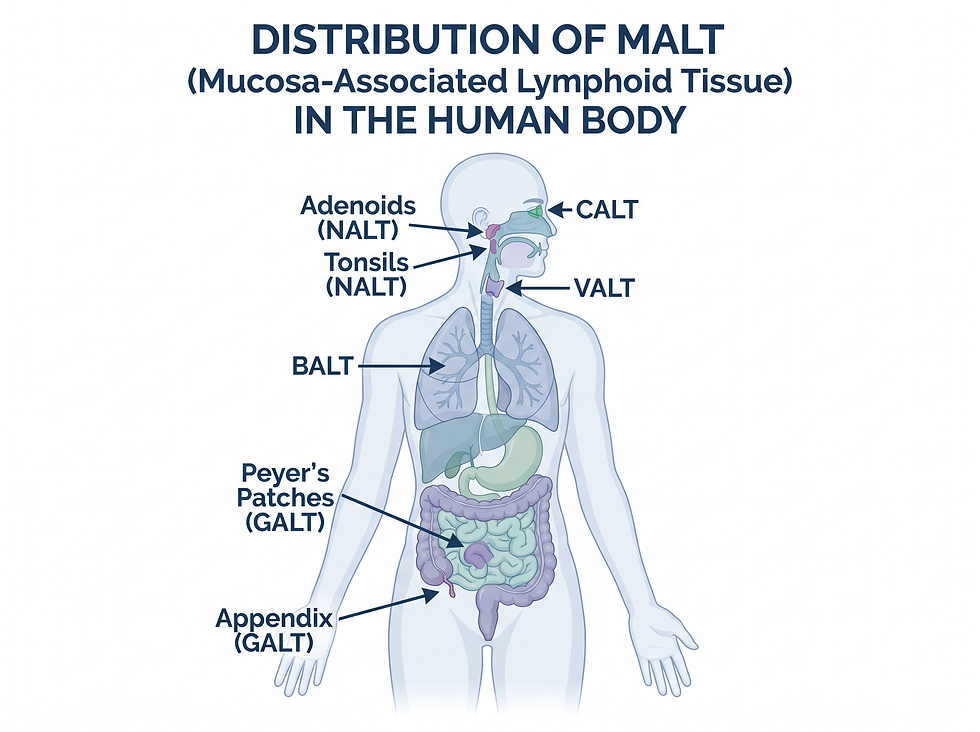
MALT is grouped into categories by location:
GALT (Gut-Associated Lymphoid Tissue): Found in the digestive tract, for example the appendix and Peyer's patches.
BALT (Bronchus-Associated Lymphoid Tissue): Found in the respiratory tract, in the bronchial linings.
NALT (Nasal-Associated Lymphoid Tissue): Found in the nasal cavity and throat, including the adenoids and tonsils.
CALT (Conjunctival-Associated Lymphoid Tissue): Found in the eyes, in the conjunctiva.
VALT (Vulvovaginal-Associated Lymphoid Tissue): Found in the reproductive tract, in the vaginal mucosa.
Cellular Composition of MALT
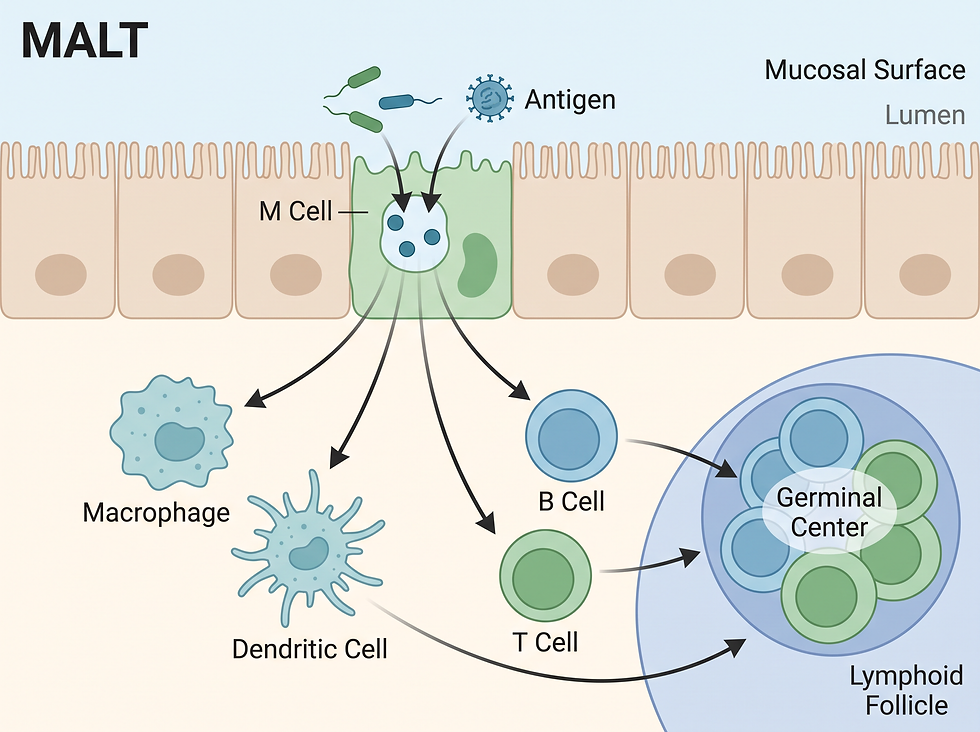
MALT is a complex assembly of immune components working together. Innate immune cells such as macrophages and dendritic cells destroy germs and present their antigens to other cells. Adaptive immune cells, including B cells and T cells, use that information to launch a targeted attack. Our guide to helper T cells explains how these coordinators work.
MALT also contains M cells, or microfold cells. These specialized cells move antigens from the surface of the mucous membrane directly to the immune cell clusters underneath, so the immune system is alerted almost as soon as a pathogen makes contact.
Clinical Significance and Conditions
MALT protects the body, but it can also be the site of disease. Inflammation and infection are common and appear as familiar problems such as tonsillitis or appendicitis. In rare cases, cells in these tissues become malignant, leading to MALT lymphoma, a cancer that begins in the lymphoid tissue of mucous membranes. For background on this cancer family, read our overview of lymphoma.
Appendicitis: Inflammation of the appendix, with severe abdominal pain and fever. See our article on the appendicolith, a small stone that can trigger it.
Tonsillitis: Infection of the tonsils, with sore throat and difficulty swallowing.
MALT lymphoma: Cancer of the lymphoid tissue, with symptoms such as weight loss and localized pain.
Intussusception: Intestinal blockage involving Peyer's patches, with abdominal cramping and nausea.
Diagnosis usually combines blood tests to check white cell counts, swabs for bacterial cultures, and imaging such as ultrasound or CT. Treatment ranges from antibiotic courses for infections to surgery such as appendectomy, or specialized cancer therapies.
Supporting Mucosal Health
Healthy mucous membranes support MALT function. Key habits include a balanced diet with plenty of fluids, good hygiene, avoiding irritants such as tobacco smoke and excess alcohol, and regular check-ups so problems are caught early.

Conclusion
MALT is a cornerstone of the body's defenses. By housing most of our immune cells at the main entry points, it provides an immediate and effective response to environmental threats. Understanding MALT highlights how complex the immune system is and why mucosal health matters, through hygiene, nutrition, and proactive medical care.
Support your natural defenses: If you have persistent symptoms such as chronic sore throats, unexplained abdominal pain, or recurring mucosal infections, talk with a healthcare professional.
Frequently Asked Questions
What exactly is MALT?
MALT stands for mucosa-associated lymphoid tissue, which are clusters of immune cells found in the linings of various body tracts.
Where is MALT located?
It is found in the respiratory, digestive, urinary, and reproductive tracts, as well as the eyes, ears, nose, and mouth.
What is the main function of MALT?
It serves as the first line of defense against pathogens entering the body through mucous membranes.
How many immune cells are in MALT?
Approximately 50% to 70% of the body's immune cells are located within MALT.
What are some examples of MALT?
Common examples include the tonsils, adenoids, Peyer's patches in the small intestine, and the appendix.
What is GALT?
GALT is gut-associated lymphoid tissue, the most well-studied category of MALT.
How does MALT help with vaccines?
Oral and nasal vaccines interact directly with MALT in the throat and nose to trigger an immune memory response.
What are M cells?
M cells, or microfold cells, transport antigens from the mucosal surface to the immune cells underneath.
Can MALT become cancerous?
Yes. MALT lymphoma is a cancer that can develop in these lymphoid tissues.
Is the appendix useful?
Yes. The appendix is part of MALT and plays a role in immune defense.
What is antigen sampling?
It is the process in which immune cells in MALT trap and identify foreign particles to determine whether they are harmful.
What symptoms indicate a MALT problem?
Symptoms vary by location but can include fever, sore throat, abdominal pain, or unexplained weight loss.
How are MALT conditions diagnosed?
Doctors use blood tests, swabs, imaging such as CT scans, and sometimes biopsies.
What is the difference between MALT and lymph nodes?
Both contain immune cells, but MALT lies within mucous membranes, whereas lymph nodes are separate organs along the lymphatic vessels.
How can I support my MALT health?
A balanced diet, proper hydration, and avoiding irritants help maintain mucosal health and general immune support.
Medical Disclaimer
This content is for informational purposes only and does not constitute medical advice. Always seek the guidance of a qualified health provider with any questions regarding a medical condition.
Source date: August 12, 2025.
Comments