Lesch-Nyhan Syndrome: Symptoms, Causes, and Management

Updated: 2 days ago
Medically reviewed by Dr. Baraa Alnahhal, MD · Last reviewed: October 2026
Lesch-Nyhan syndrome (LNS) is an extremely rare genetic metabolic disorder that primarily affects males. It is characterized by a buildup of uric acid in the body, leading to painful gout, kidney stones, and significant neurological challenges, including involuntary movements and compulsive self-injury. While there is currently no cure, early diagnosis through genetic testing and multidisciplinary care can help manage symptoms and improve quality of life for affected individuals [1].
Quick Answer: What is Lesch-Nyhan syndrome?
Lesch-Nyhan syndrome (LNS) is a rare congenital disorder caused by an HPRT1 gene mutation that leads to uric acid overproduction. It primarily affects boys, causing developmental delays, poor muscle control, involuntary movements and compulsive self-injury such as lip biting. Blood, urine and genetic tests diagnose it. It is incurable; treatment lowers uric acid and prevents self-harm. [1]
What the research says
The genetics of LNS are well mapped, but the brain symptoms have no proven targeted therapy. A review estimates a prevalence of 1/380,000 live births in Canada and 1/235,000 in Spain, notes that uric acid overproduction is present in all HPRT-deficient patients and that more than 300 HPRT1 mutations have been identified, and reports that allopurinol manages uric acid overproduction, while the lack of precise understanding of the neurological dysfunction has precluded development of useful therapies for it (Torres and Puig, Orphanet J Rare Dis, 2007 [2]).
HPRT deficiency is a spectrum, and milder variants exist. In a prospective multicenter study of 46 patients with attenuated variants (aged 3 to 65, from 34 families), all overproduced uric acid; motor abnormalities were evident in 42 (91%), cognitive function was affected in 31 (67%) but never severely, and none showed self-injurious behavior (Jinnah et al., Brain, 2010 [3]).
What is Lesch-Nyhan Syndrome?
Lesch-Nyhan syndrome (LNS) is a rare inherited metabolic disorder that significantly impacts a child's brain function and behavior [1]. The condition is caused by a deficiency in an enzyme called hypoxanthine-guanine phosphoribosyltransferase (HPRT), which is essential for processing chemicals known as purines. When this enzyme is missing or malfunctioning, the body produces excessive amounts of uric acid.
The syndrome is almost exclusively found in males, affecting approximately 1 in 380,000 people. It is typically passed down through an X-linked recessive pattern from mothers to sons, though spontaneous genetic mutations can also occur in families with no prior history of the disorder. Most children do not show symptoms until about four months of age, although orange-colored crystals may appear in a baby's diaper earlier [1].
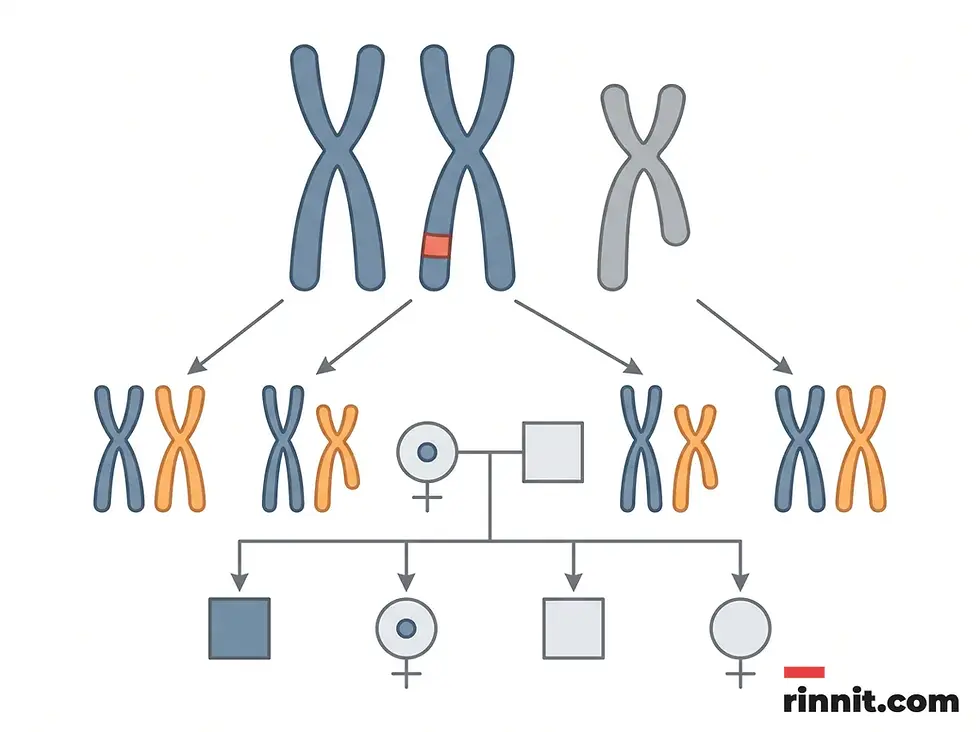
X-linked recessive inheritance: a carrier mother can pass the HPRT1 mutation to her children, and sons who inherit it are affected.
What are the symptoms of Lesch-Nyhan syndrome (LNS)?
The symptoms of Lesch-Nyhan syndrome are broad and affect multiple systems of the body, including motor function, behavior, and metabolic health [1].
Symptom Category | Common Manifestations |
|---|---|
Behavioral | Compulsive self-injury (biting lips/fingers, head banging), and occasional aggression toward others. |
Motor & Muscle | Poor muscle control, involuntary writhing (choreoathetosis), muscle stiffness (spasticity), and slurred speech. |
Metabolic Health | Gout (painful joint inflammation), kidney stones, bladder stones, and orange crystals in diapers. |
Cognitive | Learning disabilities, developmental delays, and a short attention span. |
One of the most distressing aspects of LNS is the uncontrollable urge for self-injury. This behavior typically begins once a child's teeth emerge and requires constant monitoring and protective interventions to prevent serious physical harm.
What role do uric acid and genetics play in Lesch-Nyhan syndrome?
The primary cause of LNS is a mutation in the HPRT1 gene, which provides instructions for making the HPRT enzyme [1]. This enzyme is part of a "salvage pathway" that recycles purines. Without functional HPRT, purines are instead broken down into uric acid.
When uric acid levels become too high (hyperuricemia), the excess acid forms tiny, needle-like crystals. These crystals can accumulate in:
Joints: Leading to gout, a severe and painful form of arthritis.
Kidneys and Bladder: Forming stones that can block urine flow and potentially lead to kidney failure.
Soft Tissues: Creating small lumps under the skin.
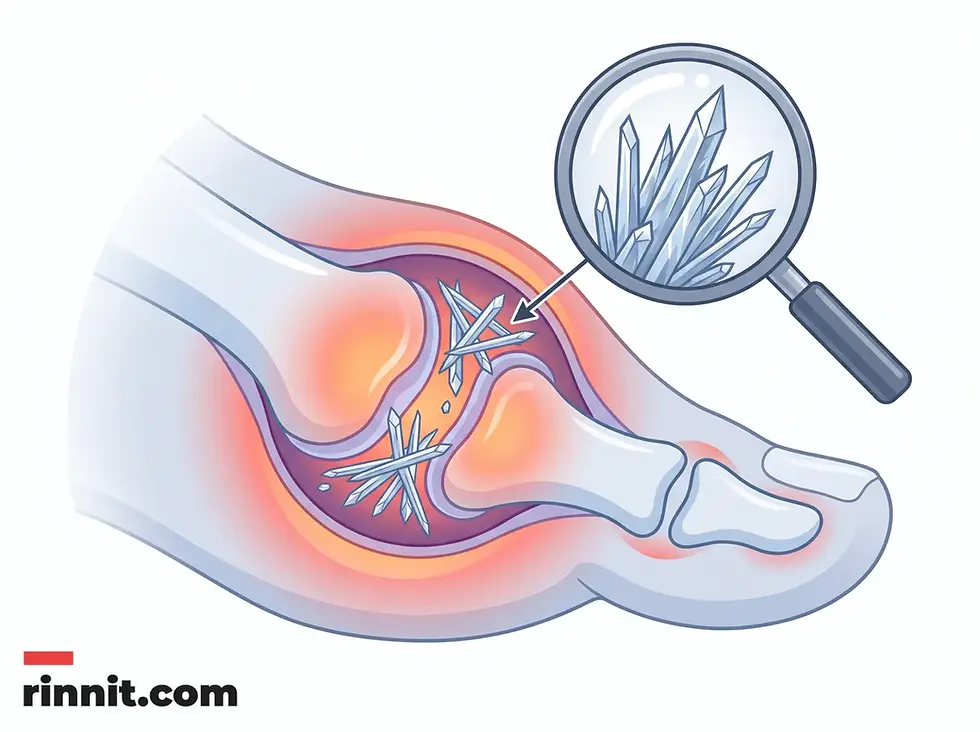
Excess uric acid forms needle-like crystals in the joints, causing painful gout-like inflammation.
Researchers also suspect that the HPRT deficiency may disrupt levels of dopamine, a critical chemical messenger in the brain, which contributes to the neurological and behavioral symptoms of the disorder.
How is Lesch-Nyhan syndrome diagnosed and tested?
Diagnosing Lesch-Nyhan syndrome involves a combination of clinical observation and laboratory testing [1]. Healthcare providers look for the characteristic combination of developmental delays and self-injurious behavior.
The diagnostic process typically includes:
Uric Acid Testing: Blood and urine tests are conducted to measure the concentration of uric acid.
Enzyme Analysis: Testing the activity level of the HPRT enzyme in the blood or skin cells.
Genetic Testing: A definitive diagnosis is made by identifying the specific mutation in the HPRT1 gene.
For families with a known history of LNS, prenatal testing options such as amniocentesis or chorionic villus sampling are available to determine if a fetus has inherited the condition [1].
How is Lesch-Nyhan syndrome managed and treated?
While there is currently no cure for Lesch-Nyhan syndrome, a multidisciplinary approach is used to manage symptoms and prevent complications [1].
Metabolic Management
Medications such as allopurinol are commonly prescribed to lower uric acid levels in the blood. While these medications are highly effective at preventing gout and kidney stones, they do not improve the neurological or behavioral symptoms of LNS. Procedures such as shockwave or laser lithotripsy may be used to break up kidney or bladder stones [1].
Behavioral and Physical Support
Managing the behavioral aspects of LNS requires significant support. Protective equipment, such as mouth guards, splints, or soft restraints, may be necessary to prevent self-injury. Behavioral therapy can help some individuals manage aggressive impulses, while physical and occupational therapy are essential for addressing movement disorders and improving daily functioning [1].

Care for LNS combines medication to lower uric acid, physical and occupational therapy, and protective equipment.
What is the bottom line on Lesch-Nyhan syndrome?
Lesch-Nyhan syndrome is a complex and challenging disorder that requires lifelong medical and behavioral support. Although the prognosis for classic LNS is often poor, early diagnosis and modern management strategies have improved the quality of life for many affected individuals. Cleveland Clinic notes that most people with classic LNS cannot walk and rarely live beyond 20 years because of disease complications [1]. Ongoing research into the relationship between HPRT deficiency and brain chemistry continues to offer hope for more effective treatments in the future.
Your next step: if you notice developmental delays, orange crystals in your infant's diaper, or unusual self-injurious behaviors, consult a pediatric specialist or genetic counselor promptly. Early intervention is vital for managing metabolic complications.
Frequently Asked Questions
What is Lesch-Nyhan Syndrome?
Lesch-Nyhan Syndrome is a rare genetic disorder that causes a buildup of uric acid and leads to movement and behavioral problems.
Why does LNS primarily affect boys?
LNS is an X-linked recessive disorder, meaning the gene mutation is carried on the X chromosome, which males have only one of.
What are the first signs of LNS?
Early signs include developmental delays, poor muscle tone, and orange-colored crystals in a baby's diaper.
What is the most common behavioral symptom?
Compulsive self-injury, such as biting the lips, fingers, and cheeks, is a hallmark of the condition.
Does LNS cause arthritis?
Yes, the high levels of uric acid can cause gout, a painful form of inflammatory arthritis.
How is the condition diagnosed?
LNS is diagnosed through blood and urine tests for uric acid, enzyme activity tests, and genetic analysis.
Can LNS be cured?
There is no cure at this time, but treatments are available to manage uric acid levels and physical symptoms.
What causes the self-injurious behavior?
While not fully understood, it is believed to be linked to how the enzyme deficiency affects brain chemicals like dopamine.
Is LNS contagious?
No, it is a genetic condition present from birth and cannot be transmitted to others.
Are there milder forms of the syndrome?
Yes, some variants, like Kelley-Seegmiller syndrome, involve milder symptoms primarily related to gout and kidney stones.
Related Reading
Hyperuricemia (High Uric Acid Level): Causes, Symptoms, and Treatments explains high uric acid levels, a key feature of this syndrome.
Gout: Symptoms, Causes, Diagnosis, Treatment & Complete Guide covers gout, the painful joint problem caused by uric acid crystals.
Kidney Stones: Symptoms, Causes, and Treatment Guide explains how kidney stones form and are treated.
Dystonia: Symptoms, Causes, and What Treatment Can Actually Do explains the involuntary muscle movements common in Lesch-Nyhan syndrome.
References
Cleveland Clinic. Lesch-Nyhan Syndrome. Cleveland Clinic. July 17, 2022. https://my.clevelandclinic.org/health/diseases/23493-lesch-nyhan-syndrome
Torres RJ, Puig JG. Hypoxanthine-guanine phosophoribosyltransferase (HPRT) deficiency: Lesch-Nyhan syndrome. Orphanet J Rare Dis. 2007;2:48. PMID 18067674. https://doi.org/10.1186/1750-1172-2-48
Jinnah HA, Ceballos-Picot I, Torres RJ, et al. Attenuated variants of Lesch-Nyhan disease. Brain. 2010;133(Pt 3):671-689. PMID 20176575. https://doi.org/10.1093/brain/awq013
Medical disclaimer
This article is for informational purposes only and is not a substitute for professional medical advice, diagnosis, or treatment. The clinical information in this guide reflects source material last reviewed in July 2022.



Comments