Laryngospasm: Understanding Sudden Vocal Cord Tightening

Updated: 2 days ago
Medically reviewed by Dr. Baraa Alnahhal, MD · Last reviewed: October 2026
Laryngospasm is a sudden, temporary tightening of the vocal cords that blocks the airway, so you can't breathe or speak for about 20 seconds. Triggers include GERD, asthma, laryngeal hypersensitivity, stress or anxiety, and anesthesia. It rarely causes serious problems, but spasms linked to anesthesia can be life-threatening. Treating the underlying cause and using techniques such as notch pressure and paced breathing can help [1].
Quick Answer: What is laryngospasm?
Laryngospasm is a rare condition in which the vocal cords suddenly tighten and block the airway, preventing breathing or speaking for about 20 seconds. It rarely causes serious problems, though anesthesia-related spasms can be life-threatening. Triggers include GERD, asthma and stress. Stay calm, press the laryngospasm notch and pace breathing; call 911 if you still cannot breathe. [1]
What the research says
Lidocaine lowered the risk of laryngospasm during anesthesia in children. A meta-analysis of 9 randomized trials (787 children) found that lidocaine reduced laryngospasm (risk ratio 0.39, 95% CI 0.24 to 0.66), with benefit for both intravenous (RR 0.34) and topical (RR 0.42) lidocaine (Mihara et al., Anaesthesia, 2014 [2]).
Several other measures also helped in children. A meta-analysis of 29 randomized trials (4,452 children) found lower odds of laryngospasm with lidocaine (OR 0.38, 95% CI 0.22 to 0.67) and dexmedetomidine (OR 0.31, 95% CI 0.10 to 0.91), and with propofol induction compared with sevoflurane induction (OR 0.17, 95% CI 0.06 to 0.48); the authors advise caution because outcome definitions varied (Deng et al., J Anesth, 2025 [3]).
In adults, intravenous lidocaine did not change the rate of laryngospasm. Across 16 trials (1,516 adults), intravenous lidocaine reduced post-extubation cough (RR 0.64, 95% CI 0.48 to 0.86) and sore throat at one hour (RR 0.46, 95% CI 0.32 to 0.67), with no difference in the incidence of laryngospasm (Yang et al., Br J Anaesth, 2020 [4]).
What Is Laryngospasm?
Laryngospasm is a rare condition in which your vocal cords suddenly become very tight. They block your airway so you can't breathe or speak for about 20 seconds. It rarely causes serious problems, but even a brief episode can be a scary experience [1].
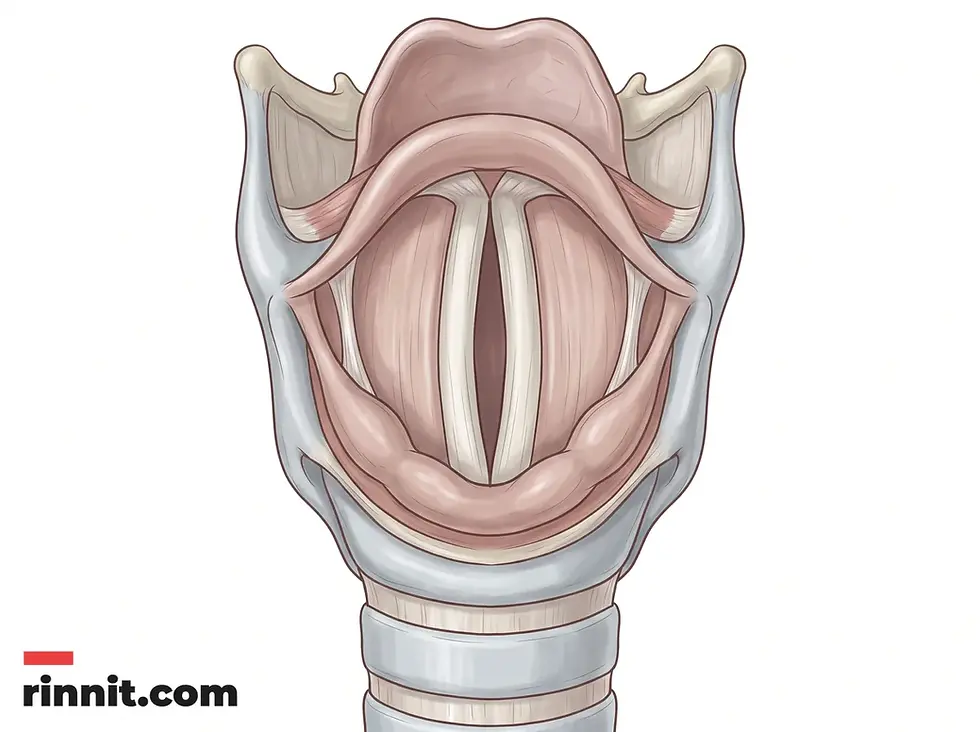
The larynx seen from above: the vocal cords sit in the airway, and in a laryngospasm they suddenly tighten and narrow the opening.
Laryngospasm vs. Bronchospasm
Both conditions cause sudden spasms that can leave you unable to breathe or speak. Laryngospasm affects your vocal cords, while bronchospasm affects the airways that connect your windpipe to your lungs [1].
What are the symptoms and triggers of laryngospasm?
The most common symptom of laryngospasm, a sudden tightening of the vocal cords, is not being able to breathe. Other symptoms include [1]:
A choking sensation
Coughing
A high-pitched whistling sound (stridor)
Hoarseness
Not being able to speak
Common Causes and Triggers
Laryngospasm may happen for no identifiable reason. But certain conditions and situations can make your vocal cords seize up [1]:
Trigger category | Description |
|---|---|
Respiratory | Asthma: you may have a spasm if you inhale dirty air or take deep, fast breaths after exercise. |
Gastrointestinal | GERD may trigger a spasm if stomach acid or undigested food backs up your esophagus and touches your vocal cords. |
Sensory | Laryngeal hypersensitivity: breathing cold air, coughing, eating certain foods, or smelling strong scents can trigger a spasm. |
Psychological | Stress or anxiety disorders: a spasm may be your body's physical reaction to stressful situations or anxiety. |
Surgical | Reaction to general anesthesia: anesthesia may irritate your vocal cords, for example when breathing tubes are removed after surgery. |
Sleep-related laryngospasm is another variation. You may wake up gasping for air, and acid reflux or issues with your vocal cords may be the cause [1].
Laryngospasm related to anesthesia may be life-threatening, and your surgical team takes steps immediately to relax your vocal cords [1]. Respiratory problems such as laryngospasm are among the most common complications of pediatric anesthesia [3], and pooled trial data show that lidocaine can lower the risk in children [2][3].
How is laryngospasm diagnosed?
A healthcare provider will ask about your symptoms, including how often you have laryngospasm, and review your health history to see whether you have a condition that can trigger it [1]. Because the spasms are brief, they are rarely seen during a visit, so providers focus on finding triggers such as GERD or asthma.
They may use an endoscope, a thin, flexible, lighted tube, to look at your vocal cords [1].
How is laryngospasm managed and treated?
Your treatment depends on the cause. For example, if GERD triggers the spasms, treating it may help. There is no single treatment that keeps your vocal cords from going into spasm, but treating any underlying cause may reduce how often it happens [1].
Techniques to Stop a Spasm
During an episode, these steps can help your vocal cords relax [1]:
Stay calm: gasping for air may make the spasm worse.
Press on your laryngospasm notch: the notch is the soft spot behind your earlobes and just above your jaw. Pressing down and inward on it helps your vocal cords relax.
Breathe through a straw: this slows down your breathing and lets your vocal cords relax. Breathe in and out without stopping, and don't take in air through your nose.
Pace your breathing: slowly breathe in through your nose, tighten your lips, and slowly exhale. Hold your breath for five seconds, then repeat until your vocal cords relax.
Take small sips of water: this can help if vocal cord irritation causes the spasm.

Pressing down and inward on the laryngospasm notch can help the vocal cords relax.

Paced breathing: inhale slowly through the nose, then exhale slowly through pursed lips.
If you still can't breathe or speak when pressure on the notch or breathing exercises don't help, call 911 (or your local emergency number) or go to the nearest emergency room [1]. Talk to a healthcare provider if you have frequent episodes, because a health issue may be making your vocal cords tighten [1].
What is the bottom line on laryngospasm?
Laryngospasm is brief but intense, and it can cause significant anxiety. By identifying your triggers and practicing the relaxation techniques above, many people can manage it. It rarely causes serious problems, but frequent episodes should be discussed with a healthcare provider so any underlying cause can be treated [1].
Your next step: if you have frequent vocal cord spasms, talk with a provider who treats larynx disorders. They can help you understand your triggers and build a management plan.
Frequently Asked Questions
How long does a typical laryngospasm last?
Most last about 20 seconds, though they can feel much longer to the person having one [1].
Can you die from a laryngospasm?
Laryngospasm on its own rarely causes serious problems, though it can be frightening. Spasms related to anesthesia may be life-threatening, which is why surgical teams act immediately to relax the vocal cords [1].
What is the “laryngospasm notch”?
The “laryngospasm notch” is the soft spot behind your earlobes and just above your jaw. Pressing down and inward on it helps your vocal cords relax [1].
Does acid reflux cause laryngospasm?
Acid reflux can. GERD may trigger a spasm if stomach acid or undigested food backs up your esophagus and touches your vocal cords [1].
Is laryngospasm the same as asthma?
No. Asthma can be a trigger, but laryngospasm affects the vocal cords, whereas bronchospasm affects the airways that connect your windpipe to your lungs [1].
Can anxiety trigger a vocal cord spasm?
Yes. Stress or anxiety disorders can trigger laryngospasm as a physical reaction to stressful situations [1].
Should I go to the ER for a laryngospasm?
Yes, if you still can't breathe or speak after pressing the notch or doing breathing exercises. Call 911 (or your local emergency number) or go to the nearest emergency room [1].
What is sleep-related laryngospasm?
You wake up suddenly gasping for air. Acid reflux or issues with your vocal cords may cause it [1].
How is laryngospasm diagnosed?
A provider asks about your symptoms and reviews your health history. They may use an endoscope to look at your vocal cords [1].
Is there a cure for laryngospasm?
There is no single treatment that prevents spasms, but treating an underlying cause such as GERD may reduce how often they happen [1].
Related Reading
Vocal Cord Dysfunction: Symptoms, Triggers, and Management explains another condition where the vocal cords close when they should not.
Understanding Laryngopharyngeal Reflux (LPR): Symptoms, Causes, and Care covers throat reflux, a common trigger of laryngospasm.
Croup: The Barking Cough, Symptoms, Causes, Home Care and When to Go to the ER — What Parents Need to Know explains the childhood airway illness that causes stridor and barking cough.
General Anesthesia: How It Works, Risks and Recovery explains how anesthesia works and how airway risks are managed.
References
Cleveland Clinic. Laryngospasm. Cleveland Clinic. January 19, 2026. https://my.clevelandclinic.org/health/diseases/22406-laryngospasm
Mihara T, Uchimoto K, Morita S, et al. The efficacy of lidocaine to prevent laryngospasm in children: a systematic review and meta-analysis. Anaesthesia. 2014;69(12):1388-1396. PMID 24992191. https://doi.org/10.1111/anae.12788
Deng QW, Tan WC, Zhan YQ, et al. Prophylactic pharmacological interventions against perioperative respiratory adverse events in children undergoing noncardiac surgery: a systematic review and meta-analysis. J Anesth. 2025;39(2):248-264. PMID 39798043. https://doi.org/10.1007/s00540-024-03453-y
Yang SS, Wang NN, Postonogova T, et al. Intravenous lidocaine to prevent postoperative airway complications in adults: a systematic review and meta-analysis. Br J Anaesth. 2020;124(3):314-323. PMID 32000978. https://doi.org/10.1016/j.bja.2019.11.033
Medical disclaimer
This article is for informational purposes only and is not a substitute for professional medical advice, diagnosis, or treatment. The clinical information in this guide reflects source material last reviewed in January 2026.



Comments