Kartagener Syndrome: Understanding the Rare Genetic Condition

Updated: 2 days ago
Medically reviewed by Dr. Baraa Alnahhal, MD · Last reviewed: October 2026
Quick Answer: Key Facts About Kartagener Syndrome
Kartagener syndrome is a rare genetic form of primary ciliary dyskinesia defined by mirrored organs (situs inversus), bronchiectasis and frequent sinus infections. An inherited gene variant affects how cilia work. Symptoms include breathing difficulty at birth, chronic cough and frequent lung, ear and sinus infections. There is no cure, but airway clearance, antibiotics and vaccinations help.
Feature | Details |
Condition type | A rare genetic disorder; a form of primary ciliary dyskinesia (PCD). [1] |
Core features | Situs inversus (mirrored organs), bronchiectasis and frequent sinus infections. [1] |
Primary cause | An inherited gene variant that affects how the cilia work and how organs develop. [1] |
How common | PCD affects about 1 in 10,000 to 30,000 people; Kartagener syndrome is the form that includes situs inversus. [2] |
Diagnosis | No single test: imaging, genetic testing, nasal nitric oxide testing and electron microscopy of nasal cells. [1] |
Treatment | No cure. Airway clearance, antibiotics, vaccinations and oxygen therapy when needed. [1] |
Key symptoms | Breathing difficulty at birth, chronic cough or runny nose, and frequent lung, ear and sinus infections. [1] |
What the research says
Diagnosis relies on several tests, ideally at an experienced center. A joint European Respiratory Society and American Thoracic Society guideline notes that PCD is caused by variants in more than 55 genes. The task force strongly recommends high-speed video microscopy, immunofluorescence and nasal nitric oxide testing as adjunct tests to transmission electron microscopy and/or genetic testing, but found that no adjunct test is suitable on its own to diagnose PCD or to rule it out. It encourages seeking a genetic diagnosis and evaluation at a referral center experienced in PCD. (Shoemark et al., Eur Respir J, 2025) [4]
Azithromycin maintenance therapy halved flare-ups in a randomized trial. In the BESTCILIA trial, 90 people with PCD aged 7 to 50 were randomly assigned to azithromycin (49) or placebo (41) three times a week for 6 months. The mean number of respiratory exacerbations was 0.75 with azithromycin versus 1.62 with placebo (rate ratio 0.45; 95% CI 0.26 to 0.78). Loose stools or diarrhea were more common with azithromycin (23% vs 5%), and the trial ended before reaching its planned size because of recruitment difficulties. (Kobbernagel et al., Lancet Respir Med, 2020) [5]
Symptoms vary widely between people with PCD. A systematic review and meta-analysis of 52 studies covering 1,970 patients found a 5% prevalence of congenital heart disease, but considerable variation between studies for the other symptoms it examined. The authors call for larger multicenter studies that use uniform diagnostic methods. (Goutaki et al., Eur Respir J, 2016) [6]
What Is Kartagener Syndrome?
Kartagener syndrome is a condition you are born with, in which the cilia in your airways do not work properly. Cilia are tiny, hairlike structures that move together in waves to carry mucus and germs out of the airways. When they do not move as they should, a problem called dyskinesia, mucus builds up and infections follow. [1] [2] Kartagener syndrome is a form of PCD that is distinguished by situs inversus.
Situs inversus means the major organs are a mirror image of their usual placement, on the opposite side of the body and reversed. For example, the heart may sit on the right side of the chest instead of the left. Situs inversus usually does not cause additional health problems on its own, but it is important to tell your healthcare providers about it. PCD is often diagnosed at birth or during childhood. [1]
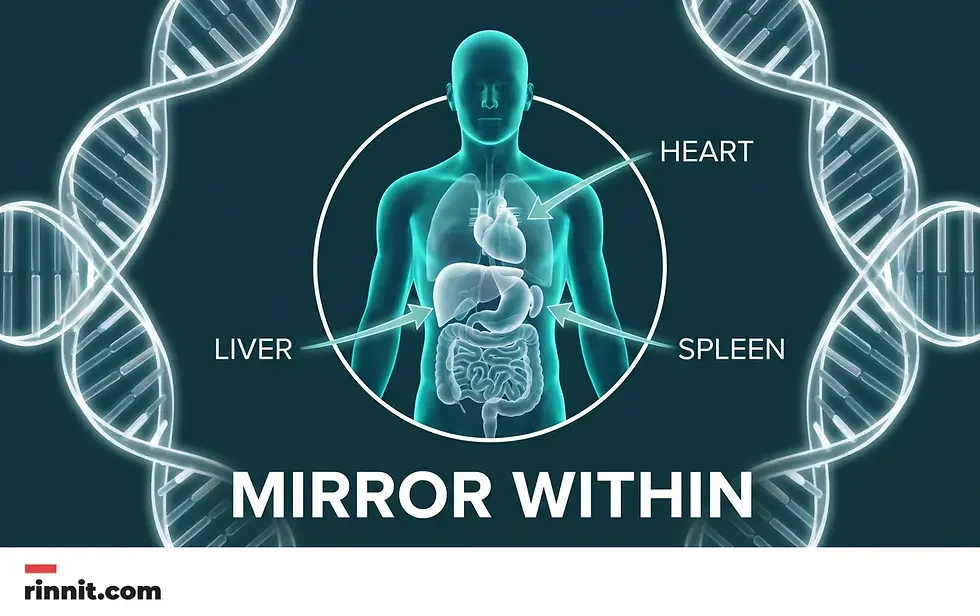
What role do cilia and genetics play in Kartagener syndrome?
Kartagener syndrome is caused by a gene change (variant) that you are born with. Changes in many different genes can cause PCD, and these genes affect how the cilia develop and move and how organs are positioned as you develop. [1] The joint ERS and ATS guideline notes that variants in more than 55 genes can cause PCD. [4]
Inheritance: The gene changes are usually inherited from both biological parents, who can only pass on the condition if both carry the variant. [1]
Mechanism: Gene changes affect the structure and movement of the cilia. [1]
Spontaneous change: In rare cases, neither parent has a PCD gene and a new change happens during fetal development. [1]
Carrier status: Parents may not know they carry a PCD gene and may have no symptoms themselves. [1]
Because the same condition can affect sperm, PCD can cause sperm that do not move around much or at all, which can lead to infertility in males. [1] The National Heart, Lung, and Blood Institute adds that women with PCD may have problems getting pregnant. [2] In the airways, the impaired cilia contribute to bronchiectasis, which is damage that makes the airways widen and form pockets. [1]

What are the symptoms and signs of Kartagener syndrome?
Symptoms often begin early in life. Newborns may have difficulty breathing right after birth, while older children typically develop a chronic cough and/or runny nose. Because the cilia cannot clear bacteria effectively, people have frequent lung, ear and sinus infections. [1]
Complications of Kartagener syndrome can include: [1]
Acute respiratory distress syndrome (ARDS).
Frequent lung infections, including pneumonia.
Hearing loss.
Speech delay.
Infertility in males.
How is Kartagener syndrome diagnosed?
A healthcare provider diagnoses Kartagener syndrome when a child has primary ciliary dyskinesia and their organs are reversed. Imaging tests such as X-rays, ultrasounds or CT scans show where the organs are in the body. [1] There is no single test that diagnoses PCD, and it can take time to reach an accurate diagnosis. Tests that help include: [1]
Ear, nose and throat exams: an otolaryngologist (ENT) examines the ears, nose and throat and can also test hearing. [1]
Pulmonary function tests: these measure how well the lungs are working. [1]
Genetic testing: a blood sample or cheek swab is checked for gene changes that cause PCD. [1]
Nasal nitric oxide testing: a screening breathing test that measures nitric oxide levels using a small device placed temporarily in the nose. [1]
Electron microscopy: a provider brushes cells from the inside of the nose and examines under a microscope how well the cilia work and whether their structure is abnormal. [1]
International guidelines recommend confirming the diagnosis with transmission electron microscopy and/or genetic testing, using other tests as adjuncts, and having people evaluated at a referral center with experience in diagnosing PCD. [4]
How is Kartagener syndrome managed and treated?
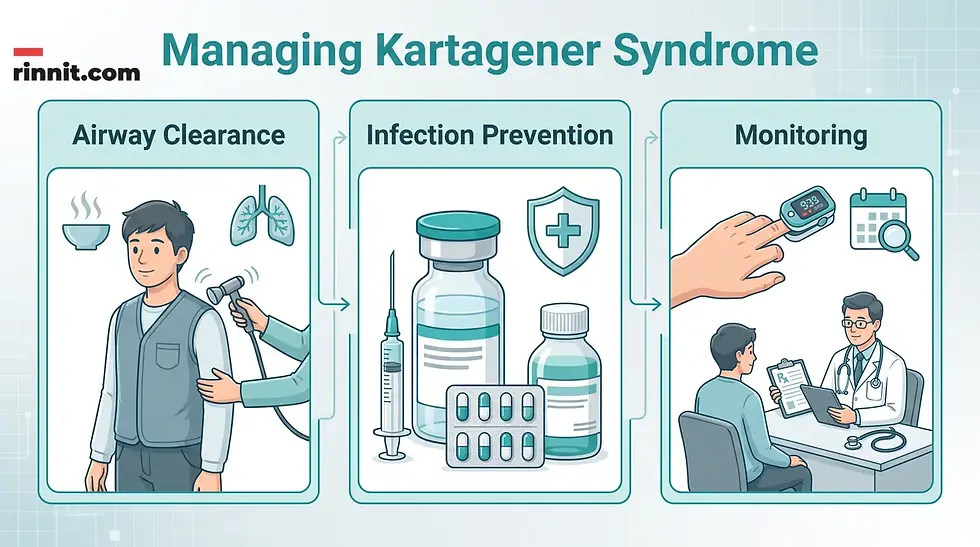
Kartagener syndrome has no cure, but several strategies help manage the condition and prevent complications. The focus is on keeping the airways clear and treating or preventing infections. [1] [3]
Airway clearance: Techniques such as chest physiotherapy, along with breathing and coughing techniques, are done frequently to help the lungs stay clear. [1] [3]
Infection control: Antibiotics treat or prevent bacterial infections. When symptoms are more severe, antibiotics may be given through an IV for a few weeks at a time. [1] [3]
Preventive health: Staying up to date with recommended vaccinations helps protect the lungs. [1]
Oxygen therapy: Supplemental oxygen may be needed, for example at night or during exercise, if lung function is significantly impaired. [1] [3]
Transplantation: In severe cases, some people need a lung transplant, which is rare. [1] [3]
What is the outlook for people living with Kartagener syndrome?
Kartagener syndrome affects people in different ways. Some children need to be in the hospital frequently or for a long time, while others do not. [1] The National Heart, Lung, and Blood Institute notes that many people with PCD live an active life and have a normal lifespan, and the American Lung Association says that most people who are diagnosed relatively early and receive proper care live a long life with good quality. [2] [3]
It is important to tell all of your healthcare providers that you have situs inversus so that your mirrored organ placement can be taken into account in your care. [1] Cleveland Clinic also suggests reaching out to parent groups and organizations that support families with PCD, which can offer understanding and insight from people who have been there. The PCD Foundation, for example, offers resources for patients and caregivers and a research registry. [7]
Learn more. For more evidence-based health guides, visit Rinnit.com.
Frequently Asked Questions
Is Kartagener syndrome contagious?
No. It is a genetic condition you are born with, so it cannot be spread from person to person. [1]
Does situs inversus cause pain?
No. Situs inversus usually does not cause additional health problems, although it is important to tell your healthcare providers that you have it. [1]
Can women with Kartagener syndrome have children?
Women with primary ciliary dyskinesia (PCD) may have problems getting pregnant, and men are usually unable to have children because their sperm may not move properly. A fertility specialist can talk through the options with you. [2]
How common is Kartagener syndrome?
PCD, the broader condition, affects approximately 1 in every 10,000 to 30,000 people. Kartagener syndrome is the form of PCD that includes situs inversus, so it is rarer still. [2]
What is the main difference between PCD and Kartagener syndrome?
Kartagener syndrome is a form of PCD in which the organs are also a mirror image of their usual placement (situs inversus). [1]
Can the condition be detected before birth?
Situs inversus can sometimes be seen on a prenatal ultrasound, but PCD itself is usually diagnosed after birth, often at birth or during childhood. [1]
Is there a special diet for Kartagener syndrome?
There is no specific diet for Kartagener syndrome. A balanced diet and staying well hydrated support overall health, and your care team can advise you on your individual needs.
Does Kartagener syndrome affect life expectancy?
Many people with PCD live an active life with a normal lifespan, and most who are diagnosed relatively early and receive proper care live a long life with good quality. Outcomes vary from person to person, and some people develop severe lung disease. [2]
Why does it cause hearing loss?
Hearing loss is a recognized complication of Kartagener syndrome. Because the cilia cannot clear germs and mucus well, ear infections are frequent, and repeated infections can affect hearing over time. [1]
How is Kartagener syndrome treated?
There is no cure, but treatment focuses on airway clearance techniques such as chest physiotherapy, antibiotics to treat or prevent bacterial infections, recommended vaccinations and, when needed, oxygen therapy. [1]
What kind of doctor treats this condition?
Care often involves several specialists, such as lung doctors (pulmonologists), ear, nose and throat doctors (ENTs) and geneticists, ideally at a center with experience in PCD. [1]
Is Kartagener syndrome the same as cystic fibrosis?
No. Both can affect the lungs and mucus, but they are different conditions caused by different genes.
Can cilia function ever be restored?
Currently there is no treatment that fixes the cilia. Researchers continue to study new approaches, so treatments may become available in the future. [2]
Are there support groups available?
Yes. Organizations such as the PCD Foundation offer information for patients and caregivers, a research registry and an online community. [7]
Should I get genetic counseling?
If PCD runs in your family or you have a child with Kartagener syndrome, genetic counseling can help you understand how the condition is inherited and what that could mean for future children. [1]
Conclusion
Kartagener syndrome is a lifelong genetic condition that combines primary ciliary dyskinesia with mirrored organ placement. There is no cure, but airway clearance, infection control and vaccinations can help protect the lungs, and many people with PCD live active lives. Early diagnosis and a dedicated care team that includes lung, ear, nose and throat and genetics specialists are the most important factors in getting the best possible outcome. [1] [2]
Related Reading
Understanding Primary Ciliary Dyskinesia (PCD): Symptoms and Management explains the cilia disorder that underlies Kartagener syndrome.
Bronchiectasis: The Widened Airways Condition That Makes Mucus Hard to Clear — Explained describes the airway widening and lung damage that repeated infections cause.
Understanding Situs Inversus: Mirrored Internal Anatomy explains the mirrored organ placement seen in Kartagener syndrome.
Chronic Sinusitis (Chronic Rhinosinusitis): Symptoms, Causes, and Treatment covers long-lasting sinus inflammation, a common feature of the condition.
References
Cleveland Clinic. Kartagener Syndrome. Cleveland Clinic. Last updated April 1, 2026. https://my.clevelandclinic.org/health/diseases/kartagener-syndrome
National Heart, Lung, and Blood Institute. What Is Primary Ciliary Dyskinesia? National Heart, Lung, and Blood Institute. Last updated July 12, 2022. https://www.nhlbi.nih.gov/health/primary-ciliary-dyskinesia
American Lung Association. Treating Primary Ciliary Dyskinesia (PCD). American Lung Association. Page last updated August 6, 2026. https://www.lung.org/lung-health-diseases/lung-disease-lookup/primary-ciliary-dyskinesia/treating-and-managing
Shoemark A, Goutaki M, Kinghorn B, et al. European Respiratory Society and American Thoracic Society guidelines for the diagnosis of primary ciliary dyskinesia. Eur Respir J. 2025;66(6). PMID 41005984. https://doi.org/10.1183/13993003.00745-2025
Kobbernagel HE, Buchvald FF, Haarman EG, et al. Efficacy and safety of azithromycin maintenance therapy in primary ciliary dyskinesia (BESTCILIA): a multicentre, double-blind, randomised, placebo-controlled phase 3 trial. Lancet Respir Med. 2020;8(5):493-505. PMID 32380069. https://doi.org/10.1016/S2213-2600(20)30058-8
Goutaki M, Meier AB, Halbeisen FS, et al. Clinical manifestations in primary ciliary dyskinesia: systematic review and meta-analysis. Eur Respir J. 2016;48(4):1081-1095. PMID 27492829. https://doi.org/10.1183/13993003.00736-2016
PCD Foundation. Primary Ciliary Dyskinesia | PCD Foundation. PCD Foundation. Accessed October 15, 2026. https://www.pcdfoundation.org/
Medical disclaimer
This article is for general educational purposes only and is not a substitute for professional medical advice. Always seek the advice of your physician or other qualified health provider with any questions you may have regarding a medical condition.



Comments