
Chronic Sinusitis (Chronic Rhinosinusitis): Symptoms, Causes, and Treatment

Updated: 2 days ago
Medically reviewed by Dr. Baraa Alnahhal, MD · Last reviewed: September 2026
Chronic sinusitis, also called chronic rhinosinusitis, is inflammation and swelling of the sinuses that lasts 12 weeks or longer, even with treatment. It keeps mucus from draining, causing a stuffy nose, facial pressure, and a reduced sense of smell and taste. The cause is usually not known. Nasal polyps — soft, noncancerous growths — and sinus infections often play a part. Treatments range from nasal steroid sprays and saline rinses to surgery when other options fail.
Quick Answer
What it is: Inflammation and swelling of the sinuses — the spaces inside the nose and head — that lasts 12 weeks or longer even with treatment.
What it causes: Mucus cannot drain properly, so the nose stays stuffy and breathing through the nose is hard; the area around the eyes, cheeks, nose, or forehead can feel swollen or tender, and smell and taste are often reduced.
Cause: Usually not known; a cold or sinus infection, nasal polyps, a deviated septum, or tumors inside the nose can make it worse.
Diagnosis: Symptom review and exam, nasal endoscopy, CT or MRI scan, and sometimes tissue samples or an allergy skin test.
Treatment: Nasal corticosteroid sprays, saline rinses, corticosteroid pills or shots for severe cases, antibiotics for bacterial infections, allergy treatment, polyp-reducing injections, and endoscopic sinus surgery when other treatments fail.
What Is Chronic Sinusitis?
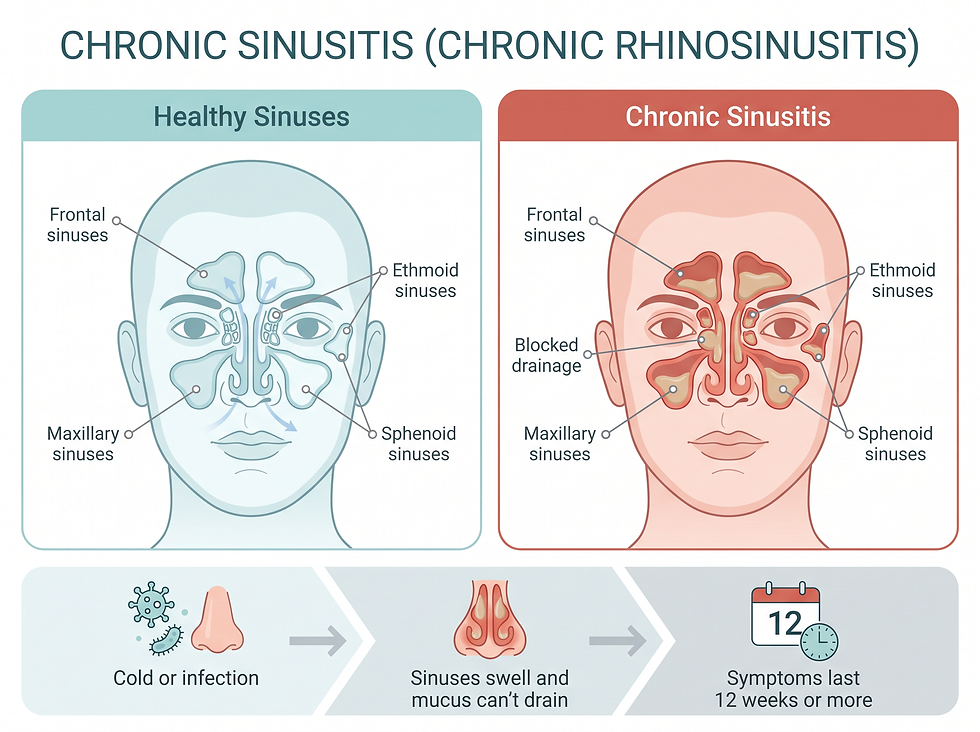
Chronic sinusitis causes the spaces inside the nose and head, called sinuses, to become inflamed and swollen. When sinuses are inflamed, they cannot drain properly. Mucus builds up, the nose stays stuffy, and breathing through the nose becomes hard.
The area around the eyes might feel swollen or tender. The condition lasts 12 weeks or longer, even with treatment — that time frame is what separates it from the more common, short-lived acute form.
Chronic sinusitis is also called chronic rhinosinusitis. The condition affects adults and children. An infection, growths in the sinuses called nasal polyps, or swelling of the lining of the sinuses can all be part of the picture.
What Causes Chronic Sinusitis?
The cause of chronic sinusitis usually is not known. Some medical conditions can cause it, particularly in younger people. Cystic fibrosis, for example, can cause chronic sinusitis in children and teens.
Several conditions can make chronic sinusitis worse. A common cold or other infection that affects the sinuses — caused by viruses or bacteria — is the first. Problems inside the nose, such as a deviated nasal septum, nasal polyps, or tumors, are the second.
Nasal polyps are worth understanding on their own. They are soft growths on the lining of the nose or the spaces inside the nose, known as sinuses. Nasal polyps are not cancer, and they often occur in groups, like grapes on a stem.
Question | Answer |
What is the cause of chronic sinusitis? | The cause usually is not known |
Which medical condition can cause it in children? | Cystic fibrosis can cause chronic sinusitis in children and teens |
What infections make it worse? | A common cold or other sinus infection, caused by viruses or bacteria |
What structural problems make it worse? | A deviated nasal septum, nasal polyps, or tumors inside the nose |
Are nasal polyps cancerous? | No — nasal polyps are soft growths that are not cancer and often occur in groups like grapes on a stem |
What Are the Symptoms?
The common symptoms of chronic sinusitis center on thick mucus, congestion, facial pressure, and a dulled sense of smell. Thick, discolored mucus from the nose — known as a runny nose — and mucus down the back of the throat, known as postnasal drip, are hallmark signs. A blocked or stuffy nose, known as congestion, makes it hard to breathe through the nose.
Pain, tenderness, and swelling around the eyes, cheeks, nose, or forehead complete the core set. A reduced sense of smell and taste is a particularly telling feature of the chronic form.
Other symptoms can include ear pain, headache, aching in the teeth, cough, sore throat, bad breath, and tiredness. Chronic and acute sinusitis have similar symptoms, but fever is a useful differentiator: fever is not common with chronic sinusitis, though it might be part of acute sinusitis.
Symptom | What It Feels Like |
Thick, discolored mucus | Mucus from the nose (runny nose) or down the back of the throat (postnasal drip) |
Congestion | Blocked or stuffy nose that makes it hard to breathe through the nose |
Facial pressure | Pain, tenderness, and swelling around the eyes, cheeks, nose, or forehead |
Reduced smell and taste | A dulled ability to smell and taste |
Ear pain | Pain or fullness in the ears |
Headache | Often connected to sinus pressure |
Toothache | Aching in the teeth from pressure |
Cough | Often from postnasal drip |
Sore throat | Irritation from mucus draining into the throat |
Bad breath | From mucus buildup |
Tiredness | General fatigue |

When Should You See a Doctor?
Schedule an appointment with your healthcare provider for repeated sinusitis, for sinusitis that does not get better with treatment, or for sinusitis symptoms that last more than 10 days.
Seek a healthcare provider right away if you have symptoms that could mean a serious infection. Those warning signs include a fever, swelling or redness around the eyes, a bad headache, forehead swelling, confusion, double vision or other vision changes, and a stiff neck.
Action | Triggers |
Schedule an appointment | Repeated sinusitis; sinusitis that does not get better with treatment; symptoms lasting more than 10 days |
See a provider right away | Fever; swelling or redness around the eyes; bad headache; forehead swelling; confusion; double vision or other vision changes; stiff neck |
Who Is at Risk?
Several factors raise the risk of getting chronic sinusitis. A dental infection can raise the risk, as can a fungal infection. Regularly being around cigarette smoke or other pollutants is a third risk factor — tobacco smoke and other pollutants irritate the lungs and the nasal passages.
Conditions that make chronic sinusitis worse also tend to cluster with it. A common cold or other sinus infection, a deviated nasal septum, nasal polyps, and tumors all contribute to the cycle of inflammation and blockage.
Risk Factor | Why It Raises Risk |
Dental infection | Infection near the sinuses can inflame them |
Fungal infection | Fungal infections can involve the sinuses |
Cigarette smoke or pollutants | Smoke and pollutants regularly irritate the nasal passages |
A deviated nasal septum | A shifted septum can block sinus drainage |
Nasal polyps or tumors | Growths inside the nose block drainage and add inflammation |
Cystic fibrosis | Can cause chronic sinusitis in children and teens |
Can Chronic Sinusitis Cause Complications?
Serious complications of chronic sinusitis are rare. The most concerning ones involve the infection spreading to nearby structures.
Vision problems can occur if a sinus infection spreads to an eye socket. That can reduce vision or, in the worst case, possibly cause blindness. Infections can also spread to the membranes and fluid around the brain and spinal cord — an infection called meningitis. That is not common. Other serious infections can spread to the bones, called osteomyelitis, or to the skin, called cellulitis.
Complication | Description |
Vision problems | An infection that spreads to an eye socket can reduce vision or possibly cause blindness |
Meningitis | A serious sinus infection that spreads to the membranes and fluid around the brain and spinal cord — not common |
Osteomyelitis | An infection that spreads to the bones — rare |
Cellulitis | An infection that spreads to the skin — rare |
How Is Chronic Sinusitis Diagnosed?
Diagnosis starts with the basics. A healthcare provider asks about symptoms and does an exam. The exam might include feeling for tenderness in the nose and face and looking inside the nose.
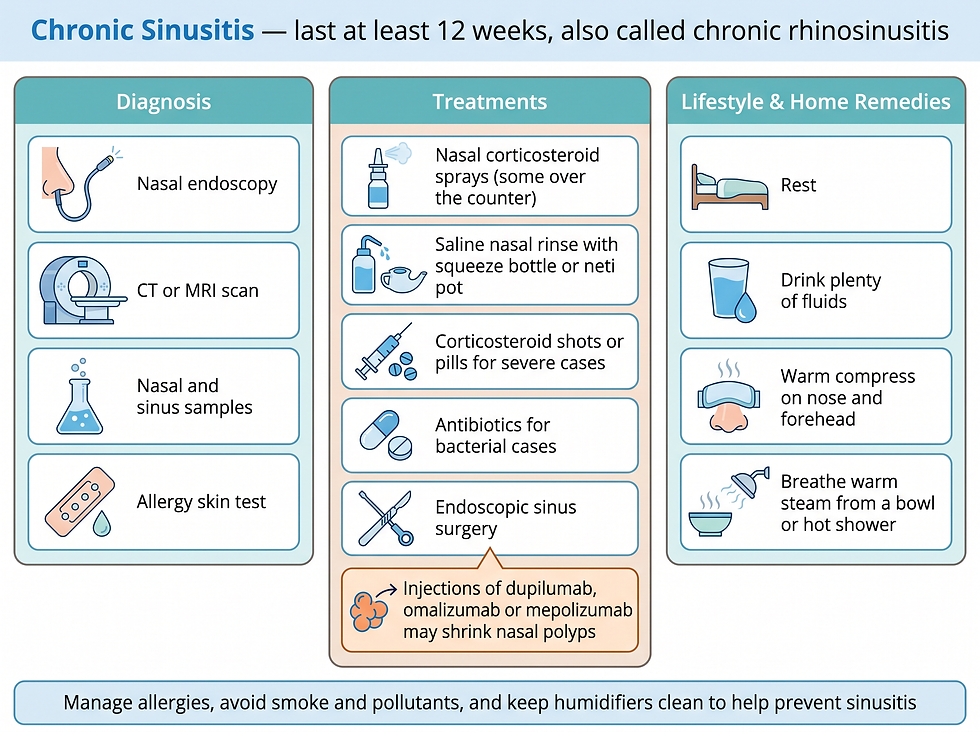
Nasal endoscopy is the key next step. The provider inserts a thin, flexible tube known as an endoscope into the nose. A light on the tube allows the provider to see inside the sinuses directly.
Imaging tests can show details of the sinuses and nasal area, and might pinpoint the cause. CT or MRI scans are the two imaging options. Nasal and sinus samples are not often used in diagnosis, but if the condition does not improve with treatment or gets worse, tissue samples from the nose or sinuses might help find the cause. Finally, if allergies might be causing the sinusitis, an allergy skin test might show the cause.
Diagnostic Step | What It Involves |
Symptoms review and exam | Provider asks about symptoms; exam includes feeling for tenderness in the nose and face and looking inside the nose |
Nasal endoscopy | A thin, flexible tube with a light (endoscope) is inserted into the nose to see inside the sinuses |
CT or MRI scan | Imaging shows details of the sinuses and nasal area and might pinpoint the cause |
Nasal and sinus samples | Tissue samples if the condition does not improve or gets worse; lab tests are not often used |
Allergy skin test | Can show whether allergies are causing the chronic sinusitis |
How Is Chronic Sinusitis Treated?
The first line of treatment is nasal corticosteroids. These nasal sprays help prevent and treat swelling, and some are available without a prescription. Examples include fluticasone (Flonase Allergy Relief, Xhance), budesonide (Rhinocort Allergy), mometasone (Nasonex 24HR Allergy), and beclomethasone (Beconase AQ, Qnasl, others).
Saline nasal rinses are a core home treatment. A specially designed squeeze bottle or a neti pot — a home remedy called nasal lavage — helps clear the sinuses, and saline nasal sprays are also available.
Corticosteroid shots or pills ease severe sinusitis, especially for people who have nasal polyps. Because they can cause serious side effects when used long term, they are used only to treat severe symptoms. Allergy medicines might also lessen allergy symptoms of sinusitis caused by allergies.
Two specialized treatments address specific situations. Aspirin desensitization treatment is for people who react to aspirin and whose reaction causes sinusitis and nasal polyps — under medical supervision, people receive larger and larger doses of aspirin to increase their ability to take it. For people with nasal polyps and chronic sinusitis, a shot of dupilumab (Dupixent), omalizumab (Xolair), or mepolizumab (Nucala) might reduce the size of the nasal polyps and lessen stuffiness.
Treatment | How It Helps | Key Notes |
Nasal corticosteroid sprays | Prevent and treat swelling; some are available without a prescription | Examples: fluticasone, budesonide, mometasone, beclomethasone |
Saline nasal rinses | Clear the sinuses using a squeeze bottle or neti pot (nasal lavage) | Saline nasal sprays are also available |
Corticosteroid shots or pills | Ease severe sinusitis, especially with nasal polyps | Can cause serious side effects long term; reserved for severe symptoms |
Allergy medicines | Lessen allergy symptoms when allergies cause the sinusitis | None noted |
Aspirin desensitization | For people whose aspirin reaction causes sinusitis and nasal polyps | Larger and larger doses under medical supervision |
Polyp-reducing injections | Dupilumab, omalizumab, or mepolizumab shots may shrink nasal polyps and lessen stuffiness | For people with both nasal polyps and chronic sinusitis |
Antibiotics
Antibiotics are sometimes needed to treat sinusitis caused by bacteria. A possible bacterial infection might need to be treated with an antibiotic, sometimes together with other medicines.
Immunotherapy
For sinusitis caused or made worse by allergies, allergy shots might help. This is known as immunotherapy.
Surgery
Endoscopic sinus surgery is the option for chronic sinusitis that does not clear up with treatment. In this procedure, a healthcare provider uses a thin, flexible tube with an attached light, called an endoscope, and tiny cutting tools to remove the tissue that is causing the problem — opening the blocked passage between the sinuses so they can drain.
What Home Remedies Help?
Simple self-help steps can ease chronic sinusitis symptoms. Rest helps the body fight infection and speed recovery. Drinking plenty of fluids keeps mucus drainable.
A warm compress on the nose and forehead might help ease pressure in the sinuses. Keeping the sinuses moist helps as well: breathing in the vapor from a bowl of hot water with a towel over your head, or taking a hot shower, can ease pain and help mucus drain.
Home Remedy | How It Helps |
Rest | Helps the body fight infection and speed recovery |
Drink fluids | Keeps mucus thin and easier to drain |
Warm compress | On the nose and forehead, may ease sinus pressure |
Warm steam | Vapor from a hot water bowl with a towel over the head, or a hot shower, eases pain and helps mucus drain |
How Can You Prevent Chronic Sinusitis?
Four practical steps can lower the risk of getting chronic sinusitis. The first is protecting your health: stay away from people who have colds or other infections, and wash your hands often with soap and water, especially before meals.
The second is managing allergies. Working with your healthcare provider to keep symptoms under control helps, as does staying away from things you are allergic to when possible. The third is avoiding cigarette smoke and polluted air, which irritate the lungs and the nasal passages.
Finally, if the air in your home is dry, using a humidifier may help prevent sinusitis. Be sure the humidifier stays clean and free of mold with regular, complete cleaning.
Prevention Step | Why It Helps |
Protect your health | Avoiding people with colds and washing hands often lowers exposure to infections |
Manage allergies | Keeping allergy symptoms under control reduces sinus inflammation |
Avoid smoke and polluted air | Tobacco smoke and pollutants irritate the nasal passages |
Use a humidifier | Adds moisture to dry air; keep it clean and mold-free |
Preparing for Your Appointment
You will likely see your primary care provider first for symptoms of sinusitis. If you have had many bouts of acute sinusitis or you have symptoms of chronic sinusitis, your provider might refer you to an allergist or an ear, nose and throat specialist.
Before the visit, make a list of your symptoms, including any that seem unrelated to the reason for the appointment, and when they began. Include key personal information, such as whether you have allergies or asthma and your family medical history. Bring a list of all medicines, vitamins, or other supplements you take, including doses, plus your questions.
Useful questions to ask include: What is the most likely cause of my symptoms? What tests do I need? Is my condition likely to go away or be long lasting? What treatments do you suggest for me? If you have other health conditions, how can you best manage them together? Should you see a specialist? And are there brochures or other printed material you can have, and what websites are suggested?
Your provider will likely ask their own questions. Expect to be asked whether you have symptoms all the time or sometimes, how bad your symptoms are, what seems to make them better or worse, and whether you smoke or are around smoke or other pollutants.
Conclusion
Chronic sinusitis, also called chronic rhinosinusitis, is inflammation and swelling of the sinuses that lasts 12 weeks or longer, even with treatment. The cause usually is not known, but nasal polyps, sinus infections, and structural problems inside the nose often play a part. The condition keeps mucus from draining, causing a stuffy nose, facial pressure, and a reduced sense of smell and taste. Nasal corticosteroid sprays, saline rinses, and other treatments can ease symptoms, and endoscopic sinus surgery is an option when treatments fail. Serious complications are rare. Seek care right away for warning signs such as fever, swelling around the eyes, vision changes, or a stiff neck.
If your sinus symptoms last more than 10 days or keep coming back, speak with a healthcare provider about testing and treatment.
Frequently Asked Questions
What is chronic sinusitis?
Chronic sinusitis, also called chronic rhinosinusitis, is inflammation and swelling of the sinuses — the spaces inside the nose and head — that lasts 12 weeks or longer, even with treatment. It keeps mucus from draining, making the nose stuffy and breathing through the nose hard.
What causes chronic sinusitis?
The cause usually is not known. Cystic fibrosis can cause it in children and teens. Conditions that can make it worse include a common cold or other sinus infection, and problems inside the nose such as a deviated nasal septum, nasal polyps, or tumors.
What are the main symptoms of chronic sinusitis?
The common symptoms are thick, discolored mucus from the nose or down the back of the throat (postnasal drip), a blocked or stuffy nose, pain, tenderness, and swelling around the eyes, cheeks, nose, or forehead, and a reduced sense of smell and taste. Ear pain, headache, aching teeth, cough, sore throat, bad breath, and tiredness can also occur. Fever is not common with chronic sinusitis.
How is chronic sinusitis different from acute sinusitis?
Both share similar symptoms, but acute sinusitis is a short-lived infection often linked to a cold, while chronic sinusitis lasts at least 12 weeks. Fever might occur with acute sinusitis but is not common with the chronic form.
What are nasal polyps?
Nasal polyps are soft growths on the lining of the nose or the sinuses. They are not cancer and often occur in groups, like grapes on a stem. They can contribute to chronic sinusitis, and some treatments specifically target them.
How is chronic sinusitis diagnosed?
Diagnosis begins with a symptom review and an exam that may include feeling for tenderness in the nose and face. Nasal endoscopy lets the provider see inside the sinuses, CT or MRI scans show details of the sinus area, tissue samples may be taken if treatment fails, and an allergy skin test can identify allergy-related causes.
Can chronic sinusitis be cured?
There is no single cure, but symptoms can be managed. Nasal corticosteroid sprays, saline rinses, corticosteroid pills or shots for severe cases, allergy medicines, antibiotics for bacterial infections, allergy shots, polyp-reducing injections, and endoscopic sinus surgery are the available options.
When should I see a doctor for sinusitis?
Schedule an appointment for repeated sinusitis, sinusitis that does not get better with treatment, or symptoms lasting more than 10 days. See a provider right away for fever, swelling or redness around the eyes, a bad headache, forehead swelling, confusion, double vision or other vision changes, or a stiff neck.
External References
Health information, not medical advice. This article is for general education and is not a substitute for professional diagnosis or treatment. Always consult a qualified healthcare provider about your own health, and seek emergency care for urgent symptoms.
Comments