Hirsutism: Causes, Symptoms, and the Treatment Options That Work

Updated: 3 days ago
Medically reviewed by Dr. Baraa Alnahhal, MD · Last reviewed: October 2026
Quick Answer: What Is Hirsutism?
Hirsutism is a condition in women that causes extra growth of dark or coarse hair in a male-like pattern, most often on the face, chest, back and lower stomach. It is frequently caused by excess androgens, mainly testosterone. Treatment is not always necessary, but options include birth control pills, anti-androgen medicines, laser therapy and electrolysis. [1] [2]

What the research says
PCOS, the leading cause of hirsutism, is common. A meta-analysis of 24 studies estimated that polycystic ovary syndrome affects 6% of women by NIH criteria and 10% by Rotterdam and Androgen Excess and PCOS Society criteria (Bozdag et al., Hum Reprod, 2016 [3]).
Some medicines have trial support; metformin and diet alone did not help. A Cochrane review of 157 randomized trials with 10,550 women (noting that hirsutism occurs in 5% to 10% of women of reproductive age) found that spironolactone 100 mg daily lowered Ferriman-Gallwey hirsutism scores more than placebo (mean difference −7.69; 95% CI −10.12 to −5.26; low-quality evidence), that metformin showed no benefit over placebo, and that low-calorie diets reduced BMI without reducing hirsutism scores (van Zuuren et al., Cochrane Database Syst Rev, 2015 [4]).
Guidelines favor birth control pills first, then an anti-androgen if needed. The Endocrine Society guideline suggests combined estrogen-progestin contraceptives for most women, adding an anti-androgen after 6 months if the response is suboptimal; it recommends against anti-androgen monotherapy unless adequate contraception is used, and suggests laser or photoepilation for most women who choose hair removal (Martin et al., J Clin Endocrinol Metab, 2018 [5]).
What Is Hirsutism?
Hirsutism (pronounced HUR-soot-iz-um) is a condition in women that results in extra growth of dark or coarse hair. The hair growth follows a male-like pattern. It may show up on the face, chest, back, and other body parts where hair usually doesn't grow on women.
With hirsutism, extra hair growth often happens due to excess male hormones called androgens — and the main androgen involved is testosterone.
The condition is often most noticeable around the mouth and chin. Self-care methods can help remove unwanted hair, and medical treatment is available for those who wish to treat hirsutism.
Symptoms: What Hirsutism Looks Like
Hirsutism is stiff or dark hair that appears on the body where women don't commonly have hair. The affected areas can include the face, chest, lower stomach, inner thighs, and back.
When high androgen levels cause hirsutism, other symptoms might develop over time — a process called virilization. These additional signs are important to recognize, because they can signal a more significant hormone imbalance:
Virilization Sign | What It Involves |
Deepened voice | The voice becomes deeper over time |
Hair loss | The scalp loses hair |
Acne | New acne appears |
Smaller breasts | Breast size becomes smaller |
Increased muscle mass | Muscle mass increases |
Clitoral enlargement | The clitoris becomes larger |
When to See a Doctor
If you think you have too much coarse hair on your face or body, talk with your health care team and ask about treatment options.
Extra facial or body hair can be a symptom of another condition. Get a checkup if, over a few months, you have heavy or rapid hair growth on your face or body. Also get checked if you notice symptoms of virilization, such as a deepening voice or new acne. You may be referred to an endocrinologist — a healthcare professional who finds and treats hormone disorders — or a dermatologist, who treats skin problems.
What Causes Hirsutism?
Hirsutism can be caused by several underlying conditions:
Cause | How It Works |
Polycystic ovary syndrome (PCOS) | Shifts the balance of sex hormones; often starts during puberty; over years may lead to extra hair growth, irregular periods, obesity, infertility, and sometimes multiple small cysts on the ovaries |
Cushing syndrome | The body makes high levels of the hormone cortisol — either because the adrenal glands make too much, or from taking medicines such as prednisone over a long time |
Congenital adrenal hyperplasia | A condition present at birth, passed through genes; causes the adrenal glands to make irregular amounts of steroid hormones, such as too little cortisol and too much androgen |
Tumors | Rarely, a tumor in the ovaries or adrenal glands releases androgen and causes hirsutism |
Medicines | Minoxidil; danazol (used to treat endometriosis); testosterone; and dehydroepiandrosterone (DHEA) — and androgens in a partner's skin products may affect you through skin-to-skin contact |
Hirsutism may also happen with no clear cause.
Risk Factors
Some factors can raise the risk of hirsutism:
Family history. Some conditions that cause hirsutism run in families — including congenital adrenal hyperplasia and polycystic ovary syndrome.
Ancestry. Women of Mediterranean, Middle Eastern, and South Asian descent are more likely to have extra body hair with no clear cause than are other women.
Obesity. Being obese causes the body to make more androgens, which can make hirsutism worse.
Complications
Hirsutism can be distressing. You might feel self-conscious about having unwanted hair, and some people become depressed. Hirsutism itself doesn't cause physical health problems — but if a medical condition is causing a hormonal imbalance, that may lead to other health concerns.
If you have hirsutism and irregular periods, you might have PCOS, which can cause infertility. And people who take certain medicines to treat hirsutism should not try to become pregnant because of the risk of birth defects.
Prevention
Hirsutism usually isn't preventable. But losing weight if you're overweight might help reduce hirsutism — that's especially true if you have PCOS.
Diagnosis: How Doctors Figure It Out
To check for hirsutism, your healthcare professional starts with a physical exam. You'll also answer questions about your medical history and any medicines you take.
You may need blood tests that measure certain hormones, including testosterone. If you have hirsutism, these tests might help find out whether higher androgen levels are the cause.
Your healthcare professional might examine your stomach area and do a pelvic exam to look for lumps that could be signs of a tumor. Sometimes, imaging tests such as an MRI or CT scan are recommended to check for pelvic or adrenal tumors.
Treatment: What Helps Hirsutism
Treatment isn't necessary for hirsutism with no sign of a hormonal condition. For people who do need treatment — or who simply decide to seek it — the approach may involve treating underlying health problems, starting a self-care routine to remove unwanted hair, and trying various therapies and medicines.
Medications

Cosmetic or self-care hair removal alone doesn't work for everyone. If that's your situation, talk with your healthcare professional about medicines — noting that they often take up to six months or more to make a difference in hair growth.
Medicine | How It Works | Key Points |
Birth control pills | Estrogen and progestin treat androgen-caused hirsutism | Common for people who don't want to become pregnant; side effects include nausea and headache |
Anti-androgens | Block androgens from attaching to cells | Spironolactone is most commonly used; results take at least six months; can cause birth defects, so use birth control while taking them |
Skin cream (eflornithine) | Prescription cream applied to the face twice a day; slows new hair growth | Doesn't remove existing hair; works better alongside laser therapy or electrolysis |
Procedures
Hair removal procedures may deliver longer-lasting results than self-care methods, and they can be used alongside medicines:
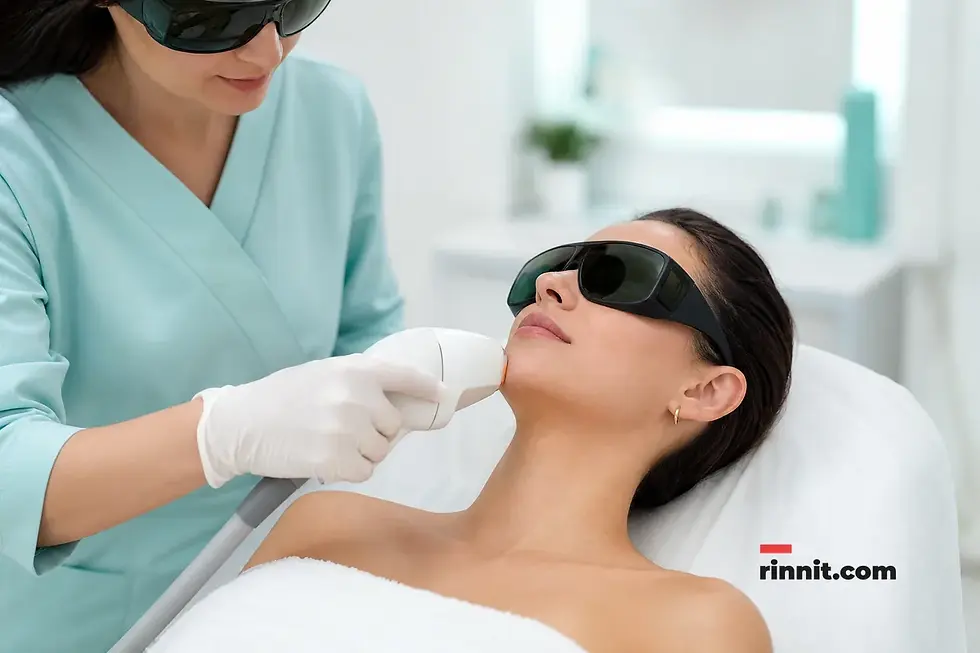
Laser therapy (photoepilation). A beam of highly concentrated light is passed over the skin. It damages hair follicles and prevents hair from growing. You might need more than one treatment. For people whose unwanted hair is black, brown, or auburn, laser therapy is often a better option than electrolysis. One caution: people with tanned or darkly pigmented skin have a higher risk of side effects from certain lasers, including darkening or lightening of the usual skin tones, blistering, and inflammation.
Electrolysis. A tiny needle is placed into each hair follicle, and a pulse of electric current damages and, over time, destroys the follicle. More than one treatment may be needed. For people with naturally blond or white hair, electrolysis is a better option than laser therapy. Electrolysis works, but it can be painful — a numbing cream applied before treatment might ease discomfort.
Self-Care Methods
Self-care methods remove unwanted hair or make it less visible — though only for a short time:
Method | How It Works | Trade-Offs |
Plucking | Removing a few stray hairs with tweezers, thin cotton threads, or other devices | Good for small areas; hair often grows back |
Shaving | Quick and inexpensive | Needs to be done regularly |
Waxing | Warm wax hardens on the skin, then is pulled off to remove hair from large areas quickly | May sting; sometimes irritates the skin |
Depilatory products | Chemicals in gels, creams, or lotions dissolve the hair | Need regular use; may irritate the skin |
Bleaching | Lightens hair color so it's harder to see on light skin; often contains hydrogen peroxide | May cause skin irritation; test on a small area first |
Preparing for Your Appointment
When you make your appointment, ask if you should wait to remove unwanted hair until after the checkup — that might make it easier for your healthcare professional to assess your condition.
What to bring: Make a list of your key personal information, including other medical conditions and changes in your menstrual cycle or sex drive. List all medicines, vitamins, and supplements with doses. And write down your questions.
Questions worth asking: What's likely causing my symptoms? What are other possible causes? What tests do I need? How long might my condition last? What's the best course of action? What are other treatment options? I have other health conditions — how can I manage them together? Should I see a specialist?
What your doctor may ask: When did your symptoms begin? Has the hair grown slowly or quickly? Is your hair amount similar to other women in your family? Has your menstrual cycle changed? Have you gained weight? Developed new acne? Have your breasts or your voice changed? Are you planning to become pregnant soon?
Conclusion: Treatable, With Options for Every Goal
Hirsutism is a common, treatable condition — and the right path depends on what's driving it. If excess hair growth is rapid or comes with virilization signs like a deepening voice, the priority is ruling out an underlying hormone imbalance such as PCOS or Cushing syndrome. If hormone tests are normal, self-care and cosmetic treatments are entirely reasonable on their own.
For those who want more durable results, prescription medicines, laser therapy, and electrolysis all have proven roles — with the honest caveat that hormonal treatments take at least six months to show results. If hirsutism is taking a toll on your confidence, that's a valid reason to seek care. You don't have to manage it alone.
Want more clear, trustworthy explainers like this one? Explore our library of women's health guides — and if a specific symptom is on your mind, tell us in the comments and we may make it our next deep dive.
Frequently Asked Questions
What is hirsutism?
Hirsutism is a condition in women that results in extra growth of dark or coarse hair in a male-like pattern — often on the face, chest, back, lower stomach, or inner thighs. It's frequently caused by excess male hormones (androgens, mainly testosterone).
What causes hirsutism?
Polycystic ovary syndrome (PCOS) is a common cause, along with Cushing syndrome, congenital adrenal hyperplasia, certain medicines (minoxidil, danazol, testosterone, DHEA), and — rarely — tumors in the ovaries or adrenal glands. It can also occur with no clear cause.
What is virilization?
When high androgen levels cause hirsutism, other symptoms may develop over time — called virilization — including a deepened voice, scalp hair loss, acne, smaller breast size, increased muscle mass, and clitoral enlargement.
Who is at higher risk for hirsutism?
People with a family history of PCOS or congenital adrenal hyperplasia, women of Mediterranean, Middle Eastern, or South Asian descent, and people with obesity (which increases androgen production).
Is hirsutism treatment always necessary?
No. Treatment isn't necessary for hirsutism with no sign of a hormonal condition. Self-care and cosmetic methods are appropriate for many.
How long do hirsutism medicines take to work?
Often six months or more. Anti-androgens like spironolactone take at least six months, and results are modest.
What's the difference between laser therapy and electrolysis for hair removal?
Laser therapy uses concentrated light to damage follicles and suits black, brown, or auburn hair. Electrolysis uses electric current via a needle in each follicle and is better for naturally blond or white hair. Both may need multiple treatments.
Can I manage hirsutism at home?
Yes — self-care methods include plucking, shaving, waxing, depilatory products, and bleaching. They remove or hide hair only temporarily, but they're quick and inexpensive options.
Should I see a specialist for hirsutism?
If hair growth is heavy or rapid over a few months, or if you have virilization symptoms, get checked — you may be referred to an endocrinologist (hormone disorders) or dermatologist (skin).
Related Reading
Laser Hair Removal: How It Works, Sessions and Results explains how laser hair removal works and what results to expect.
DHEAS Test (DHEA Sulfate): Why It's Done and What Results Mean explains the adrenal hormone blood test used to check for PCOS and adrenal disorders.
References
Mayo Clinic Staff. Hirsutism - Symptoms and causes. Mayo Clinic. September 17, 2025. https://www.mayoclinic.org/diseases-conditions/hirsutism/symptoms-causes/syc-20354935
Mayo Clinic Staff. Hirsutism - Diagnosis and treatment. Mayo Clinic. September 17, 2025. https://www.mayoclinic.org/diseases-conditions/hirsutism/diagnosis-treatment/drc-20354941
Bozdag G, Mumusoglu S, Zengin D, et al. The prevalence and phenotypic features of polycystic ovary syndrome: a systematic review and meta-analysis. Hum Reprod. 2016;31(12):2841-2855. PMID 27664216. https://doi.org/10.1093/humrep/dew218
van Zuuren EJ, Fedorowicz Z, Carter B, et al. Interventions for hirsutism (excluding laser and photoepilation therapy alone). Cochrane Database Syst Rev. 2015;2015(4):CD010334. PMID 25918921. https://doi.org/10.1002/14651858.CD010334.pub2
Martin KA, Anderson RR, Chang RJ, et al. Evaluation and treatment of hirsutism in premenopausal women: an Endocrine Society clinical practice guideline. J Clin Endocrinol Metab. 2018;103(4):1233-1257. PMID 29522147. https://doi.org/10.1210/jc.2018-00241
Further reading: Office on Women's Health. Polycystic ovary syndrome. OASH Office on Women's Health. October 24, 2025. https://www.womenshealth.gov/a-z-topics/polycystic-ovary-syndrome.
Medical disclaimer
This article is for general informational purposes and is not a substitute for professional medical advice, diagnosis, or treatment. Always consult a qualified healthcare professional about any medical condition.



Comments