Heparin-Induced Thrombocytopenia (HIT): Risks and Management

Updated: 2 days ago
Medically reviewed by Dr. Baraa Alnahhal, MD · Last reviewed: October 15, 2026
Quick Answer: What is heparin-induced thrombocytopenia (HIT)?
Heparin-induced thrombocytopenia (HIT) is a potentially life-threatening immune reaction to heparin, a medication used to prevent blood clots [1]. Antibodies cause platelets to clump and form excessive clots, which lowers the platelet count and raises the risk of both severe clotting and bleeding [1]. Treatment involves immediately stopping all heparin products and switching to non-heparin blood thinners [1] [4].
What the research says
A low 4Ts score reliably rules HIT out. A meta-analysis of 13 studies (3,068 patients) found the negative predictive value of a low-probability 4Ts score was 0.998, while the positive predictive value was only 0.14 for an intermediate score and 0.64 for a high score, so higher scores need further testing (Cuker et al., Blood, 2012) [2].
HIT is uncommon but carries real risk. Among 791,932 US hospitalized patients with venous thromboembolism, 4,948 (0.6%) had HIT, and in-hospital mortality was higher with HIT than without (11.01% vs 8.97%) after propensity matching (Shah et al., J Vasc Surg Venous Lymphat Disord, 2023) [3].
Only one drug is formally approved for HIT. A review reported that only argatroban holds regulatory approval for HIT treatment in the US and Europe, fondaparinux is increasingly used off-label, and DOACs in acute HIT should be reserved for clinically stable patients without severe thrombosis (Hvas et al., Expert Rev Hematol, 2021) [4].

Key Takeaways
Feature | HIT Details |
Primary Mechanism | Immune reaction to heparin-PF4 complex leading to platelet activation [1]. |
Main Types | HIT I (mild, non-immune) and HIT II (severe, immune-mediated) [1]. |
Primary Risks | Deep vein thrombosis (DVT), pulmonary embolism (PE), and stroke [1]. |
Diagnosis Tool | The 4Ts Scoring System (Thrombocytopenia, Timing, Thrombosis, other causes) [1]. |
Core Treatment | Immediate cessation of heparin and use of non-heparin alternatives [1]. |
Future Precaution | Lifelong avoidance of heparin and use of medical alert notifications [1]. |
The Paradox of Heparin-Induced Clotting
Heparin is a standard anticoagulant used to prevent and treat blood clots after surgery or injury. However, in a small percentage of patients, the medication triggers a dangerous immune response known as HIT II. The process begins when heparin binds to Platelet Factor 4 (PF4), a protein released by platelets. The immune system mistakenly identifies this heparin-PF4 complex as a threat and produces antibodies to attack it [1].
When these antibodies bind to the heparin-PF4 complex, they also attach to the surface of platelets, causing them to activate and clump together. This activation creates a feedback loop: activated platelets release more PF4, which forms more complexes, leading to even more antibodies and more clotting [1]. This widespread clotting (thrombosis) consumes the body's supply of platelets, leading to low platelet counts (thrombocytopenia) and an increased risk of severe bleeding [1].
Recognizing Symptoms and the 4Ts Test
Symptoms of HIT can be categorized by the complications they cause. About half of patients with HIT II develop new, dangerous blood clots. Signs of these clots include sudden swelling, pain, or redness in the limbs, sharp chest pain, and shortness of breath [1]. Conversely, if platelet levels drop too low, patients may experience uncontrollable nosebleeds, bleeding gums, or bruising [1].
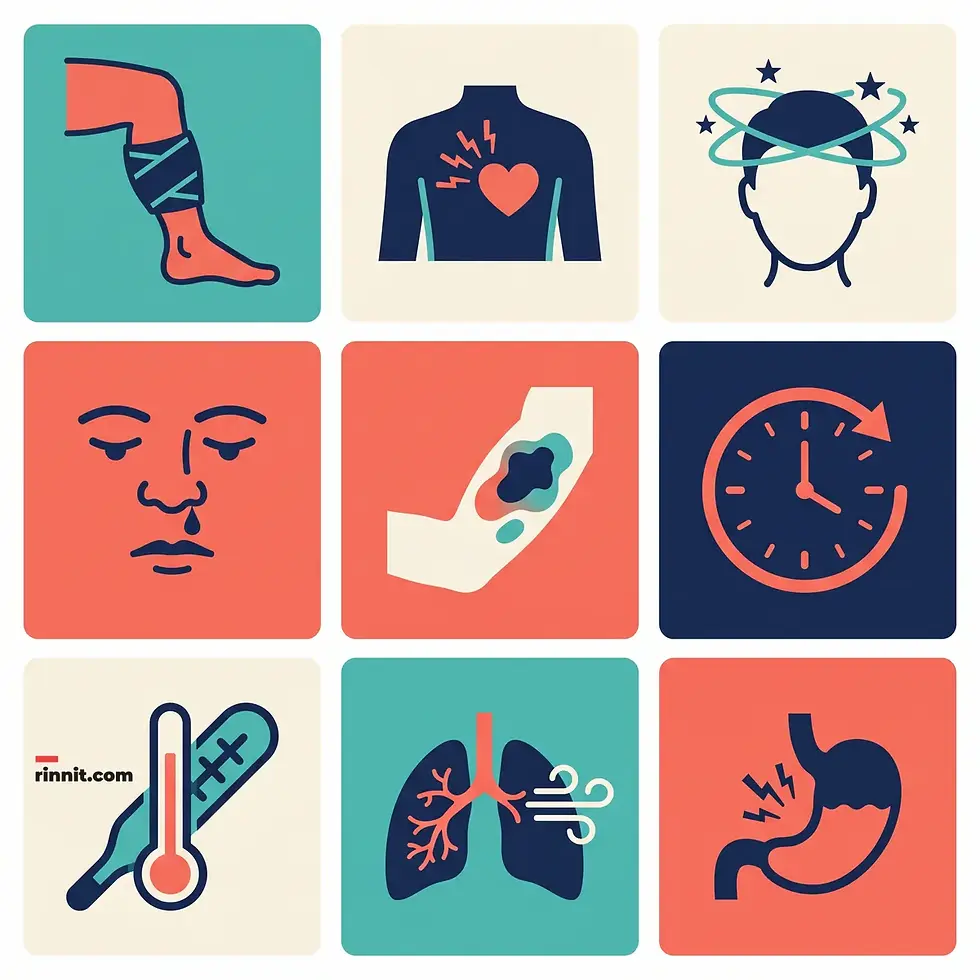
Healthcare providers use the 4Ts Scoring System to quickly assess the likelihood of HIT before definitive blood tests are completed:
Complications and Risk Factors
HIT is associated with several life-threatening complications. Clots in the veins can lead to pulmonary embolisms, while clots in the arteries can cause heart attacks or strokes [1]. In rare cases, the reaction can cause skin necrosis at the site of heparin injection or even an adrenal crisis due to a clot in the adrenal glands [1].
Risk factors for developing HIT include female sex and specific medical procedures, such as orthopedic or heart surgeries involving cardiopulmonary bypass [1]. The specific type of heparin used may also play a role in the overall risk profile [1]. Because the condition is immune-mediated, it can occur even if a patient has successfully taken heparin in the past.
Treatment and Long-Term Outlook
The first and most critical step in treating HIT is the immediate discontinuation of all heparin products [4], including heparin-coated catheters. Patients are then switched to alternative non-heparin anticoagulants, such as direct thrombin inhibitors (e.g., argatroban) or factor Xa inhibitors (e.g., fondaparinux) [1] [4]. Warfarin is generally avoided until platelet counts have normalized [1].

For patients who have experienced HIT, the long-term outlook requires vigilance. Heparin must be avoided for life, and patients should inform all future healthcare providers of their history [1]. Carrying a medical alert card or wearing an alert bracelet is highly recommended to prevent accidental heparin administration during future medical emergencies [1].
Conclusion
Heparin-induced thrombocytopenia is a complex and dangerous condition that requires swift medical action. By understanding the mechanism of HIT and recognizing the early warning signs, patients and providers can work together to manage the risks effectively.
FAQ
Is HIT a type of allergy?
It is an immune-mediated reaction, similar to an allergy, but it specifically involves the activation of platelets rather than a standard allergic response.
Can HIT happen the first time I take heparin?
Yes, though it typically takes 5 to 10 days for the immune system to produce the necessary antibodies.
What is the difference between HIT I and HIT II?
HIT I is a mild, non-immune drop in platelets that resolves on its own, while HIT II is a severe, immune-mediated reaction that causes dangerous clotting.
Why does a blood thinner cause more clots in HIT?
The immune response to heparin triggers platelets to clump together, which paradoxically leads to excessive clotting.
How low do platelets go in HIT?
Platelet counts typically drop by 50% or more from the patient's baseline.
What is the 4Ts score?
It is a clinical tool used to estimate the probability that a patient's low platelet count is caused by HIT.
Can HIT cause a heart attack?
Yes, if a blood clot forms in the coronary arteries that supply the heart.
Is HIT common after heart surgery?
Heart surgery and bypass procedures are known risk factors for developing HIT.
Can I ever take heparin again if I've had HIT?
No, heparin should be avoided for life to prevent a recurrence of the immune reaction.
What is PF4?
Platelet Factor 4 is a protein found in platelets that binds to heparin, forming the complex that triggers the immune system in HIT.
How is HIT diagnosed?
Diagnosis involves a combination of clinical scoring (4Ts) and blood tests for PF4 antibodies.
What is a D-dimer test?
It is a blood test used to check for the presence of blood clot fragments in the body.
Are women more at risk for HIT?
Yes, studies show that HIT is more commonly diagnosed in women.
What is skin necrosis in HIT?
It is the death of skin tissue caused by blood clots blocking flow to the skin, often near heparin injection sites.
Can HIT cause a stroke?
Yes, if a clot travels to the brain or forms in the carotid arteries.
What is argatroban?
It is a direct thrombin inhibitor often used as a safe alternative to heparin for patients with HIT.
Is fondaparinux safe for HIT patients?
Yes, it is a factor Xa inhibitor that does not typically react with HIT antibodies.
Can I take warfarin immediately if I have HIT?
No, warfarin is usually delayed until platelet levels recover.
What is delayed-onset HIT?
A form of HIT where symptoms only appear several days after the patient has stopped taking heparin.
Can HIT cause bleeding?
Yes, because the clotting process consumes platelets, leaving too few to stop bleeding from cuts or injuries.
What are the signs of a pulmonary embolism (PE)?
Sudden chest pain, shortness of breath, and a rapid heartbeat.
What are the signs of deep vein thrombosis (DVT)?
Swelling, pain, and redness, usually in one leg or arm.
Is HIT fatal?
It can be life-threatening if not diagnosed and treated promptly due to the risk of major clots.
How long does it take for platelets to return to normal?
Platelet counts usually begin to recover within a few days after stopping heparin.
Can heparin-coated catheters cause HIT?
Having HIT means you shouldn't take heparin, so ask your care team whether any catheter or flush they use contains heparin.
What is an adrenal crisis in HIT?
A rare emergency caused by a blood clot in the adrenal glands.
Do all heparin patients get HIT?
No, it is a rare complication affecting only a small percentage of people who receive the drug.
What is refractory HIT?
A situation where HIT symptoms continue even after heparin has been completely stopped.
Should I wear a medical alert bracelet for HIT?
Yes, it is highly recommended to ensure emergency responders do not administer heparin.
Can HIT be prevented?
While not always preventable, using low-molecular-weight heparin (LMWH) instead of unfractionated heparin may reduce the risk.
What is a blood transfusion used for in HIT?
Transfusions may be used to temporarily boost platelet levels if severe bleeding occurs.
Can HIT cause fever and chills?
Yes, these can be systemic symptoms of the immune reaction or a resulting blood clot.
Is HIT related to COVID-19?
While distinct, some vascular complications of COVID-19 can mimic or complicate the management of clotting disorders.
What is the “heparin-PF4 complex”?
It is the combination of the drug and a platelet protein that the immune system attacks.
How often are platelet levels checked on heparin?
Providers typically monitor platelet counts daily or every few days while a patient is on heparin.
Can HIT cause a TIA (mini-stroke)?
Yes, small clots can temporarily block blood flow to the brain.
What is a “direct oral anticoagulant” (DOAC)?
These are newer blood thinners like Eliquis or Xarelto that may be used as alternatives to heparin.
Does HIT cause bruising?
Yes, easy bruising is a sign of low platelet levels.
Can HIT occur after orthopedic surgery?
Yes, patients undergoing hip or knee replacements are at a higher risk for HIT.
What is the most common symptom of HIT?
The most common sign is a significant, unexplained drop in platelet count.
Can HIT cause internal bleeding?
It is uncommon. Even though platelets are low, serious bleeding is rare in HIT, and blood clots are the main danger.
Is HIT the same as hemophilia?
No, hemophilia is a genetic bleeding disorder, while HIT is an acquired immune reaction to a drug.
Can HIT be cured?
The reaction stops once heparin is removed, but the “allergy” to heparin remains for life.
What is a “PF4 antibody test”?
A laboratory test that confirms the presence of the specific antibodies that cause HIT.
Can HIT cause a cough or wheezing?
Yes, these can be signs of a pulmonary embolism resulting from HIT.
Why is timing important in the 4Ts score?
The timing of the platelet drop helps distinguish HIT from other post-surgical complications.
Can steroids help treat HIT?
No. Steroids are not a standard treatment for HIT; in rare severe or hard-to-treat cases, specialists may give intravenous immune globulin (IVIG) along with a non-heparin blood thinner.
Is heparin-induced thrombocytopenia thrombosis (HITT) the same as HIT?
HITT is a term specifically used when HIT is accompanied by the formation of new blood clots.
What should I ask my doctor if I'm on heparin?
Ask how your platelet levels are being monitored and what signs of clotting you should watch for.
Can I still have surgery if I've had HIT?
Yes, but your surgical team must use non-heparin anticoagulants for the procedure.
Further Reading
May J, Cuker A. Practical guide to the diagnosis and management of heparin-induced thrombocytopenia. Hematology Am Soc Hematol Educ Program. 2024;2024(1):388-395. PMID: 39644042.
Related Reading
Direct Thrombin Inhibitors: Types, Uses and Side Effects explains direct thrombin inhibitors.
Learn more in our guide to Platelet Count (PLT) Blood Test: Normal Range, Low and High Results Explained.
Sources
Cleveland Clinic. Heparin-Induced Thrombocytopenia. Cleveland Clinic. Last updated May 14, 2026. https://my.clevelandclinic.org/health/diseases/24014-heparin-induced-thrombocytopenia
Cuker A, Gimotty PA, Crowther MA, et al. Predictive value of the 4Ts scoring system for heparin-induced thrombocytopenia: a systematic review and meta-analysis. Blood. 2012;120(20):4160-4167. PMID 22990018. https://doi.org/10.1182/blood-2012-07-443051
Shah NB, Sharedalal P, Shafi I, et al. Prevalence and outcomes of heparin-induced thrombocytopenia in hospitalized patients with venous thromboembolic disease: insight from national inpatient sample. J Vasc Surg Venous Lymphat Disord. 2023;11(4):723-730. PMID 36893884. https://doi.org/10.1016/j.jvsv.2023.02.001
Hvas AM, Favaloro EJ, Hellfritzsch M. Heparin-induced thrombocytopenia: pathophysiology, diagnosis and treatment. Expert Rev Hematol. 2021;14(4):335-346. PMID 33736552. https://doi.org/10.1080/17474086.2021.1905512
Disclaimer
The information provided in this article is for educational purposes only and should not be considered medical advice. If you suspect a reaction to a medication, seek emergency care immediately.



Comments