Hairy Ear (Auricular Hypertrichosis)

Updated: 3 days ago
Medically reviewed by Dr. Baraa Alnahhal, MD · Last reviewed: October 17, 2026
Quick Answer
Auricular hypertrichosis is hair growth on the outer ear, including the earlobe and the opening of the ear canal, involving both fine vellus hair and stiff, dark terminal hair [1]. Experts aren't sure why it develops, but changing testosterone levels may play a role [1]. Ear hair doesn't affect hearing [1], though it needs regular maintenance to keep ears smooth.
Key takeaways
Medical name: Auricular hypertrichosis [1].
Likely driver: Experts aren't sure, but changing testosterone levels may play a role, and ear follicles may become more sensitive to testosterone [1].
Hair types: Vellus hair (fine, light) and terminal hair (stiff, dark) [1].
Who gets it: Males are more likely to have hairy ears [1] [2].
Health impact: Not a serious medical issue and doesn't affect hearing, but it may increase the risk of swimmer's ear and recurrent wax blockages [1].
Removal options: Trimming, shaving, depilatory creams, plucking, waxing, sugaring, threading, and professional IPL or laser treatments [1] [3].
What the research says
Nobody has studied ear hair removal specifically. The best evidence comes from reviews of hair removal in general. A literature review explains that removal methods fall into two groups: depilation (removing the hair shaft, including shaving and chemical depilatories) and epilation (removing the shaft, follicle and bulb, including plucking, threading, waxing, sugaring, lasers and intense pulsed light). All methods are temporary except electrolysis, and most efficacy studies were limited to darker hair and fairer skin (Kang et al., Skin Therapy Lett, 2021) [3].
Home light devices can reduce hair for a long time, but not on ears. In a review of light-based home-use hair removal devices, long-term use of a commercially available home-use IPL appliance gave persistent hair reduction (80%) one year after the last treatment. Those results come from other body areas (such as legs, armpits and bikini area), not the ear, and the devices had limits, including poor hair clearance in very dark skin types (Town et al., Lasers Surg Med, 2019) [4].
What Is Hairy Ear?
Ear hair, or hairy ear, happens when hair grows on the part of your ear that you can see and in your ear canal [1]. Your ear canal is the funnel-shaped pathway to your eardrum. Males are more likely to have hairy ears [1] [2].
Ear hair isn't a serious medical issue. It doesn't affect your hearing, and it actually helps to protect your inner ear from debris [1]. But having lots of ear hair may make you feel self-conscious about your appearance.
Understanding Ear Hair Types
Not all ear hair is the same. Most people have some degree of hair on their ears, but the visibility and texture change based on the hair type involved:
Vellus hair: Often referred to as "peach fuzz," this hair is very fine, short and colorless. It lies flat against the skin, and both males and females have this type [1]. It is usually hard to notice.
Terminal hair: This is the more noticeable, stiff, dark hair, sometimes called tragi hair, that stands out from the skin and sticks out of the ear canal [1]. It is the main reason people seek removal treatments.
Why Does Ear Hair Grow?
Experts aren't sure why some people develop hairy ears, but changing testosterone levels may play a role [1]. You are born with a certain amount and type of hair. Fetuses develop fine hair called lanugo for protection and warmth, and newborn babies have vellus hair that covers their body [1]. As you go through puberty, your body begins to create more androgens, including testosterone, and rising hormone levels lead to terminal hair in places like your face, armpits, chest and belly [1] [2].
Males have much higher testosterone levels than females. One theory behind hairy ears is that the hair follicles in males' ears become more sensitive to testosterone and grow more hair [1]. This may be the same reason why some males have hair growing from the inside of their nose [1].
Complications of Ear Hair
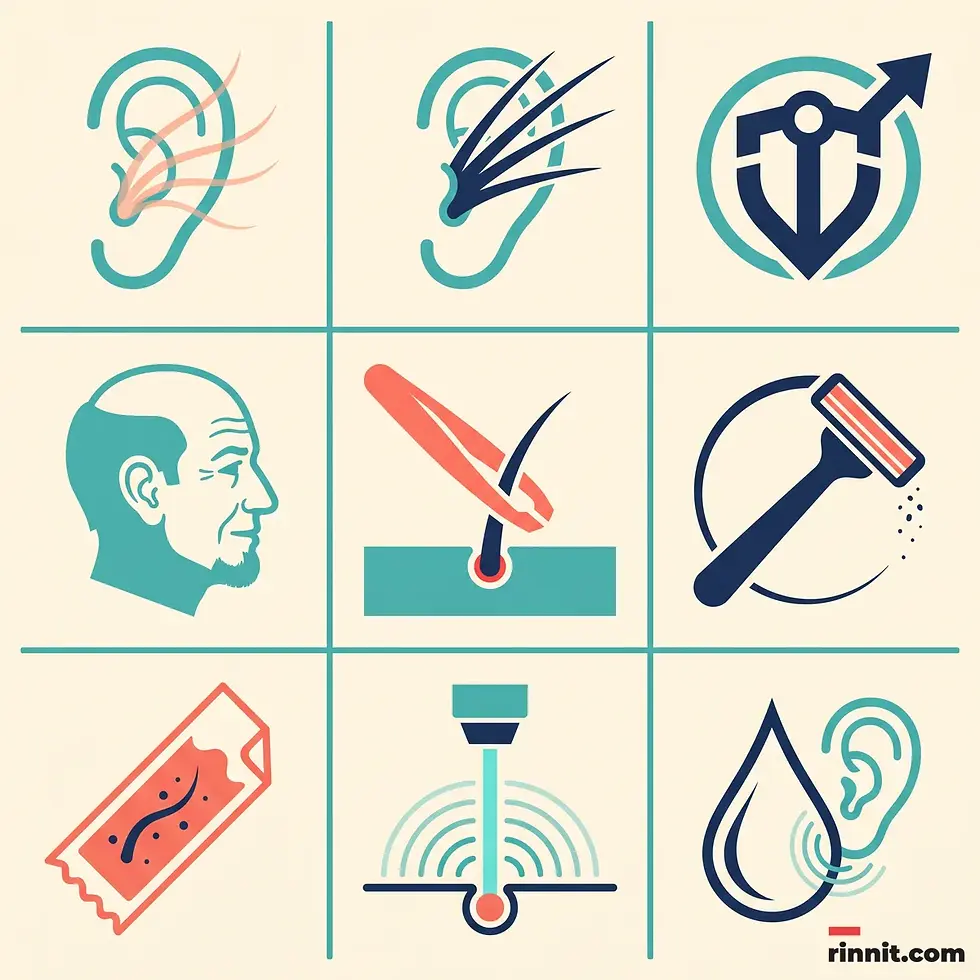
For most people, ear hair is mainly a cosmetic concern. However, noticeable growth can sometimes lead to minor problems:
Swimmer's ear (otitis externa): Ear hair that traps water in your ear canal may lead to an outer ear infection, so having hairy ears may increase your risk [1].
Recurrent wax blockages: Terminal hair, the stiff, dark hair in your ear canal, can lead to recurrent wax blockages [1].
Hearing aid problems: Terminal hair can keep hearing aids from working like they should, especially if you have wax blockages [1].
Self-consciousness: Many people feel self-conscious about tufts of hair sticking out of their ears, which can affect social confidence.
Safe Removal and Management
Because the ears are delicate and contain sensitive structures like the eardrum, hair removal should be approached with care. Your ear canal is very sensitive, so you shouldn't pluck or use depilatory cream to remove hairs there [1].

Surface removal (depilation)
Depilation removes the hair you can see, at the edge of your ear canal and on the visible parts of your ear [1]. You can do it yourself or ask your barber or stylist to do it.
Electric trimmers: Small trimmers designed for ear and nose hair are a common home method [1]. Don't push them deep into the canal.
Scissors: Small scissors with safety tips can be used on visible ear hair [1]. Avoid ordinary sharp scissors because of the risk of nicks and cuts.
Shaving: Shaving is a form of depilation [1] [3] and can be used on the flat, visible parts of the outer ear, with a mirror and a steady hand.
Depilatory creams: Creams made to remove facial hair can be used on the visible outer ear, never inside the ear canal [1].
Root removal (epilation)
Epilation removes the hair shaft and often the bulb [3], so it can be a longer-lasting solution. You may do some treatments at home, but most options involve working with an esthetician or healthcare provider.
Plucking: Tweezing pulls out the hair shaft and may snag the root, but it can hurt. If you pluck, stay on your outer ears. You could damage your ear canal or even puncture your eardrum if you go deep into your ear [1].
Waxing: Soft wax is spread on the outer ear, taking care to keep wax out of the ear canal.
Sugaring: This works like waxing but uses a sugar paste to pull out the hair shaft and root.
Threading: This is like plucking but uses thread instead of tweezers.
Intense pulsed light (IPL) and laser hair removal: These are medical treatments [1]. IPL uses light pulses and laser uses heat to destroy hair follicles so the hair doesn't grow back as quickly.
At-home kits exist for sugaring and threading, but it's probably best to have a professional remove your ear hair. You might have terminal hair inside your ear canal that you can't see, and an ENT provider can safely trim those hairs for you [1]. You may need more than one treatment if hair grows back [1], and you'll need regular trims or treatments to keep ear hair from becoming noticeable.
Conclusion
Hairy ears are common, especially in males, and they are generally harmless. Ear hair doesn't affect your hearing and even helps protect your ear from debris [1], but stiff terminal hair in the canal can raise the risk of swimmer's ear and recurrent wax blockages [1], and noticeable tufts can make you self-conscious. Whether you choose a quick trim at home or a professional treatment, managing ear hair is a simple part of a grooming routine. If you're unsure how to treat it, or you have symptoms like ear pain or blocked hearing, talk to a healthcare provider.
For more visual health guides and educational resources, explore Rinnit's infographic templates.
Frequently Asked Questions
What is the medical term for hairy ears?
It is called auricular hypertrichosis.
Does ear hair affect hearing?
No, ear hair doesn't affect your hearing.
Why do men seem to get hairy ears more often?
Males are more likely to have hairy ears. One theory is that the hair follicles in males' ears become more sensitive to testosterone, and males have much higher testosterone levels than females.
Is ear hair protective?
Ear hair isn't a serious medical issue, and it actually helps protect your inner ear from debris.
What is vellus hair?
Very fine, short, colorless "peach fuzz" that lies flat on the skin. Both males and females have it.
What is terminal hair?
Stiff, dark hair that stands out from the skin and can stick out of the ear canal.
What are tragi?
Tragi is another name for the stiff, dark terminal hairs that grow at the opening of the ear canal.
Can ear hair cause infections?
It can raise your risk of swimmer's ear, because ear hair that traps water in the ear canal may lead to an outer ear infection.
Can ear hair cause wax blockages?
Yes. Terminal hair in the ear canal can lead to recurrent wax blockages.
Can ear hair affect hearing aids?
Yes. Terminal hair can keep hearing aids from working like they should, especially if you have wax blockages.
How do I safely trim ear hair?
Use a small electric trimmer made for ear and nose hair, or small scissors with safety tips, and stay at the edge of the ear canal rather than going deep inside.
Can I use a normal razor?
Shaving is a form of depilation that can be used on the flat, visible parts of the outer ear with a steady hand and a mirror. Don't use a razor inside the ear canal.
Is plucking better than shaving?
Plucking can pull out the hair shaft and may snag the root, so it can last longer than cutting the hair. It can also hurt, and it should be limited to the outer ear.
Can I use hair removal cream inside my ear?
No. Depilatory creams can be used on the visible outer ear, but you shouldn't use them on hairs inside your ear canal.
Can I wax my own ears?
You can, taking care to keep wax out of the ear canal, but it's probably best to have a professional do it. You might have terminal hair inside your ear canal that you can't see.
Can I sugar or thread ear hair at home?
At-home kits exist for sugaring and threading, but it's probably best to have a professional remove your ear hair.
What is IPL?
Intense pulsed light, a medical treatment that uses light pulses to remove hair from the outer ear.
How does laser hair removal work on the ear?
Heat from a laser destroys hair follicles so ear hair doesn't grow back as quickly. It is a medical treatment.
Is laser hair removal permanent?
A review of hair removal methods found that all are temporary except electrolysis. Some treatments may keep ear hair from coming back, while others leave hair roots to sprout anew, so you may need more than one treatment.
Can I use a home IPL device on my ears?
Light-based devices for home use exist, but the evidence comes from other body areas. Ask a healthcare provider before using one near your ears.
Can an ENT trim the hair in my ear canal?
Yes. An ENT provider can safely trim hairs inside your ear canal that you can't see.
When should I see a healthcare provider about ear hair?
Talk to a healthcare provider if your ear hair makes you feel self-conscious. They'll recommend treatments that are right for you.
Is ear hair itchy?
Some people notice a tickling sensation in the outer ear when ear hair grows.
What is lanugo?
Fine hair that develops on a fetus in the womb for protection and warmth.
Is ear hair related to nose hair?
Possibly. One theory is that the same testosterone sensitivity may explain why some males have hair growing from the inside of their nose.
What is the ear canal?
The funnel-shaped pathway that leads from the outer ear to the eardrum.
Does ear hair grow in the inner ear?
Hairy ear refers to hair growing on the visible part of the ear and in the ear canal.
What is otitis externa?
The medical term for swimmer's ear, an infection of the outer ear canal.
Can ear hair cause tinnitus or vertigo?
Ear hair doesn't affect your hearing, and it isn't described as a cause of tinnitus or vertigo. See a healthcare provider about ringing in the ears or dizziness.
Is it safe to singe ear hair with a flame?
No. Burning ear hair is dangerous and should never be attempted.
What is the hair bulb?
The rounded base of the hair root, where the hair grows and where it is supplied with blood.
Is plucking safe inside the ear canal?
No. Plucking ear hair can hurt, and going deep into your ear could damage your ear canal or even puncture your eardrum.
How long does it take to recover from ear hair removal?
It depends on the method. There's no recovery time with careful trimming using scissors or a small shaving device, while other treatments vary.
Will ear hair grow back?
Yes. Some treatments may keep ear hair from coming back, but others remove only the shaft, so you'll need regular trims or treatments.
Who can remove ear hair for me?
A barber or stylist can do surface removal, an esthetician can do waxing, sugaring or threading, and a healthcare provider or ENT can offer medical options and safely trim hairs deep in the canal.
Related Reading
References
Cleveland Clinic. Ear hair (hairy ear). Cleveland Clinic. Medically reviewed; last updated September 11, 2026. https://my.clevelandclinic.org/health/diseases/25162-ear-hair
Saleh D, Yarrarapu SNS, Cook C. Hypertrichosis. In: StatPearls [Internet]. Treasure Island (FL): StatPearls Publishing; 2026. Last update August 16, 2023. https://www.ncbi.nlm.nih.gov/books/NBK534854/
Kang CN, Shah M, Lynde C, Fleming P. Hair removal practices: a literature review. Skin Therapy Lett. 2021;26(5):6-11. PMID: 34524781. https://pubmed.ncbi.nlm.nih.gov/34524781/
Town G, Botchkareva NV, Uzunbajakava NE, et al. Light-based home-use devices for hair removal: why do they work and how effective they are? Lasers Surg Med. 2019;51(6):481-490. PMID: 30681170. https://doi.org/10.1002/lsm.23061
Medical disclaimer
This article is for informational purposes only and is not a substitute for professional medical advice, diagnosis, or treatment. Always seek the advice of a qualified healthcare provider with any questions about a medical condition or before making decisions about treatment. Never disregard professional medical advice or delay seeking it because of something you have read here.



Comments