Giardia Infection: How This Waterborne Parasite Spreads, and What Treatment Can — and Can't — Do

Updated: 3 days ago
Medically reviewed by Dr. Baraa Alnahhal, MD · Last reviewed: October 2026
Giardia infection, also called giardiasis, is caused by a tiny parasite that infects the small intestine and causes stomach cramps, bloating, upset stomach, and loose stools [1]. It is one of the most common causes of waterborne disease in the United States, and it spreads through water, food, and person-to-person contact [1]. Many infections clear on their own within weeks, and several medicines can treat cases that are severe or persistent, but they do not work for everyone, so prevention matters most [1].
Quick Answer
Giardia infection (giardiasis) is an infection of the small intestine caused by the giardia parasite, spread through contaminated water, food or person-to-person contact. It causes watery or greasy stools, cramps, bloating and gas, usually starting 1 to 3 weeks after exposure and lasting 2 to 6 weeks. Many people recover on their own; medicines treat severe cases. [1] [2]
What the research says
Several drugs work, but evidence for shorter regimens is thin. A Cochrane review of 19 trials with 1,817 people (1,441 of them children) found that once-daily albendazole was probably as effective as 5 to 10 days of metronidazole at clearing the parasite (risk ratio 0.99) with fewer gastrointestinal side effects. Trials of single-dose tinidazole and other shortened regimens were too small and at too high a risk of bias to draw firm conclusions (Granados et al., Cochrane Database of Systematic Reviews, 2012 [3]).
Gut symptoms can outlast the infection by years. Ten years after a 2004 giardiasis outbreak in Bergen, Norway, 43% of 576 people who had been infected had irritable bowel syndrome, compared with 14% of 685 matched controls (adjusted odds ratio 4.74). Chronic fatigue affected 26% versus 11% (adjusted odds ratio 3.01) (Litleskare et al., Clinical Gastroenterology and Hepatology, 2018 [4]).
What is giardia infection?
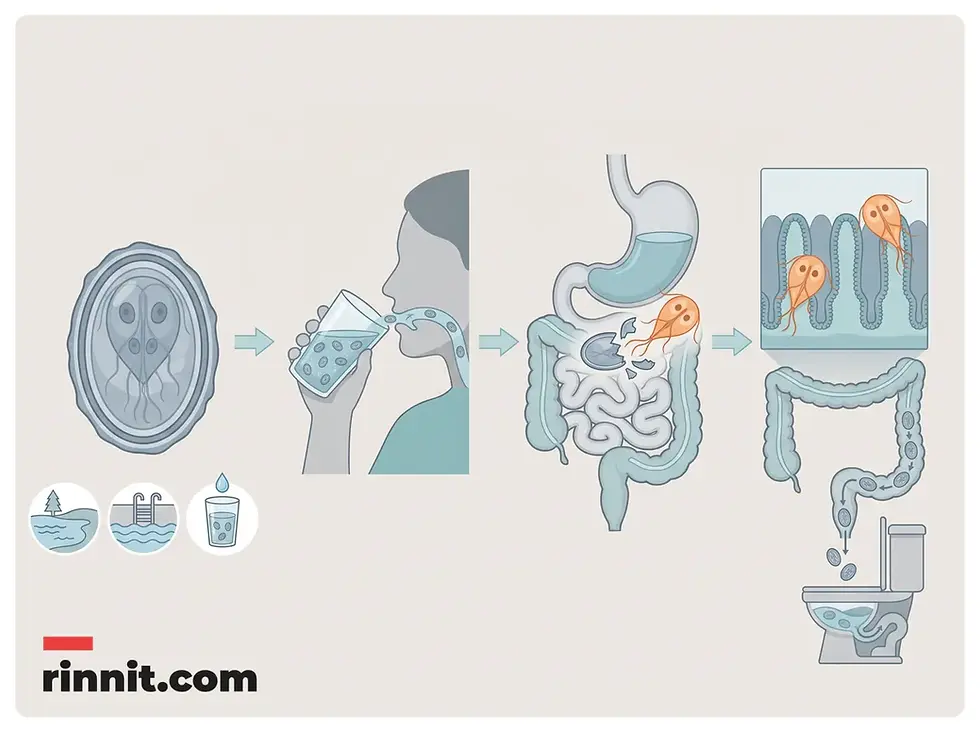
Giardia infection is caused by a tiny parasite that lives in the small intestine. It is one of the most common causes of disease carried by water in the United States. The parasites can live in streams and lakes, public water supplies, swimming pools, whirlpool spas, and wells [1].
The parasite lives all over the world, mainly in areas with poor sanitation and unsafe water [1]. Infections most often clear up within weeks, but you may have stomach problems long after the parasites are gone [1].
What are the symptoms of giardia infection?
Some people with giardia infection have no symptoms at all, though they can still spread the parasite to others through their stool. For those who do get sick, symptoms most often appear 1 to 3 weeks after getting the parasite [1]. They may include:
Loose stools: often watery and sometimes foul-smelling; they may be soft and greasy instead.
Stomach cramps and bloating: ongoing cramping and a swollen, full feeling in the belly.
Gas and upset stomach: general digestive discomfort and nausea.
Tiredness: unusual fatigue during the infection.
Weight loss: ongoing diarrhea can lead to measurable weight loss [1].
Symptoms may last 2 to 6 weeks. For some people they last longer or come back after seemingly clearing up [1].
What causes giardia infection?
Before the parasites pass out of the body in stool, they form hard shells called cysts. The cysts let the parasites live outside the intestines for months. Infection happens when you swallow the cysts, and once inside a person or animal they break down and release the parasites [1].

Swallowing tainted water
This is the most common way to get infected. Giardia parasites are found in lakes, ponds, rivers, and streams around the world, and may also be in public water supplies, wells, cisterns, swimming pools, water parks, and spas. They can reach ground and surface water through runoff from farms, wastewater, or animal feces, and children in diapers and people with loose stools may taint pools and spas [1].
Eating tainted food
Giardia can spread through food when food handlers with the infection do not wash their hands well, or when raw produce is watered or washed with tainted water. Because cooking kills giardia, food is a less common source of infection than water [1].
Person-to-person contact
You can get infected if stool gets on your hands. Parents who change diapers are at higher risk, and so are child care workers and children in child care centers, where outbreaks happen often. The parasite can also spread through anal sex [1].
Who is at higher risk?
Anyone can pick up giardia, but some people face a higher risk [1]:
Children: infection is far more common in children than adults, because they are more likely to come into contact with stool through diapers, toilet training, or child care centers. People who live or work with small children share this risk.
People without safe drinking water: infections cluster in places with poor sanitation or unsafe water. Travelers to areas where giardia is common are at risk, especially in rural or wilderness areas.
People who have anal sex: risk is higher for those who do not use a condom, along with the risk of other sexually transmitted infections.
What are the possible complications?
Giardia infection almost never leads to death in developed countries, but it can cause lasting symptoms and serious complications, mainly in infants and children [1]:
Dehydration: often a result of loose stools, when the body lacks enough water to do its work. Infants and pregnant people are at high risk.
Failure to thrive: continuing loose stools can lead to poor nutrition, which can harm a child's physical and mental growth.
Lactose intolerance: many people lose the ability to digest the sugar in milk, and it may continue long after the infection clears [1].
When should you see a doctor?
Call your healthcare professional if you have loose stools, stomach cramping, bloating, and upset lasting more than a week, or if you lose too much fluid (dehydration). Also mention if you are at risk: you have a child in child care, you have been to an area where the infection is common, or you have swallowed water from a lake or stream [1].
How is giardia infection diagnosed?
Your healthcare professional is likely to test a sample of your stool, and may ask for several samples collected over a few days. The samples go to a lab to look for parasites [2].
How is giardia infection treated?
Giardia infection without symptoms most often needs no treatment, unless the person is likely to spread the parasites. Many people with symptoms get better on their own in a few weeks [2]. When symptoms are bad or the infection does not go away, three medicines are used:
Metronidazole: often taken three times a day for five days. Side effects may include upset stomach and a metal taste in the mouth, and you should not drink alcohol while taking it.
Tinidazole: works as well as metronidazole with many of the same side effects, but can be taken as a single dose.
Nitazoxanide: comes in a liquid form that may be easier for children to swallow. Side effects may include upset stomach, gas, yellow eyes, and brightly colored yellow urine [2].
If you have giardia while pregnant, these medicines may be harmful to the unborn baby. If symptoms are mild, your healthcare professional might ask you to wait until after the first trimester or longer for treatment. If you need treatment, talk with your healthcare professional about what is safe to take [2].
How can giardia infection be prevented?
No medicine or vaccine can prevent giardia infection, but everyday habits go a long way toward cutting the chance that you become infected or spread the infection to others [1]:
Wash your hands: this is the simplest and best prevention. Use soap and water for at least 20 seconds after using the toilet or changing diapers and before eating or preparing food. Alcohol-based sanitizers are a backup but do not work as well against the hardy cyst form.
Purify wilderness water: do not drink from shallow wells, lakes, rivers, springs, ponds, or streams unless you filter or boil the water first.
Wash produce: wash raw fruits and vegetables with safe water and peel fruit before eating. Avoid raw produce while traveling in countries where it may touch unsafe water.
Do not swallow water: keep your mouth closed when swimming in pools, lakes, or streams, and in the shower where the water is not likely to be safe.
Use bottled water when traveling: drink and brush your teeth with bottled water you open yourself, and skip the ice.
Practice safer sex: use a condom every time for anal sex, and do not have oral-anal sex unless fully protected [1].

How should you prepare for a giardia infection appointment?
To prepare for a giardia infection appointment, contact your main healthcare professional first, who may refer you to a gastroenterologist. Before your appointment, write down answers to these questions [2]:
When did your symptoms begin?
How bad are your symptoms?
Does anything make them better or worse?
Do you work or live with small children?
What medicines, vitamins, and supplements do you take, and at what dosages?
During the physical exam, your healthcare professional may gently press on parts of your belly to check for tender areas, look for signs of dehydration, and tell you how to bring in a stool sample [2].
What is the bottom line on giardia infection?
Giardia is a reminder that something invisible, a parasite protected by a hard cyst shell, can survive for months in lakes, pools, wells, and public water supplies, and that swallowing even a small amount can trigger weeks of cramps, bloating, and loose stools. The good news is that the infection almost never threatens life in developed countries, most symptomatic people improve on their own within a few weeks, and three established medicines are available when symptoms are severe or will not go away [1] [2].
Your next step: if loose stools, cramping, and bloating have lasted more than a week, or you have recently swallowed water from a lake, stream, or pool, call your healthcare professional and mention your exposure risk. For related digestive infections, see our guides on gastroenteritis and foodborne illness.
FAQ
What is giardia infection (giardiasis)?
Giardiasis is an intestinal infection caused by a tiny parasite that lives in the small intestine. It is one of the most common causes of waterborne disease in the United States and spreads through contaminated water, food, and person-to-person contact.
What are the symptoms of giardia infection?
Symptoms include loose stools that are watery, sometimes foul-smelling, or soft and greasy; stomach cramps and bloating; gas; upset stomach; tiredness; and weight loss. They typically appear 1 to 3 weeks after exposure.
How long do giardia symptoms last?
Symptoms most often last 2 to 6 weeks. For some people they last longer or come back. Stomach problems can also linger long after the parasites are gone.
How do you get giardia infection?
You get giardia by swallowing parasite cysts, most commonly from tainted water such as lakes, streams, pools, wells, or public water supplies. It can also spread through contaminated food and person-to-person contact, including changing diapers and anal sex.
Does giardia go away on its own?
Many people who have symptoms get better on their own in a few weeks. People without symptoms most often do not need treatment unless they are likely to spread the parasites to others.
What medicines treat giardia infection?
Metronidazole (often taken three times a day for five days), tinidazole (a single-dose option), and nitazoxanide (a liquid form that may be easier for children). They are used when symptoms are severe or the infection does not go away.
Why is giardia infection more common in children?
Children are more likely to come into contact with stool, especially if they wear diapers, are toilet training, or spend time in child care centers, where outbreaks happen often.
Can giardia cause long-term problems?
Giardia almost never causes death in developed countries, but it can cause lasting symptoms and complications, mainly in infants and children: dehydration, failure to thrive from poor nutrition, and lactose intolerance that may continue long after the infection clears.
How do I prevent giardia infection?
No medicine or vaccine prevents giardia. Key habits are washing hands with soap and water for at least 20 seconds, filtering or boiling wilderness water, not swallowing pool or lake water, washing produce with safe water, using bottled water while traveling, and using condoms for anal sex.
Do I need treatment if I have giardia but no symptoms?
Children and adults without symptoms most often do not need treatment, unless they are likely to spread the parasites to others.
Related Reading
Stool Test: Types, How to Collect a Sample and What Results Mean explains the stool tests used to find infections, bleeding and other gut problems.
References
Mayo Clinic Staff. Giardia infection (giardiasis) - Symptoms and causes. Mayo Clinic. September 20, 2025. https://www.mayoclinic.org/diseases-conditions/giardia-infection/symptoms-causes/syc-20372786
Mayo Clinic Staff. Giardia infection (giardiasis) - Diagnosis and treatment. Mayo Clinic. September 20, 2025. https://www.mayoclinic.org/diseases-conditions/giardia-infection/diagnosis-treatment/drc-20372790
Granados CE, Reveiz L, Uribe LG, et al. Drugs for treating giardiasis. Cochrane Database of Systematic Reviews. 2012;(12):CD007787. PMID 23235648. https://doi.org/10.1002/14651858.CD007787.pub2
Litleskare S, Rortveit G, Eide GE, et al. Prevalence of irritable bowel syndrome and chronic fatigue 10 years after Giardia infection. Clinical Gastroenterology and Hepatology. 2018;16(7):1064-1072.e4. PMID 29378314. https://doi.org/10.1016/j.cgh.2018.01.022
Further reading: Centers for Disease Control and Prevention. Giardia Infection Prevention and Control. CDC. March 12, 2024. https://www.cdc.gov/giardia/prevention/index.html.
Medical disclaimer
This article is for general informational purposes and is not a substitute for professional medical advice, diagnosis, or treatment. Always consult a qualified healthcare professional about any medical condition.



Comments