Gastroenteritis: Understanding Symptoms, Causes, and Recovery

Updated: 3 days ago
Medically reviewed by Dr. Baraa Alnahhal, MD · Last reviewed: October 2026
Quick Answer
Gastroenteritis is inflammation of the gastrointestinal tract caused by viruses such as norovirus, bacteria, parasites or chemicals. [1] Its hallmark symptoms are diarrhea and vomiting together. [1] It spreads easily through contaminated food, water or surfaces, and most adults recover quickly with rest and rehydration. [1] Handwashing helps prevent it. [1] Seek medical attention immediately for signs of severe dehydration. [1]
What the research says
Probiotics shortened diarrhea and vomiting in children. A meta-analysis of 25 randomized trials (5,170 patients) found probiotics significantly reduced the overall duration of diarrhea (MD −7.76, 95% CI −14.60 to −0.91; p = 0.03) and the duration of vomiting (MD −0.19, 95% CI −0.28 to −0.09; p < 0.01) (Alsabri et al., J Pediatr Gastroenterol Nutr, 2025). [2]
Adding a specific probiotic to a smectite regimen worked better than smectite alone. In 57 trials conducted in China (5,767 children), adding the probiotic CNCM I-745 improved the cure rate (RR 1.45, 95% CI 1.38–1.53) and shortened the illness (SMD −1.54 days, 95% CI −1.79 to −1.29). Both studies tested probiotics as an add-on; rehydration remains the cornerstone of treatment described below (Li and McFarland, Front Pediatr, 2026). [3]
What is Gastroenteritis?
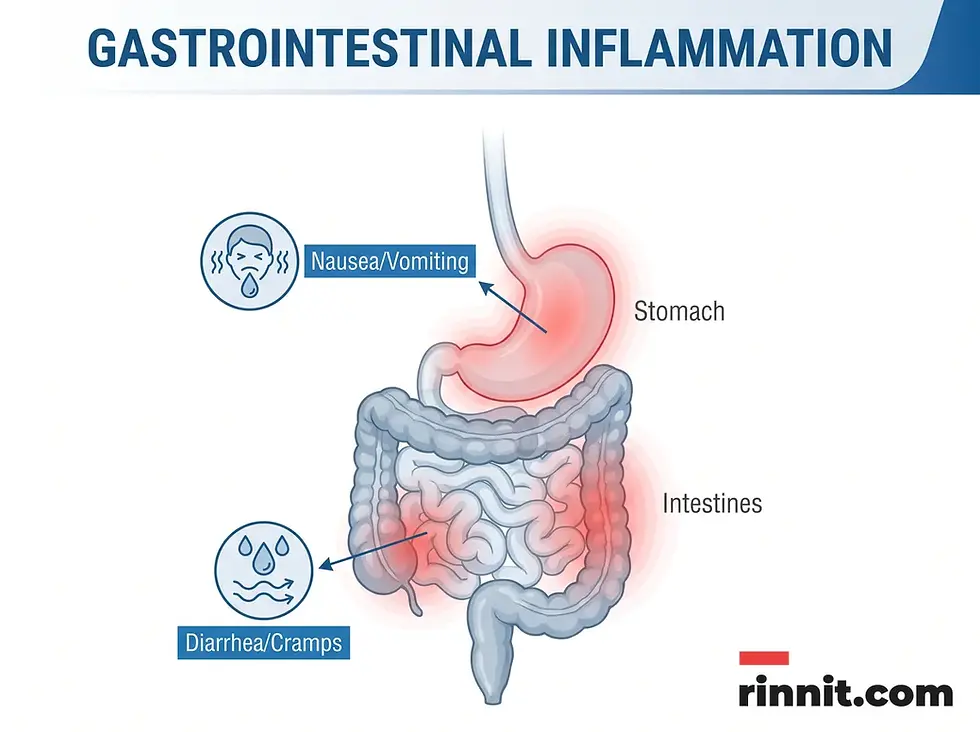
Gastroenteritis occurs when inflammation spreads through the lining of the stomach and the intestines. [1] This inflammation causes the affected organs to become swollen and sore, disrupting their normal function. Although it is often colloquially called "stomach flu," it is not caused by the influenza virus. [1] Instead, it is a localized reaction to a variety of external triggers that enter the digestive system.
Types of Gastroenteritis
Healthcare providers classify gastroenteritis based on the underlying cause of the inflammation.
Type | Primary Cause | Common Examples |
Infectious | Pathogens | Norovirus, Salmonella, E. coli |
Chemical | Toxins | Heavy metals, plant toxins, alcohol overuse |
Medication-Induced | Drugs | NSAIDs, chemotherapy, colchicine |
Symptoms and Warning Signs
The hallmark of gastroenteritis is the simultaneous occurrence of symptoms in both the stomach and the intestines. [1] These signs often appear suddenly and can be intense for a short duration. [1]
Gastrointestinal Symptoms
Systemic Symptoms
As the immune system responds, you may experience symptoms that affect the entire body, including fever, chills, fatigue, and muscle aches. [1] While the most acute symptoms typically last only 24 to 48 hours, some bacterial or parasitic infections may persist longer and require medical intervention. [1]
Causes and Contagion
Infectious gastroenteritis is the most prevalent form, with viruses accounting for approximately 60% of all cases. [1] Norovirus alone is responsible for half of all viral outbreaks.
Infectious Pathogens
Viruses: Norovirus, Rotavirus (common in children), and Adenovirus.
Bacteria: Often linked to food poisoning, including Salmonella, E. coli, and Campylobacter. [1]
Parasites: Organisms like Giardia or Cryptosporidium, often found in contaminated water.
Fungi: Less common, but includes infections like Candidiasis.
Contagion and Transmission
Infectious gastroenteritis is highly contagious and spreads via the fecal-oral route. [1] Microscopic traces of the pathogen can linger on hands, bathroom surfaces, or diaper-changing areas. [1] These traces are then transferred to food, water, or directly into the mouth of another person. Individuals are most contagious while symptoms are present and for at least two days after they have subsided. [1]

Complications: The Risk of Dehydration
The primary danger associated with gastroenteritis is dehydration. [1] The rapid loss of fluids through vomiting and diarrhea, combined with an inability to keep new fluids down, can quickly deplete the body's water and electrolyte reserves. [1]
Signs of Dehydration
Extreme Thirst: A powerful urge to drink water.
Physical Signs: Dry mouth, sunken eyes, or a lack of tears in infants.
Urinary Changes: Dark-colored urine or a significant decrease in urination frequency.
Neurological Signs: Dizziness, lightheadedness, or extreme lethargy.
Vulnerable populations, including infants, young children, and adults over the age of 65, are at the highest risk for severe complications and should be monitored closely. [1]
Diagnosis and Treatment
Most cases of gastroenteritis are diagnosed based on a review of symptoms and a physical examination. [1] In persistent or severe cases, a healthcare provider may request a stool sample to identify the specific pathogen or blood tests to assess dehydration levels.
Management Strategies
The cornerstone of treatment is rehydration. [1] Patients should sip small amounts of water, clear broths, or oral rehydration solutions (like Pedialyte) frequently.
Strategy | Action |
Rehydration | Sip fluids slowly to avoid triggering more vomiting. |
Dietary Transition | Start with bland foods like rice, toast, or bananas. |
Medication | Use anti-nausea or antidiarrheal meds only as directed. |
Antibiotics | Used only for confirmed bacterial infections, not viral ones. |

Prevention and Safety
Preventing the spread of gastroenteritis requires a proactive approach to hygiene and food safety. Frequent handwashing with soap and water is the most effective defense, especially after using the restroom or changing diapers. In the kitchen, always wash produce, cook meats to safe internal temperatures, and avoid cross-contaminating surfaces with raw food juices. For infants, the Rotavirus vaccine provides significant protection against one of the most common viral triggers.
When to Get Help
If you or a loved one shows signs of severe dehydration or if symptoms do not improve after 48 hours, contact a healthcare provider immediately. Staying hydrated and practicing strict hygiene are your best tools for a quick and safe recovery.
Frequently Asked Questions
Is gastroenteritis the same as the flu?
No. The "flu" (influenza) is a respiratory infection. Gastroenteritis is inflammation of the digestive tract. [1] While they share some systemic symptoms like fever, they are caused by entirely different viruses. [1]
How long should I stay home after having gastroenteritis?
You are most contagious during symptoms and for two days after they stop. [1] It is recommended to stay home until you have been symptom-free for at least 48 hours to prevent spreading the infection to others.
Can I get gastroenteritis from a swimming pool?
Yes. Certain parasites and bacteria can survive in pool water, especially if it is not properly treated with chlorine. Swallowing contaminated water is a common way to contract a parasitic infection.
What is the best thing to drink when I have the stomach flu?
Small, frequent sips of water, clear broth, or electrolyte-replacement drinks are best. Avoid sugary sodas or caffeinated drinks, as these can sometimes worsen diarrhea.
Should I take antibiotics for gastroenteritis?
Antibiotics only work against bacteria. Since most cases of gastroenteritis are viral, antibiotics are usually ineffective. They are only prescribed if a doctor confirms a bacterial cause through testing.
Is hand sanitizer as good as handwashing for these germs?
Not always. Some common triggers, like Norovirus, are very hardy and are not easily killed by standard alcohol-based hand sanitizers. Thorough washing with soap and running water is much more effective.
What is the BRAT diet?
BRAT stands for Bananas, Rice, Applesauce, and Toast. These are bland, low-fiber foods that are traditionally recommended to help ease the digestive system back into processing food after an illness.
Can food poisoning cause gastroenteritis?
Yes. Food poisoning is essentially acute infectious gastroenteritis caused by consuming food contaminated with bacteria, viruses, or toxins.
When is vomiting a sign of something more serious?
If you see blood in your vomit, have severe abdominal pain, or cannot keep any fluids down for more than 24 hours, you should seek immediate medical attention.
Content reviewed and produced following the Rinnit editorial framework. Last updated: October 8, 2026.
References
Cleveland Clinic. Gastroenteritis. Cleveland Clinic Health Library. Medically reviewed; last updated September 25, 2023. https://my.clevelandclinic.org/health/diseases/gastroenteritis
Alsabri M, Rath S, Abo-Elnour DE, et al. Efficacy of probiotics in reducing the duration and severity of acute gastroenteritis in children: a meta-analysis of randomized controlled trials. J Pediatr Gastroenterol Nutr. 2025;81(4):1000-1009. PMID 40739406. doi:10.1002/jpn3.70172
Li T, McFarland LV. CNCM I-745 and smectite treatment for pediatric acute gastroenteritis in China: a systematic review and meta-analysis. Front Pediatr. 2026;14:1747695. PMID 41798274. doi:10.3389/fped.2026.1747695



Comments