Understanding Gastrin: The Engine of Digestive Health

Updated: 3 days ago
Medically reviewed by Dr. Baraa Alnahhal, MD · Last reviewed: October 2026
Quick Answer: What is gastrin?
Gastrin is a hormone produced by G-cells in the stomach lining that triggers the release of gastric acid, activates digestive enzymes and stimulates stomach contractions that move food along. [1] It is essential for healthy digestion, but excessive levels, often from certain conditions or medications, can cause acid overproduction, leading to painful ulcers, chronic reflux and damage to the digestive lining. [1]
What the research says
A fasting gastrin blood test is a sensitive first step for gastrin-producing tumors. A review of Zollinger-Ellison syndrome reports that a fasting serum gastrin measurement has a sensitivity of 99%, that gastrinoma patients present with levels above 100 pg/mL, and that a level above 1,000 pg/mL with a stomach pH below 2 is diagnostic. Common causes of high gastrin, such as atrophic gastritis, H. pylori infection, kidney failure, and gastric outlet obstruction, should be ruled out first (Chatzipanagiotou et al., J Neuroendocrinol, 2023). [2]
Acid-suppressing medicines raise gastrin. In a meta-analysis of 6 studies comparing newer potassium-competitive acid blockers with proton pump inhibitors, serum gastrin rose more with the newer drugs (mean difference 130.92 pg/mL, 95% CI 36.37–225.47), and the authors advised monitoring for hypergastrinemia (Jang et al., J Gastroenterol Hepatol, 2026). [3]
Medicines and lab methods can complicate testing. A review noted that diagnosing Zollinger-Ellison syndrome has become harder because patients may need to withdraw from proton pump inhibitor treatment before testing and because many gastrin radioimmunoassays are unreliable (Ito et al., World J Gastroenterol, 2012). [4]
Anatomy and Function of Gastrin
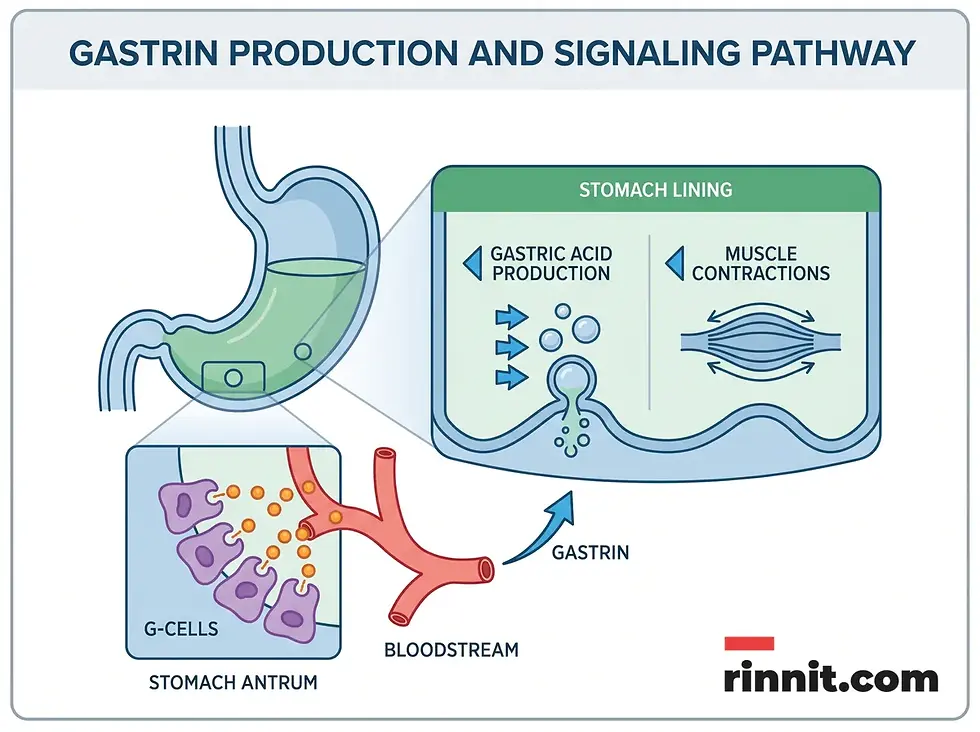
Gastrin functions as a chemical messenger in the bloodstream, coordinating complex digestive tasks. Its primary responsibility is signaling the stomach to release hydrochloric acid, which is necessary for breaking down proteins and activating the enzyme pepsin. Beyond acid regulation, gastrin stimulates the stomach lining to replenish itself and prompts the muscles of the stomach to contract, a process known as gastric motility. [1]
Where Gastrin Is Produced
The hormone is primarily manufactured by specialized cells called G-cells. [1] These cells are located within the gastric glands of the stomach lining, specifically in the bottom section known as the antrum. While the stomach is the main production site, small amounts of gastrin are also released by the pancreas and the first part of the small intestine, the duodenum. [1]
The Release Mechanism
The digestive system and the brain maintain constant communication through the vagal nerves. [1] This connection allows the mere thought of food to stimulate gastrin release. [1] Once eating begins, physical signals, such as the stretching of stomach walls and the presence of proteins, trigger a significant increase in hormone production. [1] Gastrin release naturally slows down and eventually stops as food enters the small intestine and stomach acidity levels rise. [1]
Feature | Description |
Primary Source | G-cells in the stomach antrum |
Secondary Sources | Duodenum and pancreas |
Main Function | Triggers gastric acid release |
Muscle Action | Stimulates gastric motility |
Activation | Thinking of food, stomach stretching, proteins |
Inhibition | Rising acid levels, somatostatin release |
Clinical Significance of Gastrin Levels
Monitoring gastrin levels is a diagnostic tool for identifying underlying gastrointestinal disorders. Healthcare providers typically use a blood test to measure the concentration of gastrin in the bloodstream. [1] Maintaining a proper balance is essential, as elevated levels, a condition known as hypergastrinemia, can lead to serious health complications.
Risks of High Gastrin
When gastrin levels remain chronically high, the resulting overproduction of stomach acid can erode the protective lining of the stomach and duodenum. [1] This often leads to peptic ulcer disease or chronic gastroesophageal reflux disease (GERD). [1] If standard medications fail to resolve these issues, providers may investigate gastrin imbalances as a potential cause. [1]
Conditions Associated with Imbalance
Several medical conditions can cause gastrin levels to rise. Gastrinomas are rare, gastrin-releasing tumors often associated with Zollinger-Ellison syndrome or Multiple Endocrine Neoplasia type 1 (MEN1). [1] [2] Other causes include chronic kidney failure, gastric outlet obstructions, or atrophic gastritis, where the stomach's acid-producing cells begin to waste away. [1] [2]
Condition | Impact on Gastrin | Underlying Cause |
Zollinger-Ellison Syndrome | Extremely high | Gastrin-releasing tumors (gastrinomas) |
Atrophic Gastritis | High (with low acid) | Cell atrophy, H. pylori, or autoimmunity |
Kidney Failure | Elevated | Reduced clearance of the hormone |
PPI/H2 Blocker Use | Elevated | Body attempts to compensate for low acid |

Managing Your Digestive Health
If you experience persistent gastrointestinal symptoms, it is important to consult a healthcare professional. Symptoms such as burning stomach pain, chronic heartburn, hoarseness, or chronic diarrhea may indicate an issue with gastrin regulation or related digestive processes. [1]
When to Seek Care
Professional evaluation is especially necessary for symptoms that occur frequently or do not respond to over-the-counter treatments. Diagnosing the root cause, whether it is an infection, a side effect of medication, or a hormonal imbalance, is the first step toward effective treatment and symptom relief.
Supporting Digestive Wellness
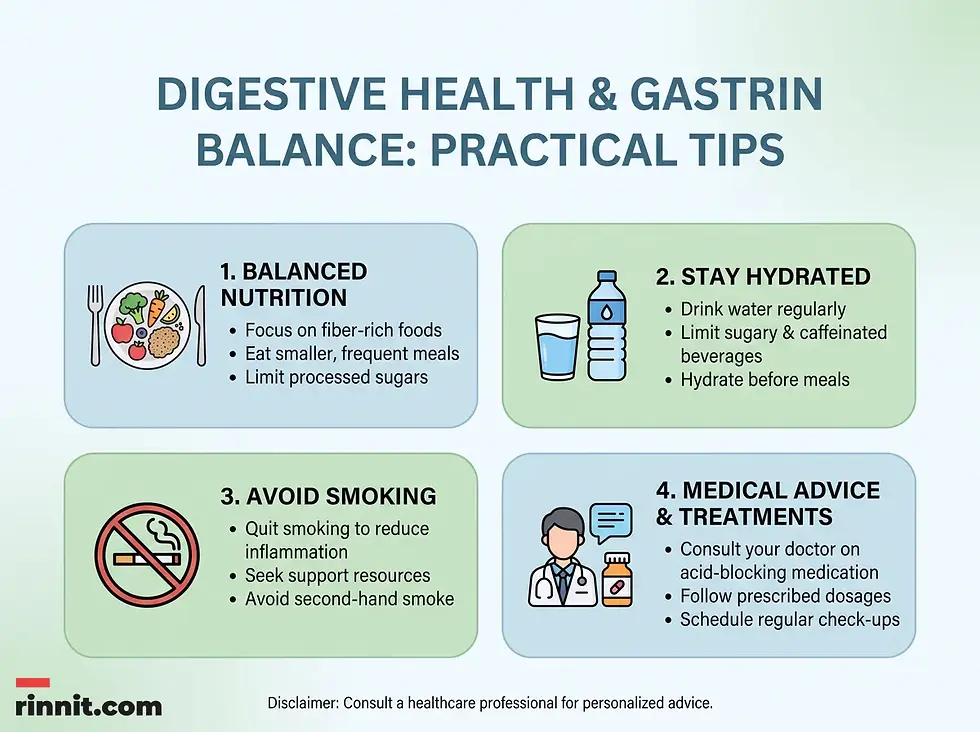
Maintaining a healthy digestive system involves a combination of medical guidance and lifestyle choices. Following a provider's treatment plan for conditions like GERD or ulcers can help prevent long-term damage caused by gastrin imbalances.
Conclusion
Gastrin is a foundational component of the digestive process, acting as the primary trigger for stomach acid and motility. While it is essential for nutrient breakdown, its balance is delicate. High levels can lead to painful and chronic conditions that significantly impact quality of life. By understanding the role of gastrin and recognizing the symptoms of imbalance, individuals can work with their healthcare teams to help keep their digestive system healthy and functional.
Call to Action: Are you experiencing persistent stomach pain or chronic acid reflux? Consult a healthcare professional to discuss your symptoms and determine whether a gastrin test is right for you.
This article provides general information and is not a substitute for professional medical advice. Always consult a qualified healthcare provider about your symptoms, and do not stop or change prescribed medicines without medical guidance.
Frequently Asked Questions
What is Gastrin?
Gastrin is a hormone produced in the stomach that triggers the release of gastric acid and stimulates muscle contractions for digestion. [1]
Where is Gastrin produced?
Most gastrin is produced by G-cells in the antrum, the lower part of the stomach, with smaller amounts coming from the duodenum and pancreas. [1]
What does Gastrin do?
Gastrin signals the stomach to release acid, helps the stomach lining replenish itself, and activates stomach muscle movements. [1]
What causes high Gastrin levels?
Causes include gastrin-releasing tumors (gastrinomas), chronic kidney failure, atrophic gastritis, and certain acid-blocking medications. [1] [2]
What are the symptoms of high Gastrin?
Symptoms include burning stomach pain, chronic heartburn, indigestion, hoarseness, and chronic diarrhea. [1]
How is Gastrin measured?
A healthcare provider uses a simple blood test to check the levels of gastrin in your bloodstream. [1] Because acid-reducing medicines can affect the result, your provider may give you specific instructions before the test. [2] [4] Never stop a prescribed medicine on your own.
What is a gastrinoma?
A gastrinoma is a type of tumor, usually in the pancreas or duodenum, that releases excessive amounts of gastrin. [1] [2]
Can medications affect Gastrin levels?
Yes, acid-blocking drugs like proton pump inhibitors (PPIs) can cause the body to produce more gastrin to compensate for lower acid levels. [1]
What is Zollinger-Ellison syndrome?
Zollinger-Ellison syndrome is a rare condition where one or more gastrinomas cause the stomach to produce too much acid, leading to severe ulcers. [2]
How does Gastrin stop being released?
Gastrin release stops when food leaves the stomach and enters the small intestine, or when stomach acid levels become high enough. [1]
Content reviewed and produced following the Rinnit editorial framework. Last updated: October 8, 2026.
Related Reading
Zollinger-Ellison Syndrome: Symptoms, Causes, Diagnosis and Treatment — What You Need to Know explains how gastrin-making tumors cause severe stomach ulcers.
Understanding Hypergastrinemia: A Complete Guide to High Gastrin Levels covers the causes and meaning of high gastrin levels.
Peptic Ulcer Disease: Causes, Symptoms, Diagnosis, and Treatment describes sores in the stomach lining and how they are treated.
Stomach: Anatomy, Essential Functions, and Care explains the parts of the stomach and how it digests food.
References
Cleveland Clinic. Gastrin. Cleveland Clinic Health Library. Medically reviewed; last updated October 3, 2025. https://my.clevelandclinic.org/health/body/gastrin
Chatzipanagiotou O, Schizas D, Vailas M, et al. All you need to know about gastrinoma today: gastrinoma and Zollinger-Ellison syndrome: a thorough update. J Neuroendocrinol. 2023;35(4):e13267. PMID: 37042078. DOI: 10.1111/jne.13267
Jang Y, Park J, Kang D, et al. Safety of potassium-competitive acid blockers compared with proton pump inhibitors in patients with gastroesophageal reflux disease and peptic ulcer disease: a systematic review and meta-analysis. J Gastroenterol Hepatol. 2026;41(1):28-40. PMID: 41330871. DOI: 10.1111/jgh.70178
Ito T, Cadiot G, Jensen RT. Diagnosis of Zollinger-Ellison syndrome: increasingly difficult. World J Gastroenterol. 2012;18(39):5495-5503. PMID: 23112541. DOI: 10.3748/wjg.v18.i39.5495
Medical disclaimer
The information provided in this article is for educational purposes only and should not be used as a substitute for professional medical advice, diagnosis, or treatment. Always seek the advice of your physician or other qualified health provider with any questions you may have regarding a medical condition.



Comments