Garlic Allergy: Symptoms, Causes, and Management Strategies

Updated: 2 days ago
Medically reviewed by Dr. Baraa Alnahhal, MD · Last reviewed: October 2026
Quick Answer
A garlic allergy is an uncommon immune system reaction to garlic that can cause hives, swelling and difficulty breathing, usually immediately or within about two hours; intolerance is more likely. Some people also react to onions, chives and leeks. It is diagnosed with skin, blood or supervised food tests. Avoid garlic, carry prescribed epinephrine and call 911 for severe reactions. [3]
What the research says
Garlic and onion allergy is real, though uncommon. In a clinic study of 8,109 patients, 924 had confirmed food hypersensitivity, and garlic or onions were the cause in 27 of them (about 2.9%). The authors recommend including garlic and onion in food allergy testing (Armentia et al., Allergol Immunopathol, 2020).
Garlic and onion sensitization often go together. Among 108 patients screened for food allergy, 15 (13.8%) had garlic- and/or onion-specific IgE antibodies, a sign of sensitization, and 12 of those 15 (80%) had antibodies to both (Almogren et al., Afr Health Sci, 2013).
What is a Garlic Allergy?
A garlic allergy is a condition in which the immune system overreacts to garlic. When someone with this allergy eats or touches garlic, the body releases chemicals such as histamine and makes antibodies to fight what it wrongly sees as a danger. It can occur at any age, and its intensity varies a lot from person to person. Most people never react to garlic, but for some, even a small amount can cause symptoms such as difficulty breathing or a skin rash.
Allergy vs. intolerance
It is important to tell a true garlic allergy from a garlic intolerance. An allergy involves the immune system and can be life-threatening. An intolerance starts in the gastrointestinal system and often doesn't involve the immune system at all. It is usually linked to conditions such as irritable bowel syndrome (IBS) or lactose intolerance, or to a missing enzyme that helps break down a food.
Feature | Garlic allergy | Garlic intolerance |
System affected | Immune system | Digestive system |
Common symptoms | Hives, swelling, difficulty breathing | Bloating, diarrhea, nausea |
Severity | Can be life-threatening (anaphylaxis) | Usually less severe |
Timing | Immediate or within about 2 hours | Often several hours later |

Symptoms and Warning Signs
Symptoms can show up in several body systems and often start immediately or within about two hours of eating or touching garlic.
Common physical reactions
Skin: hives, itching, or skin discoloration.
Swelling: swelling in the mouth, tongue, or throat.
Breathing: shortness of breath or difficulty breathing.
Digestive: stomachache, nausea, or diarrhea.
Circulation: a rapid pulse, dizziness, or fainting.
Anaphylaxis risk
Anaphylaxis is a severe, life-threatening allergic reaction that needs immediate medical care. A garlic allergy usually doesn't cause life-threatening symptoms, but it can. Research shows anaphylaxis is more likely with raw garlic than with cooked garlic. Reactions can also differ by form: some people don't react to garlic in sauces, soups, or condiments but do react to raw garlic. Call 911 or your local emergency number right away for a severe reaction.
Causes and Cross-Reactivity
A garlic allergy happens when the immune system treats garlic as a threat. Healthcare providers aren't sure why some people develop food allergies and others don't. A family history of allergies, asthma, or eczema can raise the risk, as can being allergic to similar plants such as onions, chives, or leeks.
The allium family connection
Garlic belongs to the allium family, which also includes onions, shallots, leeks, and chives. Because these plants contain similar proteins, many people with a garlic allergy show cross-reactivity. You can be allergic to garlic and not to onion, but many people react to both. You are not automatically allergic to every plant in the family.
Allium relative | Relationship to garlic |
Onions | Contain similar proteins. Many people with a garlic allergy react to both. |
Leeks | A close relative of garlic. Cross-reactivity can be a problem. |
Chives | A close relative of garlic. Cross-reactivity can be a problem. |
Shallots | A close relative of garlic. Cross-reactivity can be a problem. |
Diagnosis and Testing
Food allergies can be hard to diagnose because most people eat many foods and ingredients at once, and garlic is in many complex dishes. A provider or allergist will ask about your symptoms and health history, and may use tests to find out whether garlic is the cause.
Clinical diagnostic methods
Skin prick test: a small amount of the allergen is applied to the skin, and the provider watches for a reaction.
Blood test: checks for an immune response to a specific food.
Food challenge test: under medical supervision, you eat garlic in a healthcare setting while the provider watches for a reaction. Never try this at home.
Management and Treatment
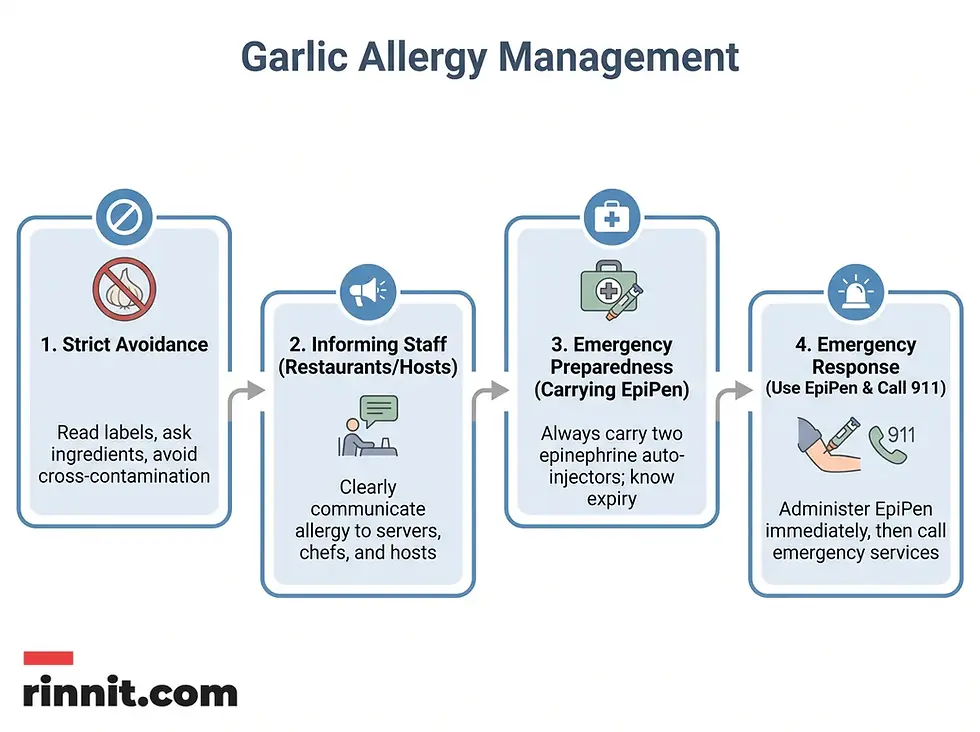
The best treatment is to avoid garlic completely. That takes vigilance with food labels and clear communication with anyone preparing your food. Garlic is common in packaged and processed foods and may not always be listed on the label, so when in doubt, avoid the food or contact the manufacturer.
Emergency preparedness
If you accidentally eat or touch garlic and have mild symptoms, most people respond well to over-the-counter antihistamines such as diphenhydramine or cetirizine. For people at risk of serious reactions, a provider may prescribe an epinephrine auto-injector (EpiPen). Carry it with you. If you use it, you should still contact emergency services, because the medicine can wear off.
Kitchen and dining safety
Cross-contamination: thoroughly wash pots, pans, cutting boards, and surfaces that touched garlic.
Dining out: tell restaurant staff about your allergy before you order. The chef may be able to cook your food separately or suggest safe choices.
Parties and picnics: tell the host about your allergy, ask what ingredients were used, or bring your own food.
Foods that may contain garlic: salad dressings, frozen meals, canned soup or chili, boxed rice and pasta, and other condiments and sauces.
Substitutions: use alternative spices such as paprika, oregano, cumin, or basil to add flavor without the risk.
Outlook and Prevention
You can't prevent a garlic allergy, and most food allergies don't go away. Children may outgrow a garlic allergy, but only a healthcare provider can confirm it, and adults are less likely to outgrow a food allergy. Living with the condition takes constant awareness of ingredients, but people with a garlic allergy can usually find plenty of foods to eat.
When to See a Healthcare Provider
See a healthcare provider or allergist if you or your child has a physical reaction to garlic, such as hives, a rash, or swelling in the mouth or tongue. A professional diagnosis, an emergency plan, and the right knowledge are the best way to stay safe while eating a varied diet.
Frequently Asked Questions
Can I be allergic to garlic but not onions?
Yes, it is possible. But onion and garlic belong to the same allium family and contain similar proteins, so many people react to both. This is called cross-reactivity.
Does cooking garlic make it safe for someone with an allergy?
Not necessarily. Some people react to raw garlic but not to garlic in sauces, soups, or condiments, and anaphylaxis is more likely with raw garlic. Because reactions are hard to predict, do not test your tolerance on your own.
What are common hidden sources of garlic?
Garlic is often found in salad dressings, frozen meals, canned soup or chili, boxed rice and pasta, and other condiments and sauces. It may not always be listed on the label, so when in doubt, avoid the food or call the manufacturer.
Is a garlic allergy the same as IBS?
No. Irritable bowel syndrome is a digestive condition that can be linked to garlic intolerance, but it does not involve the immune system the way a true allergy does.
Can a garlic allergy be cured?
Most food allergies can't be cured. The best approach is to avoid garlic and be prepared in case of accidental exposure. Children may outgrow a garlic allergy, but only a healthcare provider can confirm it.
What can I use instead of garlic for flavor?
Alternative spices such as paprika, oregano, cumin, or basil can add flavor without the risk of a garlic reaction.
Is it possible to develop a garlic allergy as an adult?
Yes. A garlic allergy can occur at any age.
What should I do if I accidentally eat garlic?
For mild symptoms, most people respond well to an over-the-counter antihistamine. For a severe reaction, such as trouble breathing or swelling, use your epinephrine auto-injector and call 911 or your local emergency number. Contact emergency services even after using the auto-injector, because the medicine can wear off.
How is a garlic allergy diagnosed?
An allergist asks about your symptoms and may use a skin prick test or a blood test. Sometimes a food challenge is done, where you eat garlic under medical supervision. Never try this test at home.
Can touching garlic cause an allergic reaction?
Yes. Some people react after touching garlic, with itchy, red or irritated skin. Wearing gloves while cooking and washing surfaces and cutting boards can help.
Related Reading
Food Allergy: Symptoms, Causes, Treatment & Complete Guide explains how food allergies work and how they are treated.
Anaphylaxis: Symptoms, Triggers, and Why Epinephrine Is the Only Emergency Treatment covers severe allergic reactions and why epinephrine is needed fast.
Food Intolerance: Symptoms, Causes, and Dietary Management explains how food intolerance differs from a true allergy.
Allergy Skin Test: Prick, Intradermal and Patch Tests, Preparation and Results describes the skin test allergists use to find food triggers.
References
Armentia A, Martín-Armentia S, Pineda F, et al. Allergic hypersensitivity to garlic and onion in children and adults. Allergologia et Immunopathologia. 2020;48(3):232-236. PMID 31477394. https://doi.org/10.1016/j.aller.2019.06.005
Almogren A, Shakoor Z, Adam MH. Garlic and onion sensitization among Saudi patients screened for food allergy: a hospital based study. African Health Sciences. 2013;13(3):689-693. PMID 24250308. https://doi.org/10.4314/ahs.v13i3.24
Cleveland Clinic. Garlic allergy. Cleveland Clinic. December 13, 2023. https://my.clevelandclinic.org/health/diseases/garlic-allergy
Medical disclaimer
This article was prepared for general information only and is not a substitute for professional medical advice.



Comments