Understanding the Frenum: Anatomy, Function, and Oral Health

Updated: 3 days ago
Medically reviewed by Dr. Baraa Alnahhal, MD | Last reviewed: October 17, 2026
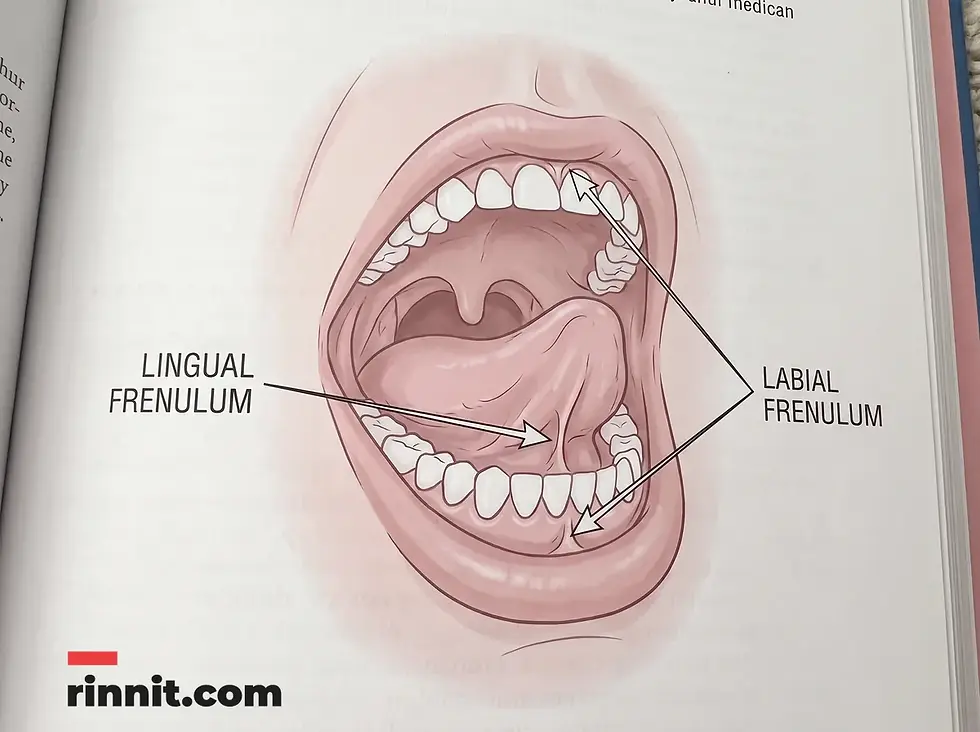
Quick Answer: What is an oral frenum, also called a frenulum?
An oral frenum, also called a frenulum, is a thin, ropelike band of tissue that stabilizes and supports the tongue and lips [1]. The lingual frenulum connects the tongue to the floor of the mouth, and the labial frenulum joins the lips to the gums [1]. Made of collagen and elastic fibers, frenums help with speech, swallowing, chewing and dental alignment.
What the research says
Frenotomy may help breastfeeding in symptomatic infants. A 2023 meta-analysis of 21 studies found that breastfeeding self-efficacy, maternal nipple pain, infant latch and infant reflux improved after frenotomy in mother-infant pairs with ankyloglossia-related breastfeeding difficulty. (Cordray et al., Pediatr Res, 2024) [2]
The overall evidence is still debated. A 2025 umbrella review of 15 systematic reviews rated confidence as critically low in 14 of them, called the evidence on breastfeeding outcomes inconclusive, and warned that overdiagnosis of tongue-tie may lead to overtreatment. (da Silva et al., Int J Paediatr Dent, 2026) [3]
A tooth gap does not automatically need surgery. A systematic review of 11 studies linked two frenum subtypes (papillary and papillary penetrating) to a gap between the upper front teeth, and advised delaying upper lip frenectomy until the permanent lateral incisors have erupted, since the gap can close on its own. (Tadros et al., Int J Pediatr Otorhinolaryngol, 2022) [4]
Based on articles retrieved from PubMed.
Anatomical Types and Locations
Most people have several frenums in the mouth. The most prominent is the lingual frenulum, directly under the tongue. Labial frenulums lie between the lips and gums, and the most noticeable sits above the upper front teeth. Smaller buccal frenums are found in the cheeks, giving structure to the facial tissues during movement [1].
Oral frenums are usually the same color as the gums and vary in size and thickness between people [1]. They are made of fibrous connective tissue, elastic fibers and striated muscle fibers, which give them strength, flexibility and the ability to take part in forceful movements such as chewing and speaking [1].
Frenum Type | Location | Primary Function |
Lingual | Under the tongue | Connects the tongue to the floor of the mouth [1]. |
Labial (Upper) | Above upper front teeth | Connects the upper lip to the gums. |
Labial (Lower) | Below lower front teeth | Connects the lower lip to the gums. |
Buccal | Inside the cheeks | Provides structure to the cheeks and lips [1]. |

Core Functions in Daily Life
The main role of oral frenulums is stability and support [1]. They act as a biological anchor so the lips and tongue do not move excessively. In infants the frenum matters for breastfeeding; in adults it supports clear speech and efficient chewing.
Beyond mechanical support, the frenum helps maintain the overall structure of the mouth. Collagen in the connective tissue gives it the durability to withstand constant motion and pressure from talking and eating.
Property | Component | Benefit |
Strength | Collagen | Provides durable support for oral structures. |
Flexibility | Elastic fibers | Allows the lips and tongue to move freely. |
Movement | Muscle fibers | Aids in the forceful motions of chewing and speech. |
Common Conditions and Disorders
Most frenums work without trouble, but developmental or accidental factors can cause problems. A common injury is a frenum tear, which can come from sports accidents, snagging on braces or even eating. Chronic issues involve length or thickness, such as "tongue-tie" (ankyloglossia) or "lip-tie," where a short frenum restricts movement [1].
If a labial frenum is too thick, it can push the front teeth apart and create a gap [1] [4]. A frenum that is too short can pull on the gums, leading to gum recession [1] and exposed tooth roots. These conditions can affect the look of the smile and, if unaddressed, long-term dental health.
Condition | Description | Potential Impact |
Tongue-Tie | Short lingual frenulum | Restricts tongue movement; affects breastfeeding. |
Lip-Tie | Short labial frenulum | Limits lip movement; can lead to gum recession. |
Tooth Gap | Thick labial frenulum | Pushes front teeth apart, creating a space. |
Frenum Tear | Snagged or bumped tissue | Causes pain, swelling, and temporary discomfort. |
Recognizing Symptoms and Seeking Care
Spotting frenum problems early can help prevent developmental abnormalities of the mouth and jaw. Common signs include difficulty swallowing, speech problems, and persistent mouth breathing or snoring [1]. In children, trouble sticking out the tongue or difficulty breastfeeding are the main reasons a provider should check the frenum's attachment.
Keeping frenums healthy mainly means good oral hygiene. Regular brushing and flossing reduce the bacteria that can inflame tissue [1]. If a frenum seriously interferes with function, a provider may recommend a frenectomy, a simple surgical procedure to adjust the tissue. It is typically done only when a functional benefit, such as better breastfeeding, is clearly established.

The Bottom Line: What You Need to Know About the Frenum
The frenum is a small but vital part of oral anatomy that supports basic functions from a baby's first feeds to adult speech. Understanding its role and keeping up good oral care supports long-term dental health.
If you have persistent gum soreness, or your child has trouble feeding or speaking, see a dentist for an oral evaluation. A simple check of the frenum's attachment can bring clarity.
Frequently Asked Questions
What is the difference between a frenum and a frenulum?
The terms are often used interchangeably; a frenulum is technically a small frenum.
Where are the most noticeable frenums located?
Under the tongue and above the upper front teeth.
What is tongue-tie?
A condition where the lingual frenulum is too short, restricting the tongue's movement.
Can a frenum tear heal on its own?
Minor tears usually heal without intervention, though they may be painful and swollen at first.
Does a thick frenum cause tooth gaps?
A thick frenum can. A thick labial frenum can push the two upper front teeth apart.
What is a frenectomy?
A surgical procedure to remove or adjust a frenum that is causing functional problems.
Why is the frenum important for infants?
The frenum affects the latch and tongue movement needed for breastfeeding.
Can a short frenum cause gum recession?
Yes. It can pull the gums away from the teeth, exposing the roots.
What does "buccal" mean in buccal frenum?
"Buccal" refers to the cheek; these frenums are on the sides of the mouth.
What is the frenum made of?
Fibrous connective tissue (collagen), elastic fibers and muscle fibers.
Do frenums exist outside of the mouth?
Yes. Frenums are also found in the genitals, digestive tract and brain.
Can speech issues be fixed by a frenectomy?
Surgeons rarely perform the procedure for speech alone, as there is no good evidence that it helps for that purpose.
What color is a healthy frenum?
A healthy frenum is typically the same pinkish color as the surrounding gums.
How can I prevent frenum inflammation?
Practice good oral hygiene with regular brushing and flossing to reduce bacteria.
What is the Latin origin of the word?
The word "frenum" is Latin for "bridle," and "frenulum" means "little bridle."
Related reading on Rinnit
Understanding Your Gums: Anatomy, Function, and Proactive Care
Gum Disease Treatment: Restoring Oral Health and Preventing Bone Loss
Gingivitis: Why Your Gums Bleed, What Causes It, and How Daily Care Reverses It
Fissured Tongue: Symptoms, Causes, Diagnosis, Treatment and Outlook — What You Need to Know
Gingivectomy: A Guide to Gum Tissue Removal and Smile Enhancement
Sources
Cleveland Clinic. Frenum (Frenulum in Mouth). Cleveland Clinic. Last updated December 12, 2023. https://my.clevelandclinic.org/health/body/frenum-mouth-frenulum
Cordray H, Raol N, Mahendran GN, et al. Quantitative impact of frenotomy on breastfeeding: a systematic review and meta-analysis. Pediatr Res. 2024;95(1):34-42. PMID 37608056. https://doi.org/10.1038/s41390-023-02784-y
da Silva BV, Barollo AV, Sá NDNL, et al. Lingual Frenotomy in Breastfeeding Infants: An Umbrella Review. Int J Paediatr Dent. 2026;36(1):90-104. PMID 40990400. https://doi.org/10.1111/ipd.70031
Tadros S, Ben-Dov T, Catháin ÉÓ, et al. Association between superior labial frenum and maxillary midline diastema - a systematic review. Int J Pediatr Otorhinolaryngol. 2022;156:111063. PMID 35248905. https://doi.org/10.1016/j.ijporl.2022.111063
Medical disclaimer
This article is provided for general educational purposes only and is not a substitute for professional medical advice, diagnosis or treatment. Always seek the advice of a qualified health provider with any questions regarding a medical condition.



Comments