Understanding Your Gums: Anatomy, Function, and Proactive Care

Updated: 2 hours ago
Medically reviewed by Dr. Baraa Alnahhal, MD · Last reviewed: September 2026
WHEN TO SEE A DENTIST If you notice unusual swelling, persistent bleeding, or changes in the color of your gums, consult a dental professional promptly. Early intervention is the key to reversing gingivitis and preventing bone-eroding periodontitis.
TL;DR
Your gums, or gingivae, are the pink tissues that anchor your teeth and protect the underlying jawbone. Maintaining healthy gums through consistent brushing, flossing, and professional check-ups is vital for preventing periodontal disease, which can lead to irreversible tooth and bone loss.
Quick Answer: What Are Gums and How Do You Keep Them Healthy?
The gums are specialized soft tissues that surround the base of the teeth and cover the jawbone. They act as a protective seal and support system that keeps teeth stable. Healthy gums are typically pink and firm, but they are susceptible to infections such as gingivitis and periodontitis if oral hygiene is neglected. Proactive care means daily cleaning and regular dental visits to prevent bone erosion and tooth loss.
The human mouth relies on a complex support system to maintain its structure and function. At the center of that system are the gums, medically known as gingivae. These pink tissues do more than frame a smile: they form a critical barrier and anchor for the teeth. By surrounding the base of each tooth and covering the jawbone, the gums help keep bacteria away from the deeper structures of the mouth.
The Anatomy of Your Gums
The gums are made of several distinct layers and specialized tissues, each with a unique role in oral protection. Most people only notice the pink surface, but the gingival structure includes both mobile and fixed components that adapt to chewing and movement of the mouth.
Marginal gingiva: The unattached strip of tissue surrounding the neck of the tooth. It can be moved slightly during clinical exams.
Attached gingiva: The firm second layer of tissue that is bound to the underlying bone and cannot be moved.
Interdental papilla: The triangular tissue found in the gaps between adjacent teeth.
Alveolar mucosa: A bright red mucous membrane that extends across the floor of the mouth, cheeks, and lips.

Beyond these primary layers, the mouth contains thin lines of tissue called frena (singular: frenum) that connect the lips to the gums. The maxillary labial frenum sits at the front of the upper jaw, while the mandible buccal frenum lies between the lower lip and lower gum. Deep within the tooth socket, the periodontal ligament acts as a connective anchor that secures the roots of the teeth to the jawbone.
Functions and Characteristics of Healthy Gums
The primary purpose of the gums is to keep the teeth in place and protect the jawbone from external stress and pathogens. Healthy gingivae are a consistent pink color and feel firm to the touch. When gums are healthy, they form a tight seal around the teeth, preventing food particles and bacteria from collecting in the sockets.
Common Gum Conditions and Disorders
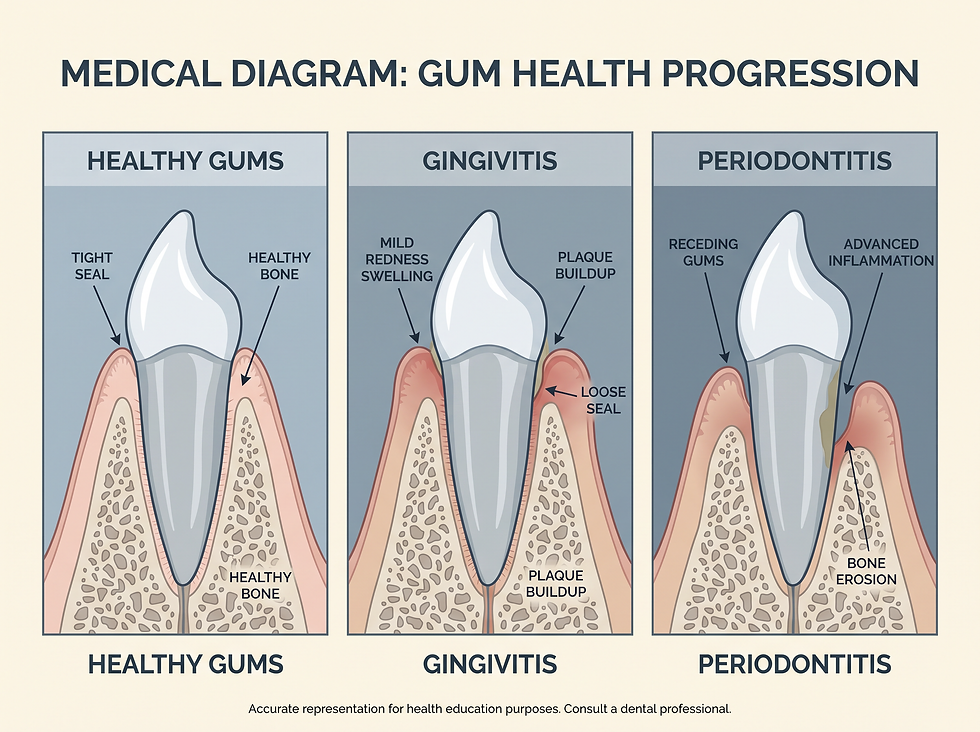
Gum disease, or periodontal disease, is a widespread health concern that affects a significant portion of the adult population. It typically progresses from mild inflammation to severe infection, potentially causing permanent structural damage.
Gingivitis: The earliest stage of gum disease, marked by inflammation from the buildup of plaque, tartar, and bacteria. It is very common and often reversible.
Periodontitis: If gingivitis is left untreated, it can evolve into periodontitis, a serious bacterial infection that erodes the bone supporting the teeth. It becomes more common with age.
More than 47% of adults over age 30 have some form of periodontal disease, and roughly 70% of adults aged 65 and older are affected.
Proactive Care for Long-Term Gum Health
Healthy gums require a combination of daily personal hygiene and professional care. Because gum disease often develops silently, consistent habits are the most effective defense against bone and tooth loss.
Daily Hygiene Practices
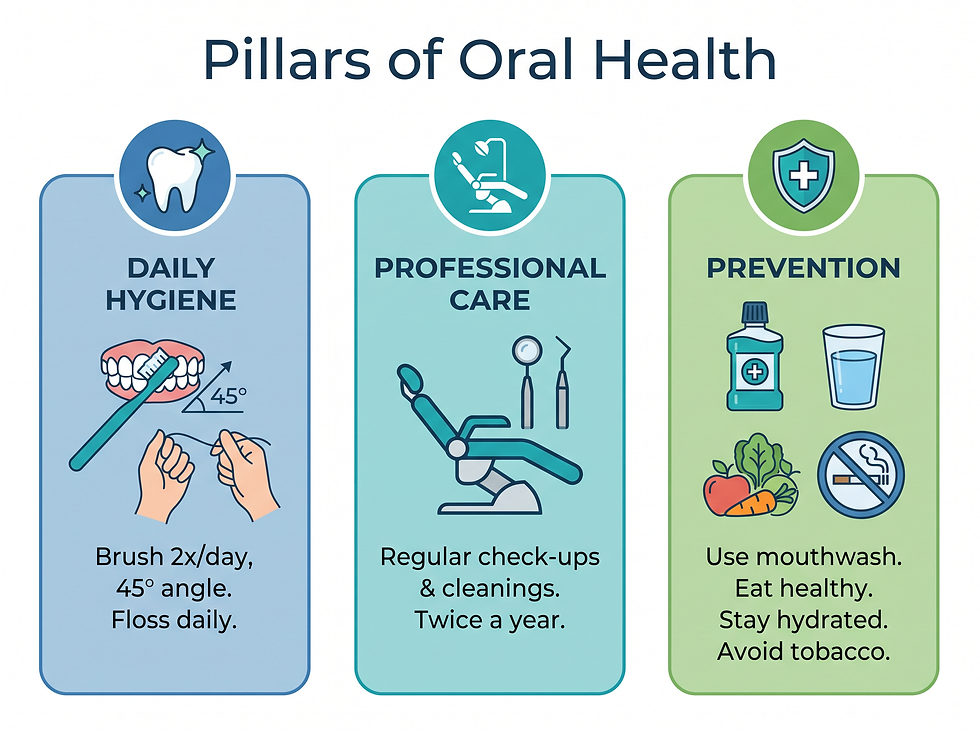
Brushing at least twice a day is the foundation of oral care. For best results, angle the toothbrush at 45 degrees toward the gum line so the bristles clear bacteria and plaque where the tissue meets the tooth. Daily flossing is equally important because it removes debris from the spaces between teeth that a toothbrush cannot reach. An antibacterial mouthwash can further reduce the bacterial load in the mouth.
Professional Maintenance
Dentists generally recommend professional cleanings and check-ups every six months. These visits allow hardened tartar to be removed and inflammation to be caught early. People who are naturally prone to gum disease may need more frequent visits.
Conclusion
The gums are the essential foundation of a healthy mouth, giving the teeth and jawbone the support and protection they need. Periodontal disease is a significant risk for many adults, but it is largely preventable with dedicated hygiene and regular professional care. By watching for warning signs such as persistent bleeding or swelling, you can act early to protect your oral health for life.
Take Action for Your Smile
Schedule your twice-yearly check-up today to keep your gums firm, pink, and healthy, and see a dental professional promptly if you notice swelling, persistent bleeding, or color changes.
Frequently Asked Questions
What are gums made of?
Gums consist of layers of soft, pink connective tissue that surround the base of the teeth and cover the jawbone.
Why are my gums bleeding when I brush?
Bleeding is often a sign of gingivitis, an early stage of gum disease caused by plaque and bacteria buildup.
What does "gingiva" mean?
Gingiva is the medical term for the gums.
How often should I see a dentist for gum health?
Most professionals recommend a check-up and cleaning every six months, though some people need more frequent visits.
Can gum disease cause tooth loss?
Yes. Advanced gum disease (periodontitis) erodes the bone and ligaments that hold teeth in place, eventually leading to tooth loss.
What is the difference between gingivitis and periodontitis?
Gingivitis is mild inflammation of the gums, while periodontitis is a more severe infection that damages the supporting bone.
Is it normal for gums to be red?
Healthy gums should be pink. Bright red gums often indicate inflammation or infection.
What is the interdental papilla?
It is the triangular piece of gum tissue that sits in the space between two adjacent teeth.
How does flossing help my gums?
Flossing removes plaque and bacteria from between the teeth where a toothbrush cannot reach, helping prevent infection.
What is a frenum?
A frenum is a thin line of soft tissue that connects the lips or cheeks to the gums.
Can I reverse gum disease?
Early-stage gum disease (gingivitis) can often be reversed with improved hygiene and professional cleaning.
What is tartar?
Tartar is hardened plaque that can only be removed by a dental professional.
Why should I angle my toothbrush at 45 degrees?
This angle allows the bristles to clean the critical area where the gums meet the teeth.
How common is gum disease?
Roughly 47% of U.S. adults over 30 have some form of periodontal disease, rising to about 70% in adults aged 65 and older.
What are the warning signs of unhealthy gums?
Persistent swelling, redness, and bleeding during brushing or flossing are key warning signs.
References
Medical Disclaimer: The information provided in this article is for educational purposes only and should not be considered medical advice. Always seek the advice of a qualified dental or healthcare professional with any questions you may have about a dental condition or treatment.
Comments