Frenotomy (Infant Tongue-Tie Procedure)

Updated: 3 days ago
Medically reviewed by Dr. Baraa Alnahhal, MD · Last reviewed: October 2026
Quick Answer: What is a frenotomy?
A frenotomy is a quick surgical procedure that releases the tissue under a baby's tongue to treat tongue-tie, which can make breastfeeding painful or difficult. [1] It is usually done in a doctor's office without anesthesia and takes about one minute. [1] It is recommended when other methods fail to resolve latching problems, and most babies can breastfeed immediately afterward. [1]
What the research says
Frenotomy reduces nursing mothers' nipple pain in the short term. A Cochrane review of 5 randomized trials (302 infants) found that pooled results from 3 trials (212 mothers) showed lower pain scores after frenotomy (mean difference −0.7 on a 10-point scale, 95% CI −1.4 to −0.1), while infant feeding scores did not improve consistently across trials and the certainty of the evidence was limited by small, imperfect studies. No adverse effects were reported (O'Shea et al., Cochrane Database Syst Rev, 2017) [2].
A GRADE-based systematic review found moderate-quality support for frenotomy. Reviewing 4 randomized trials and 12 observational studies, the authors rated the evidence for improved sucking, latching, and nipple pain as strong to moderate, and no major complications were reported (Ito, Pediatr Int, 2014) [3].
No frenotomy technique has a proven advantage over another. A systematic review of 35 articles found that conventional scissors frenotomy (5 articles, 589 patients) and laser frenotomy (2 articles, 78 patients) each reduced maternal nipple pain, and only minor adverse events were reported for all techniques (Khan et al., Otolaryngol Head Neck Surg, 2020) [4].
Indications for Frenotomy
While many infants have a visible lingual frenulum, not all require a frenotomy. [1] The procedure is specifically indicated when tongue-tie interferes with feeding, health, and development.
Indication | Description |
Painful Latch | Persistent nipple pain for the nursing parent during breastfeeding. [1] |
Latching Difficulty | The infant struggles to maintain a deep or consistent latch. [1] |
Milk Transfer Issues | Ineffective sucking that leads to poor weight gain or low milk intake. |
Persistent Feeding Challenges | Feeding issues that remain after adjusting positions or consultation. [1] |
The Procedure Details
Frenotomy is a straightforward procedure that prioritizes safety and minimal discomfort for the infant.
Preparation and Assessment
Before a frenotomy is scheduled, a pediatrician performs a thorough physical exam to rule out other causes of breastfeeding difficulties, such as nervous system disorders or other anatomical issues. [1] If tongue-tie is confirmed as the primary cause, the provider may work with a lactation consultant to try non-surgical solutions first. [1] Once the decision is made, the provider explains the simple steps and ensures the parents are comfortable with the process.
Surgical Execution
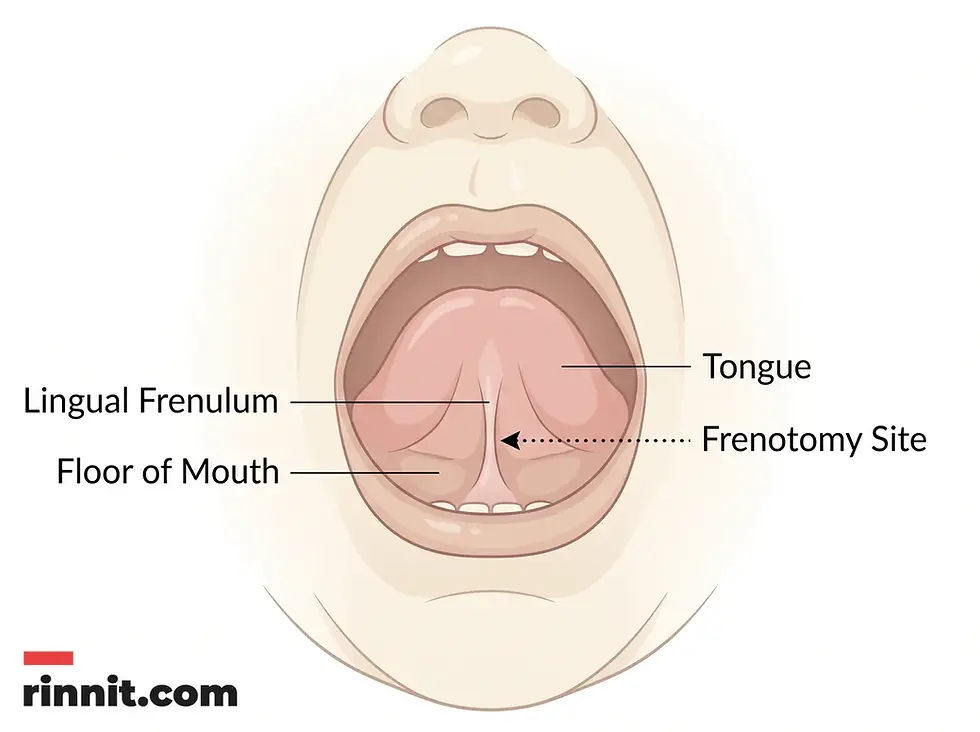
The procedure is typically performed by a trained clinician, such as a pediatrician, ENT specialist, or breastfeeding medicine physician. [1] Using the traditional method, the provider uses sterile scissors to make a small, precise cut in the lingual frenulum. [1] Some providers may use lasers as an alternative. [1] [4] Anesthesia is not required for infants, though oral sucrose may be used for comfort. [1] The entire process is exceptionally fast, often taking less than one minute to complete.
Post-Procedure Recovery
Recovery from a frenotomy is typically rapid, with most infants returning to normal behavior almost immediately.
Healthcare providers recommend breastfeeding the baby immediately after the procedure. Nursing provides natural comfort and helps stop any minor bleeding at the site. [1] While some parents notice an immediate improvement in latching and milk transfer, others may see gradual progress over one to two weeks. [1] Contrary to some popular beliefs, there is no clinical evidence to support stretching or massaging the wound to aid recovery. [1]

Benefits and Rare Risks
Frenotomy is widely regarded as a safe intervention for infants with symptomatic tongue-tie. [1] [4]
The primary benefits include a reduction in nursing pain for the parent and, for many babies, more effective breastfeeding. [2] [3] While risks are rare, they can include minor bleeding, infection, scarring, or temporary feeding aversion. [1] In some cases, an infant may require additional support from a speech or feeding therapist to learn how to use their newly mobile tongue effectively. [1]

Conclusion
Frenotomy is a simple, safe procedure that can make a real difference for families struggling with breastfeeding due to infant tongue-tie. By providing a quick release of restricted tissue, it can reduce the physical strain on nursing parents and may help infants feed more efficiently. When performed by a qualified professional after a thorough assessment, it remains a useful tool in supporting early infant nutrition and maternal comfort.
Follow-Up Note: Always attend your scheduled follow-up appointment so your pediatrician can check the healing site and ensure that breastfeeding is progressing as expected.
This article provides general information and is not a substitute for professional medical advice. Always consult a qualified healthcare provider about your baby's feeding and any treatment decisions.
Frequently Asked Questions
What is the difference between a frenotomy and a frenectomy?
The terms are often used interchangeably, but strictly a frenotomy is a simple snip that releases the tissue, while a frenectomy removes the fold of tissue. [1]
Does my baby need anesthesia for a frenotomy?
Infants typically do not need anesthesia for this procedure because it is very quick. [1] Oral sucrose (sugar water) is sometimes used for comfort. [1]
How long does the procedure take?
The traditional scissors method is very fast, usually taking about one minute to complete. [1]
Will a frenotomy prevent future speech problems?
No. Research does not show an association between infant tongue-tie and future speech disorders, and the procedure is not done for speech prevention. [1]
Can I breastfeed immediately after the procedure?
Yes, providers actually recommend feeding your baby right away to help comfort them and stop any minor bleeding. [1]
Are there any exercises I need to do after the surgery?
Current medical evidence does not support the need for stretching or massaging the wound after a frenotomy. [1]
How soon will I see an improvement in breastfeeding?
Some parents notice an immediate change, while for others, it may take one to two weeks to see a full improvement. [1]
What are the main risks of a frenotomy?
While rare, risks include minor bleeding, infection, scarring, or temporary feeding aversion. [1]
Who performs this procedure?
Frenotomies are typically performed by pediatricians, ENT physicians, or Breastfeeding Medicine specialists. [1]
What if my baby still has trouble latching after the procedure?
Some infants may need additional help from a lactation consultant or speech therapist to gain full movement and coordination of their tongue. [1]
Content reviewed and produced following the Rinnit editorial framework. Last updated: October 8, 2026.
How do I prepare my baby for a frenotomy?
First, a pediatrician does a thorough physical exam to rule out other causes of breastfeeding trouble, such as nervous system disorders or conditions affecting the head or mouth. [1] If tongue-tie seems to be the main problem, a lactation consultant may try adjusting your baby's position or latch before any procedure. [1] If breastfeeding still isn't working, your provider will discuss the benefits and risks of a frenotomy and make sure you're comfortable going ahead. [1] Your baby won't need any anesthesia, though some providers give a little sugar solution by mouth beforehand to keep them comfortable. [1]
When should I call my baby's doctor after a frenotomy?
Call your provider if you notice signs of a complication after the procedure, such as bleeding or infection. [1] Also reach out if your baby seems to have pain or discomfort during breastfeeding, or if you have any questions or concerns about feeding or the treatment plan. [1] Your provider will schedule a follow-up visit to check for problems, ask how breastfeeding is going and offer extra help if you need it. [1]
Related Reading
Nipple Shields: When and How to Use Them explains when nipple shields help with breastfeeding.
References
Cleveland Clinic. Frenotomy (Tongue-Tie Procedure in Infants). Cleveland Clinic Health Library. Medically reviewed; last updated May 16, 2024. https://my.clevelandclinic.org/health/procedures/frenotomy
O'Shea JE, Foster JP, O'Donnell CP, et al. Frenotomy for tongue-tie in newborn infants. Cochrane Database Syst Rev. 2017;3(3):CD011065. PMID: 28284020. DOI: 10.1002/14651858.CD011065.pub2
Ito Y. Does frenotomy improve breast-feeding difficulties in infants with ankyloglossia? Pediatr Int. 2014;56(4):497-505. PMID: 24978831. DOI: 10.1111/ped.12429
Khan U, MacPherson J, Bezuhly M, Hong P. Comparison of frenotomy techniques for the treatment of ankyloglossia in children: a systematic review. Otolaryngol Head Neck Surg. 2020;163(3):428-443. PMID: 32482127. DOI: 10.1177/0194599820917619



Comments