Femoral Hernia: Causes, Symptoms, and Treatment

Updated: 2 days ago
Medically reviewed by Dr. Baraa Alnahhal, MD · Last reviewed: October 2026
Source currency note: This guide reflects medical information reviewed in May 2025. Always confirm current guidance with your healthcare professional.
Quick Answer: What is a femoral hernia?
A femoral hernia is a rare hernia in which tissue or intestine pushes through a weak spot into the femoral canal in the upper thigh, more often in females. It may cause a groin bulge or pain, or no symptoms. It can become trapped and strangulated, a medical emergency, so surgery is usually recommended even without symptoms. [3]
What the research says
Emergency repair is far riskier than planned surgery for women with groin hernias. A meta-analysis of 34 studies (107,422 inguinal and 18,550 femoral hernia cases in women) found a mortality rate of 0.2% after elective surgery versus 4% after emergency repair, with bowel resection needed in 17.3% of emergency cases. Femoral hernia recurrence was 1.0% after minimally invasive repair versus 3.3% after an anterior (open) approach. No study had evaluated watchful waiting in women, so the true risk of getting trapped without surgery is unclear (Huber et al., Updates in Surgery, 2026).
Mesh can lower recurrence even when the hernia is trapped or strangulated. A meta-analysis of 24 studies (12,402 patients) of emergency repair for incarcerated or strangulated groin hernias, including femoral hernias, found that mesh repair reduced recurrence (odds ratio 0.36; 95% CI 0.19 to 0.67) without raising mortality. When bowel resection was needed, however, mesh was linked to more surgical site infections (odds ratio 1.74; 95% CI 1.04 to 2.91) (Marcolin et al., Hernia, 2023).
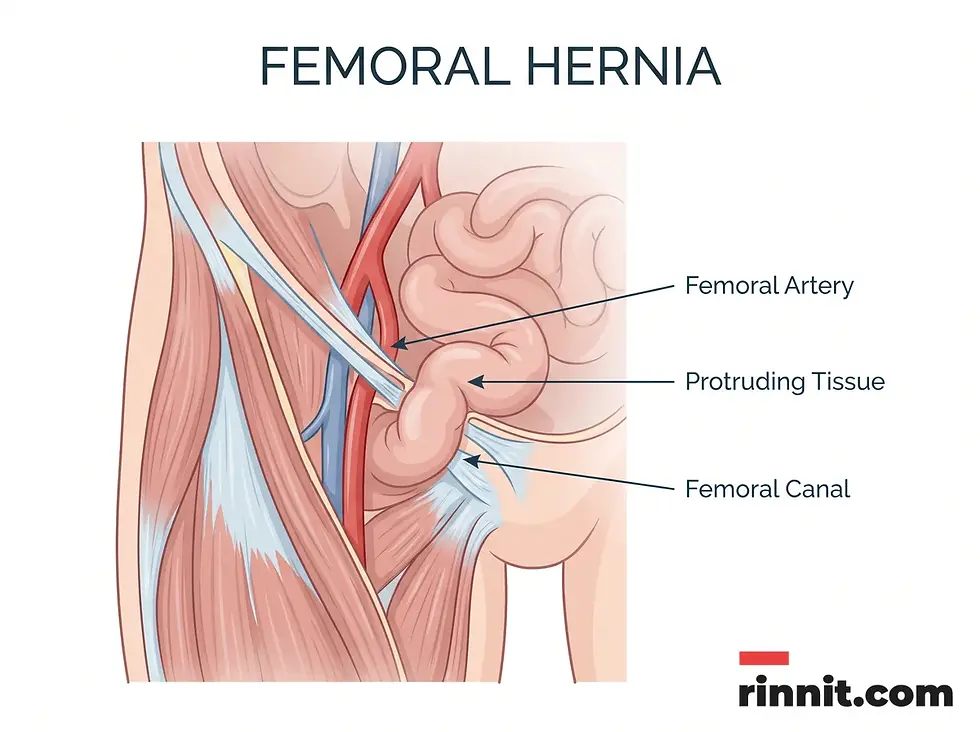
Overview of Femoral Hernias
A femoral hernia is a protrusion of abdominal contents through the femoral ring into the femoral canal. This canal is a narrow passage that sits right next to the femoral vein, on its inner side, and contains only fat and small lymph vessels. Although femoral hernias account for only a small percentage of all groin hernias, they are clinically significant because of their high rate of complications.
Feature | Description |
Location | Upper thigh, just below the groin crease |
Prevalence | Rare overall, but much more common in females |
Primary risk | High risk of incarceration and strangulation |
Definitive cure | Surgical repair |
Who is at risk?
While anyone can develop this condition, it is more common in women, particularly older women, because of the wider shape of the female pelvis. In some cases the condition is congenital, meaning it is present from birth, but most cases develop later in life because of increased abdominal pressure.
Recognizing the Symptoms
Many people with a femoral hernia do not notice any symptoms at first. The hernia may be discovered during a routine physical examination. When symptoms do occur, they typically involve a visible or palpable lump in the upper thigh or groin area.
Symptom type | Common signs |
Visual | A bulge or lump in the inner upper thigh or groin |
Sensory | Aching, sudden sharp pain, or pressure in the groin |
Systemic | Nausea and vomiting (often a sign of a complication) |
Aggravators | Standing for long periods, heavy lifting, or straining |
The pain from a femoral hernia may get worse during activities that increase pressure inside the abdomen, such as coughing, lifting heavy objects, or straining during bowel movements.
Causes and Risk Factors
A femoral hernia develops when muscle weakness combines with increased pressure inside the abdominal cavity. This pressure forces tissue or a portion of the intestine through a weak point in the lower abdominal wall and into the femoral canal.
Common triggers of abdominal pressure
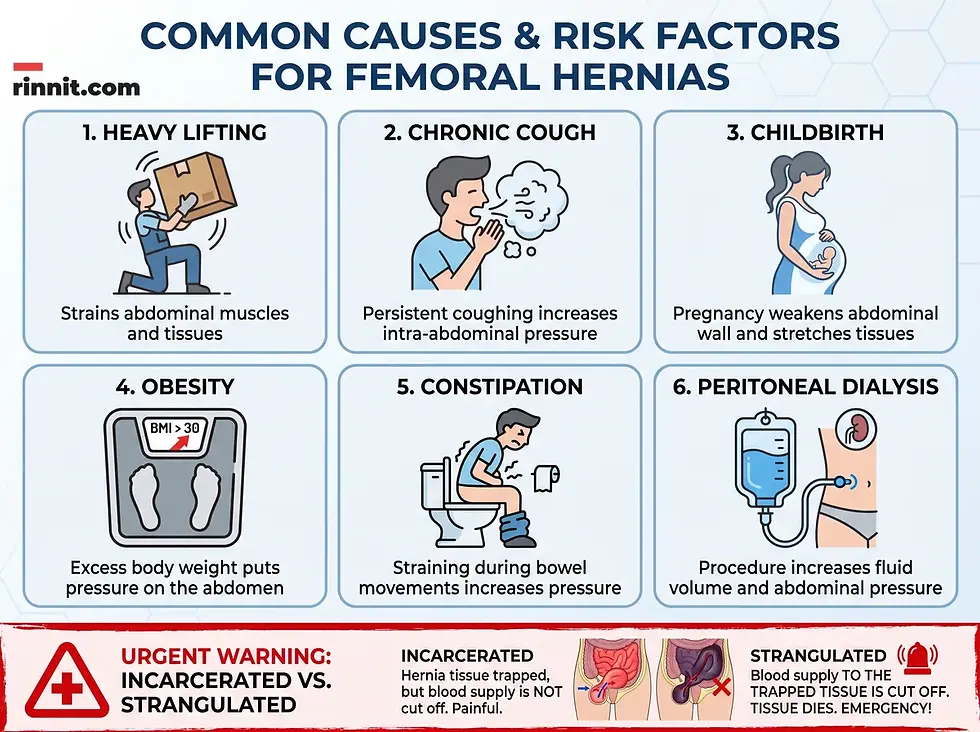
Several factors can contribute to a femoral hernia by placing excessive strain on the abdominal muscles:
Physical strain: frequently lifting or pushing heavy objects.
Chronic conditions: persistent coughing or sneezing.
Digestive issues: chronic constipation leading to frequent straining.
Weight factors: obesity or sudden significant weight gain.
Medical procedures: receiving peritoneal dialysis for kidney disease or kidney failure.
Pregnancy: the physical strain of pregnancy and childbirth.
Potential Complications
The most serious aspect of a femoral hernia is the risk of complications. Because the femoral canal is very narrow and rigid, protruding tissue is easily trapped.
Complication | Description | Urgency |
Incarceration | The hernia becomes trapped and cannot be pushed back into the abdomen. | Urgent medical evaluation |
Strangulation | The blood supply to the trapped tissue is cut off, leading to tissue death. | Medical emergency |
Warning: A strangulated hernia is a life-threatening condition. If the skin over the bulge turns red, purple, or dark, or if you have sudden severe pain, nausea, or vomiting, seek emergency medical care immediately.
Diagnosis and Differential Diagnosis
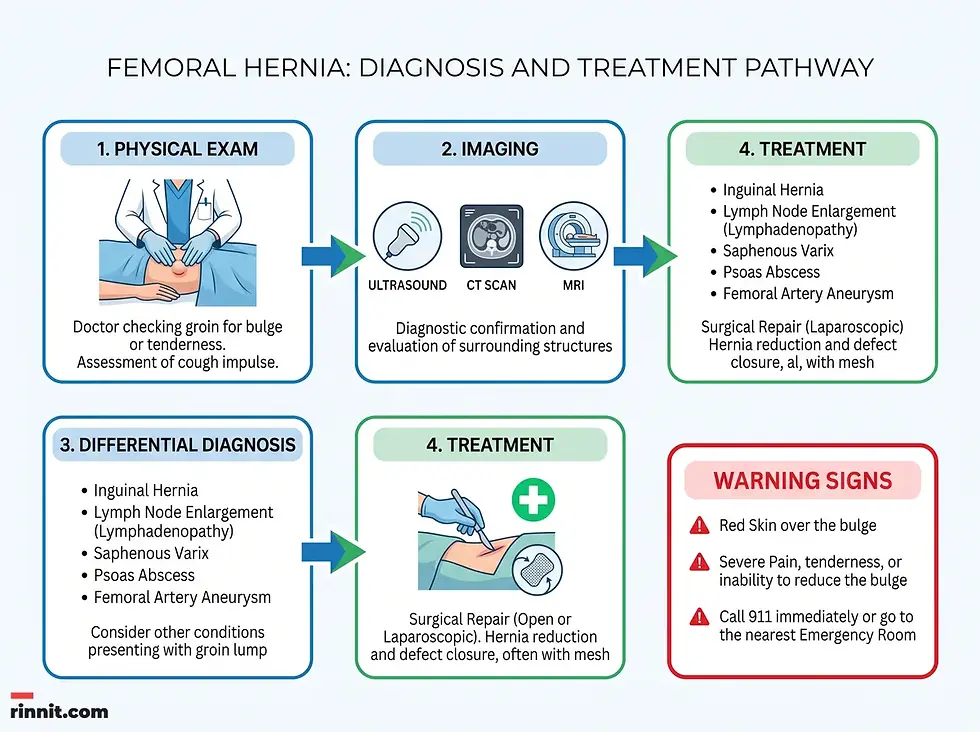
To diagnose a femoral hernia, a healthcare provider will perform a physical examination. They will assess the bulge and ask whether it changes in size or sensitivity when you strain or lift objects. Because femoral hernias can be difficult to tell apart from other conditions, imaging tests are often needed.
Diagnostic tools
Ultrasound: often the first imaging step to see the hernia.
CT scan: gives detailed cross-sectional images of the abdominal wall.
MRI: used in complex cases or to rule out other soft tissue problems.
Differential diagnosis
Several other conditions can mimic the appearance of a femoral hernia, so a careful evaluation is needed to rule them out:
Condition | Key characteristic |
Inguinal hernia | Occurs higher in the groin than a femoral hernia |
Femoral artery aneurysm | A bulging, pulsating weak spot in the femoral artery |
Hydrocele | A fluid-filled sac in the scrotum (males) |
Swollen lymph nodes | Often caused by infection or inflammation in the leg or groin |
Varicocele | Swollen veins within the scrotum |
Psoas abscess | A collection of pus in the psoas muscle |
Nuck cyst | A rare, painful swelling in the groin (females) |
Treatment: Surgical Repair
Surgery is the only definitive cure for a femoral hernia. Unlike some other types of hernias that may be monitored if they are small and cause no symptoms, femoral hernias are almost always repaired surgically because of the high risk of strangulation.
Surgical approaches
Open hernia repair: the surgeon makes an incision near the hernia, pushes the protruding tissue back into place, and reinforces the weak area with stitches or a synthetic mesh.
Laparoscopic surgery: a minimally invasive approach that uses small incisions and a camera (laparoscope) to repair the hernia from the inside, typically with mesh.
The choice of procedure depends on the size of the hernia, whether it is incarcerated, and the patient's overall health.
Outlook and Prevention
The outlook for people who have surgical repair is generally excellent. Surgery cures the hernia, although you can develop another one, so there is a small risk of recurrence. Following the surgeon's after-surgery instructions is important for a successful recovery.
Prevention strategies
Not all femoral hernias can be prevented, but you can lower your risk by protecting and strengthening your lower abdominal muscles and managing abdominal pressure:
Maintain a healthy weight. Reducing excess weight lowers the pressure on your abdominal wall.
Use proper lifting techniques. Lift heavy objects with your legs instead of tightening your stomach muscles.
Manage chronic coughs. Get treatment for persistent coughing or sneezing.
Prevent constipation. Eat a high-fiber diet and stay hydrated to avoid straining during bowel movements.
Strengthen your core. Stronger abdominal muscles give your internal organs better support.
Conclusion
A femoral hernia is a serious condition that needs prompt medical attention. It may not always cause symptoms, but the potential for life-threatening complications such as strangulation makes surgical repair the standard of care. By recognizing the signs early and managing risk factors, you can help ensure a good outcome and lower the chance of recurrence.
Next step: If you notice a new bulge in your groin or upper thigh, or have unexplained groin pain, schedule an appointment with your healthcare provider for an evaluation. If you have sudden, severe pain with nausea, seek emergency medical help immediately.
Frequently Asked Questions
What is the main difference between a femoral and an inguinal hernia?
Both occur in the groin area, but a femoral hernia is located lower, in the upper thigh just below the groin crease, while an inguinal hernia occurs higher up in the groin. Femoral hernias are much rarer and carry a significantly higher risk of becoming trapped or strangulated.
Why are femoral hernias more common in women?
Women have a wider pelvis, which naturally results in a wider femoral canal. This increased space makes it easier for abdominal tissue to protrude into the canal under pressure.
Can a femoral hernia go away on its own?
No. A femoral hernia will not heal or disappear without medical treatment. Because it involves a weakness in the muscle wall, surgery is the only way to repair the defect and prevent dangerous complications.
What does a femoral hernia feel like?
Many people feel nothing at all. When symptoms are present, it usually feels like a dull ache or a sudden, sharp pain in the groin or inner thigh. The pain often gets worse when standing, lifting heavy objects, or straining.
Is femoral hernia surgery a major operation?
Most femoral hernia repairs are considered routine procedures. Depending on the approach (open or laparoscopic), many patients can go home the same day. If the hernia is strangulated, the surgery becomes a more complex emergency procedure.
What are the signs of a strangulated femoral hernia?
Signs include sudden and severe pain, a bulge that becomes firm or tender, skin discoloration (red, purple, or dark) over the hernia site, nausea, vomiting, and an inability to have a bowel movement or pass gas.
How long is the recovery after femoral hernia surgery?
Recovery times vary, but most people can return to light activities within a few days. Heavy lifting and strenuous exercise are typically restricted for several weeks to allow the muscle wall and mesh to heal. Always follow your surgeon's instructions.
Can I prevent a femoral hernia from coming back?
While surgery is highly effective, you can lower the risk of another hernia by maintaining a healthy weight, avoiding heavy lifting, treating chronic coughs, and avoiding straining during bowel movements. Ask your surgeon whether routine follow-up exams are right for you.
What happens if I leave a femoral hernia untreated?
Leaving a femoral hernia untreated significantly increases the risk of incarceration and strangulation. These complications can lead to bowel obstruction and tissue death, which are life-threatening emergencies that need immediate surgery.
Are femoral hernias congenital?
In some cases a person is born with a weakened femoral canal, which makes the hernia congenital. Most femoral hernias, however, are acquired later in life because of factors that increase abdominal pressure over time.
Related Reading
Inguinal Hernia: Symptoms, Causes, and When Surgery Is Needed explains the more common groin hernia and when surgery is needed.
Hernia Repair Surgery: Procedures, Recovery, and Outcomes explains open and laparoscopic hernia repair and what recovery involves.
Richter Hernia: Symptoms, Causes, and Emergency Treatment explains a hernia type that can trap the bowel and need emergency surgery.
Surgical Mesh for Hernia Repair: Types, Placement, Risks, and Recovery explains how mesh is used in hernia repair and its risks.
References
Huber AK, Kaiser A, Gerdes S, et al. Management of inguinal and femoral hernias in women: meta analysis of current practices and review of international guidelines. Updates in Surgery. 2026. PMID 42053954. https://doi.org/10.1007/s13304-026-02659-x
Marcolin P, Mazzola Poli de Figueiredo S, Moura Fé de Melo V, et al. Mesh repair versus non-mesh repair for incarcerated and strangulated groin hernia: an updated systematic review and meta-analysis. Hernia. 2023;27(6):1397-1413. PMID 37679548. https://doi.org/10.1007/s10029-023-02874-0
Cleveland Clinic. Femoral hernia. Cleveland Clinic. May 14, 2025. https://my.clevelandclinic.org/health/diseases/femoral-hernia
Medical disclaimer
This article was prepared for general information only and is not a substitute for professional medical advice.



Comments