Hernia Repair Surgery: Procedures, Recovery, and Outcomes

Updated: 2 days ago
Medically reviewed by Dr. Baraa Alnahhal, MD · Last reviewed: September 2026
TL;DR
Hernia repair surgery, or herniorrhaphy, is a common procedure used to treat organs pushing through weakened muscle walls. The surgery involves repositioning the herniated tissue and reinforcing the area with sutures or surgical mesh. While most hernias eventually require surgical intervention, modern techniques like laparoscopic and robotic repair offer minimally invasive options with faster recovery times.
Quick Answer
Hernia repair surgery is the standard medical treatment for hernias, involving the repositioning of displaced tissue and the reinforcement of the weakened muscle wall using stitches or surgical mesh. Performed through open, laparoscopic, or robotic techniques, the procedure typically takes between 30 minutes and five hours. Most patients return home the same day, with full recovery for non-physical jobs occurring within a few days, while physically demanding roles may require several weeks of healing.
Overview of Hernia Repair
A hernia occurs when an internal organ or fatty tissue pushes through a tear or gap in the surrounding muscle or connective tissue wall. Hernia repair surgery, clinically known as herniorrhaphy, is the primary method for addressing this condition. The procedure aims to return the displaced tissue to its original position and strengthen the weakened barrier to prevent future occurrences.
Most hernias do not heal on their own and tend to worsen over time, leading to increased discomfort, pressure, and potential complications. While not every hernia requires immediate surgery, medical intervention is typically recommended when symptoms interfere with daily life or when there is a risk of the hernia affecting other organs.
Surgical Approaches to Hernia Repair
There are three primary methods used to perform hernia surgery, each selected based on the hernia's location, complexity, and the patient's overall health.
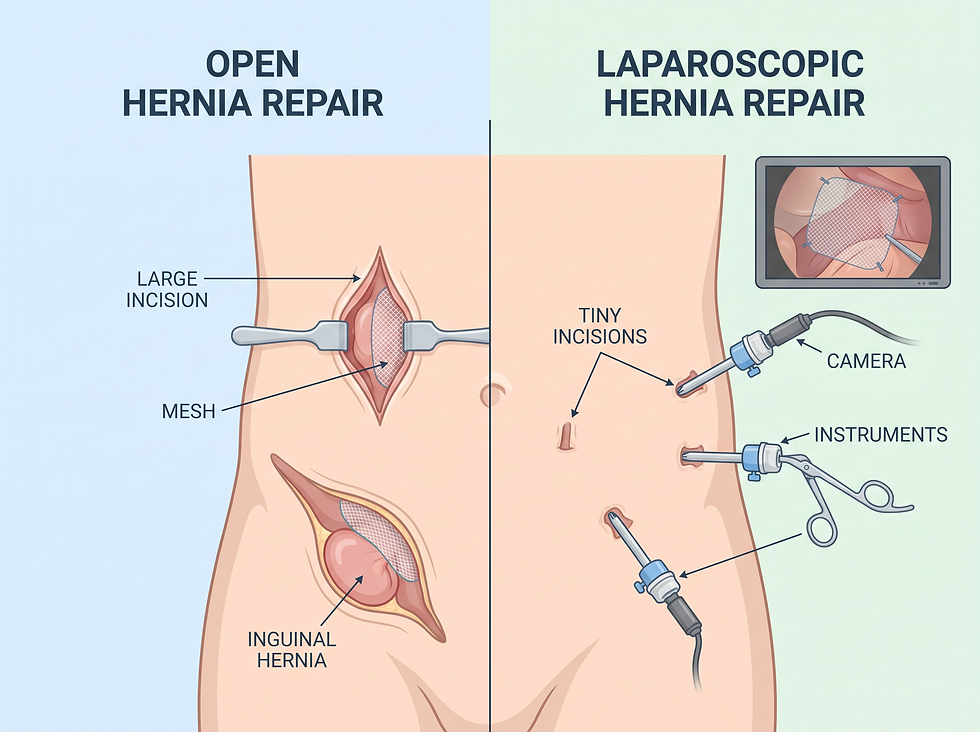
Open repair: A single, traditional incision is made directly over the hernia site. It allows direct manual access and often uses surgical mesh for reinforcement.
Laparoscopic repair: Performed through 3 to 4 tiny incisions using a camera and specialized tools. It is minimally invasive, with less scarring and faster initial recovery.
Robotic repair: A type of laparoscopic surgery where the surgeon controls robotic instruments. It offers high precision and is often used for complex abdominal wall repairs.
The Procedure Journey
Preparation for hernia surgery involves a thorough medical review, blood tests, and imaging to ensure the patient is fit for the operation. Patients are typically advised to fast before the procedure and may need to adjust certain medications, such as blood thinners.
During surgery, the patient receives either general anesthesia (common for laparoscopic and robotic methods) or local anesthesia with sedation (often used for open repairs). The surgeon then makes the necessary incisions, repositions the herniated tissue, and reinforces the muscle wall. Surgical mesh is frequently used to provide additional support, significantly reducing the likelihood of the hernia returning.
Recovery and Long-Term Outlook
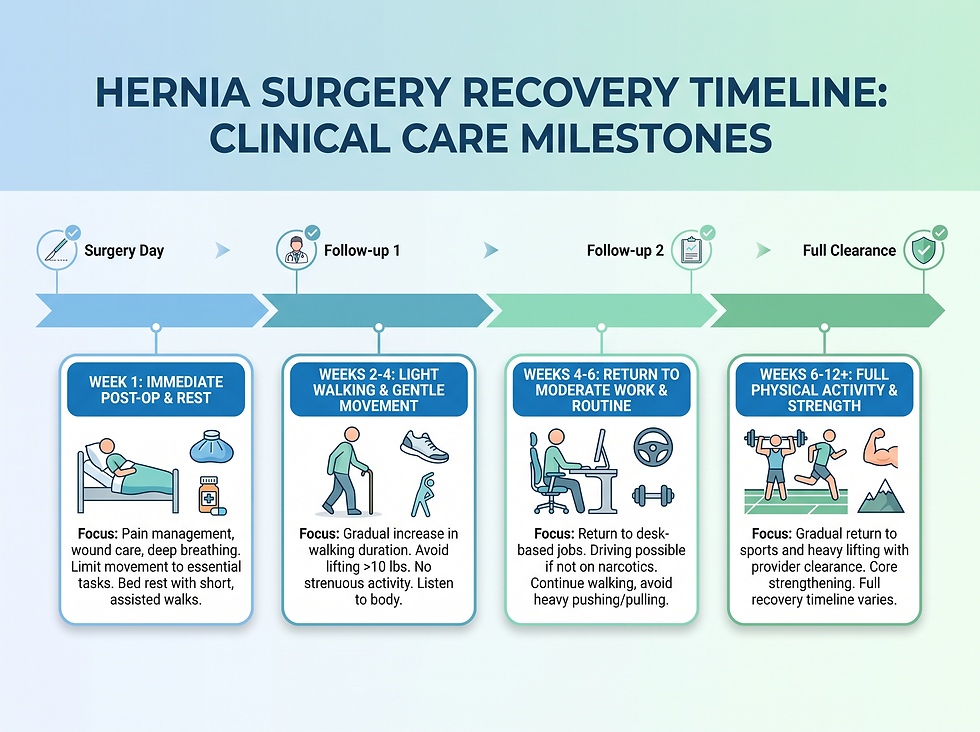
Most hernia repairs are outpatient procedures, allowing patients to go home the same day. The first 24 hours should be dedicated to rest, though light activity like walking is encouraged starting the day after surgery.
Recovery Milestones
Initial rest (first 24 hours): Focus on rest and vital sign monitoring.
Light activity (day 2 onward): Walking and basic household movements.
Return to desk work (3 to 7 days): Resuming non-physically demanding professional tasks.
Full physical activity (2 to 4 weeks): Resuming heavy lifting and strenuous exercise as cleared by a provider.
Benefits and Potential Risks
Hernia surgery is widely considered a safe and effective intervention. Statistics indicate that only about 16% of patients require a second surgery within a decade of their initial repair. Minimally invasive techniques further improve outcomes by reducing post-operative pain and scarring.
As with any major surgery, there are potential risks. Short-term complications may include minor infections at the incision site, fluid collection (seromas), or temporary difficulty emptying the bladder. Long-term considerations include the rare possibility of mesh erosion or chronic pain, which should be monitored by a healthcare professional.

Conclusion
Hernia repair surgery is a vital procedure that restores physical function and prevents the progression of tissue displacement. Whether performed through traditional open surgery or advanced robotic techniques, the goal remains the same: to provide a durable repair that allows patients to return to their normal activities with minimal discomfort and a low risk of recurrence.
What you can do now: If you have noticed a persistent bulge, discomfort, or pain in your abdomen or groin, seek a medical evaluation. Consult a surgical specialist to discuss your symptoms and determine which hernia repair approach is most appropriate for your health needs and lifestyle.
Frequently Asked Questions (FAQ)
1. What is hernia repair surgery?
It is a procedure to push herniated tissue back into place and reinforce the weakened muscle wall.
2. Do all hernias need surgery?
Most hernias eventually require surgery as they tend to worsen and cause complications over time.
3. What is the difference between laparoscopic and open surgery?
Laparoscopic surgery uses small incisions and a camera, while open surgery uses a single larger incision.
4. How long does the procedure take?
Surgery can take as little as 30 minutes for simple repairs or up to five hours for complex cases.
5. Is surgical mesh always used?
Mesh is frequently used to provide extra support and significantly reduce the risk of the hernia returning.
6. When can I go home after surgery?
Most hernia repairs are outpatient, meaning you can typically go home the same day.
7. How soon can I walk after surgery?
Light walking is usually encouraged starting the day after the procedure to aid recovery.
8. When can I return to work?
Patients with desk jobs often return within a few days, while physical labor may require several weeks.
9. What are the signs of a complication?
Contact a provider if you experience fever, chills, inability to pass gas, or excessive redness at the incision site.
10. Can a hernia come back after surgery?
While rare, recurrence is possible; approximately 16% of patients may need a second surgery within 10 years.
11. Is robotic surgery better than laparoscopic?
Robotic surgery offers high precision for complex cases, though it may take longer to perform.
12. Will I be in pain after the procedure?
Discomfort is common for a few days to weeks, and providers will offer a plan for pain management.
13. What is a seroma?
A seroma is a temporary collection of fluid that can sometimes occur at the surgical site during healing.
14. Does hernia surgery affect sexual function?
While rare, groin repairs can occasionally cause temporary pain during sex or affect nearby nerves.
15. What should I avoid during recovery?
You should avoid heavy lifting and strenuous activity until cleared by your healthcare provider.
Medical disclaimer: The information provided is for educational purposes only and should not be used as a substitute for professional medical advice, diagnosis, or treatment. Always seek the advice of your physician or other qualified health provider with any questions you may have regarding a medical condition. Based on information dated September 21, 2023.
Comments