Esophagitis: Symptoms, Causes, and Treatment

Updated: 3 days ago
Medically reviewed by Dr. Baraa Alnahhal, MD. Last reviewed October 17, 2026. This content is for educational purposes and is not medical advice.
Quick Answer
Esophagitis is inflammation of the lining of the esophagus, the tube that carries food to the stomach. It causes painful swallowing, food sticking, heartburn and reflux, and prolonged chest pain or bloody vomit are emergency signs. Causes include acid reflux, food allergies, certain pills and infections. Treatment matches the cause, such as acid blockers for reflux.
What the research says
Based on abstracts retrieved from PubMed:
For eosinophilic esophagitis, dupilumab ranked highest for easing swallowing difficulty in the short term. A network meta-analysis of 13 randomized trials in people aged 12 and older found that dupilumab 300 mg and cendakimab 360 mg improved dysphagia at 12 and 24 weeks, with dupilumab ranked highest (SUCRA 92% at 12 weeks and 97% at 24 weeks). At 48 weeks, budesonide orodispersible tablets ranked highest (SUCRA 96%). The authors note that most steroid trials were short and lacked head-to-head comparisons with biologics (Al Hayek et al., Clin Gastroenterol Hepatol, 2026).
For erosive reflux esophagitis, newer acid blockers (P-CABs) and strong PPIs healed the lining best. A network meta-analysis of 39 randomized trials found that vonoprazan 20 mg, zastaprazan 20 mg, and esomeprazole 40 mg were the most effective once-daily options for 8-week healing, with the greatest benefit in severe (LA grade C/D) disease. Safety was generally comparable between P-CABs and PPIs (Al Hayek et al., EClinicalMedicine, 2026).
P-CABs did not consistently beat optimized PPIs. A larger network meta-analysis of 99 randomized trials found that P-CABs did not consistently outperform dual-delayed release or double-dose PPIs for healing and maintenance of erosive esophagitis, and adverse events were comparable across therapies (Simadibrata et al., Esophagus, 2026).
Key Facts at a Glance
Fact | Detail |
Definition | Inflammation of the esophageal lining [1] |
Pronunciation | uh-sof-uh-JIE-tis |
Most common cause | Stomach acid backing up (reflux) [1] |
Main symptom | Painful or difficult swallowing; heartburn [1] |
Common in | People with GERD, allergies, or weak immune systems [1] |
Key test | Upper endoscopy with biopsy [2] |
Emergency sign | Chest pain lasting more than a few minutes, food stuck, bloody vomit [1] |
What Is Esophagitis?
The esophagus is the muscular tube that carries food and drink from the mouth down to the stomach. Esophagitis is swelling and irritation, called inflammation, of the tissues lining that tube.
The condition can cause painful, difficult swallowing. It can also lead to chest pain. Because various things can trigger it, treatment depends on the exact cause and on how badly the lining is damaged.
Without treatment, esophagitis can damage the esophageal lining. The tube may start having trouble moving food and liquid from the mouth to the stomach. Over time, the condition can also lead to other serious problems, including scarring, narrowing, unhealthy weight loss, and dehydration.
Symptoms
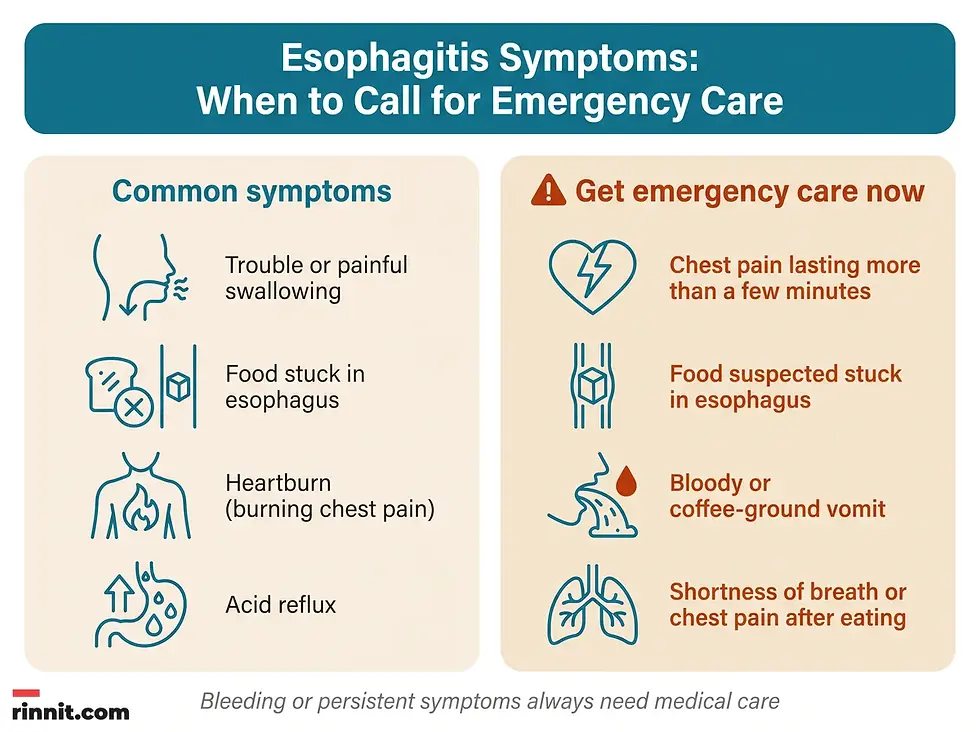
Common symptoms of esophagitis include:
Trouble swallowing
Painful swallowing
Food becoming stuck in the esophagus, also known as food impaction
A burning chest pain called heartburn, often felt behind the breastbone while eating
Stomach acid backing up into the esophagus, also called acid reflux
Babies and some children with esophagitis are too young to explain their discomfort. Their symptoms can look different:
Feeding troubles, such as getting easily upset, arching the back, and refusing to eat
Failure to thrive (not growing or gaining weight as expected)
Chest or belly pain in older children
When to See a Doctor
Most esophagitis symptoms can be caused by several different digestive conditions. See a healthcare professional if your symptoms:
Last more than a few days
Don't improve after using over-the-counter antacids
Make it hard to eat or cause weight loss
Come along with flu-like symptoms such as headache, fever, and muscle aches
Get emergency care immediately if you:
Have chest pain lasting more than a few minutes
Think food is stuck in your esophagus
Have a history of heart disease and feel chest pain
Feel pain in your mouth or throat when eating
Have shortness of breath or chest pain soon after eating
Vomit large amounts, vomit forcefully, or have trouble breathing after vomiting
Notice vomit that is yellow or green, looks like coffee grounds, or contains blood
Causes: Four Main Types
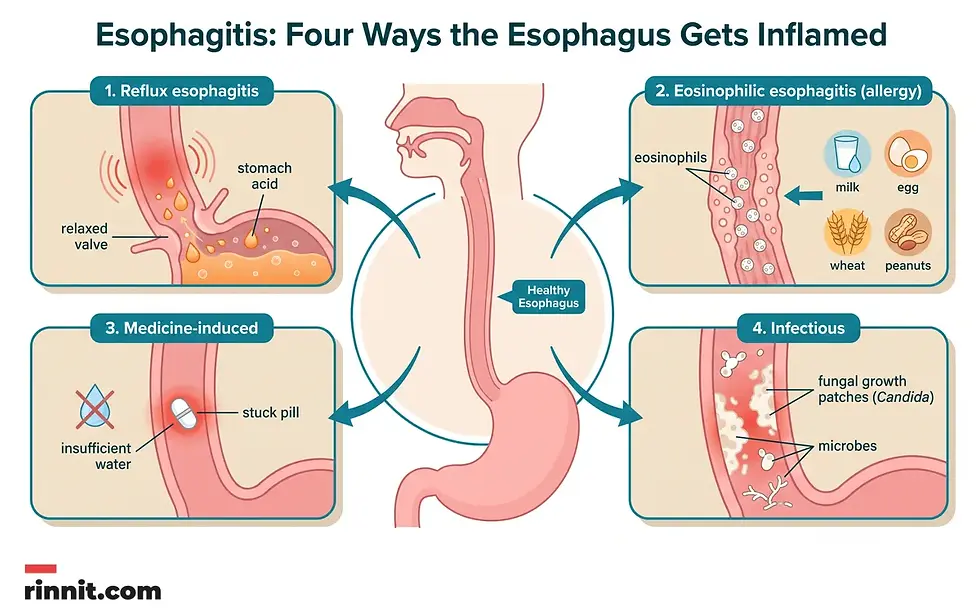
Healthcare professionals usually label esophagitis by the condition that causes it, and sometimes a person has more than one cause.
Type | What Causes It |
Reflux esophagitis | Stomach acid backs up because the valve to the stomach doesn't close properly |
Eosinophilic esophagitis | Allergy-related white blood cells build up in the esophagus |
Lymphocytic esophagitis | A rarer type with excess lymphocytes in the lining |
Medicine-induced esophagitis | Pills stay against the lining too long and damage tissue |
Infectious esophagitis | Bacteria, viruses, or fungi infect esophageal tissue |
Reflux Esophagitis
A valve called the lower esophageal sphincter normally keeps stomach acid out of the esophagus. Sometimes this valve doesn't close properly, or it opens when it shouldn't.
In some people, the upper part of the stomach bulges through the large muscle separating the stomach and chest. This is a hiatal hernia, and it can also let stomach acid back up.
Gastroesophageal reflux disease (GERD) is the condition in which this acid backflow is frequent or ongoing. GERD can lead to continuous swelling and tissue damage in the esophagus.
Eosinophilic Esophagitis
Eosinophils (pronounced e-o-SIN-o-fils) are white blood cells that play a key role in allergic reactions. Eosinophilic esophagitis happens when large numbers of these cells build up in the esophagus, most likely in response to a food allergen, acid reflux, or both.
Certain foods commonly trigger this type, including milk, eggs, wheat, soy, peanuts, and seafood. Standard allergy testing often cannot spot these foods as triggers.
Airborne allergens such as pollen can also be the cause, and people with this condition often have other non-food allergies. Two common symptoms are food getting stuck after swallowing (food impaction) and trouble swallowing (dysphagia). On endoscopy, the esophagus often shows irritated rings of irregular tissue from ongoing inflammation.
Lymphocytic Esophagitis
Lymphocytic esophagitis is an uncommon type in which higher-than-normal numbers of white blood cells called lymphocytes build up in the esophageal lining. It may be related to eosinophilic esophagitis or to GERD.
Medicine-Induced Esophagitis
Also called drug-induced esophagitis, this type happens when oral medicines damage esophageal tissue because they stay in contact with the lining for too long. A common scenario is swallowing a pill with little or no water, so the pill or its residue sits against the esophagus.
Medicines linked to esophagitis include:
Pain relievers such as aspirin, ibuprofen, and naproxen sodium
Antibiotics such as tetracycline and doxycycline
Potassium chloride (used to treat low potassium levels)
Bisphosphonates for bone conditions like osteoporosis, including alendronate
Quinidine, a treatment for heart conditions
Infectious Esophagitis
An infection of the esophageal tissue, from bacteria, viruses, or fungi, can cause esophagitis. This type is fairly rare and most often affects people with weakened immune systems, such as those living with HIV/AIDS or cancer.
A fungus normally present in the mouth, Candida albicans, is a common cause. This fungal infection is often linked to a weakened immune system, diabetes, cancer, or the use of steroid or antibiotic medicines.
Risk Factors
Risk factors vary by the type of esophagitis.
Type | Risk Factors |
Reflux | Eating right before bed; large, fatty meals; smoking; extra weight (including pregnancy) |
Eosinophilic | History of asthma, eczema, or hay fever; family history of the condition |
Medicine-induced | Taking pills with little water; taking pills lying down or right before sleep; older age; large or oddly shaped pills |
Infectious | Steroid or antibiotic use; diabetes; weakened immunity from HIV/AIDS, cancer, or immunosuppressant medicines |
For reflux esophagitis specifically, certain foods can worsen symptoms: caffeine, alcohol, fatty foods, chocolate, and peppermint.
Complications of Untreated Esophagitis
Without treatment, esophagitis can change the structure of the esophagus. Possible complications include:
Stricture: scarring or narrowing of the esophagus
Tearing of the lining: which can come from retching or from medical tools passing through an inflamed esophagus during endoscopy
Barrett esophagus: a condition where acid reflux damages the cells lining the esophagus, raising the risk of esophageal cancer
How Esophagitis Is Diagnosed
Diagnosis starts with a symptom review and physical exam, followed by one or more tests.
Endoscopy is the main test. A long, thin tube with a tiny camera, called an endoscope, is guided down the throat into the esophagus, letting the professional see whether the lining looks different than usual. The appearance often points to the cause, such as reflux or medicine-induced damage. Small tissue samples (a biopsy) may be taken for testing. Relaxing medicine is given beforehand.
The esophageal capsule test can be done in the office without a full endoscopy. A capsule attached to a string is swallowed; it dissolves in the stomach and releases a small sponge. The sponge is then pulled back up through the mouth, sampling esophageal tissue as it goes. This helps gauge how inflamed the esophagus is.
Barium X-ray involves drinking a solution or taking a pill containing barium, which coats the lining of the esophagus and stomach so they show up clearly on images. This test can find narrowing, other structural changes, a hiatal hernia, tumors, or other conditions behind the symptoms.
Laboratory tests on tissue samples can diagnose bacterial, viral, or fungal infections, detect allergy-related eosinophil buildup, and spot irregular cells that may signal cancer or pre-cancerous changes.

Treatment
Treatment aims to relieve symptoms, manage complications, and address the underlying cause, and the approach varies by type.
Reflux Esophagitis
Over-the-counter medicines. These include antacids (such as Maalox or Mylanta), H-2-receptor blockers that lower stomach acid (such as cimetidine), and proton pump inhibitors (PPIs) that block acid and help the esophagus heal (such as lansoprazole and omeprazole).
Prescription medicines. Stronger H-2-receptor blockers and PPIs are available by prescription.
Surgery. If other treatments fail, a procedure called fundoplication may help. The surgeon wraps part of the stomach around the lower esophageal sphincter, strengthening the valve so acid cannot back up.
Eosinophilic Esophagitis
Treatment involves avoiding the trigger allergen and calming the allergic response:
Proton pump inhibitors are usually prescribed first. Options include esomeprazole, lansoprazole, omeprazole, or pantoprazole.
Swallowed steroids act on the esophageal surface tissue. Budesonide comes as a liquid; fluticasone is sprayed into the mouth and then swallowed. Because the medicine coats the esophagus rather than circulating through the body, swallowed steroids are far less likely than steroid pills to cause serious side effects.
Elimination diets. Since standard allergy tests often can't pinpoint the trigger food, a professional may recommend removing common food allergens, then slowly adding foods back one by one to see when symptoms return.
Elemental diets. In a more restrictive approach, all food is temporarily replaced with an amino acid-based formula, with regular foods reintroduced gradually. Both diet approaches must be guided by a healthcare professional.
Monoclonal antibodies. Dupilumab blocks the proteins that drive inflammation. It is approved for people age 1 and older who weigh at least 33 pounds (15 kilograms) with eosinophilic esophagitis, given as an injection under the skin every one to two weeks depending on weight.
Medicine-Induced Esophagitis
Treatment means avoiding the problem medicine when possible and adopting safer pill habits:
Switching to a different medicine less likely to cause the problem
Taking a liquid version of the medicine if available
Sitting or standing for at least 30 minutes after taking a pill
Drinking a full glass of water with each pill (though fluid restrictions, such as with kidney disease, may apply)
Infectious Esophagitis
Prescription medicines can clear infections caused by viruses, bacteria, or fungi.
Treating Complications
When the esophagus becomes very narrow or food keeps getting stuck, a gastroenterologist can perform esophageal dilation, using medical tools to widen the tube. The devices used may have a tapered tip that gradually widens, or an inflatable balloon that expands once placed in the esophagus.
Lifestyle and Home Remedies
Depending on the type of esophagitis, these steps can ease symptoms and prevent recurrence:
Avoid reflux-triggering foods and drinks, including alcohol, caffeine, chocolate, and mint-flavored products.
Take pills properly. Swallow pills with plenty of water, before a meal, and stay upright for at least 30 minutes afterward.
Lose extra weight with a diet and exercise plan your healthcare professional recommends.
Quit smoking if you smoke.
Avoid stooping or bending, especially soon after eating.
Don't lie down after eating. Wait at least three hours after a meal before lying down or going to bed.
Raise the head of your bed by 6 to 8 inches (15 to 20 centimeters) using wooden blocks under the bedposts. If that isn't possible, place a wedge between the mattress and box spring. Using extra pillows alone does not work.
No complementary or alternative medicine has been proved to treat esophagitis. Some people find that ginger, chamomile, or slippery elm ease heartburn or reflux symptoms, but these should never replace professional treatment.
Preparing for Your Appointment
Get emergency care if you have severe chest pain lasting more than a few minutes, food lodged in your esophagus, or inability to swallow. Otherwise, you'll likely start with your main healthcare professional, who may refer you to a gastroenterologist (digestive specialist) or an allergist.
Before the visit, prepare a list covering your symptoms (including anything that seems unrelated), key personal information such as major stresses or recent life changes, all medicines including vitamins and supplements, family history of allergies and digestive conditions, and your questions, ranked from most to least important.
You can expect your doctor to ask how bad your pain is, whether you have trouble swallowing, how often symptoms occur, what triggers or eases them, whether they follow taking any medicines, whether food has ever gotten stuck or come back up, and whether you have allergies or a family history of digestive problems.
In the meantime, avoid foods you know trigger symptoms, commonly spicy foods, caffeine, and alcohol. Over-the-counter antacids may ease symptoms briefly. If you suspect a prescription medicine is the cause, don't stop it on your own; talk with your healthcare professional first.
Conclusion
Esophagitis is inflammation of the tube that carries food to your stomach, and its story is always about the cause. Acid reflux, food allergies, certain pills, and infections each produce the same painful symptoms, yet each is treated in a completely different way. That is why a proper diagnosis, usually starting with an endoscopy, is the most important step.
The practical side is encouraging too. Many people find lasting relief through straightforward changes: taking pills upright with a full glass of water, avoiding trigger foods, waiting three hours after meals before lying down, and raising the head of the bed. And because untreated esophagitis can scar the esophagus or raise cancer risk over time, seeing a healthcare professional early, especially if chest pain, stuck food, or bloody vomit ever appear, is the safest path.
Take Action: What to Do Next
If you have painful or difficult swallowing, schedule an appointment with a healthcare professional, or seek emergency care for prolonged chest pain or bloody vomit.
Start the esophagus-friendly habits today: upright pill-taking, trigger-food awareness, and a raised bed head.
Frequently Asked Questions
What is esophagitis and what causes it?
Esophagitis is inflammation of the tissues lining the esophagus, the tube from the mouth to the stomach. It is most often caused by stomach acid backing up (reflux), an allergic reaction with eosinophil white blood cell buildup, oral medicines lingering against the lining, or infections from bacteria, viruses, or fungi.
What are the main symptoms of esophagitis?
The most common symptoms are trouble swallowing, painful swallowing, food stuck in the esophagus, burning chest pain (heartburn), and acid reflux. Babies may show feeding difficulties, back arching, or poor growth instead.
Is esophagitis dangerous?
Untreated esophagitis can scar and narrow the esophagus, cause tears in the lining, and, in long-standing acid reflux, lead to Barrett esophagus, which raises esophageal cancer risk. Emergency care is needed for chest pain lasting more than a few minutes, food stuck in the esophagus, or bloody or coffee-ground vomit.
How is esophagitis diagnosed?
The main test is an upper endoscopy, where a camera-tipped tube examines the lining and tissue samples (biopsy) may be taken. An esophageal capsule test (a swallowed sponge on a string) and a barium X-ray can also be used, and lab tests on tissue identify infections, allergies, or pre-cancerous cells.
How is esophagitis treated?
Treatment targets the cause: acid blockers (PPIs, H-2 blockers, antacids) and sometimes fundoplication surgery for reflux; allergen avoidance, swallowed steroids, elimination diets, or dupilumab for eosinophilic esophagitis; changing medicines and pill habits for drug-induced cases; and antiviral, antibacterial, or antifungal medicines for infections. Esophageal dilation can widen a narrowed esophagus.
Which medicines can cause esophagitis?
Some pills can irritate the esophagus if they stay against its lining, including aspirin, ibuprofen and naproxen, antibiotics such as doxycycline and tetracycline, potassium chloride and bisphosphonates like alendronate. Do not stop a prescribed medicine on your own; talk with your provider first.
How should I take pills to protect my esophagus?
Swallow each pill with a full glass of water and stay sitting or standing for at least 30 minutes afterward. Avoid taking pills right before lying down, unless your provider has limited your fluids.
What is eosinophilic esophagitis?
It is an allergy-related type of esophagitis in which white blood cells called eosinophils build up in the esophagus, often in response to certain foods. It is treated with diet changes, swallowed steroids or other medicines.
What foods should I avoid with reflux esophagitis?
Common triggers include caffeine, alcohol, fatty foods, chocolate, peppermint and spicy foods. Keeping a food diary can help you find your own triggers.
Does raising the head of the bed help esophagitis?
Yes, for reflux. Raising the head of the bed 6 to 8 inches with blocks or a wedge can keep acid down at night, but extra pillows alone do not work. Also wait about three hours after eating before lying down.
Trusted External Resources
National Institute of Diabetes and Digestive and Kidney Diseases (NIDDK): Acid Reflux (GER & GERD) in Adults
American Partnership for Eosinophilic Disorders (APFED): Eosinophilic Esophagitis
MedlinePlus: EGD - esophagogastroduodenoscopy
Related Reading
Esophagoscopy: Why It's Done, Types, What to Expect, Results and Risks explains the scope procedure used to look inside the esophagus, take samples and remove stuck objects.
Upper GI Series: What It Is, Why It's Done, How to Prepare and What to Expect explains the barium X-ray test that can show this condition in the esophagus, stomach and duodenum.
References
Mayo Clinic Staff. Esophagitis - Symptoms and causes. Mayo Clinic. October 29, 2024. https://www.mayoclinic.org/diseases-conditions/esophagitis/symptoms-causes/syc-20361224
Mayo Clinic Staff. Esophagitis - Diagnosis and treatment. Mayo Clinic. October 29, 2024. https://www.mayoclinic.org/diseases-conditions/esophagitis/diagnosis-treatment/drc-20361264
National Institute of Diabetes and Digestive and Kidney Diseases. Acid Reflux (GER & GERD) in Adults. National Institute of Diabetes and Digestive and Kidney Diseases. Last reviewed July 2020. https://www.niddk.nih.gov/health-information/digestive-diseases/acid-reflux-ger-gerd-adults
American Partnership for Eosinophilic Disorders. Eosinophilic Esophagitis (EoE). American Partnership for Eosinophilic Disorders. Accessed October 15, 2026. https://apfed.org/about-ead/egids/eoe/
Eisner T. EGD - esophagogastroduodenoscopy. MedlinePlus Medical Encyclopedia. Reviewed July 22, 2025. https://medlineplus.gov/ency/article/003888.htm
Al Hayek M, Lucendo AJ, Savarino EV, et al. Efficacy of Biological and Steroid Therapies in Adolescent and Adult Patients With Eosinophilic Esophagitis: A Systematic Review and Network Meta-Analysis With Meta-Regression. Clin Gastroenterol Hepatol. 2026;24(9):2374-2386. PMID 41985777. https://doi.org/10.1016/j.cgh.2026.04.003
Al Hayek M, Lucendo AJ, Barberio B, et al. Comparative efficacy and safety of potassium-competitive acid blockers and proton pump inhibitors for erosive esophagitis: a network meta-analysis of randomized controlled trials. EClinicalMedicine. 2026;93:103807. PMID 41768276. https://doi.org/10.1016/j.eclinm.2026.103807
Simadibrata DM, Koo TH, Jiménez-Castillo RA, Fass R. Potassium-competitive acid blockers and proton-pump inhibitors for the healing and maintenance of erosive esophagitis: a comprehensive and updated systematic review with network meta-analysis. Esophagus. 2026. PMID 42295653. https://doi.org/10.1007/s10388-026-01222-2
Medical disclaimer
The information provided in this article is for educational purposes only and should not be used as a substitute for professional medical advice, diagnosis, or treatment. Always seek the advice of your physician or other qualified health provider with any questions you may have regarding a medical condition.



Comments