Eosinophilia: Symptoms, Causes, Related Disorders, Diagnosis, Treatment and When to See Your Provider — What You Need to Know

Updated: 2 days ago
Medically reviewed by Dr. Baraa Alnahhal, MD · Last reviewed: September 2026
Quick Answer: What is eosinophilia and how is it treated?
Eosinophilia means your blood contains an unusually high number of eosinophils — defined as 500 or more eosinophils per microliter of blood. Eosinophils are white blood cells that support your immune system, and high counts most often point to everyday causes such as allergies, asthma or reactions to medications. Healthcare providers typically discover eosinophilia on a routine complete blood count (CBC) with a differential white blood cell count, and treatment focuses on the underlying cause rather than the eosinophil count itself.
TL;DR
Eosinophilia is a laboratory finding, not a diagnosis: your blood contains 500 or more eosinophils per microliter. Depending on the count, it can be mild, moderate or severe. The most common causes are very common and often not serious — seasonal allergies, asthma and reactions to medications — while infections (especially parasitic), immune-regulation problems and some blood cancers are less common causes. When eosinophils crowd into specific tissues they can produce named eosinophilic disorders affecting the bladder, fascia, lungs, digestive tract and other organs. Treatment is directed at the underlying condition, and a high count discovered on a routine blood test is typically not a cause for alarm.
Key fact | Detail |
Definition | 500 or more eosinophils per microliter of blood |
Severity levels | Mild, moderate or severe, depending on the count |
Most common causes | Seasonal allergies, asthma, reactions to medications |
Other causes | Parasitic infections, autoimmune and immune-regulation problems, blood cancers, hereditary genetic changes |
Tissue-crowding result | Eosinophilic disorders and hypereosinophilic syndrome (HES) |
How it is usually found | Routine complete blood count (CBC) with differential white blood cell count |
Treatment approach | Treat the underlying condition causing the high count |
Limitation statement: The reference source does not publish prevalence figures for eosinophilia, and this article does not invent any.
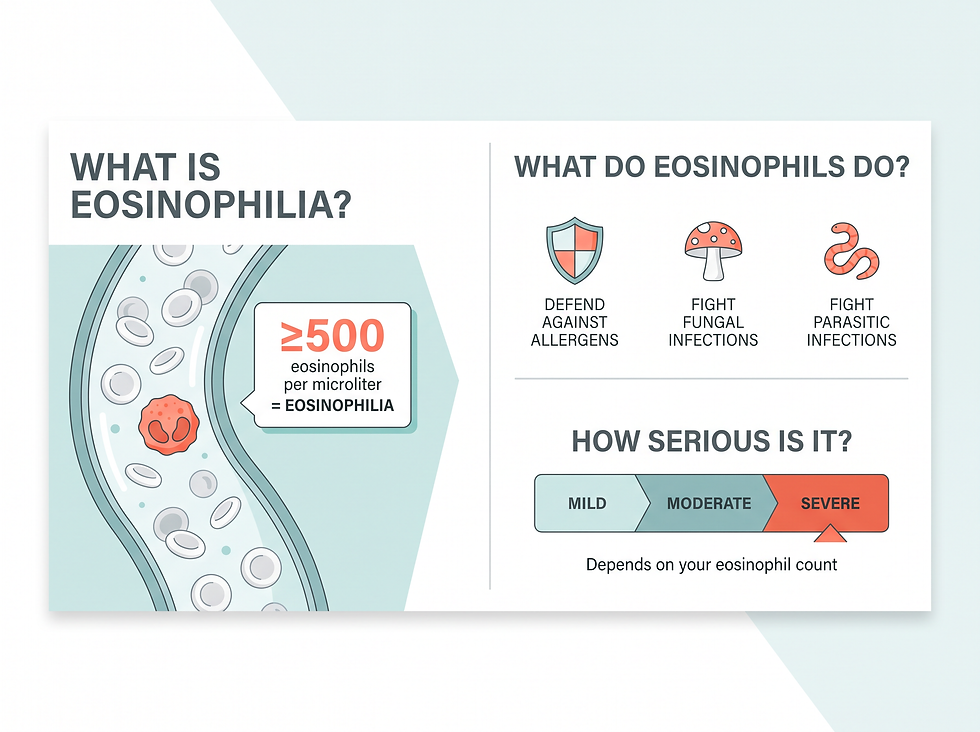
What Is Eosinophilia?
What exactly are eosinophils?
Eosinophils are one of several white blood cells that support your immune system. They are part of your body's defense system against allergens, and they help protect your body from fungal and parasitic infections.
How do you know if your eosinophil count is high?
Eosinophilia happens when your body produces an unusually high number of eosinophils — a count of 500 or more eosinophils per microliter of blood. Sometimes, certain medical conditions and medications cause these high eosinophil levels.
Is eosinophilia serious?
The seriousness depends on the count. Eosinophilia can be mild, moderate or severe. High eosinophil levels can indicate a mild condition such as a drug reaction or allergy, or a severe condition could cause it, including some blood disorders. Sometimes, high numbers of eosinophils crowd together at specific areas of your body, causing medical conditions linked to inflammation that can affect multiple areas of your body.
Symptoms and Causes
What does eosinophilia feel like?
Eosinophilia doesn't always cause symptoms. High eosinophil levels usually come from underlying conditions that cause many different symptoms. In other words, what you feel — if anything — reflects the condition behind the lab result, not the eosinophils themselves.
What causes eosinophilia?
Many conditions cause your eosinophil counts to increase in your blood. Some are very common and often aren't very serious, while others point to more significant illness.
Cause category | Examples from the source | Typical seriousness |
Allergic | Seasonal allergies | Very common, often not very serious |
Respiratory | Asthma | Very common, often not very serious |
Medication | Reactions to medications | Very common, often not very serious |
Infectious | Infections, especially from parasites | Varies with the infection |
Immune regulation | Autoimmune diseases: inflammatory bowel disease, autoimmune myocarditis, vasculitis, sarcoidosis | Chronic conditions needing management |
Blood disorders | Blood cancers that make eosinophils inappropriately | Serious; requires treatment |
Genetic | Hereditary genetic changes passed on by biological parents | Varies |

What happens when eosinophils crowd into tissues?
Sometimes, eosinophils cause inflammation in specific areas of your body. When this happens, it's called an eosinophilic disorder or hypereosinophilic syndrome (HES). Specific eosinophilic disorders are named for the parts of your body that are affected.
Eosinophilic disorder | Body area affected |
Eosinophilic cystitis | Bladder |
Eosinophilic fasciitis | Fascia — the connective tissue that runs throughout your body |
Eosinophilic pneumonia | Lungs |
Eosinophilic gastrointestinal disorders (EGID) | Esophagus (eosinophilic esophagitis), colon (large intestine), stomach and small intestine |
Eosinophilic granulomatosis with polyangiitis (EGPA) | Lungs, heart, sinuses and other organs; also known as Churg-Strauss syndrome |
Hypereosinophilic syndrome (HES) | A rare group of conditions linked to continuously high levels of eosinophilia; typically affects the heart, central nervous system, skin and respiratory tract |
Diagnosis and Tests
How is eosinophilia diagnosed?
Healthcare providers typically discover eosinophilia during a routine blood test called a complete blood count (CBC) with a differential white blood cell count. Depending on your situation, your healthcare provider may do more tests to find out why your eosinophil levels are higher than normal.
Diagnostic step | What it involves |
Routine blood test | Complete blood count (CBC) with differential white blood cell count — the test that usually reveals eosinophilia |
Follow-up testing | Additional tests ordered as needed to identify the underlying cause of the elevated count |
Management and Treatment
How is eosinophilia treated?
Healthcare providers treat the underlying condition or issue that is causing high eosinophil counts — not the eosinophil number itself. The approach depends entirely on what is driving the elevation.
Underlying cause | Treatment approach |
Eosinophilic esophagitis | Steroids or other medications |
Allergies or chronic sinusitis | Allergy testing to find what causes the allergic reaction that triggered eosinophilia |
A medication | Stop or avoid the medication |
An infection | Treat the infection |
A blood cancer | Treat the cancer |
Can eosinophilia be prevented?
Allergies are the most common cause of high eosinophil levels. You can prevent allergy-related eosinophilia with treatment to control your body's allergic reactions. But there are times when eosinophilia may be a sign of an underlying condition that you may not be able to prevent.
Prevention scenario | What is possible |
Allergy-related eosinophilia | Preventable with treatment that controls your body's allergic reactions |
Eosinophilia from other underlying conditions | May not be preventable |
Outlook and Prognosis
What can you expect if you have eosinophilia?
If you have high eosinophil levels, you may need treatment for the underlying condition causing your high levels. There are many causes, ranging from mild and completely safe to more serious. Talk to your healthcare provider to learn more.
When Should You See Your Provider?
The reference source does not include an emergency-care section, so guidance here follows its routine-care framing. Eosinophilia is most often discovered incidentally on routine blood work, and a high count is typically not a cause for alarm. Contact your healthcare provider if a routine blood test shows elevated eosinophils so they can investigate the cause. Also talk with your provider if you have recurring allergic symptoms, asthma that is hard to control, a persistent sinus condition, or new symptoms such as unexplained rash, digestive trouble, breathing problems or chest symptoms, since these may point to an underlying eosinophil-related condition.

Conclusion
Eosinophilia is a lab finding that sounds more alarming than it often is. A high eosinophil count most frequently traces back to everyday causes — allergies, asthma or a medication reaction — and the finding itself usually surfaces on a routine blood test. Treatment is straightforward in principle: find and treat the underlying cause, whether that means allergy testing, adjusting a medication, treating an infection, or managing a more serious immune or blood condition.
"Eosinophilia happens when your body produces too many eosinophils. Eosinophils are one of several white blood cells that support your immune system. Many times, people learn they have eosinophilia when they have routine blood tests. A high eosinophil count typically isn't a cause for alarm. Your healthcare provider may order additional tests to find out why your eosinophil levels are unusually high."
If your blood work shows elevated eosinophils, take these three steps. First, ask your provider which underlying condition is most likely behind the result. Second, if allergies or sinus issues are suspected, complete allergy testing so treatment can target the specific trigger. Third, follow the treatment plan for any identified condition, from simple avoidance of a culprit medication to management of a chronic autoimmune or blood disorder.
This article is for general informational purposes only and should not replace professional medical advice, diagnosis or treatment. Always consult a licensed healthcare provider about your specific situation.
Frequently Asked Questions (FAQ)
What is eosinophilia in simple terms?
Eosinophilia is an unusually high number of eosinophils in your blood — 500 or more eosinophils per microliter. Eosinophils are white blood cells that support your immune system.
What is a normal eosinophil count?
The reference source defines eosinophilia as 500 or more eosinophils per microliter, so counts at or above that level are considered high. The source does not publish the full normal range.
What does it mean when eosinophils are high in a blood test?
A high eosinophil count usually reflects an underlying condition — commonly allergies, asthma, medication reactions, infections, immune-regulation problems or blood disorders — rather than a problem with the eosinophils themselves.
Is eosinophilia serious?
It depends on your eosinophil count, which classifies eosinophilia as mild, moderate or severe. High levels can indicate a mild condition such as a drug reaction or allergy, or a severe condition could cause it, including some blood disorders.
What are the most common causes of high eosinophils?
Seasonal allergies, asthma and reactions to medications are very common causes and are often not very serious.
Can infections raise eosinophil levels?
Yes. Infections, especially from parasites, can lead to eosinophilia.
Can autoimmune diseases cause eosinophilia?
Yes. Problems with immune regulation can cause eosinophilia, including autoimmune diseases like inflammatory bowel disease, autoimmune myocarditis, vasculitis and sarcoidosis.
Can blood cancer cause eosinophilia?
Yes. Blood cancers that make eosinophils inappropriately can cause eosinophilia.
Can eosinophilia be inherited?
Yes. Genetic changes that are hereditary — passed on by your biological parents — can cause eosinophilia.
What is hypereosinophilic syndrome (HES)?
Hypereosinophilic syndrome is a rare group of conditions linked to continuously high levels of eosinophilia. It typically affects the heart, central nervous system, skin and respiratory tract.
What is an eosinophilic disorder?
An eosinophilic disorder develops when high numbers of eosinophils crowd together in a specific area of your body and cause inflammation. Disorders are named for the affected body part.
What is eosinophilic cystitis?
Eosinophilic cystitis is an eosinophilic disorder of the bladder.
What is eosinophilic fasciitis?
Eosinophilic fasciitis is an eosinophilic disorder of the fascia — the connective tissue that runs throughout your body.
What is eosinophilic pneumonia?
Eosinophilic pneumonia is an eosinophilic disorder that affects your lungs.
What are eosinophilic gastrointestinal disorders (EGID)?
EGID includes eosinophilic esophagitis, which affects your esophagus, as well as disorders that affect your colon (large intestine), stomach and small intestine.
What is eosinophilic granulomatosis with polyangiitis (EGPA)?
EGPA, also known as Churg-Strauss syndrome, is an eosinophilic disorder that affects your lungs, heart, sinuses and other organs.
Does eosinophilia cause symptoms on its own?
Eosinophilia doesn't always cause symptoms. High eosinophil levels usually come from underlying conditions that cause many different symptoms.
How is eosinophilia discovered?
Healthcare providers typically discover eosinophilia during a routine blood test called a complete blood count (CBC) with a differential white blood cell count.
What happens after a CBC shows high eosinophils?
Depending on your situation, your healthcare provider may do more tests to find out why your eosinophil levels are higher than normal.
How is eosinophilia treated?
Healthcare providers treat the underlying condition or issue that is causing high eosinophil counts, such as steroids for eosinophilic esophagitis or stopping a medication that is the cause.
What if a medication is causing eosinophilia?
If a medication is causing eosinophilia, your healthcare provider will usually recommend stopping or avoiding it.
What if an infection is causing high eosinophils?
If there's an infection, your healthcare provider will treat it.
What if a blood cancer is causing high eosinophils?
If there's a blood cancer, your healthcare provider will treat it.
Can allergy-related eosinophilia be prevented?
Yes. Allergies are the most common cause of high eosinophil levels, and you can prevent allergy-related eosinophilia with treatment to control your body's allergic reactions.
Can all eosinophilia be prevented?
No. There are times when eosinophilia may be a sign of an underlying condition that you may not be able to prevent.
What is the outlook for eosinophilia?
You may need treatment for the underlying condition causing your high levels. There are many causes, ranging from mild and completely safe to more serious. Talk to your healthcare provider to learn more.
Should I be worried if my routine blood test shows high eosinophils?
A high eosinophil count typically isn't a cause for alarm. Many times, people learn they have eosinophilia when they have routine blood tests, and your healthcare provider may order additional tests to find out why your levels are unusually high.
What role do eosinophils play in the immune system?
Eosinophils are part of your body's defense system against allergens and help protect your body from fungal and parasitic infections.
When is eosinophilia considered mild, moderate or severe?
The classification depends on your eosinophil count, though the reference source does not define the specific numeric thresholds for each level.
What questions should I ask my provider about high eosinophils?
Ask what underlying condition is most likely causing the result, what additional tests are needed, what treatment is recommended, and how to manage or prevent recurrence based on the identified cause.
References
American Partnership for Eosinophilic Disorders — What is an eosinophil-associated disease?
Butt NM, Lambert J, Ali S, et al. Guideline for the investigation and management of eosinophilia. Br J Haematol. 2017;176(4):553-572.
Genetic and Rare Diseases Information Center (GARD) — Hypereosinophilic Syndrome.
Kovalszki A, Weller PF. Eosinophilia. Prim Care. 2016;43(4):607-617.
Fulkerson PC, Rothenberg ME. Targeting Eosinophils in Allergy, Inflammation and Beyond. Nat Rev Drug Discov. 2013;12(2):117-129.
Health information, not medical advice. This article is for general education and is not a substitute for professional diagnosis or treatment. Always consult a qualified healthcare provider about your own health, and seek emergency care for urgent symptoms.
Comments