Hypereosinophilic Syndrome: Symptoms, Causes & Treatment

Updated: 2 days ago
Medically reviewed by Dr. Baraa Alnahhal, MD · Last reviewed: September 2026

What Is Hypereosinophilic Syndrome?
Hypereosinophilic syndrome is organ damage or dysfunction caused by an excess of disease-fighting white blood cells called eosinophils. These cells normally help fight parasites and bacteria and help regulate the immune responses behind allergies.
HES is rare. It can affect any tissues in the body. Common targets include the skin, lungs, digestive tract, heart, and nervous system.
Understanding three related terms helps make sense of how doctors talk about this condition.
Eosinophilia: A higher than typical number of eosinophils circulating in the bloodstream.
Hypereosinophilia: A high number of eosinophils that lasts for an extended period, usually at least one month.
Hypereosinophilic syndrome: Organ damage or destruction caused by long-term high eosinophils.
In short: a high count alone is eosinophilia. A high count that lasts at least a month is hypereosinophilia. When that prolonged elevation actually damages organs, it becomes hypereosinophilic syndrome.
How Eosinophils Cause Damage
Eosinophils are important in fighting parasites and bacteria. They also regulate other immune system cells and proteins that cause allergic reactions.
HES occurs when high levels of these white blood cells last a long time. The cells themselves or their byproducts can move into organs, where they can cause damage or dysfunction.
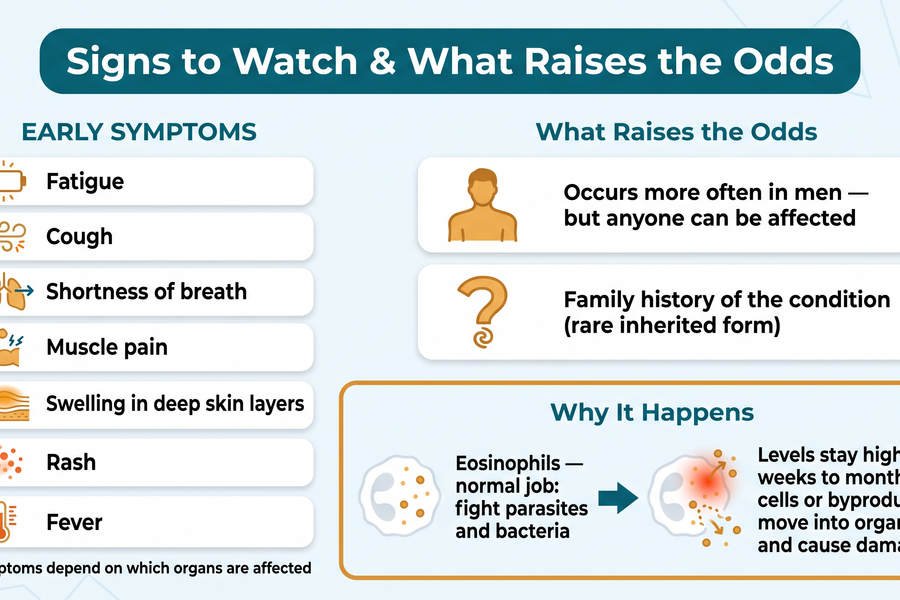
Early Symptoms of Hypereosinophilic Syndrome
Symptoms of HES vary depending on what organs are affected. Early symptoms may include the following.
Fatigue: Ongoing tiredness that rest does not fix.
Cough: A persistent cough.
Shortness of breath: Feeling winded with mild effort.
Muscle pain: Aching in the muscles.
Swelling in deep layers of the skin: Firm, deep swelling rather than surface puffiness.
Rash: New or unexplained skin eruption.
Fever: Elevated body temperature.
Because these signs mimic many common illnesses, HES is easy to overlook at first. The pattern that matters is persistence: symptoms that do not improve deserve medical attention.
Many different conditions can cause the symptoms related to HES. See your healthcare professional as soon as possible if symptoms do not improve.
When to See a Doctor
This is the single most important takeaway of this guide. If fatigue, cough, shortness of breath, muscle pain, deep skin swelling, rash, or fever persist without improving, make an appointment. Do not wait for symptoms to resolve on their own if they have lasted more than a few weeks — prolonged unexplained inflammation can quietly harm the heart, lungs, and nervous system.
Types of Hypereosinophilia
Persistent increases in these white blood cells may be caused by a number of factors. General categories of hypereosinophilia based on cause include the following.
Primary: Cancers of the bone marrow or blood that directly increase eosinophil production; a hematologist typically manages this.
Secondary (reactive): Conditions that typically activate white blood cells — parasitic or bacterial infections, allergies, immune system disorders, long-lasting inflammatory diseases, drug reactions; treating the trigger may resolve the elevation.
Familial: An inherited disorder; rare, and family history matters.
Idiopathic: No cause that can be found — most cases are idiopathic.
Risk Factors
HES can affect anyone, but it occurs more often in men. Beyond sex, the inherited (familial) form is the other recognized risk pathway.
Sex: Occurs more often in men.
Family history: A rare inherited form runs in families.
Underlying triggers (secondary type): Parasitic or bacterial infections, allergies, immune system disorders, chronic inflammatory diseases, drug reactions.
Bone marrow or blood cancer (primary type): Cancers that directly raise eosinophil production.
How Is Hypereosinophilic Syndrome Diagnosed?
A diagnosis of HES is based on persistent high levels of eosinophils and evidence of organ damage. Diagnostic tests are used to determine what has caused the increase of eosinophils and whether any tissues have been affected.
Your healthcare professional will ask about symptoms, family medical history, medicines, and possible exposure to disease.
Tests to Determine the Cause
Blood tests: Autoimmune conditions, infections, or evidence of blood-related cancers.
Allergy tests: Environmental or food allergies.
Stool tests: Parasitic infections such as hookworm.
Genetic test: Rare gene mutations that can cause HES.
Bone marrow samples: Possible cancers or other diseases of the bone marrow.
Tests to Assess Organ Damage
Blood tests: Liver and kidney function.
Imaging tests: Appearance and function of organs.
Echocardiogram: Heart function.
Lung function tests: How well you breathe in and out.
Tissue samples: Presence of eosinophils or evidence of tissue damage in organs.

Treatment Goals and First-Line Medicine
Treatment goals are to reduce eosinophil levels, lessen symptoms, and prevent further damage to organs.
If an underlying cause is found, treatment for that condition also begins.
The first line of treatment is usually a corticosteroid to lower the number of eosinophils circulating in the bloodstream.
Other Medicines Used for HES
Other medicines may be used depending on the cause of increased eosinophils or the response to corticosteroid treatment.
Hydroxyurea (Droxia, Hydrea, others): Used for some cases of elevated eosinophils.
Imatinib (Gleevec): A targeted therapy for certain causes.
Mepolizumab (Nucala): A biologic that lowers eosinophils.
Vincristine PFS: Used in selected cases.
Because HES can increase your risk of blood clots, you also may be prescribed blood-thinning medications such as warfarin (Coumadin). This clot risk is one reason ongoing medical follow-up matters even when symptoms feel controlled.
First-line medicine: Corticosteroid.
Additional medicines: Hydroxyurea, imatinib, mepolizumab, vincristine (depending on cause and response).
Clot protection: Blood thinner such as warfarin, because HES raises blood clot risk.
If a cause is found: Treatment for the underlying condition begins too.
Clinical Trials
People with HES may be candidates for clinical trials testing new treatments, interventions, and tests as a means to prevent, detect, treat, or manage this condition. Your care team can advise whether a trial fits your situation.
Your Care Team
You'll likely begin with an appointment with your primary healthcare professional. Depending on the results of early tests and symptoms, you may need appointments with specialists in multiple fields.
Allergist: Allergies.
Hematologist: Blood disorders.
Consider taking a relative or friend along to your appointments to help remember all the information provided.
Preparing for Your Appointment
Before your appointment, make a list of your signs and symptoms, including any that seem unrelated to the reason for the appointment. List any medications, including vitamins, herbs, and over-the-counter medicines, with the dosages for each and the reasons for taking them. Also note key personal information, including any major stresses or recent changes in your life.
Questions you might ask if HES is considered: Will I need additional tests? What are the treatment options? What are the benefits and risks of each treatment? Should I see additional specialists? What tests or appointments are the highest priority? Are there brochures or recommended websites?
Questions the doctor will likely ask: When did you first begin experiencing symptoms? Are the symptoms continuous or occasional? How severe are the symptoms? What seems to improve or worsen your symptoms? Do you have any allergies or skin conditions? Have you been exposed to parasites such as hookworm? Have you traveled out of the country lately? Have you recently started a new medicine? Does anyone in your family have a history of HES?
Conclusion: Get Unexplained, Persistent Symptoms Checked
Hypereosinophilic syndrome is rare, but its earliest symptoms — fatigue, cough, shortness of breath, muscle pain, deep skin swelling, rash, and fever — are common and easy to dismiss. What makes HES different is persistence: high eosinophil levels lasting a month or more that begin to damage the skin, lungs, digestive tract, heart, or nervous system.
The good news is that treatment exists. Most people start with a corticosteroid, and additional medicines — hydroxyurea, imatinib, mepolizumab, and vincristine — can lower eosinophil counts and protect organs. When a cause is found, treating it often helps too.
If your symptoms are not improving, do not wait them out. Make an appointment with your healthcare professional and bring a complete list of symptoms, medications, and personal circumstances. The earlier organ involvement is detected, the more the care team can protect your heart, lungs, and nerves.
Frequently Asked Questions
What is the difference between eosinophilia and hypereosinophilic syndrome?
Eosinophilia means a higher than typical number of eosinophils in the bloodstream. Hypereosinophilic syndrome means long-term high eosinophils — usually for at least one month — have gone on to damage or dysfunction organs such as the skin, lungs, heart, or digestive tract.
How long do eosinophils have to stay high to matter?
High eosinophil levels that last for an extended period, usually at least one month, are called hypereosinophilia. When that prolonged elevation causes organ damage, it is classified as hypereosinophilic syndrome.
What are the first signs of hypereosinophilic syndrome?
Early symptoms include fatigue, cough, shortness of breath, muscle pain, swelling in deep layers of the skin, rash, and fever. Symptoms vary depending on which organs are affected.
Can hypereosinophilic syndrome go away on its own?
Sometimes — if a reactive cause such as a parasitic infection, allergy, immune disorder, or drug reaction is found, treating the underlying condition may lower eosinophil levels and resolve the problem. When no cause is found (which is most cases), medicine such as a corticosteroid is usually needed.
What is the first treatment for HES?
The first line of treatment is usually a corticosteroid to lower the number of eosinophils circulating in the bloodstream. Other medicines — hydroxyurea, imatinib, mepolizumab, or vincristine — may be added depending on the cause or response.
Why would I be prescribed a blood thinner for HES?
HES can increase your risk of blood clots. Because of that risk, you also may be prescribed blood-thinning medications such as warfarin (Coumadin) alongside eosinophil-lowering treatment.
Which specialists treat hypereosinophilic syndrome?
You typically start with your primary healthcare professional and may be referred to an allergist (allergies) and a hematologist (blood disorders), depending on the cause found and the organs involved.
When should I see a doctor about HES-like symptoms?
See your healthcare professional as soon as possible if symptoms such as fatigue, cough, or rash do not improve. Many different conditions can cause the same symptoms, and only testing — including blood counts and organ-function checks — can sort out the cause.
References
Health information, not medical advice. This article is for general education and is not a substitute for professional diagnosis or treatment. Always consult a qualified healthcare provider about your own health, and seek emergency care for urgent symptoms.
Comments