Entomophobia (Fear of Insects): Symptoms, Causes, Triggers, Diagnosis, Treatment and When to See Your Provider — What You Need to Know

Updated: 2 days ago
Medically reviewed by Dr. Baraa Alnahhal, MD · Last reviewed: September 2026
Quick Answer
What is entomophobia and can it be treated? Entomophobia is a specific phobia — a fear of insects that causes extreme anxiety when you see or think about them. Some people avoid going outside, skip parks and playgrounds, or stop leaving the house entirely. It is usually linked to past traumatic experiences, family history, modeling others' fear, or environmental irritations. The good news: it is treatable. Exposure therapy is the main treatment, often combined with cognitive behavioral therapy, hypnotherapy, medication, yoga or meditation — and most people with specific phobias see their symptoms improve.
TL;DR — Key Facts at a Glance
Entomophobia is one of hundreds of specific phobia disorders, which are a type of anxiety disorder involving an overwhelming fear of an object, event or situation that is out of proportion to the likely real-life harm. The fear can center on being stung or bitten, encountering insects indoors or outdoors, catching a disease from an insect, or even seeing images of insects in TV shows, movies, books or online.
What is it? A specific phobia — a fear of insects.
Other names: acarophobia, insectophobia.
How common? Exact entomophobia numbers are unknown; about 1 in 10 American adults and 1 in 5 teenagers will have a specific phobia at some point.
Most common symptom: extreme anxiety when seeing or thinking about insects.
Main treatment: exposure therapy, often combined with cognitive behavioral therapy (CBT).
Outlook: most people with specific phobias improve with treatment.
It is hard to know exactly how many people have a specific phobia like entomophobia, because many people keep the fear to themselves or do not recognize it.

What Is Entomophobia?
People with entomophobia have a fear of insects. Someone with entomophobia may have extreme anxiety or fear when seeing or thinking about insects. They may avoid walking or exercising outside and may stay away from outdoor events. Some people may stop leaving their house to reduce their chances of seeing insects.
You might also hear this phobia called by other names: acarophobia and insectophobia.
What is a phobia?
Phobias are a type of anxiety disorder. They involve an overwhelming fear of an object, event or situation. The fear is out of proportion to the likely real-life harm from an event or situation. There are hundreds of specific phobia disorders like entomophobia. In entomophobia, a particular object — insects — leads to a fearful reaction.
What does a person with entomophobia fear?
Someone with entomophobia may be afraid of several specific things related to insects:
Being stung or bitten by an insect such as bees, wasps or ticks.
Coming across insects outdoors or indoors.
Getting a disease from an insect, such as flies or mosquitoes.
Having a bug infestation in their house or in their body.
Seeing images of insects in TV shows, movies, books or online.
Symptoms and Causes
Who is at risk for entomophobia?
You're more likely to develop entomophobia or a different type of specific phobia disorder if you already have:
Another phobia
Anxiety disorder
Panic disorder
Substance use disorder
What other phobias are associated with entomophobia?
Other phobias linked to entomophobia include:
Apiphobia (melissaphobia): fear of bees.
Arachnophobia: fear of spiders.
Helminthrophobia, scoleciphobia, vermiphobia: fear of worms.
Katsaridaphobia: fear of roaches.
Myrmecophobia: fear of ants.
Pteronarcophobia: fear of flies.
Spheksophobia: fear of wasps.
What are the causes of entomophobia?
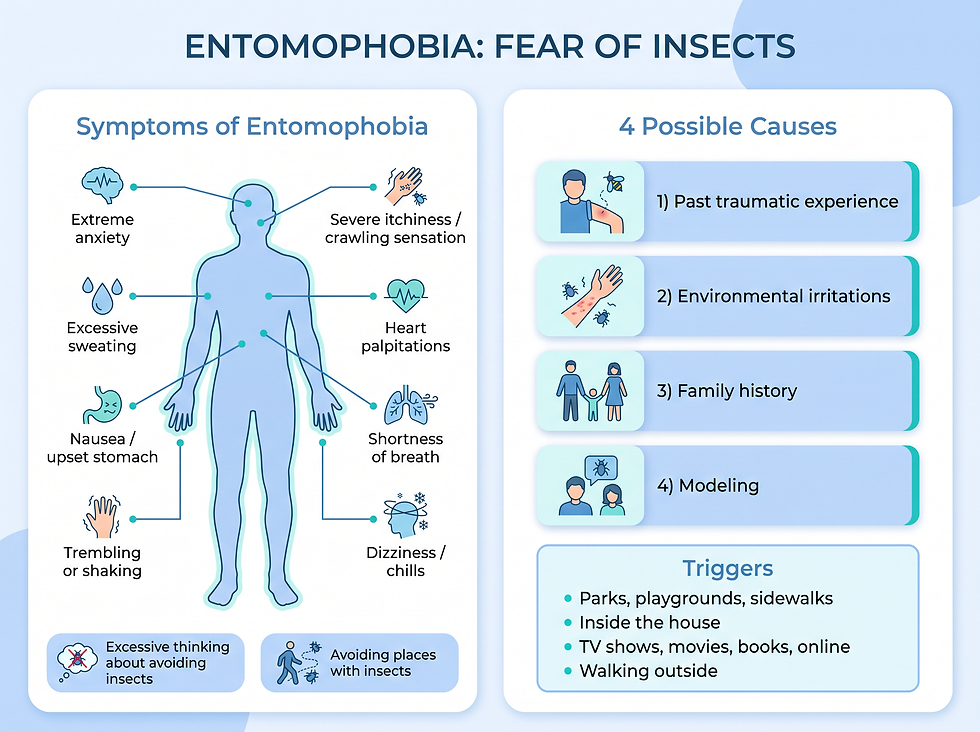
Possible causes of entomophobia include:
Past traumatic experiences: a traumatic experience related to insects, such as a severe allergic reaction to a bee sting.
Environmental irritations: itchy skin caused by pollen, mold or household allergens may lead someone to blame insects.
Family history: a close relative or parent with a phobic or anxiety disorder increases risk; a certain gene mutation may make you more anxious.
Modeling: seeing a person with entomophobia or hearing someone talk about their fear of insects can cause the same phobia in you.
What are entomophobia triggers?
Anything related to insects may bring on entomophobia. Entomophobia triggers include seeing or thinking about insects:
In public spaces like parks, playgrounds or sidewalks
Inside your or someone else's house
In TV shows, movies, books or online
While walking outside to your car
What are entomophobia symptoms?
Entomophobia symptoms can range from mild to extreme. The most common symptom is extreme anxiety when you think about insects or see them. Other emotional symptoms include:
Excessive thinking about how to avoid insects
Fear and avoidance of places where you might see an insect
People may also experience physical symptoms such as severe itchiness or a crawling sensation on their body. Other physical symptoms include:
Chills
Dizziness and lightheadedness
Excessive sweating (also called hyperhidrosis)
Nausea
Shortness of breath (also called dyspnea)
Trembling or shaking
Upset stomach or indigestion (also called dyspepsia)
Severe itchiness or a crawling sensation on the body
Diagnosis and Tests
How is entomophobia diagnosed?
If entomophobia affects your life, your healthcare provider may suggest that you see a mental health professional like a psychologist.
An important note about diagnosis: the American Psychiatric Association's Diagnostic and Statistical Manual of Mental Disorders (DSM) doesn't recognize entomophobia as a phobic disorder. But a psychologist may diagnose you after asking about your symptoms.
You may have a specific phobic disorder if the fear of insects:
Occurs when you think about or see insects
Leads you to skip situations like going to a park or for a hike
Causes you to miss out on social events
Affects your ability to enjoy life
Triggers symptoms of anxiety or fear that don't match the actual danger
Lasts at least six months
Management and Treatment
What are entomophobia treatments?
Exposure therapy is one of the main treatments for entomophobia. During exposure therapy, a mental health professional introduces you to situations and images that may trigger your symptoms. They gradually help you manage your response. Most people with specific phobias see their symptoms improve after getting this type of psychotherapy (talk therapy).
During exposure therapy, your provider helps you:
Learn relaxation and breathing techniques to use before and during an exposure
Talk about your fear of insects
View pictures or videos of insects
See live insects in a controlled setting, such as at your healthcare provider's office
Gradually progress to a situation where you may see insects, such as a park or forest
What are other entomophobia solutions?
Other techniques to overcome entomophobia include:
Cognitive behavioral therapy (CBT): helps you change how you see and react to objects and situations that trigger symptoms; often used along with exposure therapy.
Hypnotherapy: uses guided relaxation and focused attention to alter your perception of insects; can also help find the underlying cause of your insect fear.
Medications: drugs that help with physical symptoms of anxiety may temporarily lessen symptoms in certain situations; antidepressants can also help reduce overall anxiety.
Yoga and meditation: regular yoga helps you relax and reduce stress; meditation helps you focus on breathing and calm your body to lessen panic attacks.

What are the complications of entomophobia?
Severe entomophobia can have a huge impact on your day-to-day life. You may not want to walk outside, meet friends in a park or take your kids to a playground. Just thinking about seeing an insect when you leave your house can cause extreme anxiety. You may decide to stop going out of the house at all.
Some people with entomophobia have panic attacks. These attacks can lead to a racing heart rate and noncardiac chest pain or heart attack symptoms. Uncontrolled panic attacks and constant worry can lead to a panic disorder.
When Should You Call the Doctor?
Call your healthcare provider if you have:
Panic attacks
Persistent anxiety that causes problems with daily life or sleeping
Since an untreated phobia can spiral into panic disorder and social isolation, early consultation is the best course of action.
What Questions Should You Ask Your Doctor?
You may want to ask your healthcare provider:
How long will I need therapy?
Should I look for signs of complications?
What is causing this phobia?
What is the most effective treatment for me?
Conclusion and Next Steps
Specific phobias like entomophobia can impact your quality of life. You may avoid outdoor activities and events or spend less time with family and friends. The encouraging news is that there are proven therapies — exposure therapy, CBT, hypnotherapy and medication — that help most people improve.
"Specific phobias like entomophobia can impact your quality of life. You may avoid outdoor activities and events or spend less time with family and friends. Healthcare providers can help you overcome your anxiety about insects. Talk to your provider about treatments like exposure therapy, cognitive behavioral therapy, hypnotherapy or medications. These treatments can help you feel better about coming across insects in your daily life."
What to do next:
If insect fear is limiting your daily life — call your healthcare provider, especially if you have panic attacks or persistent anxiety disrupting sleep or activities.
Ask about exposure therapy — it is the main treatment, and most people with specific phobias improve with this type of psychotherapy.
Consider complementary approaches — CBT, hypnotherapy, medication, yoga and meditation all have roles in managing entomophobia symptoms.
This article is for general informational purposes only and is not a substitute for professional medical advice, diagnosis or treatment. Always consult a qualified healthcare provider with questions about a medical condition.
Frequently Asked Questions (FAQ)
What is entomophobia?
Entomophobia is a specific phobia — a fear of insects. People with this phobia feel anxious when they think about or see an insect.
What is entomophobia also called?
It is also known as acarophobia or insectophobia.
Is entomophobia an anxiety disorder?
Yes. Phobias are a type of anxiety disorder involving an overwhelming fear of an object, event or situation that is out of proportion to the likely real-life harm.
How common is entomophobia?
It's hard to know exactly how many people have it because many keep the fear to themselves or don't recognize it. However, about 1 in 10 American adults and 1 in 5 teenagers will deal with a specific phobia disorder at some point in their lives.
What do people with entomophobia fear?
They may fear being stung or bitten by insects like bees, wasps or ticks; encountering insects indoors or outdoors; getting a disease from flies or mosquitoes; bug infestations in the house or body; and even seeing images of insects on TV, in movies, books or online.
What are the main symptoms of entomophobia?
The most common symptom is extreme anxiety when you think about or see insects. Emotional symptoms include excessive thinking about avoiding insects and fear of places where insects might appear. Physical symptoms include severe itchiness or a crawling sensation on the body, chills, dizziness, excessive sweating, heart palpitations, nausea, shortness of breath, trembling and upset stomach.
Can entomophobia make your skin itch?
Yes. People may experience severe itchiness or a crawling sensation on their body as a physical symptom.
What triggers entomophobia?
Anything related to insects — seeing or thinking about them in public spaces, inside a house, in TV shows, movies, books or online, or while walking outside to your car.
Why do people develop entomophobia?
Possible causes include past traumatic experiences (like a severe allergic reaction to a bee sting), environmental irritations (itchy skin from allergens blamed on insects), family history of phobic or anxiety disorders, and modeling — seeing someone else's fear.
Can you catch entomophobia from someone else?
Yes, through modeling. Seeing a person with entomophobia or hearing someone talk about their fear of insects can cause you to have the same phobia.
Who is at higher risk of entomophobia?
People who already have another phobia, an anxiety disorder, panic disorder or substance use disorder are more likely to develop it.
Is entomophobia recognized in the DSM?
No. The American Psychiatric Association's Diagnostic and Statistical Manual of Mental Disorders doesn't recognize entomophobia as a phobic disorder, but a psychologist may still diagnose you after asking about your symptoms.
What criteria indicate a specific phobic disorder?
The fear occurs when you think about or see insects, leads you to skip situations like parks or hikes, causes you to miss social events, affects your ability to enjoy life, triggers anxiety or fear disproportionate to actual danger, and lasts at least six months.
How is entomophobia treated?
Exposure therapy is one of the main treatments. A mental health professional gradually introduces you to situations and images that trigger your symptoms and helps you manage your response.
How does exposure therapy work for entomophobia?
Your provider helps you learn relaxation and breathing techniques, talk about your fear, view pictures or videos of insects, see live insects in a controlled setting like the provider's office, and gradually progress to real-world situations like a park or forest.
Does exposure therapy work?
Yes. Most people with specific phobias see their symptoms improve after exposure therapy (a type of psychotherapy or talk therapy).
What is CBT for entomophobia?
Cognitive behavioral therapy helps you change how you see and react to objects and situations that trigger symptoms. Many providers use CBT along with exposure therapy.
Can hypnotherapy help entomophobia?
Yes. Providers use guided relaxation and focused attention to alter your perception of insects and can use hypnotherapy to find the underlying cause of your insect fear.
Can medications treat entomophobia?
Drugs that help with physical symptoms of anxiety may temporarily lessen symptoms in certain situations. Antidepressants can also help reduce overall anxiety.
Do yoga and meditation help?
Yes. A regular yoga practice helps you relax and reduce stress. Meditation helps you focus on breathing and calm your body to lessen panic attacks.
What are the complications of entomophobia?
Severe entomophobia can prevent you from walking outside, meeting friends in parks or taking kids to playgrounds. Some people stop leaving the house at all. Panic attacks can cause a racing heart rate and noncardiac chest pain or heart attack symptoms, and uncontrolled panic attacks plus constant worry can lead to panic disorder.
Can entomophobia cause panic attacks?
Yes. Some people with entomophobia have panic attacks, which can mimic heart attack symptoms and may develop into panic disorder.
When should you call the doctor about entomophobia?
Call your healthcare provider if you have panic attacks, or persistent anxiety that causes problems with daily life or sleeping.
What questions should I ask my doctor?
Ask: How long will I need therapy? Should I look for signs of complications? What is causing this phobia? What is the most effective treatment for me?
Can entomophobia get better?
Yes. Most people with specific phobias see their symptoms improve with treatment, and there are several effective options including exposure therapy, CBT, hypnotherapy, medication, yoga and meditation.
Comments