Zoophobia: Understanding the Intense Fear of Animals and How to Overcome It

Updated: 3 days ago
Medically reviewed by Dr. Baraa Alnahhal, MD · Last reviewed: October 2026
Quick Answer: 5 Key Facts About Zoophobia
Zoophobia is an extreme, irrational fear of animals and a specific phobia, with common types including fear of snakes, spiders and dogs. It is one of the three most common specific phobias and causes intense panic, avoidance of animal-related settings and physical distress. Exposure therapy is the best treatment, helping approximately 90% of those who complete it.
Feature | Details |
Definition | An extreme, irrational fear of animals (a specific phobia). |
Common Types | Ophidiophobia (snakes), Arachnophobia (spiders), and Cynophobia (dogs). |
Prevalence | One of the top three most common specific phobias; affects over 12% of U.S. adults. |
Core Symptoms | Intense panic, avoidance of animal-related settings, and physical distress. |
Best Treatment | Exposure therapy, which helps approximately 90% of those who complete it. |
What the research says
One session of exposure therapy can work as well as many. A meta-analysis of 30 multi-session and 55 single-session in vivo exposure treatments for specific phobia, the category that includes fear of animals (1,758 participants), found no significant difference between the two approaches in how well they worked after treatment or at follow-up, and effect sizes were large for all outcomes. Single-session treatment took significantly less total time, so the authors argue that policies making it easier to access would be beneficial. (Odgers et al., Behav Res Ther, 2022)
Virtual reality exposure works about as well as real-life exposure. A meta-analysis of 30 randomized trials (1,057 participants; 14 of the 30 tested virtual reality exposure for specific phobias) found a large benefit of virtual reality exposure versus a waitlist (g = 0.90) and no significant difference versus in vivo, or real-life, exposure (g = −0.07). (Carl et al., J Anxiety Disord, 2019)
What is Zoophobia?
Zoophobia is a medical term used to describe an extreme, persistent, and often irrational fear of animals. While it is natural for humans to be cautious around potentially dangerous creatures, individuals with zoophobia experience a level of dread that is entirely disproportionate to the actual threat posed by the animal. This condition is classified as a "specific phobia," which is a subset of anxiety disorders characterized by intense fear of a particular object or situation [1].
People living with this condition may find their lives significantly restricted. Some individuals fear all animals, while others focus their anxiety on a single species. Regardless of the scope, the fear is immediate and can be triggered by seeing an animal in person, viewing images or videos, or even just thinking about a potential encounter. Most adults with zoophobia recognize that their fear is excessive, yet they find the symptoms difficult to control without professional help [1].
What are the common types of animal phobias in zoophobia?
Zoophobia is the umbrella term for the fear of animals, and many people have specific variations, since certain animals trigger phobic responses far more than others. Research indicates that certain animals are much more likely to trigger phobic responses than others.
Phobia Name | Fear Trigger |
Ophidiophobia | Snakes (one of the most common globally) |
Arachnophobia | Spiders and other arachnids |
Cynophobia | Dogs |
Entomophobia | Insects |
Chiroptophobia | Bats |
Musophobia | Mice and rats |
Spheksophobia | Wasps |

What are the symptoms of zoophobia?
The symptoms of zoophobia are both behavioral and physical. The hallmark behavior is avoidance; individuals may stop visiting friends who have pets, refuse to go to parks or zoos, and even avoid watching nature documentaries or looking at pictures of animals in books.
Physical and Emotional Distress
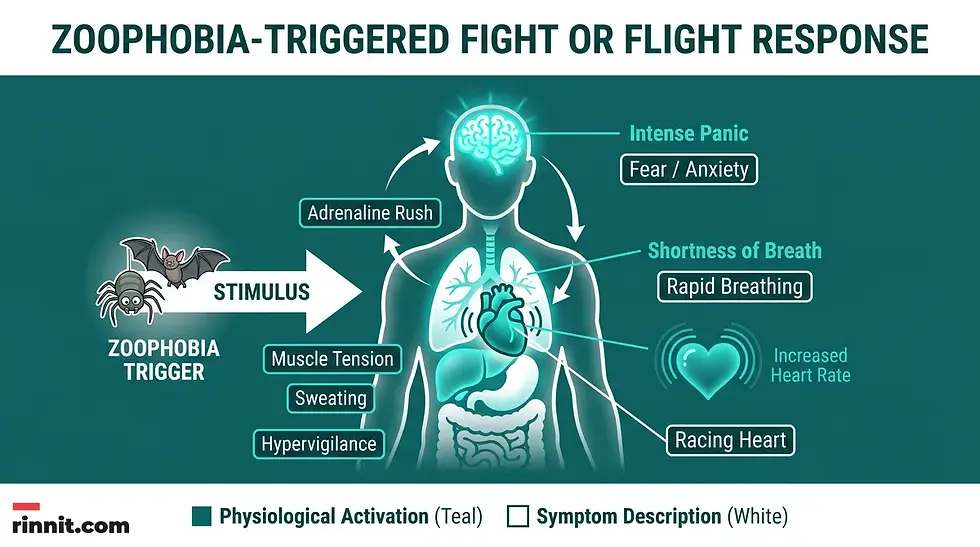
When faced with a feared animal or even the thought of one, the body's "fight or flight" response is triggered, leading to several physical sensations. These can include a racing heart (palpitations), chest tightness, and shortness of breath (dyspnea). Many people also report feeling lightheaded, nauseated, or experiencing uncontrollable trembling and sweating. These symptoms can be so severe that they mimic a heart attack or a panic attack [1].
Symptoms in Children
Children express their fear of animals differently than adults. A child with zoophobia might cling desperately to a caregiver, cry uncontrollably, or "freeze" in place when an animal is near. In some cases, the overwhelming anxiety can manifest as a temper tantrum or extreme irritability. Because children may not be able to articulate their fear, parents should look for these behavioral patterns when animals are present [1].
What Causes the Fear of Animals?
Experts have not identified a single cause for zoophobia, but it is generally believed to be a combination of environmental and biological factors.
Traumatic Experiences: Many cases of zoophobia begin with a negative encounter, such as being bitten by a dog or being startled by a snake during childhood.
Family Influence: Children often "learn" fear by observing their parents or siblings. If a caregiver reacts with panic to a spider, a child is more likely to develop a similar phobia.
Genetic Predisposition: Some individuals are born with a temperament that is naturally more prone to anxiety and phobic disorders [1].
How is Zoophobia Diagnosed?
A healthcare provider or mental health professional diagnoses zoophobia through a series of questions about your history and symptoms. To meet the clinical criteria for a specific phobia, the fear must be persistent — typically lasting for six months or longer — and must cause significant distress or interfere with your ability to function in daily life. The provider will also ensure that the symptoms aren't better explained by another condition, such as generalized anxiety disorder or post-traumatic stress disorder (PTSD) [1].
How is zoophobia treated?
The good news for those struggling with zoophobia is that it is one of the most treatable mental health conditions. With the right approach, most people can learn to manage or even completely overcome their fear.
Exposure Therapy
Exposure therapy is considered the gold standard for treating specific phobias. It involves gradually and systematically introducing the individual to the feared animal in a safe, controlled environment. This might start with simply thinking about the animal, then looking at photos, watching videos, and eventually being in the same room as the animal. This process helps the brain "unlearn" the fear response. Approximately 9 out of 10 people who commit to exposure therapy experience significant relief [1].

Cognitive Behavioral Therapy (CBT)
CBT is often used alongside exposure therapy. It focuses on identifying the irrational thoughts that fuel the fear — such as "every dog I see will bite me" — and replacing them with rational, evidence-based thoughts. By changing the way you think about animals, you can change your emotional and physical response to them [1].
Supportive Management
While therapy is the primary treatment, certain lifestyle habits can help manage general anxiety levels. Maintaining a healthy diet, getting regular exercise, and ensuring adequate sleep can make it easier to cope with phobia symptoms. Additionally, techniques like intentional deep breathing and meditation can be used in the moment to calm the body's physical reaction during an encounter [1].
What is the outlook for zoophobia, and what complications can it cause?
When left untreated, zoophobia can lead to social isolation, as the individual avoids more and more environments where animals might be present. It also increases the risk of developing other mood disorders, such as depression, or turning to substance use as a way to cope with anxiety. However, for those who seek treatment, the prognosis is excellent. Most individuals are able to return to their normal activities without the constant shadow of fear [1].
Frequently Asked Questions
Is zoophobia common?
Yes. Specific phobias affect more than 12% of adults in the U.S., and fear of animals is consistently ranked as one of the top three most common types.
Can I develop a fear of animals as an adult?
While many phobias start in childhood, it is possible to develop zoophobia at any age, often following a traumatic event.
Does exposure therapy mean I have to touch the animal?
Not necessarily. The goal is to reach a point where the animal no longer causes distress. For some, that means being able to sit in the same room; for others, it may involve physical contact. The pace is always controlled by the therapist and the patient.
Can medication cure zoophobia?
Medication is not a cure, but it can help manage the symptoms of anxiety in some cases, especially when used in conjunction with therapy.
Is it possible to fear only one type of animal?
Yes. Most people with zoophobia have a "specific" animal phobia, such as a fear of snakes (ophidiophobia) or spiders (arachnophobia).
How long does treatment take?
The duration of treatment varies, but many people see significant improvement in just a few sessions of exposure therapy.
Can zoophobia be prevented?
While not always preventable, early intervention after a traumatic event and modeling calm behavior around animals for children can reduce the risk.
Is zoophobia the same as being "afraid" of a dangerous animal?
No. It is normal to be afraid of a growling wolf. Zoophobia involves an intense fear of animals that pose little to no actual threat, such as a leashed pet or a small insect.
Can virtual reality be used for treatment?
Yes, virtual reality exposure therapy (VRET) is an emerging and effective way to practice exposure in a completely safe, digital environment.
Conclusion
Zoophobia is a challenging condition that can make the world feel like a dangerous place. However, understanding that this fear is a manageable anxiety disorder is the first step toward recovery. By utilizing evidence-based treatments like exposure therapy and CBT, individuals can reclaim their freedom and live a life unburdened by the fear of animals.
Take the next step in your wellness journey. For more expert guides on managing anxiety, improving mental health, and living a balanced life, visit Rinnit.com.
References
Cleveland Clinic. Zoophobia (fear of animals). Cleveland Clinic. Accessed October 15, 2026. https://my.clevelandclinic.org/health/diseases/22727-zoophobia-fear-of-animals
Odgers K, Kershaw KA, Li SH, et al. The relative efficacy and efficiency of single- and multi-session exposure therapies for specific phobia: a meta-analysis. Behav Res Ther. 2022;159:104203. PMID: 36323055. https://doi.org/10.1016/j.brat.2022.104203
Carl E, Stein AT, Levihn-Coon A, et al. Virtual reality exposure therapy for anxiety and related disorders: a meta-analysis of randomized controlled trials. J Anxiety Disord. 2019;61:27-36. PMID: 30287083. https://doi.org/10.1016/j.janxdis.2018.08.003
Medical disclaimer
The information provided in this article is for educational purposes only and should not be used as a substitute for professional medical advice, diagnosis, or treatment. Always seek the advice of your physician or other qualified health provider with any questions you may have regarding a medical condition.



Comments