Diffuse Large B-Cell Lymphoma (DLBCL): Symptoms, Stages, Treatment & Survival — Complete Guide

Updated: 2 days ago
Medically reviewed by Dr. Baraa Alnahhal, MD · Last reviewed: October 2026
Quick Answer
Diffuse large B-cell lymphoma (DLBCL) is the most common type of non-Hodgkin lymphoma, a fast-growing cancer of B cells, the immune system's germ-fighting white blood cells. Common signs are a fast-growing mass and painless swelling in the neck, armpit or groin, often with fever and night sweats. It can often be treated, and sometimes cured, especially when diagnosed early.
What the research says
Swapping one chemotherapy drug for an antibody-drug conjugate improved first-line outcomes. In a double-blind phase 3 trial of 879 adults with previously untreated intermediate- or high-risk DLBCL (440 on pola-R-CHP, 439 on standard R-CHOP), 76.7% of patients on pola-R-CHP were alive without progression at 2 years versus 70.2% on R-CHOP (hazard ratio for progression, relapse, or death 0.73, 95% CI 0.57–0.95); overall survival at 2 years was similar (88.7% vs. 88.6%), and the safety profile was comparable. (Tilly et al., N Engl J Med, 2022) [3]
CAR T-cell therapy worked well as second-line treatment in older adults. In a preplanned subgroup analysis of the ZUMA-7 randomized trial (51 patients aged 65 or older received axicabtagene ciloleucel; 58 received standard care with chemotherapy and stem-cell transplant), median event-free survival was 21.5 months versus 2.5 months (hazard ratio 0.276) and 75% versus 33% had a complete response; severe (grade 3 or higher) adverse events occurred in 94% versus 82% of patients, and no grade 5 cytokine release syndrome or neurologic events occurred. (Westin et al., Clin Cancer Res, 2023) [4]
At a Glance
Topic | Key Facts |
What it is | Most common type of non-Hodgkin lymphoma; fast-growing cancer of B cells |
Where it starts | B cells (germ-fighting white blood cells) of the lymphatic system |
Most common signs | Growing neck or belly mass; painless swelling in neck, armpit, or groin |
Who is most at risk | Adults over 60; people with family history, weakened immunity, HIV, or EBV infection |
How it's staged | Stages 1–4 based on lymph node regions and organ spread |
Diagnosis tools | Physical exam, blood tests, CT/PET/MRI imaging, biopsy, bone marrow and spinal tap tests |
Main treatments | Immunotherapy, chemotherapy, radiation, targeted therapy, CAR-T cell therapy, bone marrow transplant |
Survival outlook | Roughly 80% (stage 1) to about 55% (stage 4) live 5+ years after diagnosis |
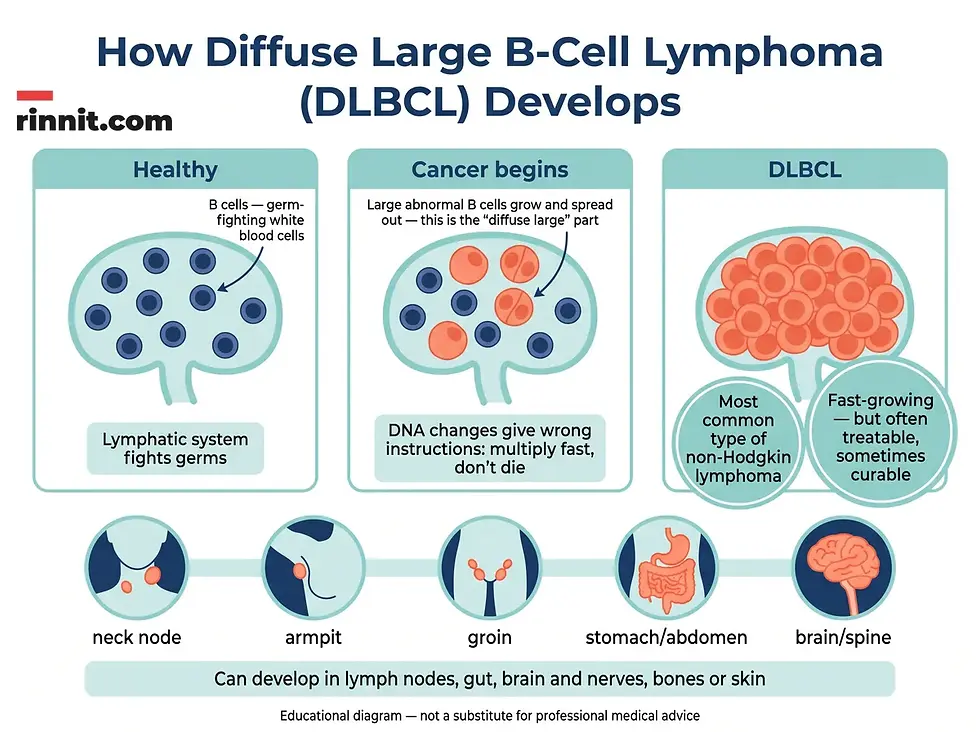
What Is Diffuse Large B-Cell Lymphoma?
DLBCL is a type of lymphoma, a cancer of the lymphatic system. The lymphatic system includes the organs, glands, tubelike vessels, and lymph nodes that work together as part of the immune system.
DLBCL starts in B cells (B lymphocytes), the germ-fighting white blood cells. Under a microscope, these cancer cells are larger than healthy B cells and spread out through the tissue — that is where the words "large" and "diffuse" come from.
DLBCL is a fast-growing cancer — but it can often be treated and sometimes cured, especially when it is diagnosed early and treated right away.
The disease is also heterogeneous, meaning its subtypes differ in their genetics, behavior, and response to treatment. Subtypes depend on factors such as where the cancer started, the genes and proteins inside the cells, and whether a virus such as the Epstein-Barr virus (EBV) is involved.
Subtypes include DLBCL not otherwise specified, T-cell/histiocyte-rich large B-cell lymphoma, ALK-positive large B-cell lymphoma, EBV-positive DLBCL, DLBCL associated with chronic inflammation, primary DLBCL of the central nervous system, intravascular large B-cell lymphoma, and several others.
Signs and Symptoms of DLBCL
The most common signs
The most common symptoms of DLBCL are:
A fast-growing mass in the neck or belly
Painless swelling of lymph nodes in the neck, armpit, or groin
Fever
Fatigue
Drenching night sweats
Unexplained weight loss
Painless swelling alone is not always a warning sign — many people with swollen lymph nodes do not have lymphoma. But a fast-growing lump or swelling that does not go away should be checked by a doctor.
Symptoms by body area
Because DLBCL can develop in lymph nodes or anywhere in the body, symptoms depend on where the cancer is.
Body area | Possible symptoms |
Gastrointestinal (stomach, intestines) | Belly pain or fullness, nausea, vomiting, loss of appetite, weight loss |
Nervous system (brain, spinal cord, eyes, meninges) | Headaches, confusion, vision changes, trouble thinking or speaking, behavior changes, seizures |
Chest | Cough, shortness of breath, trouble swallowing, pain when breathing |
Bones | Bone pain, with a higher risk of fracture |
Liver | Belly pain |
Kidneys | Blood in the urine, increased urination, frequent night urination, belly or lower back pain |
Skin | Skin changes, rash on the legs |
When to see a doctor: Make an appointment if you have symptoms that worry you — especially a growing mass, painless swelling that persists, or unexplained fever, night sweats, or weight loss. If a doctor suspects DLBCL, you may be referred to a hematologist (a specialist in blood diseases) and then an oncologist (a cancer specialist).
What Causes DLBCL?
It is not clear what causes DLBCL. Like all cancers, it begins with DNA changes inside cells that give the wrong instructions: the cells keep growing and multiplying quickly and do not die when they should.
Some DLBCLs start as other, slow-growing lymphomas that later turn aggressive. These include:
Chronic lymphocytic leukemia
Lymphoplasmacytic lymphoma
Follicular lymphoma
Marginal zone lymphoma
Risk Factors
Several factors raise the chance of developing DLBCL:
Risk factor | Details |
Older age | Most common in people in their 60s and older, but it can happen at any age |
Family history | Having a parent or sibling with lymphoma |
Weakened immune system or autoimmune condition | Ataxia-telangiectasia, Wiskott-Aldrich syndrome, rheumatoid arthritis, lupus |
Some infections | HIV, Epstein-Barr virus |
Having a risk factor does not mean you will get DLBCL, and many people with the disease have no known risk factors.
Complications and Side Effects
Treatment for DLBCL is strong, and the cancer or its treatment can cause complications:
Side effects of treatment: nausea, vomiting, fatigue, fever, rash, diarrhea
Bone marrow suppression: lowers white blood cell counts, raising infection risk
Febrile neutropenia: fever combined with low neutrophil (white blood cell) counts — a medical emergency; during treatment, call your cancer team right away or go to the emergency room for a temperature of 100.4°F (38°C) or higher
Medicine toxicity: some medicines can damage organs
Reactivated viruses: hepatitis B or C can reactivate and cause liver inflammation or damage
Tumor lysis syndrome: fast cell breakdown releases substances that can overwhelm the kidneys and other organs
Relapse: the cancer may come back, sometimes years later; some people experience more than one relapse
Medicines can be given to prevent or treat many of these side effects, and doctors monitor closely for them.
How DLBCL Is Diagnosed and Staged
The diagnostic pathway
Diagnosing DLBCL usually involves several steps:
Physical exam — checking for swollen lymph nodes in the neck, armpits, or groin, and for an enlarged spleen or liver
Blood tests — looking for lymphoma cells, checking for viruses (EBV, HIV, hepatitis B/C), and measuring LDH, a protein that is often higher in people with lymphoma
Imaging — MRI, CT, or PET scans to find where the cancer is and how far it has spread
Biopsy — removing a sample of a lymph node or other tissue for testing
Bone marrow aspiration and biopsy — taking samples from the hip bone to see whether cancer is in the marrow; not always needed if imaging already shows bone involvement
Lumbar puncture (spinal tap) — testing the fluid around the spinal cord for cancer cells, done if there are neurological symptoms or a higher risk of nervous system involvement
Lab testing of the cancer cells looks at surface protein markers (CD20, CD19, CD22, CD79a, CD10), DNA changes, and genes such as BCL2, BCL6, and MYC that cause cells to multiply quickly.
The 4 stages
Stage | What it means |
Stage 1 | Cancer in one lymph node region, or one site outside the lymph nodes |
Stage 2 | Two or more lymph node regions, all on the same side of the diaphragm |
Stage 3 | Lymph node regions on both sides of the diaphragm, or nodes above the diaphragm plus the spleen |
Stage 4 | Spread outside the lymph nodes to the bone marrow, liver, lungs, kidneys, digestive tract, or nervous system |
Treatment and Survival Outlook
Survival rates
Survival depends on several factors: your age, overall health, stage (stages 3 and 4 are harder to cure), your LDH level (higher is poorer), and the number of sites outside the lymph nodes.
Based on people living at least 5 years after diagnosis, survival is about 80% for stage 1 and roughly 55% for stage 4. These statistics take about 5 years to collect, and death rates have been falling while survival has improved over the decades.
The 6 treatment options
Treatment depends on the stage, how fast the cancer grows, your overall health, and your preferences.
Treatment | What it is | When it is used |
Immunotherapy | Medicines that help the immune system find and kill cancer cells | First-line, usually with chemotherapy; also for advanced or relapsed DLBCL |
Chemotherapy | Strong medicines, mostly given by vein, some in pills | First-line, combined with immunotherapy; high doses for DLBCL of the nervous system |
Radiation therapy | Powerful energy beams (X-rays, protons) | Early-stage disease with chemotherapy; relieves symptoms and improves quality of life in relapse |
Targeted therapy | Medicines that attack specific chemicals in cancer cells | First-line; relapsed DLBCL; refractory DLBCL (other treatments have not worked) |
CAR-T cell therapy | Your own T cells are removed, trained in a lab to recognize lymphoma markers, and returned to the body to destroy DLBCL cells | Refractory or relapsed DLBCL |
Bone marrow transplant | Healthy stem cells replace cells damaged by chemotherapy (autologous — from your own body) | Relapsed DLBCL; only for some younger, healthier people; chemotherapy before transplant suppresses the immune system and bone marrow |
Clinical trials may also offer access to new treatments, interventions, and tests — ask your healthcare team whether one fits your situation.
Coping and Support
A cancer diagnosis brings uncertainty and worry. Helpful coping strategies include:
Learning enough about DLBCL to make decisions — ask your healthcare team about test results, treatment options, and prognosis
Keeping friends and family close — they offer practical help (such as taking care of your home) and emotional support when you feel overwhelmed
Finding someone to talk with — a friend, family member, counselor, medical social worker, clergy member, or cancer support group
Other resources include the National Cancer Institute, the American Cancer Society, the Leukemia & Lymphoma Society, and the Lymphoma Research Foundation.

Preparing for Your Appointment
If DLBCL is suspected, you may be referred to a hematologist and then an oncologist. Because appointments are often brief, preparation helps:
What you can do:
Ask if anything is needed before the appointment (such as diet restrictions)
Write down all symptoms, including any that seem unrelated
Write down important personal information, including major stresses or recent life changes
Make a list of all medicines, vitamins, and supplements with doses
Take a family member or friend along to help remember the information
Write down questions, ordered from most to least important
Questions to consider asking: Do I have DLBCL? What stage is it? Has it spread? Will I need more tests? What are my treatment options? How much does each treatment prolong my life or increase my chances of a cure? What are the potential side effects? How will treatment affect my daily life? Is there one option you believe is best? Should I see a specialist?
What your doctor may ask: When did symptoms begin? Are they constant or do they come and go? How severe are they? What helps or worsens them? Have you had fevers, night sweats, or weight loss? Any lumps, swelling, or pain? Chest pain, coughing, or breathing trouble? Recent infections? Other health conditions such as diabetes, heart disease, or kidney disease?
Frequently Asked Questions
What is diffuse large B-cell lymphoma?
DLBCL is the most common type of non-Hodgkin lymphoma, a fast-growing cancer that starts in B cells — the germ-fighting white blood cells of the lymphatic system. Despite its fast growth, it can often be treated and sometimes cured, especially with early diagnosis and treatment.
What are the first signs of DLBCL?
The most common signs are a fast-growing mass in the neck or belly and painless swelling of lymph nodes in the neck, armpit, or groin. Fever, fatigue, drenching night sweats, and unexplained weight loss often accompany these signs.
What causes diffuse large B-cell lymphoma?
The exact cause is not clear. Like all cancers, it begins with DNA changes that tell cells to grow quickly and not die. Some cases start when a slow-growing lymphoma, such as follicular lymphoma, turns aggressive over time.
What raises my risk of DLBCL?
Risk factors include being over 60, having a parent or sibling with lymphoma, having a weakened immune system or autoimmune condition (such as rheumatoid arthritis or lupus), and certain infections including HIV and Epstein-Barr virus.
How is DLBCL diagnosed and staged?
Doctors use a physical exam, blood tests, CT/PET/MRI imaging, and a tissue biopsy; bone marrow tests and spinal taps are used in some cases. It is staged 1–4 based on how many lymph node regions are involved and whether it has spread to organs such as the liver, lungs, or bone marrow.
Can DLBCL be cured?
DLBCL can often be treated and sometimes cured, especially when found early. About 80% of people with stage 1 disease live at least 5 years after diagnosis, and roughly 55% of people with stage 4 do — and survival rates have been improving over the decades.
What are the main treatments for DLBCL?
The six main options are immunotherapy, chemotherapy, radiation therapy, targeted therapy, CAR-T cell therapy, and bone marrow transplant. Early-stage disease is usually treated with immunotherapy plus chemotherapy, while relapsed or refractory cases may use targeted therapy, CAR-T, or transplant.
What is R-CHOP?
R-CHOP is a common first treatment for DLBCL that combines the immunotherapy drug rituximab with four chemotherapy medicines. It is usually given in cycles a few weeks apart.
How fast does DLBCL grow?
DLBCL is a fast-growing lymphoma, and lymph nodes can enlarge over a few weeks. Because it grows quickly, treatment usually starts soon after diagnosis.
Can DLBCL come back after treatment?
Yes. DLBCL can come back, sometimes years later, so follow-up visits and scans continue after treatment. If it returns, options may include CAR-T cell therapy or a stem cell transplant.
Conclusion
DLBCL is the most common non-Hodgkin lymphoma — a fast-growing B-cell cancer that most often shows up as a growing mass or painless swollen lymph nodes, with fever, night sweats, and weight loss.
It is staged 1–4 and treated on purpose — diagnosis uses exams, blood tests, imaging, and biopsy, and treatment is matched to stage and health, from immunotherapy and chemotherapy to CAR-T cell therapy and bone marrow transplant.
Fast-growing does not mean untreatable — DLBCL is often treatable and sometimes curable, and early diagnosis makes the biggest difference.
This guide has walked you through what DLBCL is, the signs to watch for, how it is staged, and every major treatment option.
Your Next Steps
Share your thoughts — comment below with your questions or experience.
Stay updated — sign up on rinnit.com for new complete guides and health updates.
Disclaimer: This content is provided for general educational purposes only and is not a substitute for professional medical advice. Always consult a qualified healthcare professional for diagnosis and treatment.
Related Reading
Non-Hodgkin's Lymphoma: Symptoms, Causes, and Treatment Options Explained explains the wider group of lymphomas that includes DLBCL.
R-CHOP Chemotherapy describes the standard chemoimmunotherapy combination used for DLBCL.
CAR T-Cell Therapy: How It Works, Side Effects, and Recovery explains how engineered immune cells are used to treat some lymphomas.
Primary Mediastinal Large B-Cell Lymphoma: Complete Guide to Symptoms, Causes, and Treatment covers a related large B-cell lymphoma that starts in the chest.
References
Mayo Clinic Staff. Diffuse large B-cell lymphoma - Symptoms and causes. Mayo Clinic. June 18, 2025. https://www.mayoclinic.org/diseases-conditions/diffuse-large-b-cell-lymphoma/symptoms-causes/syc-20584636
Mayo Clinic Staff. Diffuse large B-cell lymphoma - Diagnosis and treatment. Mayo Clinic. June 18, 2025. https://www.mayoclinic.org/diseases-conditions/diffuse-large-b-cell-lymphoma/diagnosis-treatment/drc-20584653
Tilly H, et al. Polatuzumab Vedotin in Previously Untreated Diffuse Large B-Cell Lymphoma. N Engl J Med. 2022;386(4):351-363. PMID 34904799. https://doi.org/10.1056/NEJMoa2115304
Westin JR, et al. Safety and Efficacy of Axicabtagene Ciloleucel versus Standard of Care in Patients 65 Years of Age or Older with Relapsed/Refractory Large B-Cell Lymphoma. Clin Cancer Res. 2023;29(10):1894-1905. PMID 36999993. https://doi.org/10.1158/1078-0432.CCR-22-3136



Comments