
Primary Mediastinal Large B-Cell Lymphoma: Complete Guide to Symptoms, Causes, and Treatment

Updated: 2 days ago
Medically reviewed by Dr. Baraa Alnahhal, MD · Last reviewed: September 2026
TL;DR
Primary mediastinal large B-cell lymphoma (PMBCL) is a fast-growing type of non-Hodgkin lymphoma that usually starts in the mediastinum — the chest space between the lungs beneath the breastbone. It forms when B cells in the thymus undergo DNA changes, stop dying, and multiply into a large mass. It most often affects women in their 30s and 40s. Symptoms include cough, chest pain, hoarseness, and breathing or swallowing difficulty. Treatment options include chemoimmunotherapy, radiation, targeted therapy, CAR-T cell therapy, and bone marrow transplant.
Quick Answer
Primary mediastinal large B-cell lymphoma (PMBCL) is a fast-growing non-Hodgkin lymphoma that forms a large mass in the mediastinum, the space in the chest between the lungs. It most commonly affects women diagnosed in their 30s and 40s. Symptoms include cough, chest pain, hoarseness, and difficulty breathing or swallowing. There is no known way to prevent it, but treatments include chemoimmunotherapy, radiation, targeted therapy, CAR-T cell therapy, and bone marrow transplant, with follow-up monitoring for relapse.

What Is Primary Mediastinal Large B-Cell Lymphoma?
Primary mediastinal large B-cell lymphoma (PMBCL) is a type of lymphoma. This type of lymphoma also is known as PMBL. Lymphoma is a cancer that affects the lymphocytes, which are a type of white blood cell. The white blood cells are part of the body's germ-fighting immune system.
There are many types of lymphoma. Lymphoma types are often divided into two categories: Hodgkin lymphoma and non-Hodgkin lymphoma. PMBCL is a type of non-Hodgkin lymphoma.
Answer nugget: Primary mediastinal large B-cell lymphoma (PMBCL) is a fast-growing type of non-Hodgkin lymphoma that usually forms a large mass in the mediastinum — the space in the chest beneath the breastbone and between the lungs.
PMBCL typically forms when specialized lymphocytes in the thymus, known as B cells, undergo DNA changes and turn into cancer cells. A cell's DNA holds the instructions that tell the cell what to do and when to die. Because of these DNA changes, the cells stop dying.
They usually multiply and form a large mass within the mediastinum. The mediastinum is the space in the chest that is beneath the breastbone and between the lungs. It holds many organs including the thymus, trachea, esophagus, and heart. PMBCL is called primary mediastinal because it typically starts in the mediastinum.
PMBCL is usually a fast-growing type of cancer. Similar to other types of lymphoma, it features its own specific DNA changes that help it hide from the immune system.
What Are the Symptoms of Primary Mediastinal Large B-Cell Lymphoma?
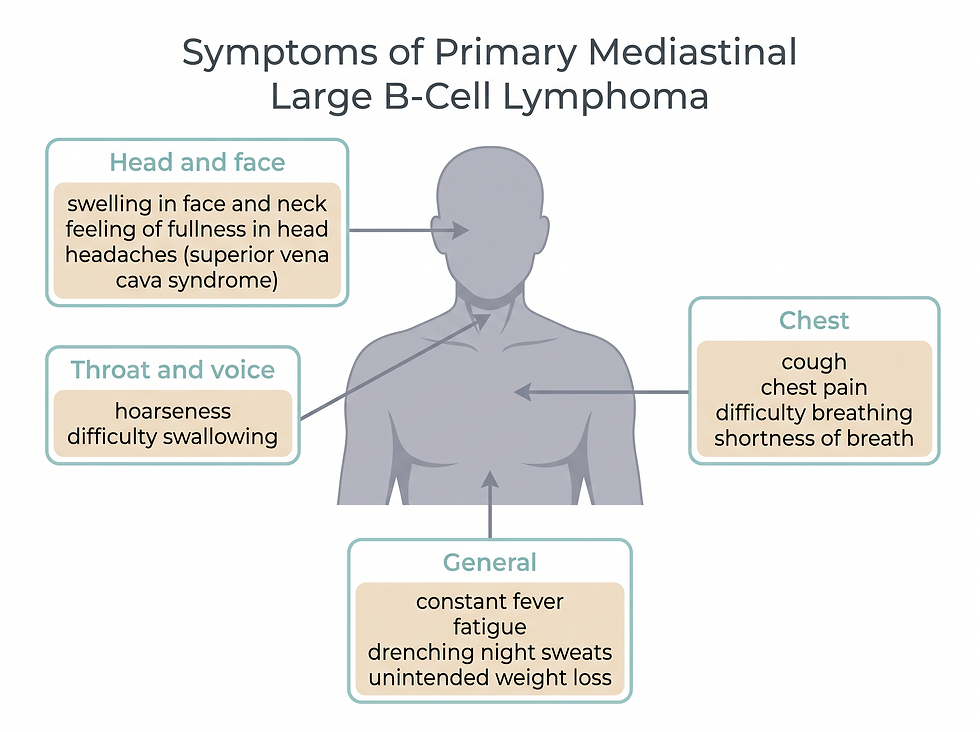
Symptoms of primary mediastinal large B-cell lymphoma may include:
Cough.
Voice changes such as hoarseness.
Difficulty breathing, swallowing or both.
Constant fever.
Chest pain.
Fatigue.
Drenching night sweats.
Weight loss without trying.
The mass also may put pressure on a large vein in the chest, called the superior vena cava. This can cause superior vena cava syndrome, which includes symptoms such as shortness of breath or difficulty breathing, swelling in the face, neck, or arms, a feeling of fullness within the head, headaches, and confusion in severe cases.
What Causes Primary Mediastinal Large B-Cell Lymphoma?
PMBCL typically forms when specialized white blood cells in the thymus, known as B cell lymphocytes, undergo DNA changes and turn into cancer cells. Exactly why these DNA changes happen is not known.
A cell's DNA holds the instructions that tell the cell what to do and when to die. These gene changes cause the cells to stop dying and to multiply rapidly.
The cancer cells usually spread and form masses within the mediastinum — the space in the chest beneath the breastbone and between the lungs, which holds many organs including the thymus, trachea, esophagus, and heart.
What Are the Risk Factors?
A risk factor for primary mediastinal large B-cell lymphoma is being female. PMBCL tends to mainly occur in adults. Most people with PMBCL are diagnosed in their 30s and 40s.
There is no known way to prevent PMBCL.
Risk Factor | Details |
|---|---|
Sex | Being female is a risk factor for PMBCL. |
Age | Tends to mainly occur in adults; most people are diagnosed in their 30s and 40s. |
Prevention | There is no known way to prevent PMBCL. |
What Are the Complications?
PMBCL often forms a mass in the mediastinum. As the mass of cancer cells grows, it can press on nearby veins and organs.
Complication | What Happens | Symptoms |
|---|---|---|
Superior vena cava syndrome | The mass presses on the superior vena cava, a large vein in the chest. | Difficulty breathing, swelling in the face and arms, headaches. |
Breathing issues | The mass puts pressure on the trachea and lungs. | Coughing, shortness of breath, chest tightness, voice changes such as hoarseness. |
Trouble swallowing | The mass presses on the esophagus (food pipe). | Difficulty swallowing. |
Fluid buildup | The mass presses on the heart or blood vessels, causing fluid to build up around the heart (pericardial effusion) or lungs (pleural effusion). | Heart pumping problems; breathing trouble and chest pain from fluid around the lungs. |
When Should You See a Doctor?
Make an appointment with a healthcare professional if you have any symptoms that worry you or are not going away.
If a cancer diagnosis is made, you may be referred to a doctor who specializes in diseases that affect blood cells, called a hematologist, as well as a doctor who specializes in treating cancer, called an oncologist.
How Is Primary Mediastinal Large B-Cell Lymphoma Diagnosed?
A PMBCL diagnosis, like other B-cell lymphoma diagnoses, often begins with a physical exam to check for swollen lymph nodes or masses in the neck, underarms, and groin, and an enlarged spleen or liver. Other tests and procedures include blood tests, imaging tests, and taking a sample of tissue for laboratory tests.
Diagnostic Step | Purpose |
|---|---|
Physical exam | Checks for swollen lymph nodes or masses in the neck, underarms, and groin, and an enlarged spleen or liver. |
Biopsy | Removes a sample of tissue from the mass for testing in a lab to look for cancer cells. |
Imaging tests | CT scan and PET scan show the location and extent of PMBCL. |
Lab testing of lymphoma cells | Specialized tests look for proteins (markers) on cancer cell surfaces and changes in the cells' DNA to confirm PMBCL. |
To decide whether the cells are PMBCL cells, the lab professionals look for proteins on the surface of the cancer cells — known as markers — and changes in the cancer cells' DNA. Cancer happens when cells get changes in their DNA, and gene changes cause the cancer cells to multiply rapidly.
How Is Primary Mediastinal Large B-Cell Lymphoma Treated?
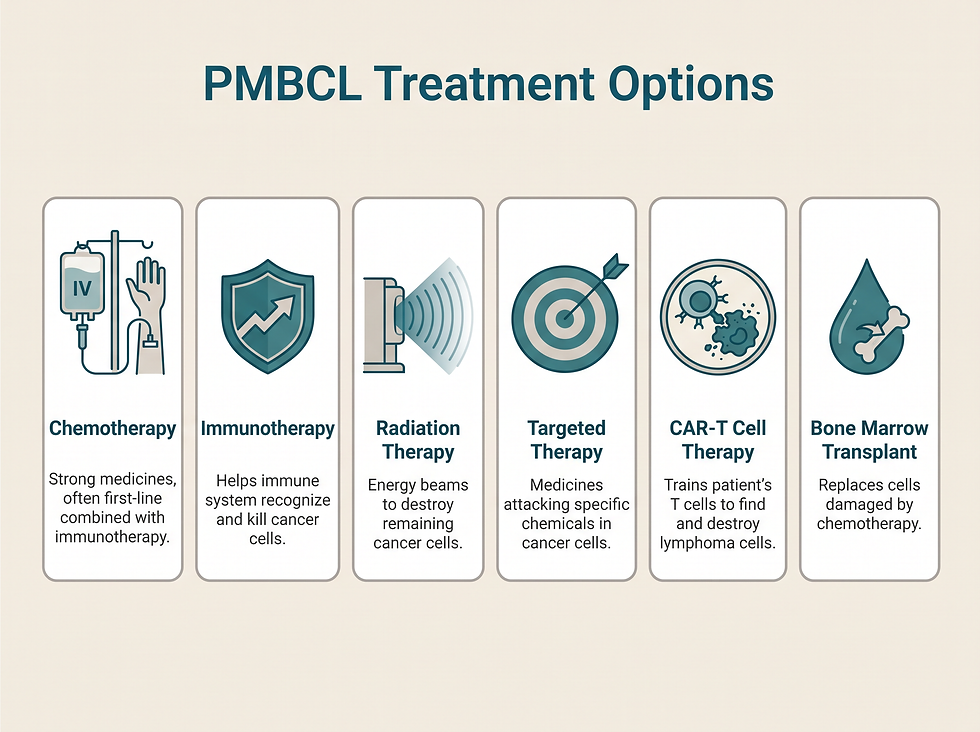
PMBCL treatments may include chemotherapy, immunotherapy, radiation therapy, targeted therapy, CAR-T cell therapy, and bone marrow transplant (also called bone marrow stem cell transplant). Your treatment depends on several factors: the cancer's stage, your overall health, and shared decision-making with your healthcare professional.
Treatment | How It Works | When It Is Used |
|---|---|---|
Chemotherapy (chemoimmunotherapy) | Strong medicines, usually given through a vein or as pills; combined with immunotherapy. | Often the first line of treatment; also an option for relapsed or refractory PMBCL. |
Immunotherapy | Medicine that helps the immune system recognize and kill cancer cells that hide from it. | Combined with chemotherapy as first-line chemoimmunotherapy. |
Radiation therapy | Powerful energy beams (X-rays, protons) directed at precise points in the body. | After chemoimmunotherapy to remove remaining cancer cells; for relapsed PMBCL; to ease symptoms when other treatments aren't possible. |
Targeted therapy | Medicines that attack specific chemicals in cancer cells, causing them to die. | Relapsed and refractory PMBCL. |
CAR-T cell therapy | T cells removed from blood, treated in a lab to make receptors that recognize a marker on lymphoma cells, then returned to the body to find and destroy cancer cells. | Refractory or relapsed PMBCL. |
Bone marrow transplant | Healthy bone marrow stem cells replace cells damaged by chemotherapy and other treatments. | Relapsed or refractory PMBCL in some people. |
Clinical trials are studies of new treatments or combinations of drugs. These studies provide a chance to try the latest treatments, though the risk of side effects might not be known. Ask your healthcare team if you might be a good fit for a clinical trial.
Monitoring After Treatment
PMBCL has a risk of coming back after treatment, known as a relapse. After treatment, you have follow-up appointments to monitor for relapse. You may need repeat biopsies and imaging.
Coping and Support
With time, you'll likely find what helps you cope with the uncertainty and worry of a cancer diagnosis. To help in the meantime, consider these steps:
Prepare to make decisions. Ask your healthcare team about your cancer, including your test results, treatment options, and, if you want, your prognosis. As you learn more, you may become more confident in making treatment decisions.
Stay connected to friends and family. Keeping in touch may give comfort during a difficult time. Think of tasks you might like help with, such as asking a friend to be there when you want to talk or helping care for your home if you must stay in the hospital.
Find someone to talk with. Find someone experienced in helping people facing a life-threatening illness. Ask your healthcare team to suggest a counselor, clergy member, or medical social worker. Ask about support groups in your area, or contact organizations such as the American Cancer Society, Blood Cancer United, and the Lymphoma Research Foundation. Online support communities are also available.
Preparing for Your Appointment
Because appointments can be brief, it's a good idea to be prepared. Be aware of anything you need to do ahead of time, such as restricting your diet. Write down symptoms you have, important personal information including major stresses or recent life changes, and a list of all medicines, vitamins, and supplements you're taking with doses.
Take a family member or friend along — it's hard to remember all the information you get during an appointment, and someone who goes with you may remember something you missed.
For PMBCL, some basic questions to ask include: Do I have PMBCL? What is the stage of my PMBCL? Has my PMBCL spread to other parts of my body? Will I need more tests? What are the treatment options? How much does each treatment prolong my life or increase my chances of a cure? What are the potential side effects of each treatment?
Conclusion
Primary mediastinal large B-cell lymphoma is a fast-growing non-Hodgkin lymphoma that forms a mass in the chest and presses on nearby veins and organs, causing cough, chest pain, breathing difficulty, and other symptoms. It most often affects women in their 30s and 40s. While there is no known way to prevent it, treatment options including chemoimmunotherapy, radiation, targeted therapy, CAR-T cell therapy, and bone marrow transplant offer real hope — and follow-up monitoring helps catch any relapse early.
If you have symptoms that worry you or aren't going away — such as persistent cough, chest pain, hoarseness, or difficulty breathing or swallowing — make an appointment with a healthcare professional right away. Early diagnosis and a personalized treatment plan make the greatest difference.
Frequently Asked Questions
What is primary mediastinal large B-cell lymphoma?
Primary mediastinal large B-cell lymphoma (PMBCL) is a fast-growing type of non-Hodgkin lymphoma — a cancer of the lymphocytes (white blood cells) — that typically forms a large mass in the mediastinum, the space in the chest beneath the breastbone and between the lungs.
What causes PMBCL?
PMBCL forms when specialized white blood cells in the thymus, called B cell lymphocytes, undergo DNA changes and turn into cancer cells. These changes cause the cells to stop dying and multiply rapidly. Exactly why these DNA changes happen is not known.
Who is at risk of developing PMBCL?
Being female is a risk factor for PMBCL. It tends to mainly occur in adults, with most people diagnosed in their 30s and 40s. There is no known way to prevent PMBCL.
What are the symptoms of PMBCL?
Symptoms include cough, hoarseness, difficulty breathing or swallowing, constant fever, chest pain, fatigue, drenching night sweats, and unintended weight loss. The chest mass may also press on the superior vena cava vein, causing swelling in the face, neck, or arms, headaches, and a feeling of fullness in the head.
How is PMBCL diagnosed?
Diagnosis begins with a physical exam and often includes blood tests, a biopsy of the mass, and imaging tests such as CT and PET scans. Lab testing looks for specific proteins (markers) on cancer cell surfaces and DNA changes to confirm PMBCL.
Is PMBCL curable?
Treatment options are effective for many people and may include chemoimmunotherapy, radiation therapy, targeted therapy, CAR-T cell therapy, and bone marrow transplant. Your healthcare professional will consider the cancer's stage, your overall health, and shared decision-making when recommending treatment.
What is chemoimmunotherapy?
Chemoimmunotherapy combines chemotherapy (strong cancer medicines) with immunotherapy (medicine that helps the immune system recognize and kill cancer cells). It is often the first line of treatment for PMBCL and may also be used for cancer that comes back after treatment.
Can PMBCL come back after treatment?
Yes. PMBCL has a risk of relapse after treatment. After treatment, follow-up appointments monitor for relapse and may include repeat biopsies and imaging tests.
Further Reading
Editorial note: This article is for educational purposes only and does not replace professional medical advice. Always consult a qualified healthcare professional for diagnosis and treatment decisions. Content based on current clinical guidance and published medical sources.
Health information, not medical advice. This article is for general education and is not a substitute for professional diagnosis or treatment. Always consult a qualified healthcare provider about your own health, and seek emergency care for urgent symptoms.
Comments